

Summary
In Episode 3, we discuss Sunzi’s Five Strategic Success Factors that we need to Manage, Improve, Reveal & Resolve, Observe, and Repeat (The actions from last week’s episode on the MIRROR). They are:
1. Your Why is Your Way
2. Create a Climate of Conquest & Overcoming Challenges/Adopt an Atmosphere of Awesome Accomplishment
3. Leverage the Landscape & Enjoy the Journey
4. Level Up Your Leadership!
5. Systematize Success
This episode features an experimental underscore by Sentius
Transcription
Hey! Hey! Hey! Welcome everyone! Thanks for joining us! I am so glad you are here listening!
These first few weeks of the podcast have been amazing! So many friends and former students have reached out with just a massive outpouring of encouragement! I really appreciate that because I’ve never done anything like this before and at times the learning curve has felt a little overwhelming but then I think about all of you. I’ve had people from all over the U.S., Canada, the U.K., Australia, and even Bangladesh tune in and listen. It’s both humbling and energizing, so thank you for your support!
I am so excited about this week’s podcast! This is one of the topics that really got me started. Last week we talked about the concept of the MIRROR, 6 critical actions for achieving victory once we have gotten clear on what our “Big Deal” is. The first of those actions is to manage, to start where we are, take charge of our lives, and start pulling our own strings. Sunzi specifically stated that there are five things that we need to manage our daily battles and start winning. Today, we are going to focus on these five strategic success factors.
So let’s go!
5. 法: Systematize Success
Checking in at #5 is the concept of systematizing success. What specific tactics can I employ, approaches can I take, and solutions can I come up with to achieve my goal? What systems, processes, and strategies have others used to create similar outcomes? How can I turn obstacles into opportunities? What steps can I take now to move forward? What habits and routines can I install in my life to support the pursuit of my “Big Deal?”
The Chinese character here is the same one used in the title of the book translated as “Art.” It has a rich set of meanings and a fascinating etymology. As a noun, it refers to methods, laws, rules, standards, and regulations. As a verb, it means to model and emulate, to embody and to exemplify. How are these two meanings related?
The etymology of the word is fascinating. It literally refers to crossing a river. The Chinese landscape is dominated by two giant rivers running west to east – the Yellow River and the Yangtze River. These are, at times, very dangerous. Before bridges, people had to find their own way to ford or cross safely without losing their footing and being swept downstream.
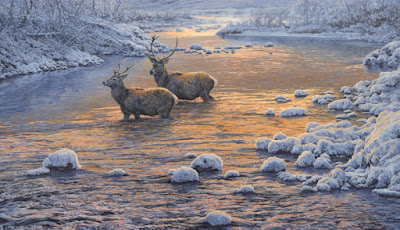
The most ancient form of the character adds a large stag on top. According to legend, the stag would appear to good people to show them where to ford the river, thereby providing a standard that they could follow. They would then mark the crossing with stones for those who came later. De-mythologizing for a moment, it is not too far of a stretch to see how an ancient people desperately looking to find a ford across a dangerous river would have regarded the sudden appearance of a stag crossing somewhere up or downstream as a sign or good omen that could easily grow into a standard for others to follow and emulate.
– Inherent then, in this “Art” is the idea of habits, of systems and structures, routines and rituals that will govern our actions and ensure reliable and reproduceable results as we pursue our “Big Deal.” In our lives, we don’t just want to be that lucky blind squirrel who sometimes finds a nut, a one-hit wonder, or a flash in the pan. No, we want to be able to replicate our success over and over again – for ourselves and others.
In sports, we don’t just want to be able to make the winning play once, we want to have trained it so many times that it is embedded in our bodies as muscle memory so that it becomes automatic. That is how we systematize success to create consistent outcomes in our lives and reproduceable results for anyone else looking to do likewise.
Once we have figured out how to get what we want in our lives, we want to be able to replicate it. It is not enough for us to just survive in our lives, we want to thrive. And once we learn how to cross the RIVERs in our life, we want to mark it to help our friends, families, and fellow human beings on this planet to thrive as well. To do that we need to systematize success.
4. 將: Level Up Your Leadership!
The fourth strategic success factor that Sunzi talks about is general leadership. In war, the general is the leader that all the troops look to for direction. Specifically, Sunzi identifies five essential characteristics for general leadership, which are equally applicable in our lives. They are: Wisdom, Trustworthiness, Empathy, Courage, and Disciplined Determination. There is so much to talk about here that I’m going to dedicate next week’s podcast to how to begin leveling up our leadership through these five essential characteristics. So stay tuned.
Leadership expert John C. Maxwell has taught that our leadership skills determine the level of our success and the success of those who live and work around us.
It’s been said that if we do what we’ve always done, then we’ll get what we’ve always got. In order to go somewhere we have never been or achieve something we have never done in our lives, we will need to not just choose new actions and new behaviors aligned with our “Big Deal,” but we will also need to upgrade our mindset – to think new thoughts, believe new ideals, and become more than we have been.
So, in order to win, we need to level up our leadership individually and surround ourselves with a competent leadership team, a support network – trusted advisors and confidants that will hold us accountable, show us our blind spots, and have our backs. Great leaders find their way across the RIVER and show other RAFTers how to do likewise.
3. 地: Leverage the Landscape & Enjoy the Journey!

The third strategic success factor that Sunzi lists is the land. It is learning to navigate the nuances, transcend the topography, and masterfully maneuver through the landscape from where we are right now to where we want to be to achieve victory in our lives.
It is asking ourselves: How do I get from where I am to where I want to be? What is the landscape like? What terrain do I have move through to be successful? What potential chokepoints are there? How can I use the landscape to my advantage? How can I transform the landscape into an asset rather than a liability?
See, we are embarking on a journey.
To get from where we are to where we want to be, we are going to have to move through not only a physical landscape but also a mental, emotional, spiritual, and social landscape that we have probably never maneuvered through in quite the same way before. Sure, we have probably been part way before, we may be familiar with the terrain but we have our limits. Sure, we can and should learn from those who have gone before us. We can stand on the shoulders of giants and draw upon those who have paved the way and that will get us so far.
I love land navigation, hiking, backpacking, and navigation. In order to get from where we are to where want to be, we need a map and a compass. We need to map out where we are going, plot our course, identify the landmarks and waypoints along the way, and set out on our journey. Move. Take a step. Of course, there will always be unknowns.
We have been talking a lot about the RIVER of life and this reminds me of what the Greek philosopher Heraclitus (ca. 535-475 BCE) said: No one ever steps into the same river twice, for it is not the same river and we are not the same people. Even if I have been somewhere before, there is always the possibility that things can and will be different.
There is a telling moment in the beginning of the Lord of the Rings saga, where Sam and Frodo have fled the comforts and familiarities of the Shire and set out towards the town of Brie to meet the wizard Gandalf. At one point in the film version, Samwise Gamgee, played by Sean Aston, stops suddenly in the middle of a field and says: “This is it. If I take one more step, it will be the farthest away from home I’ve ever been.”
Like Sam, we are going to reach the limits of our understanding, the edges of our comfort zone, the familiar boundaries that we have set in place for our lives and we are going to have to move beyond and push past them as we set out along the “road less traveled.” As we move towards what we want, as we take steps, sooner or later, what started out as a well-worn and familiar path has gotten smaller and smaller and become a game trail, and sometimes we find ourselves bushwhacking and pathfinding – blazing a trail not just for us to get where we want to be in our lives but also for those who WILL follow in our footsteps and come after us.
When we open up new avenues of possibility, others will follow. People will come into our lives. So we need to leverage the landscape and transform the topography of our thinking from obstacles to opportunities, from impasse to pathways, from problems to potential.
Equally important is enjoying the journey. As we pursue our “Big Deal” we are embarking on and amazing journey of discovery, creation, and opportunity. We cannot be so focused on the destination that we fail to stop and smell the roses. The journey has value. Let it empower, inspire, and transform us to become a better version of ourselves. Even as we keep one eye on our destination, move forward, and keep the other eye on the wonder that surrounds us and to possibilities that we maybe haven’t thought of yet.
When I went to Taiwan in 1994, I thought I wanted to be in sports medicine. I had no idea how that single decision was going to totally transform the trajectory of my life. I had no idea that I would one day be where I am now but I am infinitely grateful for the unbelievable experiences and opportunities I have had because of it.
We have no idea of the awesome things that are waiting up ahead for us. We have no idea the amazing people we are going to meet, or the unimaginable experiences and opportunities that we are going to have. So embrace that infinite possibility with an open mind – even if it leads us to someplace we never thought we’d go or even knew existed. That is where we find joy and satisfaction.
Shortly after I arrived in Taiwan, I had a profound experience that changed my life. I was running late for an important appointment and was riding my bike as fast as I could through the busy streets in a constant game of Frogger. I remember passing by a mother with her daughter. The little girl was pushing a stroller with a baby doll in it but the wheel was askew and wobbling badly making it difficult for her to go fast. For some reason, I instantly knew I could fix it but I also knew I was already late and in a hurry and there was a momentary back and forth in my mind. Ultimately, my humanitarian goals won out and I slammed on my bike brakes rushed over and pointed to the stroller because at the time, I could barely speak any Chinese, and knelt down and popped the wheel back into place. Then I smiled, waved, got back on my back, and rode away. As I did, I looked back to see that little with the biggest smile on her face. It was precious and priceless. I don’t remember what the appointment that seemed so important was – but I will always remember with gratitude stopping to help that little girl.
Whatever we encounter out there on our proverbial journey, we want to take full advantage of whatever the landscape has to offer us with gratitude and openness. That is what leveraging the landscape really means – to find the best ways to get where we want to be in our lives while being open to whatever the landscape puts in our paths – whatever opportunities the RIVER brings to our RAFT.
2. 天: Create a Climate for Conquest and Overcoming! Adopt an Atmosphere for Accomplishing & Achieving

The second strategic success factor is what Sunzi simply calls “the heavens.” The character refers to the sky above, to the seasons, to time, to climate, atmosphere, and weather. These are intangible factors that are critical for success.
What is the social, cultural and even political climate, political atmosphere like? Are they conducive to pursuing my goal?
What is my mental mindset and emotional climate and atmospheric condition? What is the energy like? If we were to give ourselves a weather-style forecast for accomplishing our “Big Deal” what would be? Clear and sunny or partly cloudy with a chance of showers?
3C’s of Climate Control: Cut the Complaining, Create a Climate Conducive to Conquering Challenges, & Contingencies to Compensate for the MESS beyond our control
1. Cut the complaining. We live in a culture where negativity is rampant. I mentioned last week that I unknowingly suffered from a victim mindset for much of my life. Sometimes, it still rears its ugly little head in my thinking and beliefs. Often in the form of complaining.
I love this quote by Japanese philosopher and peacebuilder Daisaku Ikeda: “Sometimes we complain without thinking much of it, but the frightening thing about complaining is that every time we do, a cloud descends over our heart, and our hope, appreciation, and joy gradually wane.”
2. Create a mental emotional, spiritual, and social climate conducive to conquering and overcoming challenges. We get to do that. That is 100% on us! Because it stems from our beliefs – and our beliefs shape our thinking, our thinking generates our emotions, our emotions drive our actions, and our actions largely determine our results.
3. Create Contingencies to Compensate for the cultural climate and the MESS beyond our control. Last week, I introduced the concept of the MESS beyond our control by using the analogy of the RAFT and the RIVER. This concept was first inspired by Rock Thomas. We don’t get to decide what the RIVER of life will bring, how the currents of challenge and the eddies of opportunity will swirl around us and we cannot control what other RAFTers are doing. We are only in control of our own RAFT not anyone else’s. However, we ALWAYS get to decide how we will respond to the RIVER and other RAFTers.
Simply put, if we know we are going into a climate where it rains a lot, pack an umbrella, bring some rain gear. If we are going into the desert, bring sunscreen and extra water. The same goes for operating in a corporate or cultural climate. We can take care of and prepare ourselves for the storms of life.
The Triple “A” Approach to Achieving Awesome Atmosphere: Attack, Adopt, & Adjust
Author Hugh Reginald Haweis wrote: “Emotion is the atmosphere in which thought is steeped, that which lends to thought its tone or temperature, that to which thought is often indebted for half its power.”
See, not only do our beliefs shape our thinking, which creates our feelings, which drive our actions, which determine largely determine our results – it works both ways. Our results also drive our actions, which generate greater emotion, which direct our thinking, which reinforce our beliefs as well.
1. Attack our own antagonistic attitudes. We don’t have to just sit passively by and let “stinking thinking” run rampant in our minds, fuming and festering. We don’t need to let our bad attitudes “get away with” sucking the life out of our own party. We can call ourselves on our garbage and then take out the trash!
2. Adopt an atmosphere of accomplishing and achieving. Atmosphere defines environment. So adopt an atmosphere where anything is possible and where we expect to accomplish and achieve our goals. Because, as Dr. Ed Cole stated, “Expectancy is the atmosphere for miracles” and our “attitude determines [our] altitude in life.”
3. Adjust our approach based on the atmosphere around us. When I walk into a classroom, one of the first things I do is get a feel for the atmosphere of those in the room. Then I adjust my approach accordingly. If the energy is low, I may introduce some fun, humor, or engagement to elevate it. If it is a little too rowdy, I may introduce a focused discussion question and break everyone into smaller groups. The key is to adjust our approach so that we can most effectively achieve our objectives within that atmosphere rather than letting the atmosphere dictate what results are available to us.
Balancing Season & Timing for Success
There is a paradox here between what I talked about last week in starting where we are and just getting out there and doing things and biding our time and waiting for the opportune moment. Taken to extremes, both can hinder us as we pursue our “Big Deal” or “Grand Endeavor.”
I tend to be someone who gets excited about an idea and wants to jump in and start doing. I often find myself starting to drive away before I even know where I am going, which drives my wife crazy … 😛
The danger in this approach is that sometimes, I jump the gun, go off halfcocked, or don’t have everything I need. In my zeal for getting to the beach, I may forget my towel, and so on.
It’s been said that we never get a second chance to make a first impression and it’s true. We want to make sure that we gather everything we need to maximize our opportunities and give us the best chance of success.
In a previous episode, I mentioned that I first had the idea of doing this podcast in December of 2021 and even entertained the possibility of launching in 2022. I put together a launch schedule and everything and I wrestled with whether or not I could muscle through on pure adrenalin and enthusiasm. Ultimately, I waited and spent last year learning, preparing, and focusing in on my content. In this case, it was the right call. I wouldn’t have had the same perspectives a year ago that I have now.
On the flip side, there is a danger of waiting too long, of becoming paralyzed by fear, doubt, and the need for perfection. Between what don’t want to do right now and what we don’t feel ready to do yet, lies the danger that we will do nothing. The reality is that there is no time like the present. There may never be an ideal, magical moment where the stars will align and everything will be perfect and if there is, we may not be able to see it for what it is in moment but only be able to look back years later with the benefit of hindsight and recognize it for the turning point it actually was.
As a recovering toxic perfectionist, I tend to get obsessed with wanting everything to be “just right.” One of my sons, who has mixed all of the amazing and inspiring music for this podcast, has reminded me repeatedly of a study on the best pottery. In this study, participants were assigned to two groups. One group was told to focus on quality and produce the best, most spectacular single piece of pottery they could. The other group was told to do the opposite, to focus on quantity and just get their product out there. Interestingly, the group that ended up producing the “best” pottery was the latter group, who improved their process and technique and honed their skills through the repetition of doing rather than obsessing over perfection.
I’m going to be honest. As I approached my January 2023 launch, I did not feel entirely ready. I didn’t have all the episodes I wanted recorded. There were unexpected technology issues and delays. I have recorded, edited, and put together episodes on five different computers so far. There were discussions of postponing but this time, I knew I had to move forward, to pull the trigger, to take the plunge, to jump in and grab the bull with both hands and figure it out along the way – even knowing that it was and is not going to be perfect – but I am doing and learning.
As we walk the tightrope trying to balance waiting for the opportune moment and seizing the day, it is important to remember the words of English Evangelist Leonard Ravenhill who said: “The opportunity of a lifetime must be seized within the lifetime of the opportunity.”
So “Carpe Diem”
1. 道: Your Why is Your Way!
The first strategic success factor that Sunzi lists is the Dao or the Way. The character 道 has a fascinating origin, which sheds invaluable insights into its meaning and implications for life. The Chinese character for the Dao depicts the head of a buck with a large eye under a set of antlers standing in the middle of a crossroads. For deer, elk, and similar animals, the big buck is the leader of a herd, just as the matriarch is the leader of a herd of elephants. Their primary duties are to protect and provide. They are constantly on the lookout, scanning the horizon for danger and opportunity while choosing a path to lead the herd to the most fertile and abundant areas. It is no wonder ancient Chinese observers absorbed these characteristics into their concept of the Way. Inherent in the Way, then is vision and leadership – whether we are leaders of many or simply leaders of ourselves.
See, there is a difference between a road and a way. A road is something that everyone uses but a “Way” specifically refers to the vision of opportunity that the leader has at the crossroads of choice to take definitive action and move in a certain direction. Vision guides decision, decision determines direction, direction leads to destination. How we choose to see, the vision we have at the crossroads of decision and action is the hallmark of leadership.
Behind every way, there is a why. Our “Why” is our way forward!
In order to make our Way, we need to get in touch with our Why. It is so important to get in touch with our Why! It’s not so much what we are doing as why we are doing it? Why do we want this? Why is it such a “Big Deal” for us? Why is it so important to us? Why are we fighting for this? What will our lives be like without this and what will life be like if we actually win?
See, our Why is the ember of action. Our Why is the set of beliefs that we hold about the importance of what we are doing and its significance. Our Why connects us to our longings deep down inside to that inspiring ember that can ignite action. It is our Why that gets us up in the morning when we are tired and worn out. It is our Why that sparks us to pick ourselves back up when we get knocked down, to get to our knees and then our feet, to dust ourselves and then try again when we fall! It is our Why that fires us up. It is our Why that warms our soul in the cold and lights our Way in the darkness. If our Why is strong enough, we will make it happen. If not, we will make an excuse. It is our Why that drives us and propels us through the hard times.
When things get hard and we want to give up and we want to stop and quit, and we wonder if it is still possible or even worth it and we begin to doubt if we are getting any closer, making any progress, or having any impact at all, it is our Why that gives us traction to get through the grind and keep on going, it is the vision to see the obstacles as opportunities, the problems as possibility.
It grounds us when we feel lost and keeps us moving forward to victory when we get bogged down. It unites us and unifies us internally and with likeminded individuals to work toward common goals. It anchors us in hard times and keeps us moving forward.
Our Why informs our vision and keeps us focused on our “Big Deal.” Without getting in touch with our Why, we will struggle to find our Way. With a strong and compelling enough why, we can endure, overcome, and achieve anything!
That is why Sunzi’s starts his list of five strategic success factors with it.
So to find our Way, we only need to get in touch with our Why and every time we feel we have lost our Way or our vision is blurred, obscured, or unclear, we only need to get back in tune with our Why.
We stand at the crossroads of choice every moment of our lives and we can choose at any time to move in a different direction or continue down the path we are on.
It is my fundamental belief that THERE IS ALWAYS A WAY – a way forward, a way upward, and a way over; there is ALWAYS a way around, a way through, or a way out of any situation or circumstance. The Way is a myriad network of trails and tracks, connections and crossings, potentials and possibilities. It is a set of steps and solutions, an array of openings, options, and opportunities, from wherever we find ourselves to wherever we want to go, from wherever we are right now, to wherever we want to be in any area of our lives. No matter what we have done, what has happened to us, or how we ended up where we are, there is no situation or circumstance in life that cannot be changed, improved, or overcome because we can ALWAYS change the way we look at, think about it, and respond to it. By doing so, we change our experience in this world. No matter how stuck we feel, no matter how deep the rut, no matter how dark the hole, THERE IS ALWAYS A WAY! Nothing is impossible. No obstacle is impassible. We only need the vision to see that at any moment we stand at the crossroads of choice and the determination to act upon our Why and move toward what we really want. It is our opportunity and our privilege as long as we draw breath to find a way, to become a wayfinder, a problem solver, a solution creator, a trailblazer, a guide on the path of life, not just for ourselves, but for our families, for our friends, and for all within our sphere of influence – that is the Way.

 Warrior: The Art of War for Life - A Podcast on Winning
11 Comments