

Summary
In this episode, we put a new twist on Sunzi’s adage that “warfare is the art of deception” by discussing the six traps of self-deception, which are:
1. The Limiting Lie (I can’t, I’m not …):
2. The Futility Farce (It’s no use …)
3. The Procrastination Problem (Not dealing with issues close at hand)
4. The Distant Dilemma (Worrying about things that may never happen)
5. The Temptation Trap (Taking the bait)
6. The Constant Chaos & Distracting Drama
With quotes from Plato, Marcus Aurelius, the Dalai Lama, the Arbinger Institute, and many more, along with stories from Wil Smith and Loren Eisley, this episode will inspire you to take a look in the mirror, increase your awareness of the how these forms of self-deception show up in your life, and take back your power.
Introduction
Welcome to Warrior: The Art of War for Life – A Podcast for Those Who Want to Win! Leadership Lessons, Motivational Mindsets, Empowering Principles, Success Strategies, and Transformational Tactics from Sunzi, the Master of Victory
I am your guide on the side, David Boyd, award-winning educator, transformational speaker, and Certified Life Coach.
It’s time to start winning at life!
Episode 6: Sunzi’s Six Traps of (Self)-Deception and How to Avoid Them
Hey! Hey! Hey! Welcome everyone! Thanks for joining us! I am so glad you are here listening! I want to take a moment to personally thank all of you who have provided feedback about the podcast! Your insights and opinions are invaluable to me. For those of you haven’t yet, please do. If you are listening to this episode, I want to hear from you! It’s been a little over a month since we launched and I would still love to get some more feedback on what from the episodes is speaking to you, what is impacting you, what is working and what isn’t so I can better help you win your daily battles. I’d also love to hear what challenges you are looking to overcome, what you are looking to create, and what your “Big Deals” are. So please shoot me an email at artofwarforlife@gmail.com or send me a DM on Instagram @artofwarforlife, and please join the Art of War for Life Facebook page. When you do, I will send you a free copy of the Sunzi Battle Planner I developed, a great resource to walk you through getting clear on your “Big Deal,” getting in touch with your why, Sunzi’s Five Strategic Success Factors, and how to level up our leadership with Sunzi’s Five Essential Attributes of Great Leaders.
Last week, we talked about “Four Keys to Tip the Scales of Life and Shift the Balance of Power in Our Favor.” Next week, we are going to discuss Eight Tactics to Transform Your Life. Today, we are going to discuss Sunzi’s talk about “Sunzi’s Six Traps of (Self)-Deception and How to Avoid Them.”
So let’s go!
The Art of (Self)-Deception
Chapter 1, verse 6 of Sunzi’s Art of War opens with the statement that:
Warfare is the Way of deception.
Therefore, where you have capabilities, appear incapable;
where you are engaging, appear disengaged.
When your objective is nearby, make it seem distant;
when it is distant, make it seem nearby.
Entice the enemy with profits and gains;
sow chaos and disorder within their ranks to seize them by the ear.
The traditional reading of this passage in a military context is to deceive our enemies through misrepresentation, misdirection, misattribution, misjudgment, and misinformation. The Chinese term that Sunzi’s Art of War uses here is gui3 詭 (Simplified 诡), which literally means to endanger the enemy through deceptive words that will ultimately bring them to their knees.
However, as I worked through these military strategies, I began to see some parallels with where I sometimes feel embattled in my own life. So, I want to talk about these from the perspective of self-deception.
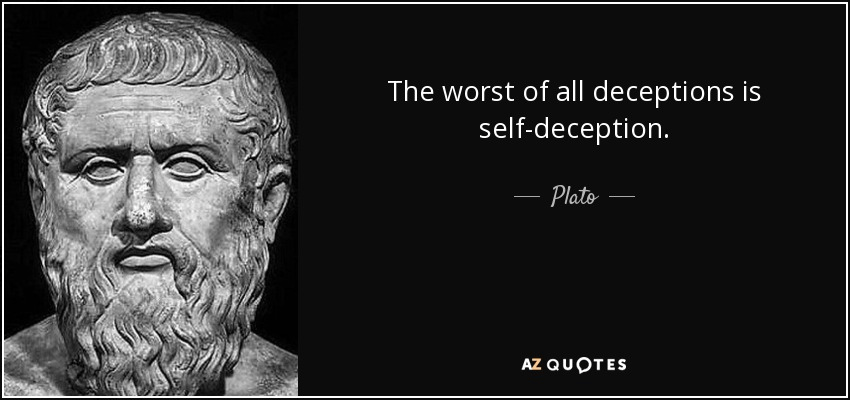
Plato taught: “The worst of all deceptions is self-deception.” Aiden Wilson Tozer (1897-1963) elaborated on this idea stating: “Of all forms of deception, self-deception is the most deadly, and of all deceived persons, the self-deceived are the least likely to discover the fraud.”
A couple years ago I did a very impactful workshop on Outward Mindset during which we discussed the idea of self-deception. In their book, Leadership and Self-Deception: Getting Out of the Box, The Arbinger Institute states: “Self-deception is like this. It blinds us to the true causes of problems, and once we’re blind, all the “solutions” we can think of will actually make matters worse. Whether at work or at home, self-deception obscures the truth about ourselves, corrupts our view of others and our circumstances, and inhibits our ability to make wise and helpful decisions.”[1]
I have a Master’s Degree if not a full on Ph.D. in Self-Deception from the school of hard knocks, with minors in self-sabotage, toxic perfectionism, and performance-based worth! Oh, and I was captain of the co-dependency and people pleasing clubs too!
Honestly, I still struggle with these things sometimes. Returning to the original Chinese etymologies, I have taken these six strategic deceptions and looked for them inwardly, to identify six traps of self-deception so that we can take a good look in the MIRROR and see if maybe we don’t fall into them ourselves. Because as Stoic Marcus Aurelius stated: “[each of us] who persists in self-deception and ignorance is injured.”
So, the Six Traps of Self-Deception are: 1. The Limiting Lie, 2. The Futility Farce, 3. The Procrastination Problem, 4. The Distant Dilemma, 5. The Temptation Trap, and 6. The Constant Chaos & Distracting Drama.

1. 能: The Limiting Lie
The first of Sunzi’s six strategies for deceiving the enemy is to appear weak when we are strong and strong when we are weak. This about misrepresentation so that enemy cannot gauge our true combat capabilities. It’s all about appearances.
The Chinese character is neng2 能, which refers to abilities and capabilities. It is a depiction of a bear eating meat. Bears are capable and versatile creatures that thrive in a variety of environments and habitats. So are we.
The limiting lie is the false belief that we are incapable不能. That we lack the ability, strength, or intelligence to accomplish and achieve our goals and dreams. It shows up in our thinking and in our self-talk as “I can’t” or “I’m not.”
How often do we believe we can’t do something we really can – limiting ourselves? How often do we tell ourselves and believe that we are not strong enough, smart enough, capable enough, attractive enough, or worthy enough to achieve what we want to achieve or live the life we dream of?
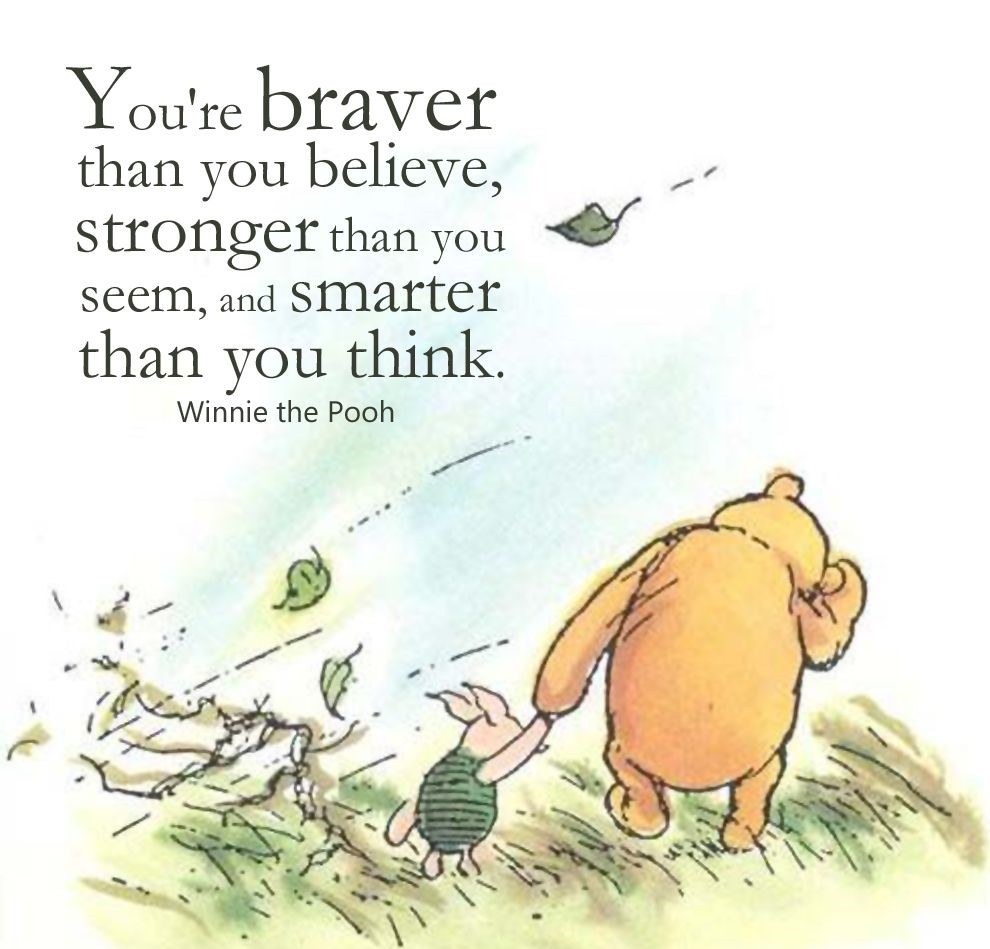
In A.A. Milne’s (1882-1956) classic children’s book Winnie the Pooh, Christopher Robin tells Pooh Bear: “You are braver than you believe, stronger than you seem, and smarter than you think.”
The problem with the limiting lie is that as soon as we accept it, it becomes a self-fulfilling prophecy. What are we really capable of? I have said before that we are powerful beings with a profound purpose on this planet. We each have great gifts to give the world! We aren’t teddy bears! We’re grizzly bears!
The most curtailing limits that we experience in our lives are NOT those placed upon by circumstance but rather by our own thinking and beliefs! Far too often our beliefs and thinking about ourselves are occupied by debilitating doubts and belittling beliefs. The only limits that exist are the ones in our own minds. Thus, all limits are self-imposed. So stop limiting ourselves and start believing in the bear!
What can we do? How can we start? Simple. Take back our self-talk! Identify something that we tell ourselves that is limiting and replace with something more empowering. We are the ones who get to decide whether we will allow any limitations in our minds and hearts. It’s time to liberate our captive minds and hearts! Make a vow to ourselves right here, right now that we will no longer tolerate any thought or belief that denigrates or diminishes us in any way! We will no longer accept any limiting lies that hold us back or hold us down from living the life that we dream of! There is a great motivational video on this by Canadian entrepreneur Rock Thomas entitled, “What follows I am, follows you!” So check it out!

2. 用: The Futility Farce
The second of Sunzi’s six strategies for deceiving the enemy is about misrepresenting our activities. The Chinese word here is yong4 用, which is literally a pictogram of a fishing net. It refers to usefulness, utility, application, employment, and deployment. The opposite of utility is futility and inactivity and that is what I want to focus on in applying this principle to our own lives – what I call the futility farce.
How often do we choose not to try or fight for what we really want because we accept or believe that it is futile, that there is no use or point in continuing, or that it’s a lost cause? How often do we give up, give in, accept something we don’t want, or settle for less than? Often the futility farce works in conjunction with the limiting lies we let dictate our lives.
As Pakistani attorney turned poet and peace advocate Tasneem Hameed has said: “When efforts are considered an exercise in futility, difficulties are converted into impossibilities.” There is a certain resignation and deep despair that flows into our lives from the belief that there is no use. Futility is a blight on our souls.
For a long time, I wrestled with feelings of futility. I believed that no matter how hard I tried, my best would never be good enough. It was profoundly painful. Sometimes that belief still screams at me from deep down inside – but it is a farce, a lie, a scam, a sham.

Long ago, my mother gave me the antidote to futility in the form of Loren Eisley’s (1907-1977) “The Star Thrower” more commonly known simply as “the starfish story:”
One day an old man was walking along the beach after a big storm. The sands were littered with starfish that had been washed up on shore by the tempest that day. As he walked, he noticed a group of amused onlookers watching a child running along the beach. The child would stop, gently pick up a starfish, throw it back into the ocean, and run to the next one.
Approaching the youth, the old man asked, “What do you think you are you doing?”
The youth replied, “Throwing starfish back into the ocean. The surf is up and the tide is going out. If I don’t throw them back, they’ll die.”
“Las,” the old man said, “Look at this beach! Don’t you realize that there are miles and miles of beach and hundreds if not thousands of starfish? You can’t save all these starfish. You can’t make a difference!”
After listening politely, the little girl bent down, picked up another starfish, and threw it back into the surf. Then, smiling at the old man as she ran on to the next one, she said…” I made a difference for that one.”
Inspired by the little girl’s example, the old man hunched over and picked up a starfish.
Growing up on the beach near Half Moon Bay, CA, I always loved this story. No matter how seemingly trivial, no good deed is ever worthless. No effort to improve is ever wasted. No determination to rise up, when we have been knocked down by the storms of life is insignificant. Every time we get back to our knees, stand up, dust ourselves, and try again we are adding value to the world. Every kindness we offer someone, every small act of service, every time we hold a door for someone else, every time, we smile at a child, or encourage someone around us, we are making a difference! Do not let the seeming immensity of the problems of this world overwhelm us and discourage us from helping the one right in front of us. Look around. There are lots of people who need help. There is lots of good we can do in this world, right now, as we are, where we are, flawed and as insufficient as we may feel. There are lots of things we can do to improve and empower ourselves, no matter how long we have let those opportunities pass by in the past. Our lives are like beaches littered with starfish washed up on shore by the storms of life. Each one is an opportunity to make a difference. So, take a step, pick up a proverbial starfish, throw it back into the ocean of infinite possibility and opportunity, and then run to the next one.
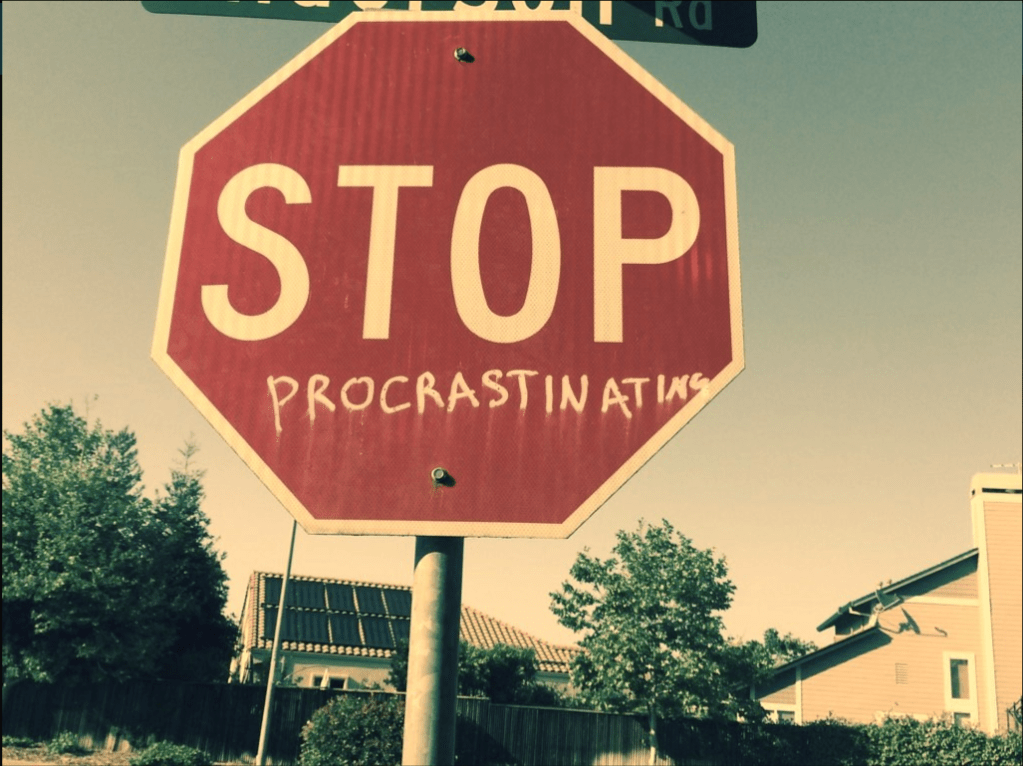
3. 近: The Procrastination Problem
The third of Sunzi’s six strategies for deceiving the enemy is about proximity. It is about misdirection and disorientation, getting the enemy turned around, and not letting them know when we are nearby and preparing to strike. The character is jin4 近, which is comprised of an axe on the road. In my own life, I have seen this principle manifest as self-deception in the problem of procrastination or not dealing with dangers or matters close at hand.
I have a confession to make, my wife and I have renovated each of the four houses we have owned over the years. The imagery of the axe in the road, reminds me that I am notorious for not putting my tools away. When it comes to house projects, I am a great starter but not as great a finisher. I often justify that I am just going to come back and work on this or that later and it would take too much time or effort to put all my tools away and get them back out again when I am ready. I have literally left axes out in our driveway when spitting wood for weeks or even sometimes months. I am not proud of this.
Alyce P. Cornyn-Selby has observed that “Procrastination is, hands down, our favorite form of self-sabotage.” Procrastination is something that I have often struggled with throughout my life. A certain amount of procrastination is commonplace and yet how often do we fail to take care of things right in front of us? Julia Cameron has observed that “Procrastination is not laziness … it is fear.” For me, procrastination is often tied back to the previous two pitfalls of self-deception: the limiting lie and the futility farce. The things I procrastinated most were the things I believed I was the most incompetent or incapable in, or the areas in which I feared that my efforts were the most futile.
What’s the big deal with procrastination? Charles Dickens (1812-1870) said: “Procrastination is the thief of time.” In the words of Napoleon Hill: “Procrastination is the bad habit of putting off until the day after tomorrow what should have been done the day before yesterday.”
American aphorist Mason Cooley (1927-2002) said: “Procrastination makes easy things hard, hard things harder.” According to ice hockey legend Wayne Gretzky: “Procrastination is one of the most and deadliest of diseases and its toll on success and happiness is heavy.” Why? According to William James (1842-1910), “Procrastination is attitude’s natural assassin. There’s nothing so fatiguing as an uncompleted task.” Not only is procrastination draining to have an endless to-do list that we keep putting off, we also run the risk of missing out on opportunities, because as I mentioned a few weeks ago: “the opportunity of a lifetime must be seized in the lifetime of the opportunity.” Investor, entrepreneur, and author Tai Lopez has warned us that “The penalty for procrastination is the loss of hopes and dreams.”
When we feel tired, stressed, and overwhelmed by all the things we need to do, what can we do to push back against the problem of procrastination? We can “Nike” up, pick one thing on our list and just do it. Then we can do another and another. We can’t change the past and we can’t control the future, but we can act now. In the words of Roy T. Bennett (1957-2018): “Don’t let procrastination take over your life. Be brave and take risks. Your life is happening right now.” As Abraham Lincoln (1809-1865) stated: “[We] cannot escape the responsibility of tomorrow by evading it today.” When there is a mountain to climb, don’t think that waiting will make it any smaller. Take a step.

4. 遠: The Distant Dilemma
The fourth trap of Sunzi’s six strategies for deceiving the enemy is to trick them into believing we or our interests lie far away. Thus, tricking them into shifting their focus to some distant danger or dilemma. This is also a problem of self-deception. In today’s world where doomsday media sensationalizes reports of this or that in some distant land or far away country, how often do we get distracted and not take care of business in our own backyard?
There is a balance here that needs to be struck. While it is important to plan ahead, to prepare for the future, and to be aware of potential dangers. However, when taken to extremes, we can spend all of our time freaking out about distant troubles that may or may not come to pass and miss what is happening right here and now close by. Sometimes, we worry about the wrong things and fall under the spell of fear with its constant whispers of what if …
Corrie Ten Boom (1892-1983) stated: “Worrying is carrying tomorrow’s load with today’s strength – carrying two days at once. It is moving into tomorrow ahead of time. Worrying doesn’t empty tomorrow of its sorrow, it empties today of its strength.” As Joyce Meyer puts it: “Worry is a down payment on a problem you may never have.” Singer Janis Joplin (1943-1970) said: “You can destroy your now by worrying about tomorrow.”
I have seen this in my own life when challenges arise and my thinking automatically goes to the worst case scenario, the worst possible outcome, and I see myself losing everything and my family living in a tent down by the river! The sky is falling on top of me and the ground is falling out from under me! So many times, the doom and gloom I thought was coming turned out to be nothing or there was a simple solution to the problem.
A great example of this was Y2K, which is the shorthand term for “the year 2000.” Y2K was commonly used to refer to a widespread computer programming shortcut that was expected to cause extensive havoc as the year changed from 1999 to 2000. Instead of allowing four digits for the year, many computer programs only allowed two digits. As a result, there was immense panic that computers would be unable to operate at the turn of the millennium when the date descended from “99” to “00” that would result in a cascade failure that bring down computer systems infrastructures, such as those for banking and power plants. Widespread outcry and panic about the potential implications of this change, not much happened – certainly not when compared to the anxiety and worry that ran rampant through the media and public imagination.
Similarly, Will Smith’s first experience skydiving is also instructive. He talks about how in a moment of bravado he agreed to go skydiving with some friends, resulting in a terrible night of sleep filled with fear, anxiety, and worry. His near panic continued the next morning through the pre-departure brief and up until the moment he was pushed out of the plane. In the euphoria of his jump, he asked himself the question: Why were you scared last night in your bed? Why were you worried and afraid sixteen hours before the jump? What did you need that fear and worry for? Why couldn’t you enjoy your life? There is no reason to be worried, it just ruined your day. As the Dalai Lama puts it: “If it can be solved, there’s no need to worry, and if it can’t be solved, worry is of no use.” So, to vibe with Reggae legend Bob Marley (1945-1981) and the Wailers’ Three Little Birds: “Don’t worry ‘bout a thing, ‘cause every little thing gonna be alright.”
5. 誘: The Temptation Trap
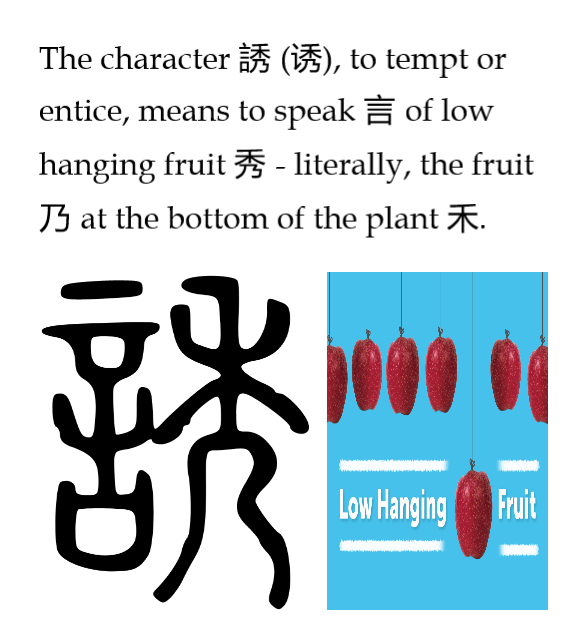
The fifth of Sunzi’s six strategies for deceiving the enemy is to tempt, lure, or bait them into a trap. The Chinese word here is you4 誘, which means to tempt, lure, attract, or entice. The character is comprised of speech 言 next to a ripe, low hanging fruit 秀. It is not difficult to see how this one applies in our own lives.
When I was young, I enjoyed fishing and I remember one day connecting the dots as to why fish strike lures or take the bait. Instinctively, a fish knows it needs to eat to survive. A fish takes the bait because it smells like food, looks like food, and even tastes like the food it enjoys eating – but there is literally a catch – a hook that lands the fish in the fisher’s net. The best bait for any fish is what it is already eating. Nowadays, there all sorts of scientifically designed artificial power baits that appeal to the fish’s olfactory senses and even hormones.
On the other side, fish strike lures because they look like and they mimic what a fish is eating. Flyfishing is a great example of this. The flyfisher is a master of deception, watching the waters for a hatch, looking at what insects are rising, and casting a fly that mimics it. It looks like the real deal but it is a deadly counterfeit, an imitation.
Sound all too familiar? Just like fish, we take the bait because we have genuine needs that we are trying to satisfy, and we fall prey to the allure of the bait. We strike that lure because it appeals to our basic survival instincts – the more desperate the better. There is a Mongolian proverb that says: “The fish sees the bait not the hook; a man sees not the danger — only the profit.”
We live in a world full of temptation. The internet bombards us with “click bait” promising to give us something we desperately want or need in our lives. Catfish are all over our social media and networking sites, posing as the perfect match. Scammers and spammers run rampant online and are constantly phishing (with a ph) in our inboxes. They all offer miracle cures – that proverbial snake oil – shortcuts and secrets to wealth, health, and abundance. They play to and prey upon our noblest sensibilities by allowing us to be the heroes that can save the less fortunate out there in some afflicted third world country. Companies sell our information and search history to marketing firms who analyze it looking for patterns of purchasing and online behavior so they can tailor an ad that will hook us. The dark side of the psychology of marketing is little more than manipulation. We take the bait because we feel like something is missing in our lives that we desperately want or need.
Thomas Jefferson (1743-1826) stated: “Do not bite at the bait of pleasure ‘till you know there is no hook beneath it.” English poet William Blake (1757-1827) said: “It is better to shun the bait than struggle in the snare.” Easier said than done. How do we do it? First and foremost, we can practice self-awareness and come to know what our needs and wants are, what our “triggers” are, what our painpoints are – these are the places where we are most vulnerable to take the bait or get lured into financial or personal scams and schemes. In the end, if it looks or sounds too good to be true, it probably is. There is (almost) always a catch. There are better ways of meeting our needs and chasing our dreams.
6. 亂: The Constant Chaos & Distracting Drama

The last of Sunzi’s six strategies for deceiving the enemy is to sow seeds of chaos, confusion, and disorder among them. Napoleon Bonaparte (1769-1821) said: “The battlefield is a scene of constant chaos. The winner will be the one who controls that chaos, both his own and the enemies.” Interestingly, this remains one of the primary objectives of China’s “Fifty Cent Army” (wu3mao2 五毛) of illicit influencers and trolls today – to sow discontent, divisive drama, distractions and diversions, and endless inflammatory outrage on our social media platforms.
The character Sunzi uses here is luan4 亂 (Simplified: 乱). It is a depiction of the frayed and loose ends on a broken loom. It is the snarled knots all tangled together instead of the tightly interwoven strands of a well-managed life. There is a constant stream of chaos and drama coming into our news feeds and if we let it, it can distract us from what is really important.
How often do we let little, trivial, or unimportant things distract us from our actual goals? How often do we get hung up on a single word instead of seeing the bigger picture? How often do we become fixated on or feel frayed by forces beyond our control instead of taking charge of the tapestry of our lives and stepping into our power to pull our own strings? How often do we turn to drama either to distract ourselves from our own issues or to try to fill some feeling of insecurity?
There is an anonymous quote that says: “Drama does not just walk into your life. Either you create it, invite it, or associate it with it.” Have you ever known someone who just seems to attract or create a lot of drama? It makes sense, since we live in a culture where victimhood and the victim mindset is rampant. Victimhood requires endless drama to sustain itself. I know, I lived that for decades and sometimes still find it lurking in the corners of my mind and heart. Indian philosopher and mystic Abhinavagupta (c. 950 – 1016) wrote: “Drama is like a dream, it is not real, but it is really felt.”
Why do we buy into drama? For me, it is tied to feelings of insufficiency and insignificance. I want to matter. I want to be noticed but I feel invisible and unheard at times.
The less we respond to drama, the more powerful our life becomes. So, as self-help author and entrepreneur Karen Salmansohn has suggested: “Un-drama yourself. Be who you were before all that drama happened which distracted you from who you really are and what you really want for your life.” So, never allow the negativity, drama, or opinions of another person to stop you from being the person you were created to be. Ignore the drama. Ignore the hatred. Ignore the pain. Find peace. Find happiness. Find yourself. You are already amazing, awesome, and absolutely essential in this world. You don’t need the drama to be important, to matter, or be heard. You already are.
Conclusion
This week we covered a lot of ground in the six traps of self-deception. Which ones do you see showing up in your life? Or are you like me and have fallen into all of them at times? I would invite each of us to reflect these six and really dig into when and where we turn to them. Because the truth is, at least for me, these aren’t just traps that we “fall” into. Rather, we albeit sometimes unknowingly turn to them thinking they will help or solve our problems – but they don’t – they are a trap. Awareness is the first step toward change.
We turn to these six forms of self-deception because we believe lies about ourselves and about the world. Maybe it’s that we just aren’t enough – not strong enough, smart enough, attractive enough, or capable enough – but that is a lie, for we carry within us all the seeds we need to thrive in this world and we can learn, grow, adapt, and overcome any challenge that stands between us and what we really want!
Maybe we believe it’s no use, which really means we don’t believe we can make a difference or that our efforts matter – that it’s too hard, the deck is stacked against us, and that the odds are never in our favor. Resistance is futile – but that is a lie, for every single good deed we perform, every act of service we render, every kindness we extend sends ripples out into the world. Every word of encouragement we utter, every time we help someone on their journey, every time we withhold judgment on others and give them permission to just be where they are as they are, we create a better world. Every fear we stare down and push past, every time we choose to honor the best within ourselves, every time we decide to get to our knees and then our feet, and to try again, empowers and strengthens us. It all matters. It all makes a difference. You matter. You make a difference.
Maybe we have procrastinated and put things off because deep down inside, the mountains seem insurmountable, or we feel overwhelmed – but that is a lie. You can do this. There is ALWAYS a way forward from wherever we are to wherever we want to be in our lives. It doesn’t matter how long we have put off taking that step, making that change, or leaving the past behind. A journey of a thousand leagues starts with the first step – the one underfoot. So take a step. Start now. Don’t wait and before we know it, we’ll be knocking at the doorstep of the dreams that once felt so distant.
Maybe we worry about too much about things that may or may never actually happen and are paralyzed by the constricting fear of “what if” – because again, in our hearts we are afraid that we are not up to the task – but that is a lie. Whatever the river brings into our lives, we can and will navigate our raft through the currents of challenge, we can and will respond to the rapids. So don’t worry about a thing because every little thing is going to be all right. No matter what happens, you will get through. You will be okay.
Maybe we have taken the bait and gotten lured into traps because we were desperate, had unmet needs, or didn’t know how to get what we wanted. Maybe we were just tricked into believing there is nothing better for us out there or that we aren’t worthy of or don’t deserve it – but that is a lie. It’s okay. We can learn from our mistakes and do better next time. We can get clear on what we want to create in our lives and protect ourselves from the counterfeits and fakes out there. We don’t need to settle for some cheap knock-off that we don’t actually want just because we don’t know how to find or create the real thing yet. We deserve better. We deserve the best.
Lastly, maybe we have allowed ourselves to get caught up in the endless drama because we believe that is the only way we can have significance or get attention – but that is a lie. The truth is that each of us already matters. We are already amazing, awesome, and absolutely essential in this world, as we are right now. We are already unique, precious, and irreplaceable. We don’t need to attract or create drama from a place of our own insecurities to get attention or make an impact. We are powerful beings with a profound purpose on this planet. So don’t be deceived. You can do it!
[1] The Arbinger Institute, Leadership and Self-Deception: Getting Out of the Box, 2000.
Soundtrack by SENTIUS
Support this podcast: https://anchor.fm/david-boyd3/support

 Warrior: The Art of War for Life - A Podcast on Winning
17 Comments