

Summary
Have you ever wanted to feel better and more motivated? Have you ever longed for greater abundance in your life? Have you ever wanted to be stronger, physically, mentally, or emotionally? In this episode of “Warrior: The Art of War for Life,” I discuss Sunzi’s “Three Tactics for Boosting Morale, Maintaining Motivation, and Growing in Abundance and Strength.” They are:
1. Reward Ourselves the First Time We Achieve & Celebrate the Small Victories
2. Change Our Banner Beliefs, Raise Our Flag, Send a New Message!
3. Be Gracious in Victory & Defeat – Treat Ourselves (& Others) Excellently, Nurture & Nourish – Especially in Defeat & Difficulty – Don’t Skip Our Self-Care
With inspiring quotes by Arnold Schwarzenegger, Brene Brown, Tara Westover, Renee Peterson Trudeau, and Susan Weiss Berry and powerful teachings from Rock Thomas, Carol Dweck, and Abigail G. Manning, this episode is certain to uplift and empower!
Please like and subscribe! Follow us on Instagram @artofwarforlife and join the Art of War for Life Facebook page. For the blog version, please visit our website at: www.artofwarforlife.com. For questions or to work with me, email: artofwarforlife@gmail.com
Original soundtrack by Sentius.
Remember: The power to win, resides within! There is ALWAYS a Way!
Transcription
Episode Introduction
Hey! Hey! Hey! Welcome everyone! Thanks for joining us! I am so glad you are here listening! Last week, we discussed Sunzi’s: “Three Secret Strategies to Overcoming Our (Inner) Enemies!” Next week, we are going to discuss how to become the “Master of Our Own Destinies!” So, stay tuned. If you are a visual learner like me, check out the blog version of this post at www.artofwarforlife.com, which includes the Chinese characters I discuss along with additional images. Don’t forget to join the Art of War for Life Facebook page and follow us on Instagram @artofwarforlife. For any questions, comments, or to work with me, shoot me an email at: artofwarforlife@gmail.com. Today we are going to talk about “Three Tactics for Maintaining Motivation & Growing in Abundance and Strength.” So let’s go!
Disclaimer
“And as a reminder: The views expressed in this podcast are my own and do not necessarily reflect the official policy or position of the United States Air Force Academy, the Air Force, the Department of Defense, or the U.S. Government. Thank you. Thank you very much!”
Three Tactics for Boosting Morale, Maintaining Motivation, & Growing in Abundance and Strength!
In Chapter 2.4 of Sunzi’s Art of War, we read:
Thus in chariot warfare, when ten or more chariots are seized, reward the first to the one who seized them and change the flags and banners. Then, intermix the chariots and drive them with ours. Treat the prisoners of war excellently and nourish them. This is what is called defeating enemies while increasing abundance and strength.
故車戰, 得車十乘以上, 賞其先得者, 而更其旌旗, 車雜而乘之, 卒善而養之, 是謂勝敵而益強。
While this passage may seem somewhat obscure at first, in it Sunzi identifies three tactics for boosting morale, maintaining motivation in the crucible of combat and growing in abundance and strength. These are perhaps even more relevant in fighting our own daily battles. They are:
1. Reward Ourselves the First Time We Achieve & Celebrate the Small Victories 賞其先得者
2. Change Our Banner Beliefs, Raise Our Flag, Send a New Message! 更其旌旗
3. Be Gracious in Victory & Defeat – Treat Yourself (& Others) Excellently, Nurture & Nourish – Especially in Defeat & Difficulty – Don’t Skip Your Self-Care 卒善而養之
1. Reward Ourselves the First Time We Achieve & Celebrate the Small Victories 賞其先得者

The first of Sunzi’s three tactics for boosting our morale, maintaining motivation, and growing in abundance and strength is to incentivize and reward ourselves. The Chinese character meaning to “reward” is shang3 賞 (simplified: 赏). It is comprised of the word “still” 尚 (shang4, which is the phonetic) above our well-known and often discussed cowry shell 貝 (bei4). The character “still” can be further broken down to the number “eight” 八 (ba1) and “direction” or heading 向 (xiang4). Taken together, the etymology of the word “reward” conveys the sense that there is still value in the journey, that as long as we are still making progress and heading off in the direction of our destination, it is worthwhile – even if we still have a long way to go – even if we are only an eighth of the way there! We are still moving forward and there is value in that progress. Remember, our direction determines our destination and our destination our decides destiny!
The Chinese character for “achieve” is de2 得, which means to attain, obtain, acquire, or gain. It is comprised of an intersection or crossroad on the left 彳beside the word “to obtain” 㝵 on the right. The graphic form of this word has undergone some evolution. The ancient form (𠭁) dating back almost 3500 years ago depicted a cowry shell 貝 above a reaching hand 又. Taken together, these elements convey the idea of the journey to strive for and attain something of value.
Sunzi understood the importance of celebrating the small victories. In Episode 3, Sunzi’s Five Strategic Success Factors, I spoke on the importance of leveraging the landscape and creating a climate conducive to conquering and overcoming. I used the metaphor of setting out on a journey – a journey of self-discovery. As we set out on our journey in pursuit of our “Big Deal,” our “Grand Endeavor,” or our “Personal Mission,” as we move from where we are to where we want to be in our lives, as we begin to fight our daily battles against the real enemies of fear and doubt, unworthiness and weakness, entitlement and laziness within, we are going to reach the limits of our understanding, the edges of our comfort zone, the familiar boundaries that we have set in place for our lives and we are going to have to move beyond and push past them as we set out along the “road less traveled.” In order to boost our morale, master our motivations, and maintain forward momentum to keep putting one foot in front of the other as we move further and further into the uncertainty of uncharted territory, we need to reward ourselves – especially early on and the first time we reach a landmark on our journey, pass a milestone, achieve a personal best or accomplish something we’ve never done. We need to affirm ourselves and celebrate the small victories, no matter how trivial.
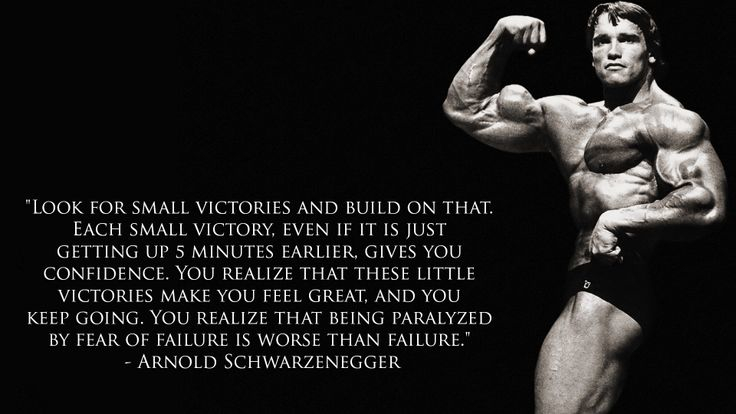
Returning to Arnold Schwarzenegger: “Look for small victories and build on that. Each small victory, even if it is just getting up five minutes earlier, gives you confidence. You realize that these little victories make you feel great and you keep going. You realize that being paralyzed by fear of failure is worse than failure.” So celebrate the small successes, for every little victory counts!
Sunzi suggests using what I call the “Rule of 10.” The “Rule of 10” is a way of dividing up larger goals into smaller more manageable tasks – simply divide it up into 10 smaller goals and celebrate each one as we accomplish them. If, for example, the goal is to save $10,000, celebrate at each $1,000 increment. Take $100 of that first $1000 and do something with it that you’ve always wanted to or that you will really enjoy and actually celebrate!
If the goal is to build up to running 10 miles, celebrate the first time you run your first mile, then two, then three. Celebrate every milestone, in whatever way will increase our energy and enthusiasm because each one is us getting closer to our goals. This is how we maintain momentum and grow stronger and more abundant. Too often, we fall into the trap of thinking, I can’t do ten, so what’s the point in doing just one? If we can flip the script and recognize that we will never do ten until we have done the first one – and that first one is the most important because it gets us started and gets us moving, then we will be on our way. Then we replicate that for the second and third miles, and so on. This will drive us as make progress toward our Big Deals. Once we start celebrating the little victories, we begin to see how infinitely important they are to our success and even our very wellbeing! By celebrating the little victories and small successes and using them as steppingstones, we focus on the process and the progress we are making rather than being obsessed with an all-too-often distant dream or faraway future that can sometimes seem unreachable, unattainable, or impossible to achieve. Don’t wait until we’ve achieved our “Big Deals” or realized our dreams to be proud of ourselves. As we celebrate the little things, we will enjoy the journey more. Be proud in every step we take toward the life we really want to create. It’s the small wins, the tiny triumphs, the everyday victories that are most important because without these unsung moments, the great achievements, the pinnacle successes won’t ever happen. So celebrate them, they will take us there!
2. Change Our Banner Beliefs, Raise Our Flag, Send a New Message! 更其旌旗
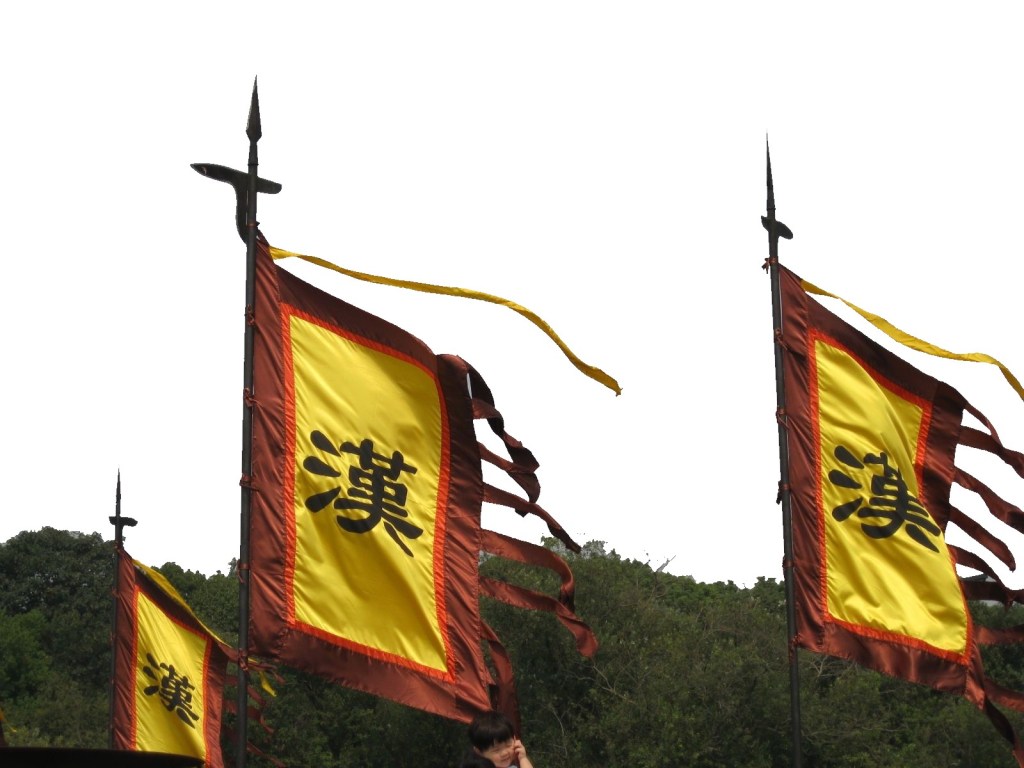
The second of Sunzi’s Three Tactics for Increasing Abundance and Strength is to “Change the Banners – Send a New Message.” The original context was to seize the enemy’s chariots, change the colors they were flying and incorporate them into the victor’s own army. This may seem completely irrelevant today, but the underlying principle is actually quite powerful. In more modern terms, a conquering enemy would seize a defeated foe’s tanks, naval vessels, jets, or helicopters. However, this is not just about appropriating machinery and tech. In ancient China, the chariot was the seat of leadership, the symbol of power and right to rule. Seizing an enemy chariot represented a change in command or, to borrow a metaphor from the business world, to be under “new management.”
The underlying imagery here is instructive. The Chinese word used here for “change” is geng4 更, which also means “more.” The original form of the character 㪅 is comprised of one or two fire-kang 丙 (bing3) over a hand working with a tool 攴. In traditional China, fire-kang’s were ingenious raised sleeping platforms that had an opening underneath them for a fire. The warmth of the fire then radiated upward throughout the bed. As with a fireplace or wood stove in the West, the fires needed to be tended, more logs needed to be added to stoke the fire, and the ashes of previous fires need to be cleaned out to make room for future fires.
This is where the connection to boosting morale, maintaining motivation, and growing in abundance and strength comes in. If our motivation and morale is like a flame, a passion burning within us, we need to regularly add fuel to it, stoke the fire, and move the logs around to keep it going. We also need to regularly clear out the ashes of former fires to make room for future fires. Thus, increasing abundance requires change. It requires mixing things up, as I discussed in Episode 7: “Eight Tactics to Transform Your Life.” It requires clearing out anything in our lives that is spent, used up, burned out, that has no life or energy left in it, or that simply does not serve us any longer.
So what does Sunzi suggest that we change? Our banner. The Chinese character for banner is jing1 旌. It is comprised of a flag 㫃, which can be further broken down into the word for direction 方 (fang1) beside a person 人 (ren2). Underneath the person is the Chinese character 生, which means to grow. Taken together, the etymology of this word reveals that banners gave people direction to grow and create. In the West, banners were traditionally flags with a slogan representing a core belief on them that were prominently displayed on buildings or during processions. In China, these banners were also attached to war chariots, so that the soldiers could see the direction their leaders were taking as the battle unfolded around them – it gave them direction and guidance.
Today, people are bombarded with banner ads all over the internet, media marketing messages promising personal change and more abundance if we rally to their cause by clicking on their link. What is our personal banner say? What message are we sending out to the world? How are we showing up? What is our status? Does our banner read: busy, bored, or in a meeting? Does it say: distracted, disengaged, or unavailable? How about: accepting offers, help wanted, or on the move? Is the message: damaged goods, loser, not worth the time or effort? Subconsciously our “banner” is tied to our core beliefs about ourselves, each other, and the world.
In Episode 2, I mentioned that often when we set out in pursuit of our “Big Deals” we may have the vision to accomplish our grand endeavors, but we may lack the beliefs to do so. In Episode 9, I discussed the importance of “Raising the Bar” on our beliefs. In the Art of War, Sunzi discusses how changing the banners following a decisive military victory sends a message that boosts morale and maintains motivation. In our own lives, we need to do the same. We need to change our message to ourselves, to each other, and to the world. However, we don’t have to wait until we’ve accomplished some grand thing or won some great victory in our lives. We need to do it first. We need to set our sights on winning – whatever that victory looks like for us individually and personally. It is time to raise the “feel good flag!” It is time to raise the bar on our beliefs! It is time to swap out the old, burnt out ashes with emblazoned new banners of empowering beliefs! How do we do that? First we need to know what we really believe.
In Episode 6, “Sunzi’s Six Traps of (Self-) Deception,” I shared Canadian entrepreneur Rock Thomas’ inspiring video: “What Follows I Am, Follows You.” This is a great place to start. I’m going to give you a prompt and I want you to fill in the blank with the first thing that pops into your mind – filtering or backtracking. Just write down whatever and however many things pop into your head. So here is your prompt: I am … [fill in the blank] … I am … [what] … How did you finish that sentence in your own mind? What was the first thing that popped into your mind? I am what? What am I? Who am I? Now think about a time when you were at your absolute worst and get in touch with those feelings and memories for a moment and ask yourself again: I am … Now think back to a time when you were at your very best and get in touch with those feelings and memories for a moment and repeat the process while thinking about that: I am … How did you finish those statements each time? What range of identities did you come up with?
Now, without blame, shame, or judgment, I want you to reflect on these? Where have seen evidence for them in your life? Do you want to continue to believe all of these things? Do they serve you? Can you give them an upgrade? If you could have a clean slate, a fresh start, a second chance, a new beginning and if anything were possible for you in this do-over (and it is!), how would you finish the prompt: I am …
When we change the banner of our beliefs, we change our experience and very existence in this world! It is time to raise the bar on what is possible for each of us and all of us! So what is the message that we want to send? How do we want to show up? What is our rally cry? Our call to arms? Our ensign to the nations? As we get in touch with that and live from that place, as we move in that direction of personal growth, we will be able to overcome our inner enemies and grow in abundance and strength!
3. 卒善而養之Be Gracious in Victory & Defeat: Don’t Skip Your Self-Care, Treat Yourself (& Others) Excellently, Nurture & Nourish – Especially in Defeat & Difficulty
The last of Sunzi’s Three Tactics for Increasing Abundance and Strength is to “Be Gracious in Victory and Defeat.” There are two key behaviors Sunzi identifies: the first is to treat the prisoners of war, the vanquished and defeated excellently 善 (shan4; ancient form: 譱) and to nurture and nourish them 養 (yang3). The ancient character for excellence is comprised of a lamb 羊 in between two words or speech 言 (yan2). Far from just some dirty, smelly animal that tasted good when it was roasted on a spit over an open fire, in ancient China the most excellent lambs, similar to the unblemished lamb in the Hebrew tradition, were given as sacrificial offerings. How did they speak about such a sacred offering? What would they say to such a sacrifice with all the reverence, gratitude, and pleading that it implied? Inherent then in the ancient character for excellence is speech.
As a transformational linguist, I know that the words we use matter. How do we speak of ourselves and what we do? In our own lives, everything we do is a sacred offering of self – or rather it has the potential to become so. We all make sacrifices and we give of ourselves. Do we regard are efforts as valuable and venerable, worthwhile work, and sacred service? Remember, what we do is not nearly as important as why we do it and what we make it mean for our lives. In other words, self-talk is a key component of excellence. It matters. I’ve mentioned before that for much of my life, my self-talk was abusive, toxic, and riddled with blame, shame, and judgment. When we are unkind, overly critical, or condemn ourselves and others when we lose, fail, or don’t measure up despite our best intentions and efforts, we rob ourselves of the opportunity to objectively learn from our defeats – and we feel like trash. Not only do we have the pain and disappointment of the defeat, we hurl on top of it the weight of blame, shame, and judgment – and that stings for more and far longer than the defeat itself.

In her book, Growth Mindset, American psychologist Carol Dweck speaks of legendary tennis player John McEnroe who, to this day, holds the record for the most dominant season in men’s tennis with an astounding 84 wins to only 3 losses in 1984, winning thirteen tournaments, including two grand slams: Wimbledon and the U.S. Open. However, his fame as a tennis player was only rivalled by his infamous outbursts and tantrums on court, including the infamous phrase: “You cannot be serious!” which later became the title to his memoir. As Dweck notes in her book, McEnroe suffered from an intense “Fixed Mindset” and toxic perfectionism – both of which ultimately led to burn out for Mac-Attack and he left the tour for a time. All of which I can relate to.
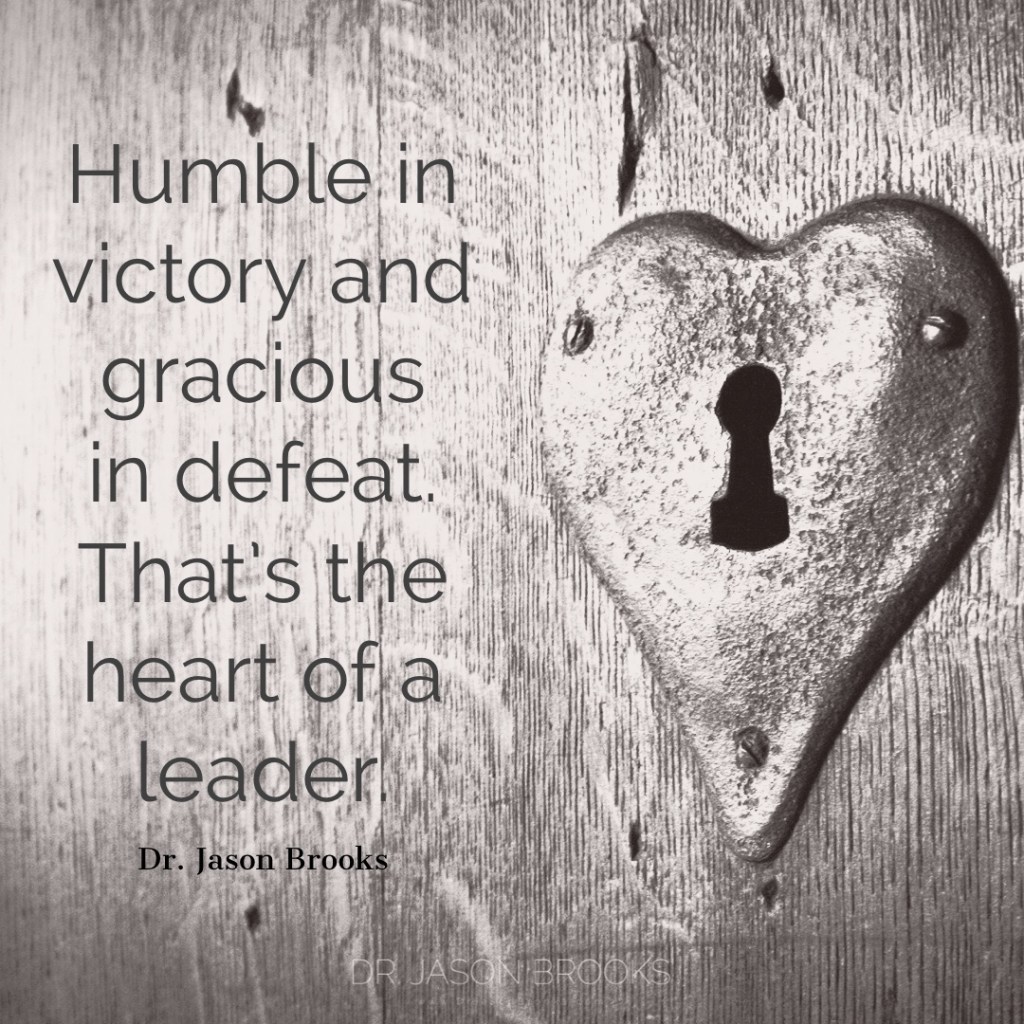
I also grew up playing tennis, though not anywhere close to the competitive level of McEnroe but I still play weekly and I love being out on the court. However, there was a long time – decades – when I quit the game because of my mindset and scathing self-talk. I put so much pressure on myself and had my self-worth so tied up in my performance that I was a virtual powder keg. My self-talk literally destroyed competitive tennis career. I remember one time, I was playing against someone who I felt that I should beat handily and as the match progressed, I just couldn’t quite find my groove. I became increasingly frustrated with myself. That frustration turned to anger as my self-condemnation grew in intensity and on match point, in true McEnroe fashion, I broke my racket. I was not gracious in defeat – to myself or to my opponent. I was a total jerk! I am not proud of how I acted that day. It was selfish, short-sighted, and immature. That was rock bottom in my tennis career. I didn’t pick up a racket again for decades after that. From the ashes of that defeat though, I was slowly able to begin shifting my mindset. I was able to reflect on what is really important to me in playing the game. I haven’t played competitively for a long time now and after learning about mindset, when I finally picked up my racket again, I knew I wanted to create a different experience from my time on the court. At almost 49 and fortunate to still be in good enough health to play a sport I love, I have learned, as Sunzi has suggested, to celebrate even the little victories on both sides of the net – the great gets, the effort and hustle, the outstanding shots, whether hit by me or my partner and it has brought an entirely new level of joy, appreciation, and deeper friendships. As Dr. Jason Brooks has said: “Humble in victory and gracious in defeat. That’s the heart of a leader.”
As we change our banner beliefs, put ourselves out there and begin taking risks, push ourselves in new ways and face our inner enemies, we are going to make mistakes, face setbacks and disappointments, lose and even fail. It’s going to happen. In fact, the harder we try, the more we risk, the bigger our mistakes and failures will be. That’s okay. It is part of the process of progress. So, knowing that failure, defeat, and loss are the steppingstones to success, victory, and greater growth, it is absolutely essential that we, as my friend Abigail G. Manning has urged in Episode 8, give ourselves “grace and space.” To do so, must not skip our self-care. We need to treat ourselves and others excellently – especially in defeat! For me, an important aspect of my self-care is my self-talk and it is often the first thing to break down when things get difficult. We need to nurture and nourish ourselves and we do that first and foremost through our self-talk. When things aren’t going well, are we our own greatest advocates or just our own worst critics? Do we seek to comfort and contextualize, to look for the good and learn from the bad? Or do we just drag up all of our past failures as evidence that we are doomed, hopeless, or unworthy? After decades of destructive and debilitating self-loathing, where I hated myself, I appreciate the reminder of researcher and storyteller Brene Brown to: “Talk to yourself like you would to someone you love.” How we speak to each other is central to treating each other excellently. So too is self-talk is central to treating ourselves excellently.
The next action is to nurture. The Chinese term that Sunzi uses here is yang3 養 (simplified 养), which means to nurture, nourish, tend to, to raise, or to rear. The word has its etymology in animal husbandry, as the traditional character is comprised a sheep 羊 (yang3, which is also the phonetic) above food 食 (shi2). However, the implications go far beyond just feeding livestock. The oldest versions of the character depict a hand holding a tool 攴, in this case perhaps a brush for working its coat. Do we take good care of ourselves when things are difficult? Do we nurture and nourish ourselves – even when we make mistakes, suffer a setback, or are dealing with disappointment and even defeat? I know that I don’t.
American historian and memoirist Tara Westover has said: “The greatest act of self-care is to believe that we are worthy of care.” An empty lamp provides no light. An empty tank will always take us exactly nowhere. So we need to take time to refuel on our journey. We can’t give to others what we don’t already have. As award-winning author and work-life balance expert Renee Peterson Trudeau asserts: “Nurturing yourself is not selfish – it’s essential to your survival and your well-being.” Self-care is the fuel that allows our light to shine brightly. Don’t neglect it. This takes us back to one of the “Eight Tactics” to transform our lives that I spoke of in Episode 7, to engage in meaningful recreation that recharges, restores, and replenishes all that we have lost along the way. What is that for you? What nourishes and nurtures your body, mind, and spirits? We need to take time to do what makes our souls genuinely happy and peaceful.
As mindfulness coach and artist Susan Weiss Berry put it: “With every act of self-care your authentic self gets stronger, and the critical, fearful mind gets weaker. Every act of self-care is a powerful declaration: I am on my side, I am on my side, each day I am more and more on my own side.” This is why nourishing and nurturing self-care is one of Sunzi’s key tactics for increasing in abundance and strength.
Conclusion
In the Art of War, Sunzi clearly defines how to increase our abundance and strength. Today, we have discussed his three tactics for growing in personal abundance and empowerment. They are:
1. Reward Ourselves the First Time We Achieve Something & Celebrate the Small Victories
2. Change Our Banner Beliefs, Raise Our Flag, Send a New Message!
3. Be Gracious in Victory & Defeat: Treat Yourself (& Others) Excellently, Nurture & Nourish – Especially in Defeat & Difficulty
How do we begin to increase our abundance and strengthen ourselves as we fight our daily battles and stare down our own inner enemies? As we start off in pursuit of our “Big Deals” and move from where we are right now to the uncharted territory of where we want to be we are signing up for a whole new life. With that comes a lot of firsts. So celebrate them! Every time we do something for the first time, every time we reach a milestone – no matter how trivial – celebrate it, in whatever way is energizing, encouraging, and inspiring for you! That will keep our excitement, morale, and motivation high as we face the uncertainty and setbacks that await us beyond our comfort zone. There is value in the process and our progress is worthwhile – so enjoy the journey – even as we keep our eyes set on the horizon! Celebrate every effort to reach for the prize!
To do, we’ll need to start upgrading our thinking and our beliefs about ourselves and our goals. It’s time to change our stories, change our narrative, change our banner! Raise the bar on our beliefs, raise our sights, and raise a new flag! Clear out the ashes of yesterday, make room for a new spark, and stoke the flames! Show ourselves and everyone else what is actually possible when we believe better about ourselves! I’ve said it before, each of us is a powerful being with a profound purpose on this planet! Each of us has great gifts to give the world! Someone out there is just waiting for us to show up in their lives with our unique blend of personality and experience, our own special sauce and zest for life! Our beliefs are like a banner that give our lives direction, pointing the way to greater growth, so raise them high, let them guide our steps and our thinking as we fight our daily battles! As we raise our flags, we simultaneously send a message others about what is possible and give them permission to change their banner beliefs, raise their “feel good flag” stoke their unique sparks of creativity and passionately pursue their “Big Deals!”
Lastly, and perhaps most importantly, as we do so we must treat ourselves and others excellently, because everything we do, everything we give, everything we make, is a sacred offering of ourselves. It matters. We matter. So speak to ourselves and about ourselves and others as we would a sacred sacrifice, a labor of love, a wonderful work in progress.

My wife enjoys doing puzzles and has introduced the hobby to our family. Human life is often like a perplexing puzzle missing the clear picture on the outside of the box. As we treat ourselves excellently, give ourselves permission to not be okay, all together, or at our best all the time, we can enjoy the experience, have patience with the process, and peace with our progress. Each of us is a masterful mosaic in the making! Unparalleled uniqueness unfolding! Making a mosaic requires taking all the broken pieces, the shattered shards of setback, the fractured fragments of failure and fitting them together to become something more wondrous and beautiful than any one of them could have been on their own. So take good care of ourselves and others – especially when it feels like our lives are falling apart! That we are just barely hanging on or holding everything together. Practice rigorous self-compassion. Give ourselves and each other grace and space. Nurture and nourish. Every act of self-care sends a message of worth – not just our own but the non-negotiable and infinite worth of all life on this planet. You are excellent! You are worthy! You are loved!
Outro
Thanks so much for listening everybody! If you found this podcast impactful, please like and subscribe, and join us for new episodes every “Warrior Wednesday.“ For more information, tools, and resources to help you in your daily battles, for questions or to work with me, shoot me an email at: artofwarforlife@gmail.com. Most importantly, always remember: “The power to win resides within! There is ALWAYS a Way!”
Support this podcast: https://podcasters.spotify.com/pod/show/david-boyd3/support

 Warrior: The Art of War for Life - A Podcast on Winning
2 Comments