
Do you ever feel like your life is not yours? That you are not in charge? That things are just spinning out of control? In Episode 22 of “Warrior: The Art of War for Life ~ A Podcast on Winning” we look at Sunzi’s Six Tactics for taking the offensive and picking our battles in life. They are:
1. Surround & Encircle
2. Take the Offensive: Strike!
3. Divide & Conquer
4. Pick Your Battles: Play to Your Strengths & Fight Where Able
5. Hold On! Maintain What You Can
6. Avoid Losses & Find Another Way
With inspiring stories and anecdotes, this episode reminds us that there is ALWAYS another option, another way, we don’t just have to accept defeat, and “victory is just on the other side of one more try!”
Episode Introduction
Hey! Hey! Hey! Welcome everyone! Thanks for joining us! I’m so glad you are here listening! I really am! I am so excited about today’s episode!
Last week, I gave a shout out to my class of 2023 graduates, who commissioned as 2nd Lieutenants in the U.S. Air and Space Forces before talking about the importance of overcoming our anger, impatience, and frustration to prevent rash action.

I wanted to give a shoutout to my brothers and sisters at the Enlisted Leadership Foundation (E.L.F.) or the Foundry in San Diego. Last week I had the privilege of presenting on Sunzi’s Five Essential Attributes for leveling up our lives and our leadership. What a great group of people doing amazing things! Thank you for your service! You are awesome! You are amazing! And you are absolutely essential in this world!
Next week, I think I’ll do a Warrior Unscripted recapping some of the new material I have developed since I introduced the topic in Episode 4, including some 2-minute exercises and reflections, so stay tuned!
This week, we are talking about six tactics for taking the offensive and picking our battles in life.
So let’s go!
Disclaimer: And as always, the thoughts and opinions expressed in this interview are fully those of the host David Boyd and do not reflect the official views of the United States Air Force Academy, the U.S. Department of the Air Force, or the U.S. Department of the Defense. Thank you. Thank you very much!
Introduction
In Chapter 3.3 of Sunzi’s Art of War we read:
Therefore, the strategy for deploying the army is this: when you outnumber the enemy tenfold, then surround them; fivefold, then attack them; twofold, then divide them; When the enemy is your equal, then engage them where you are able; when you are outnumbered, hold where you are able; when you are outmatched, then avoid them if at all possible. Otherwise, the inflexibility of a small force is the captive prey of a large force.
故用兵之法, 十則圍之, 五則攻之, 倍則分之, 敵則能戰之, 少則能守之, 不若則能避之。故小敵之堅, 大敵之擒也。
Review
This week’s episode ties back in to concepts that we’ve discussed previously. Here are a few of them:
In Episode 10, I introduced the idea of exhausting and swaying enemy forces without combat (非戰屈兵); to stop chasing our own tails!
In Episode 18, we discussed uprooting our fortresses of fear, stronghold of (in)security, and the walls we hide behind without besieging it (非攻拔城). We talked about the importance of getting at what is lying underneath our belittling beliefs and debilitating doubts.
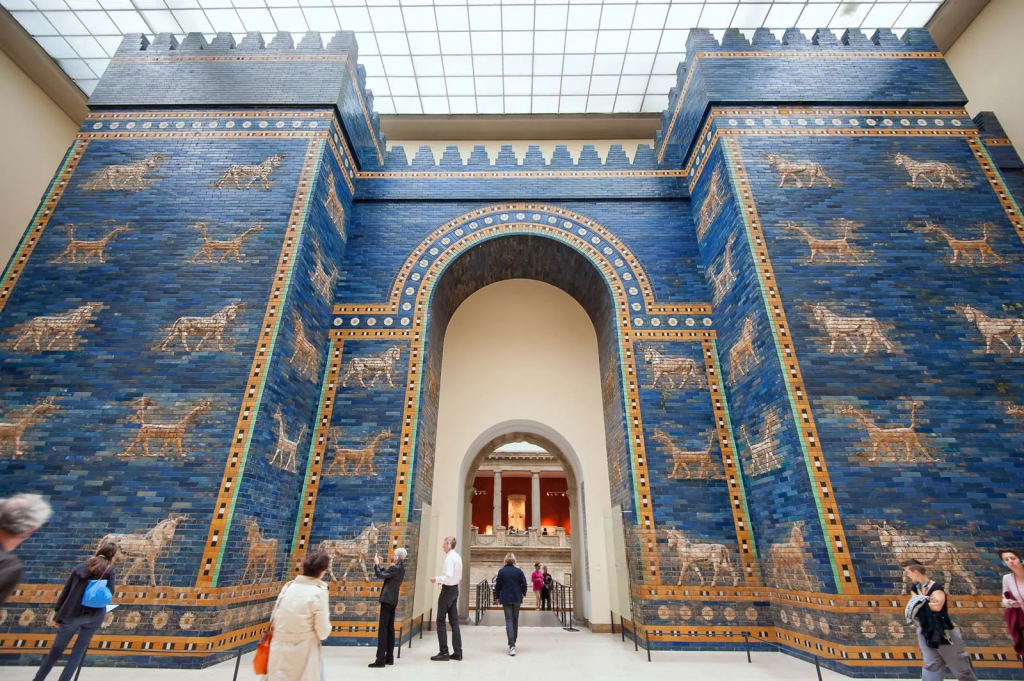
In Episode 13, I talked about the importance of destroying enemy states of mind without protracted campaigns (非久毀國). There is a great example of this from history with the fall of the Babylonian empire, which ruled much of the Middle East in ancient times — until the Persian Empire rose and overthrew them. After defeating the Babylonian army in the field of battle, the Persians arrived at the gates of Babylon, the capital of Babylonia. The Ishtar Gate (pictured above) and a series formidable fortifications loomed before them. It was said that the Ishtar Gate opened for no man (only the King of Babylon who regarded himself as a god). Rather, than engage in a lengthy siege of the city that could have taken months or even years, the Persians got smart. At King Cyrus’s command, they traced the city’s water source upstream and diverted the Euphrates River, robbing Babylon of its lifegiving waters, and allowing the Persian troops to march into the city through the dried river beds. At this time, the citizens revolted and threw open the gates allowing Cyrus to march in as a hero without a fight. This is exactly the sort of tactic that Sunzi would approve of!
In Episode 15: “Six Butt-Kicking Battlefield Beatitudes for Becoming the Master of Our Destiny!” I presented the importance of expecting and planning for opposition so that we don’t kowtow before the battle when resistance rears its ugly head (兵不頓). Let us kneel at the top of the cliffs of challenge in victory not bow down before them at the bottom before our climb has even begun!
To do, we need to preserve a vision of the value of the victory (利可全) we are fighting for, which I introduced in Episode 10: “Sunzi’s Five Full Send Commitment Tactics for When We Hit the Wall!” and preserving the benefits of the what we are trying to create in our minds, as I discussed in Episode 17: “Three Principles for Achieving the Ultimate (Personal) Victory in Life!”
Once we get clear on our “Big Deal,” our “Grand Endeavor,” as I introduced in Episode 1: “What’s Your Big Deal? What Are You Fighting For?” and as we really dig into our “Why” — because our “Why is our Way Forward,” which is the last of Sunzi’s “Five Strategic Success Factors,” discussed in Episode 3, and plan our course of action, we need to plan for the opposition we know we’re going to face.

I have a great WHOOP worksheet on this, which stands for What, wHy, Outcome, Opposition, and Plan. If you’d like a copy, please shoot me an email at: artofwarforlife@gmail.com.
All of these subjects are the context for today’s episode, in which Sunzi identifies six tactics for picking our battles. They are:
- 1. 圍 Surround
- 2. 攻 Strike: Take the Offensive
- 3. 分Divide & Conquer
- 4. 能戰 Pick Your Battles: Fight Where Able
- 5. 能守 Hold on! Maintain What You Can
- 6. 能避 Avoid Losing Battles When Possible
1. 圍 Surround
The etymology of the Chinese character 圍 (wei2; simplified: 围) is interesting and straightforward. The character means to surround and encircle, and is related to words meaning to protect. The character is comprised of an enclosure 囗 surrounding the character 韋. This character is a loan word for the warp and woof of a loom but it actually depicts two feet 舛 (top and bottom) circling an opening 口. This matches up better with the idea of guarding, patrolling, and protecting.
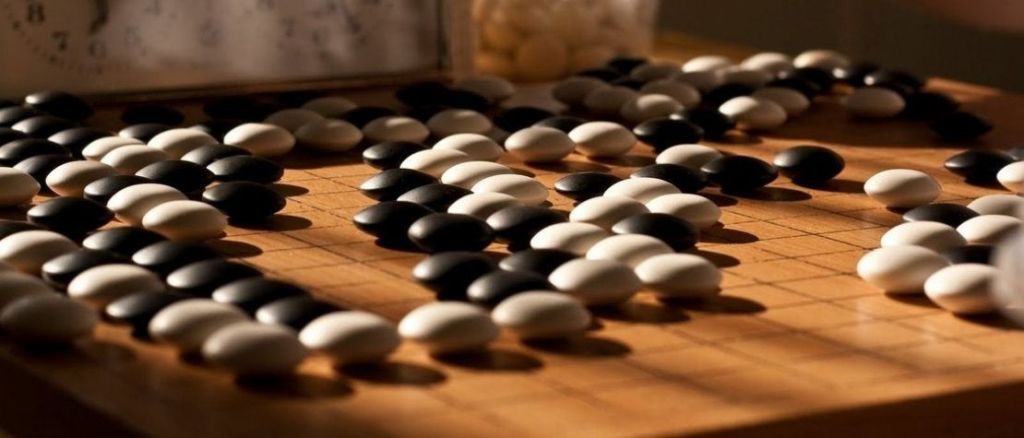
Interestingly, the character to surround is also the name of a very famous game, popularized under its Japanese name “Go.” In the game of Go, players place black or white stones on a 17×17 grid in an attempt to “surround” their opponent and claim the most territory. The game was around during and even before Sunzi’s time and Chinese strategists have been playing it for over 2500 years to master their problem solving and long-term thinking skills.
There are several lessons, we can learn from this concept. First, surround our challenges, look at our problems from multiple different angles and perspectives, to find the best opening and opportunity, and then take massive action.
The second is to surround ourselves with people who will unconditionally encourage, love, and support us — without blame, shame, and judgment — especially through the hard times. People who will show us blind spots and challenge to do and be better.
Here I want to give a shoutout to longtime friend and podcast supporter Jared Alvey who recently sent me a video that best embodies this idea. In the video, a 3 or 4 year old boy in karate class is trying to break a board with a reverse heel kick. It’s not going well. At one point, after many failed attempts, he starts to cry and states: “I can’t do it.” But his sensei encourages him and his fellow students start chanting his name. He gets a little coaching on stance and technique and after a few more failed attempts finally breaks through and the crowd goes wild! I really needed to see this as a reminder of just how important it is to surround ourselves with those sorts of people and to be that sort of encouraging support for others!
Imagine what it would have been like for that boy if he didn’t have that support and had given up and just accepted the limiting lie and belittling belief that “I can’t.” How would he have grown up if those around him had reinforced his limited view of himself or even thrown his initials failures in his face as proof that he was not good enough?
Here is the link to the karate boy breaking a board video from Linkedin that I discussed. Check it out!

2. 攻 Strike: Take the Offensive
I discussed the etymology of strike 攻 (gong1) in Episode 18: Four Steps to Attack Your Day as working and fighting with whatever tools and weapons we have at our disposal — in our hands right now!
Leverage superior numbers! Leverage our strengths and assets when the odds are in our favor.
In Episode 7: “Eight Tactics to Transform Your Life” I quoted ice hockey legend Wayne Gretzky: said: “You miss 100% of the shots you don’t take.”
Take your shot! Make your move!
3. 分 Divide & Conquer:
Etymology of divide discussed in Episode 21: Overcoming the Anger of Frustration, Impatience, & Rash Action
Prioritize & take on challenges one at a time with focused intentionality.
Charlie Daniels: “A big problem is many times just a series of smaller problems. Divide and conquer. Let’s all make the day count.”
Concentrate all our firepower on a single target.
Throw everything we have at a single objective and then move on to the next one.
Military example: Trading fire with 10 canons one at a time will mean taking 40-50 rounds of enemy fire before destroying the enemy batteries. Concentrating all firepower on a single battery will reduce that number to 20-30 rounds effectively cutting the amount of enemy fire taken by 50%.
Dave Ramsey debt snowball principle in finances. It is better to pay an extra $50 on a single debt than an extra $5 on 10 debts. Not only will we pay off our debts faster but we will gain in confidence and momentum as we pay off individual debts.

4. 能戰 Pick Your Battles: Fight Where Able & Fight to the Last
The last three tactics that Sunzi identifies are all prefaced with an additional term “capable” or “able.” I previously discussed the etymology of neng2 能 in Episode 6 as a bear. Bears are capable animals that thrive in a wide variety of habitats and environments. The idea of these last three tactics, is to play to our strengths, leverage our assets, play our game, and selectively set ourselves up for success, however we can.
Then its time to fight, battle, or grind! The Chinese term used here meaning to fight or battle is 戰 (zhan4; simplified: 战). The etymology is interesting. The character is comprised of a cicada on the left 單 (dan1; simplified: 单) and the classic Chinese dagger-axe/halberd on the right 戈. The cicada was a loan word for a sling or bolo type weapon. It may have come to represent a sling because of the zinging sound that cicadas make when they fly through the air. Regardless, the word also comes to mean single, as in a single sling pellet or single cicada (which is ironic given that cicadas tend to swarm). It conveys the idea of fighting with sling and dagger-axe to the last soldier!
For us, it is a reminder to pick our battles wisely and play to our strengths. We don’t have to show up to every argument or party that we’re invited to. If we fight every battle, we may not have the strength and energy to fight the ones that really matter! Fight on our own terms. We only have so much time and energy each day, so don’t waste time fighting losing battles or fighting over things that just don’t matter in the bigger picture. Is this worth fighting for or fighting about? Is this a hill worth dying on?
5. 能守 Hold What You Can:
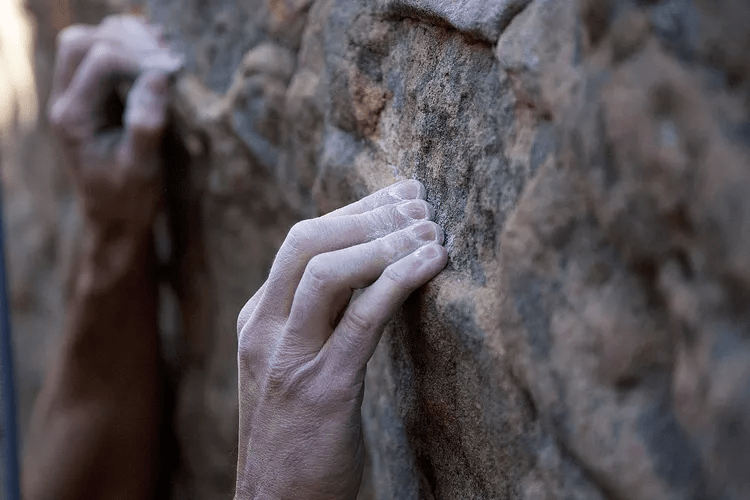
The fifth of Sunzi’s Six Tactics is to hold on, defend, conserve, and maintain when we are outnumbered and cannot take the offensive. The word is 守 (shou3), which means to hold, defend, or maintain. The etymology of the character is comprised of a roof 宀 over a hand and thumb 寸. It conveys the idea of taking stock of where we are at and taking measured action.
When we feel like our time, energy, or money is insufficient, that we getting stretched too thin, then it is time to cut back on extra things and focus on maintaining the most important priorities of our lives.
This goes back to scheduling our priorities, which I discussed in Episode 21 and structuring our lives so that we can make the best use of our time and energy, which I discussed in Episode 11.
Most importantly, hold on, hang on, and hang in. No matter how bad things seem right now, you can make it through! Things will get better!
6. 能避 Avoid No-Win Scenarios Whenever Possible:
The etymology of 避 (bi4), comes from avoiding a path 辶 that leads to defeat and finding another way. We don’t just have to accept defeat, walk in front of a firing squad, or bow down and take it.
In Episode 7: “Eight Tactics to Transform Your Life,” I introduced the concept of playing to our strengths and not into other people’s hands. Not just walking in front of a firing squad! There is ALWAYS another way, a third or fourth or fifth option. Avoid unnecessary drama and conflict. Don’t fight losing battles. We don’t have to go down with the ship! Live to fight another day. Don’t keep fighting battles that are already lost or that we don’t gain anything by winning.

 Warrior: The Art of War for Life - A Podcast on Winning
5 Comments