
Introduction
Hey, hey, hey! Welcome everyone. Thanks for joining us. I’m so glad you guys are here listening! It’s been a while. And I’ll go into that a little bit more later on as we get back into the episodes, but it’s good to be back. It’s been a long, very difficult summer and I’m just as excited to be back on the microphone. There were a lot of things going on this summer for me during the summer break, I finished renovating our house and had a very tight timeline, some days spending 12 to 15 hours and in consulting with my wife, we made the difficult decision to pause the podcast. And that freed up a little more of my time. It also created some challenges. I felt like after a month of not recording podcasts that I had lost a lot of momentum – mentally, emotionally, and so it brought out a lot of my MESS. Do I really want to come back to this again? Do I really want to invest all of the hours in preparing and editing and putting it out there? Is it really making a difference? Does it matter to anybody out there? And right as I was coming to the end of my renovation period and dealing with some of those challenges and doubts internally, I had a couple of listeners reach out to me, telling me how much they enjoyed the podcast, how impactful it was for them, how they loved the episodes, and how they were waiting for the next one and wondering when the next episode was going to drop. That really helped me take that final step. That really pushed me over the hump, to say this makes a difference. This matters. And so, to Jared: Thanks brother, I needed that! And Paul, 谢谢你!
Last week I released my Warrior Mindset interview with Special Forces Operator and Combat Controller Chris Satterwhite. There’s so much in there and it took – I’m not going to lie, it took like three months to edit, due to all sorts of video problems and bandwidth issues and so, go back and check it out because it’s finally available. There is a wealth of information, it is full of great stories and inspiration – his ‘gator story’s got to be a classic – and his example of personal perseverance in the face of overwhelming obstacles – I’m not sure that I wouldn’t have just given up if I was in his shoes after being told for years that my health conditions were all in my head. But to continue to battle for himself, for his son, for his family, for his community, for his life and to get back to a place where he is now – a contributing member to both society and the military community, training the next generation of operators and combat controllers – is inspiring! So go back and check it out if you haven’t listened to it yet.
Next week, we’re gonna talk about one of my favorite topics and one of the most well-known passages from Sunzi’s Art of War, but in a context you may not be familiar with. We’re going to be talking about knowing ourselves and knowing other people and how that makes us unbreakable. So stay tuned. This week, we’re going to talk about Sunzi’s pentagon predicters for victory. So let’s go!
If you’re a visual learner like me, check out the blog version of this podcast at http://www.artworforlife.com, which includes all the Chinese characters I discuss, along with additional images. Don’t forget to join the Art of War for Life Facebook page and follow us on Instagram @artofworforlife. For any questions, comments or to work with me, shoot me an e-mail at artofforlife@gmail.com.
Disclaimer
Oh, and as a reminder, the views expressed in this podcast are my own and do not necessarily reflect the official policy or position of the United States Air Force Academy, the Air Force, the Department of Defense, or the U.S. Government. Thank you. Thank you very much.
In Chapter 3.5 of Sunzi’s Art of War we read:
“Therefore, there are. Five things to know to achieve victory. One who understands. When one can fight and when one cannot. Will be victorious. One who recognizes how to deploy large and small numbers will be victorious, one whose superior and subordinate ranks have the same desires will be victorious. One who expects the unexpected, anticipates the unanticipated will be victorious. One whose general is capable and not interfered with by the ruler will be victorious. These five things are the way to determine victory.”
故知勝者有五: 知可以戰與不可以戰者勝, 識眾寡之用者勝, 上下同欲者勝, 以虞待不虞者勝, 將能而君不御者勝; 此五者, 知勝之道也。
In other words, these are five principles or five indicators, five predictors that we are on the path to victory. Today I want to apply these to our own lives.
Have you ever wondered if you were going to win? If you’re going to achieve the outcome that you so desperately desired and get the result that you wanted? Have you ever wondered if you are on the right path, the path of victory?
Here Sunzi provides five principles that are predictors of victory, indicators of winning, five waypoints on the path of victory. They are:
1. Understanding when and when not to fight.
2. Recognizing how to utilize our resources.
3. Unifying our desires top to bottom across the board.
4. Be prepared. Expect the unexpected and anticipate the unanticipated
5. Capable and uncompromised leadership with no meddling.
1: Understanding When and When not to Fight
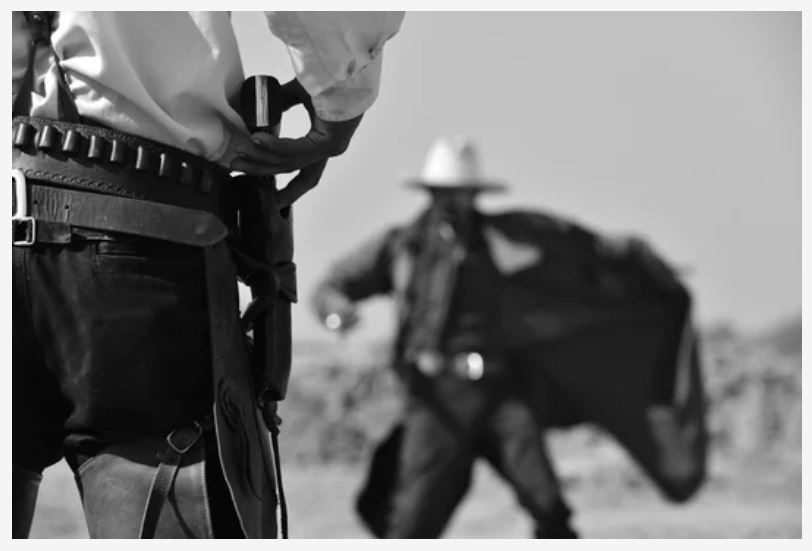
The first of Sunzi’s five waypoints on the path of victory, or the five things we need to understand or know to ensure that we are on the path to winning is understanding when we can and when we cannot fight. This links back to two of the forms of self-sabotage I talked about in Episode 24, which are pushing too far and giving up too soon. We need to know: Is this a hill worth dying on? We also need to know: Can we win? Is there value in the battle we’re fighting? This goes back to what I discussed in Episode 9: “What’s it Going to Cost Me?” We need to know that the price of victory is worth our efforts, and this also links us back to our why. Remember our why is our way forward, as I discussed in Episode 3, we need to know why we’re fighting, especially when we hit the wall. We need to be able to visualize the value of the victory we’re ultimately going to win, as I discussed in Episode 10. This is critical information for us when it’s gut check time, especially when victory doesn’t come easily. When the wins don’t just pile up, but when we have to fight and sometimes fight again and again and again!
Margaret Thatcher (1925-2013) reminded us that: “You may have to fight a battle more than once to win it.” The more times we have to fight that battle, the more important it is to know and to understand that it’s worth it. Too many of us get caught up in battles that are not worth the price we pay, and too many of us avoid fighting the battles that are absolutely essential in our lives! I know. I’ve been there, done that, got the T-shirt. So, when the chips are down, when life knocks us down and brings us to our knees, when the wind is knocked out of us and our ears are ringing when our head is spinning and we can’t see straight, when every cell in our body, our mind, and our soul screams out in pain, we need to know that what we’re fighting for is worth it in order to get back up and hit it again!
And if we know that, then we can fully commit. We have a reservoir of strength that we can draw on that no one can take away! If we don’t know that, we’re going to struggle with motivation, we’re going to struggle with consistency.
So, as you consider your “Big Deal,” that thing that you want so badly, dig into this a little bit and decide: Is this really a hill worth dying on? Is this worth it? And if it is, then draw on that strength. Visualize the victory that you’re going to win! Think about the impact you’re going to have. Think about what your life is going to be like once you’ve achieved it as if you’ve already done so. Think about all the people who are going to be blessed and benefited by you creating this thing that only you can bring about! That’s principle #1.
2. Recognizing How to Utilize the Resources Available to Us
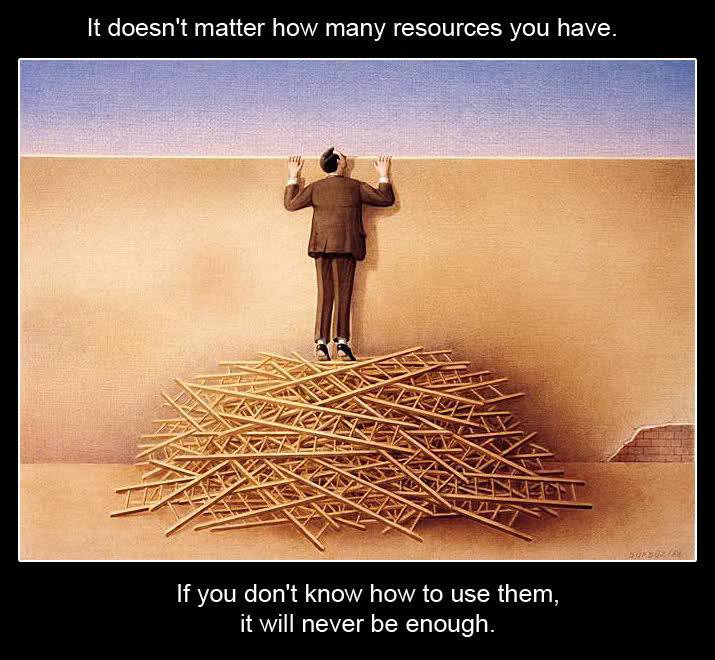
The second of Sunzi’s five principles for achieving victory, or for knowing that we’re going to win, the second of his five waypoints on the path of victory, is to recognize how to use what we have. From a military standpoint. Sunzi is specifically talking about how to utilize numbers. Large forces, small forces, but by extension, also how to utilize various different weapons and military resources: manpower, fire power, air power. He didn’t have air power. He wishes he had air power.
The verb here is shi4 識, which means to recognize or be acquainted with, and its etymology is really interesting. The character is composed of speech 言 next to a sentry 戠, and the character for sentry can be further broken down to sound 音 beside the traditional dagger axe 戈. So, a sentry is one who is armed and listening for any sound out there – any indicator of trouble or danger, as well as, on the flip side, any opportunity to take the offensive.
I find it interesting that the act of recognition or perception, then, is determined by what we say about the sounds we hear, the meaning that we create. What does it mean when we hear a twig snap in the forest. What does it mean? What do we make it mean?
So, in terms of resources, do we recognize what is actually out there and available to us? What do we tell ourselves about the resources and the opportunities that surround us and are available to us? Do we recognize them or see them as opportunities or obstacles? Do we see them for what they really are? Most of us have way more resources and opportunities around us than we realize. When we feel stuck or when we feel like we’ve hit that wall, it is so important to be able to recognize the resources that are available to us in any moment. Otherwise, we’re just going to feel stuck.
One great tool for doing this is to do a SWOT analysis. If you’ve never used a SWOT analysis, SWOT stands for strengths, weaknesses, opportunities, and threats. I’ve got a great worksheet on this if you want to copy shoot me an e-mail at artofwarforlife@gmail.com and I’ll send it your way.
It’s often said that size matters, and that numbers matter, and this links back to what we discussed. In Episode 11: “The Art of Getting Stuff Done or Sunzi’s Three Tactics for Effective Execution.” But it’s not always about sheer force of numbers. It’s about how we use what we have. It’s about leveraging our assets and compensating for our liabilities, which ties back to playing to our strengths, which I discussed in Episode 6 and Episode 7. Do we recognize when, when the numbers are in our favor or when we’re outnumbered, when the odds are against us so that we can fight smarter and not just harder for what we want. Do we take advantage of the momentum that we have when we have it? Or do we give up too soon? Remember Leonard Ravenhill, “The opportunity of a lifetime must be seized within the lifetime of the opportunity.”
So, do we know on a practical and pragmatic level how to best use what we have, whether it’s a lot or a little? It’s been said that it’s not always the size of the dog in the fight that matters most but the size of the fight in the dog. What can we make with what we have at our disposal? History is full of lessons of people who took something that was perceived as worthless and useless and found the value in it. Artists are great at doing things like this. Recycling is a great example. If we’re resourceful and we have the cognition, the perception, the recognition to see the value and the worth – and specifically Sunzi’s talking about the utility of the things around us — then we’re one step closer to winning!
Christian theologian TD Jakes has taught: “God gives you the resources for success, but it’s up to you to recognize them and use them to their fullest.” Regardless of whether we believe in God or not, the resources for success are all around us, but it is up to us to recognize them and use them to their fullest!
See, as people, we have a nasty habit of not recognizing the abundance of resources that are all around us and because of that we miss all the benefits, potential, and opportunities that those resources have to offer. Far too often we get stuck in a scarcity mindset and end up feeling an unnecessary sense of lack. This is especially true when it comes to other people – the human resources around us. All of us know people, all of us know someone who can help us get closer to what we want in our lives. Stephen R Covey taught that “the person who is truly effective has the humility and reverence to recognize their own perceptual limitations and to appreciate the rich resources available through interaction with the hearts and minds of other human beings.”
So do we recognize the resources, whether great or small, many or few that are around us right now? This really comes down to a mindset – what we tell ourselves about the resources that are available to us! If we constantly tell ourselves: “I’m stuck,” “I can’t do anything,” “I don’t have any tools,” “I don’t have any resources,” “I don’t have a network,” “I don’t have support,” then that’s the reality that we’re going to experience. What if we changed the story? What if we flipped the narrative? What if instead, we started telling ourselves that we have access to everyone and everything we need to chase our dreams to be successful.

I want to give you a couple of examples. There is a book on your shelf right now – and if you don’t own any books – there is a book at the Public Library right now that will speak into exactly what you’re struggling with, that will inspire you, and educate you, and empower you in your own specific journey. So, go to the library, ask a librarian some questions, really get in touch with ‘what am I trying to create?’ ‘What are the challenges that I’m having?’ ‘What are the biggest obstacles that are standing in the way?’ and justice look through the book titles, flip a few pages, find something that calls out to you, that speaks to you! It will happen! And if you’re not a book reader, there is a motivational video on YouTube or any other number of free apps like Mindset that can change your life! There are insights in there! You have the wisdom! We have more information at our disposal at our fingertips on our cell phones than all the societies that have ever preceded us combined! We just need to recognize it for what it is!
There is someone in your life right now that you can turn to. Maybe you don’t know them well but you know them enough to approach them with humility, with vulnerability, and reach out and say, ‘hey, I am struggling with this’ or ‘I really want to create this’ what do you recommend? There’s someone who’s further up the path where you would like to be in your life, who’s just waiting for you to reach out, who can be a mentor, who could be a companion on the path.
Most importantly, there is something you can do right now, as you are, where you are, to move towards who you want to be, how you want to show up, and what you want to accomplish in your life, out of your life, and for your life! So, start brainstorming on who those people are, what resources are available, look around.

I recently did this as kind of a thought exercise, as we’re looking at and purchasing an organic farm in Arkansas. We’ve been looking all over the country for an organic farm as an investment, and we’ve looked at farms in Missouri and Kentucky and Georgia, and now we’re looking at one in Arkansas. One of the available resources on the property is timber, a very thick, overgrown, dense forest on much of the property, which makes it difficult, a challenge and obstacle, to farm. However, that’s also an opportunity because we can have a logging company come in and selectively log and get some money from that as well as getting some building materials from that.
In addition to the timber, as I started doing this thought exercise, I started thinking, OK, well, what else is going to be available from that? What second order products are going to be available? And as we consulted with people and talked through it, someone reminded me that logging is very messy and they’re going to leave a lot of slag. They’re going to take all the big timber and they’re going to leave all the branches and trunks. And I thought, ‘Oh, geez, do I really want to do deal with that? What a mess! It’s going to take hours and hours to clean this up.’

But then, I switched my mindset. ‘OK, so we want to be self-sufficient and we love having a wood stove. We’ve talked about putting a wood stove in the house. Well, having somebody come in and selectively log would leave us with enough firewood for a decade!’ And then I thought, ‘In addition to us, we could sell some of that extra firewood. We could stack it in cords, and we could even wrap it in bundles and sell it to campers.’ Like there’s all these things we could do with this firewood and a couple of different ways to add value and make money. And then I thought, ‘You know, in addition to the firewood. There’s also going to be all this slag, all this little stuff, all these little branches and everything. Well, my wife and I want to establish this trail system on our property.’ I thought, ‘Well, for the price of a wood chipper, we would have an endless supply of material to chip and put on our trails.’ And then I thought about how here I am on. this property with like no usable trees and how we’re spending $8 a bag for cedar mulch, and I thought, ‘You know, there might be somebody out there who would like to buy some mulch as well.’
So, the brain starts thinking and once we get into that process, we flip that switch of, OK, there are resources. What are they? I just need to recognize them. Then everything changes in our lives and our brain will start moving and going and instead of scarcity, we will find abundance – regardless of whether our resources are numerous or few, we will begin to find them, we will begin to recognize how we can maximize the resources that are available to us.

Principle #3: Unifying Our Desires Top to Bottom
This is about buy-in. This is about getting everyone on the same page. Building buy-in in a military context or even in a corporate context, getting everyone on the same page and working towards the same objective can be really challenging, getting everyone throughout the ranks, getting the officers and the enlisted all on the same page, getting management and leadership on the same page as employees, working towards a common goal. This is absolutely critical! In our own lives, this is equally applicable.
The etymology of the Chinese character, that Sunzi uses here is really interesting. The character is tong2 同, which means similar, identical, or the same. It’s comprised of a sail 凡over the character one 一, meaning unity or to be united, above a mouth 口. In ancient China, people were counted by their mouths, by how many mouths there were there to feed. So, the etymology of this character points towards getting everybody working the sails as one, getting everybody working together for a shared livelihood, and specifically here in this context, aligning our desires from top to bottom.

Sometimes we want things in our hearts, but don’t believe that we can have them in our heads. That is disunity – and that always creates internal conflict, which impacts our ability to get what we want. Sometimes we have physical appetites. I want to be healthy and strong, but I also want sugar and don’t want to go get into the gym? That is part of the human condition. That is the challenge! Sometimes I just want to lay on the couch and watch TV and yet I also want to create things in my life. So, there’s this tug of war, this constant back and forth between our desires and getting ourselves aligned.
That’s what we’re talking about here! We’re talking about alignment. When we’re out of alignment, we create internal conflict. We may feel like we’re our own worst enemy, which links back to self-sabotage from Episode 24. So, the challenge is getting our minds to think, our hearts to feel and our bodies to move and act as one for the same goal. As I first mentioned in Episode 1, and have repeated many times since, when we get clear on our “Big Deal,” we may have a vision of what we want, but we may lack the beliefs to support that vision, or the consistent thinking, or emotional fire to maintain the actions we need to create it. We may be misaligned.
So, this is all about alignment. As life coach Angie Monko puts it: “Aligning to your purpose inspires you to not only get out of bed in the morning, but it feels right. It also feels light like you’re following your soul’s desire. You may not be able to explain it, but you just know that this is your path. It makes your heart sing when you are aligned to your purpose. It gives you an anchor to come back to you when you feel you may be veering off path in your life.”
I’ve said it before, and I will say it again: Each of us is a powerful being with profound purpose on this planet! We have great gifts to give the world! This requires some work. Maybe a lot of work in the beginning. If you’re like me, having spent most of my life with beliefs about myself and the world that are out of alignment or misaligned with what I really wanted, it could be a challenge at first. It could take time.

I have a son who has had chronic migraine headaches and it took us a while to figure out what was going on. Ultimately, we found a good chiropractor who was able to look at some X-rays and see that his spine was out of alignment, and once we started getting him regular chiropractic care, his headaches got better. But it took quite a few adjustments. It would get better for a little while, but then those vertebrae that had been in that position for 14 years started to slip back into where they were – and it’s the same way with us!
Once we align our beliefs, our thinking, our values, our decision making, and our actions with what we really want, don’t be surprised if you slip out of that again, especially when things get hard! And it’s OK! Just the awareness alone of what we want and how to get there can lead us to more frequent and quicker adjustment times, which will reduce the times that we feel misaligned, which will get us closer to what we want.
As Iyanla Vanzant has observed, “When we are in alignment with the desires of our heart, things have a way of working out.” It won’t always be easy. But will be in an authentic place in our lives, maybe for the first time in our lives, and, as American author David Simon is written, “authenticity is an alignment between our beliefs, our desires, and our choices in the world. Agreement between ideals, aspirations, and deeds is a key to a life of peace, happiness, and success.” As we unite and align our beliefs, our thinking, our feelings, and our behaviors, we are on the path of victory and sooner or later we’re going to win!
Principle #4: Be Prepared, Expect the Unexpected, and Anticipate the Unanticipated
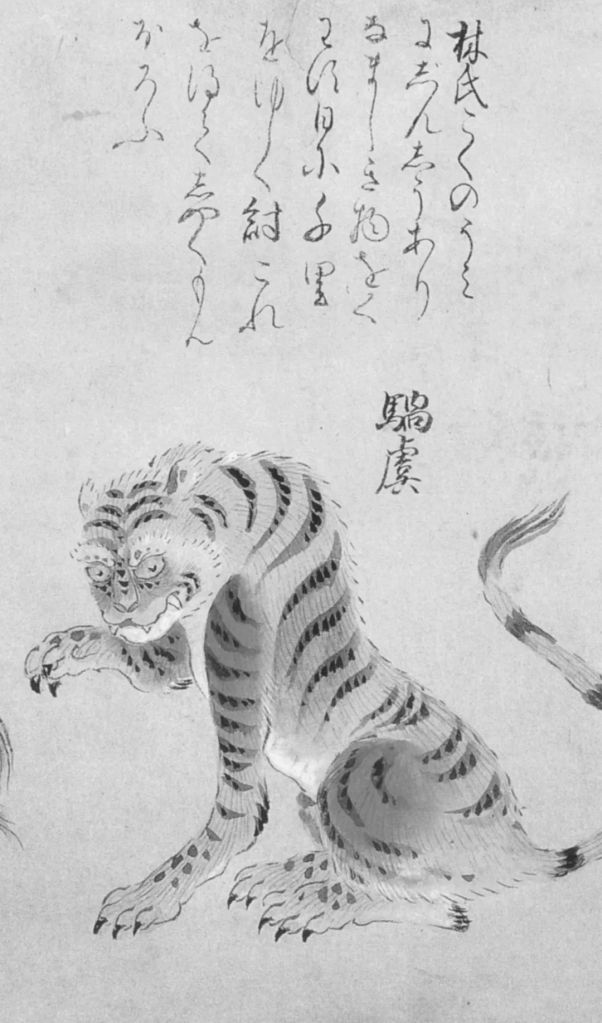
The etymology of the character that Sunzi uses here is fascinating. The character is yu2 虞. It depicts a tiger head 虍above a person carrying a jug 吳. It refers to a legendary beast with the head of a white tiger and a black striped tail growing out of a human body that ate its own dead flesh. It’s kind of morbid, and super weird. The character later came to describe unbelievable, unimaginable, unexpected, and unpredictable things that couldn’t be fathomed!

Here, Sunzi is talking about the principles of preparation, and while we can never fully prepare for, or expect the unexpected, or anticipate the unanticipated, there are principles of preparation that can help us in any situation. Just by focusing on basic needs and contingency planning for the most likely challenges and obstacles. But more than that, preparation is a mindset.
Katrina Katress has stated: “The ultimate form of preparation is not planning for a specific scenario, but a mindset that can handle uncertainty.”
Can I handle anything that comes my way? What does my self-talk like? Can I overcome any obstacle, solve any problems that life throws at me? Am I going to get through? Or do I have to have everything in life so structured and so regimented that even the slightest deviation throws me off my game? With a good game plan, almost anybody can win, but when the game plan goes out the window, do we have a Plan B, or a Plan C, or can we just wing it and figure it out on the way? We need to be able to do both. We need to be resilient and flexible, and we need to adapt.
It’s been said that “if ye are prepared, ye shall not fear,” and so preparing ourselves mentally, emotionally, spiritually and socially, with networks of support and recognizing those resources like we talked about earlier is critical! Inventor, scientist, and engineer Alexander Graham Bell (1847-1922) asserted: “Before anything else, preparation is the key to success.” Spanish writer Miguel de Cervantes Saavedra (1547-1616) stated: “To be prepared is half the victory.”
So, what do I need to prepare physically, mentally, emotionally, spiritually. What do I need to prepare for my MESS? What is my MESS? How can I manage my MESS rather than focusing on outcomes? Let’s focus on improving our process and how we show up. Don’t get too attached or fixated on the outcome, because if the outcome doesn’t come, if it doesn’t arrive in whatever timeline we may have set for ourselves, we’re going to feel frustrated. We’re going to feel disheartened and disappointed. Instead of focusing on an outcome, focus on the value that we’re adding to the world, to our teams, to our families and communities, and to our own lives by doing what we’re doing and preparing ourselves.
There are a lot of things that we can actually prepare for. If we’re starting a new business, we can literally create a checklist of everything we need to do and prepare in terms of resources. If we’re going on a trip, we pack bags – we know how to do this! We can do this stuff! and the better we prepare ahead of time, the easier that trip goes or that new business venture goes. Part of this also goes back to what I discussed in Episode 3: “Sunzi’s Five Strategic Success Factors,” one of which was “Leverage the Landscape and Enjoy the Journey.” As we leverage that landscape, the things that are available to us, that is a principle of preparation. Whatever we find out there, we’re going to use, we’re going to take advantage of. So, be prepared. Start preparing for the things that we’re most likely to encounter. Look at who has achieved the outcome that you want in your life and look at the obstacles they had to overcome on the way. Reach out to people and say, “hey, I’m thinking about doing this, do you have any experience?” Look at what people have learned – those lessons learned – by turning to those who have gone before us on the paths we can prevent a lot of heartache.
An ounce of prevention is worth a pound of cure. So, we can prepare. We don’t have to make the same mistakes that other people did! We don’t have to reinvent the wheel every time! We can learn from their process and we can stand on the shoulders of giants! So, be prepared.
I love this one because I grew up as a Boy Scout and the motto of Scouting is “Be Prepared.” One of the ways that the scouting program helps young men and young women be prepared is by exposing us to a whole lot of different topics and to gain a little bit of exposure and experience with a whole lot of different things. Each one of those is represented by a merit badge, but through those merit badges, they taught me a mindset, which was: I can figure it out. I gained confidence in my ability to look at things, even things I’d never seen before or things I’d never done before, figure out the underlying principles, and then make it work.

Principle #5: Capable and Uncompromised Leadership
The fifth of Sunzi’s five waypoints on the path of victory, the fifth of his Pentagon principles for winning, is capable and uncompromised leadership with no meddling. There are two parts to this. The first is increasing our own abilities and capabilities, and the second is eliminating external meddling or micromanaging. So, the first half, increasing our own capabilities, links back to Episode 4: “Sunzi’s Five Attributes of General Leadership.” We have the ability to level up our own lives! It also links back to Episode 22: “Six Tactics to Take Back Your Life,” where I talked about becoming the general of our own lives, the master of our own destinies, and eliminating the “Yes-Buts” in our lives!
So, as we’re building capacity and ability as we’re leveling up our lives, it’s also valuable to spend some time thinking about the ways that we compromise or settle in our lives. What is it that interferes with or gets in the way of us showing up in our lives the way we want to? What is it that interferes with our character and our integrity? By identifying those breakdown points, we can then put a plan in place to increase our abilities and capabilities in those areas, put plans in place, gather resources, and increase support. We can divert attention to those areas that could sabotage what we really want in terms of how we’re showing up in our lives.
So, as we increase our abilities and decrease our compromises with ourselves, our inner enemies, those inner demons, those debilitating doubts and festering fears that are the real enemies of our lives, we’re on the path to victory!
The second half to this is no meddling. The Chinese character Sunzi uses here is yu4 御, which means to drive a chariot, and the character depicts a hand steering a horse or holding a set of reins. As we increase our ability and capability to lead ourselves and not meddle in anyone else’s lives, not be a backseat driver. It’s important to not allow anyone else to be a backseat driver and meddle in our own lives and our own decision making, which can be hard, especially when we have some overbearing parents or family members, or people who think they know what’s best for us, and in some cases they do, but in some cases they’ve crossed the line into meddling and controlling our lives.
In 16 years at the US Air Force Academy, I have mentored so many students who had loving parents who had their children’s lives all planned out for them, well-intentioned or not, that is meddling, that is micromanaging. In our own lives, we need to look at those places where maybe we need to cut the umbilical and we need to look and see who is it who’s meddling and micromanaging my decision making and my dreams, and being that constant voice, that back seat driver?
See, there’s a difference between a good co-pilot and navigator and a back seat driver. One is part of a team and trusts us to make the decision that is best for us. The other does not. A good question to ask ourselves is how many people have their hands on the reins of our lives? Take a look. Do they all need to have their hand on the reins? How hard is it to steer with multiple people’s hands on the reins? Or to use a modern analogy, a steering wheel? How many people have their hands on the steering wheel of our lives? And no wonder we feel pulled this way and that! It’s time to get everyone else’s hands off the reins off the steering wheel of our lives, increase our capacity and our ability, and decrease the amount of meddling and micromanaging!

Conclusion
In conclusion, today we’ve talked about Sunzi’s Pentagon principles for knowing we’re on the path of victory, five indicators, predictors of victory, five waypoints on the path of winning. They are:
1. Understand and know when we can fight and when we cannot fight.
2. Recognize how to utilize resources.
3. Unify desires top to bottom.
4. Be prepared, expect the unexpected, and anticipate the unanticipated
5. Capable and uncompromised leadership with no meddling.
There’s a lot here. As we really dig into our why, and to what we’re fighting for, and reflect on if it’s really worth it, if it’s really a hill worth dying on, is this really a line I need to draw in the sand, we gain confidence and clarity because, if it is, then when our backs get pushed back to the wall, we know that we can dig in and take a stand! I once heard that sooner or later everyone gets pushed back to the wall of faith, and there they must make their stand – and it’s true! So we need to know, we need to have total faith and confidence and belief in what we’re doing and what we’re about and what we’re fighting for! With that clarity comes strength! So get clear. Get clear on what you’re fighting for and why! Are you fighting for something that you really want or are you fighting for what someone else wants?
Once we know that, once we understand when and where to fight and not to fight, and we start fighting the right battles for what we really want, then we need to start recognizing how to use what we have. We need to see and recognize that there are abundant resources available that can get us closer to what we want, that can help us in our daily battles to achieve and create what we want in our lives, out of our lives, and for our lives!
There is always something that we can do right now, where we are, as we are, with what we have at our disposal, that can get us closer to what we want to create, who we want to be, and how we want to show up in this world! Part of that is about getting clear and recognizing that we have the resources available to us and part of that is about alignment.
Start with the end in mind. What is it that is most important to us? Is this thing I’m doing right now getting me to who I want to be and what I want to create in my life? If not, get rid of it! Let’s get aligned so that everything we do and everything we think and everything we believe, everything we feel moves us towards what we want to create! Towards that “Big Deal,” towards bringing our great gifts to the world, to the people who are waiting for us to show up in their lives with that unique thing that we have, that unique perspective, that unique insight, that unique idea, that unique solution!
Then be prepared; expect the unexpected; anticipate the unanticipated – and one thing I want to throw in here is expect challenge, expect set back! There is opposition in all things, and the grander the vision and ideal, the greater our “Big Deal” is, the greater the opposition there’s going to be internally and externally! We’re going to fail, we’re going to stumble, we’re going to fall flat on our faces. We are going to faceplant, we are going to scorpion, and go head over heels. We have to expect that and it’s OK!
So, knowing that, we can fall forward, we can fail forward, and then we can get back up and we can anticipate: ‘What am I going to do when I fall? What am I going to do when I hit the wall? What do I need to know and feel and believe when I’m on my knees and everything hurts to get back up and try again?’ We don’t have to wait for that moment to figure it out. We can plan ahead. ‘Ohh, I know exactly what I’m ‘gonna do, I know exactly what I’m ‘gonna think about when I face plant and when I wonder if I’m actually going to make it. I’m going to think about this, or I’m ‘gonna think about that. I’m ‘gonna think about my kids or my family or my spouse or the abundance that I want to create. I’m ‘gonna think about my partner. I’m going to think about all those people who are going to benefit by getting my “Big Deal” out in the world and on the market and dig in.
That’s where we dig in. So be prepared. Expect the unexpected. Anticipate the unanticipated. Prepare for challenges and know above all else, that you’re ‘gonna figure it out that you’re ‘gonna get through it! Nothing can stop us! Then increase our abilities and improve our capabilities. Just because we may not have been able to do it in the past, it doesn’t mean that we can’t do it now! We are stronger than we were, and we can get strong enough if we’re not now to achieve whatever we need to achieve mentally, emotionally, spiritually, and socially! We can manage our MESS, we can improve and increase our efficiency and our capabilities and our abilities, and we can decrease all the areas in our lives where we are settling, where we’re compromising. We can start cutting all the backseat drivers, all the meddling, and all the micromanaging! We can get everyone else’s hands off our wheel, and we can take charge!
As we do those five things, we can be assured that we are on the path of victory that sooner or later, we’re going to get exactly where we want to be! So start tackling them, start working on them, and start taking the self-assurance! We can remind ourselves: ‘Yeah, I know exactly what I’m fighting for. I know exactly what this is worth and what it means, and because of that, I’m on the path of victory!’ We can remind ourselves: ‘I see all these resources around and I know how to use them and if I don’t, I’m going to find someone who does, someone who can help me.’ As we engage in that recognition, that thought process and that self-talk, we are on the path of victory! As we unify our desires top to bottom, we are on the path of victory! As we prepare ourselves mentally, emotionally, spiritually, socially, and manage that MESS, expecting to fail, expecting to fall, but giving ourselves permission to fail and fall forward, we are on the path of victory! Every time we put forth effort to improve ourselves and our abilities and our capabilities, and to decrease the times in our lives where we compromise and settle for less, we are on the path of victory! Every time we cut those voices out of our heads that say ‘don’t quit your day job! You’re not ‘gonna make it! Just give up! Why do you ‘gotta push so hard?’ We are on the path of victory and we will win!
2,500 years ago, Sunzi noted that through these five things we can know who’s going to win. So, go win! Go do these five things! You can do it!

 Warrior: The Art of War for Life - A Podcast on Winning
2 Comments