In last half of chapter 4.4 of Sunzi’s Art of War we read:
故勝兵若以鎰稱銖, 敗兵若以銖稱鎰。勝者之戰也, 若決積水于千仞之谿, 形也。
Therefore, the conquering army is like a ton compared to an ounce and the defeated army is like an ounce compared to a ton. The combat of a conquering army is like the flowing of accumulated waters rushing through a gorge a thousand fathoms deep – this is strategic configuration.
In this passage, Sunzi describes the drastic difference between victorious and defeated armies using a scaled comparison and a metaphor defining the benefits of strategic configurations. From this passage, I have extracted five strategies for creating a massive breakthrough in our lives, one that can turn defeat into victory. They are:
1. Adopt an abundance mindset.
2. Make a decision and then take decisive action!
3. Keep going, keep the energy flowing. Consistent, concentrated effort carves a way through!
4. Amass & Store Up Personal Reserves – Motivational MREs
5. Open the Floodgates! Take Massive (Strategically Formulated) Action!
1. Adopt an Abundance Mindset
The first strategy for creating a massive breakthrough is to adopt an abundance mindset. When we think about what we want to accomplish, is our mindset one of abundance, are we overflowing with confidence? Or is our self-confidence thin, fragmented, and full of holes? Why does it even matter? In Sunzi’s estimation, those who have an abundance mindset are far more likely – over 500X more likely – to be happy with their lives and to achieve their goals than are those who have a scarcity mindset. In other words, they are far more likely to win!
2. Make a Decision and Then Take Decisive Action!
The second strategy for creating a massive breakthrough in our lives, one that can turn defeat into victory, is to make a decision and then take decisive action. Jim Rohn (1930-2009) has taught that we “cannot make progress without making decisions.” We can’t let ourselves get bogged down by indecision as if not making a choice will solve our problems for us. It won’t.
3. Keep Going, Keep the Energy Flowing: Consistent, Concentrated Effort Carves a Way Through!
The third strategy for creating a massive breakthrough in our lives is to keep going, to keep the energy flowing because consistent, concentrated effort – even just a little bit – carves a way through any obstacle! As the Roman poet and Epicurean philosopher Lucretius (99 – c. 55 BC) observed: “The fall of dropping water wears away stone.” It is the accumulation of the little things that accomplishes great things!
4. Amass & Store Up Personal Reserves – Motivational MREs
The fourth strategy for creating a massive breakthrough in our lives is to build up a personal reserve or reservoir to sustain us and see us through. Everyone in the military knows about MREs, which stand for “Meals Ready to Eat.” I want to commandeer the idea of MREs today to provide a framework of mental, emotional, spiritual, and social resources we can collect, amass, and build up as a personal reserve to sustain us through hard times. So, I am recoining the term MREs to mean “Motivation Ready to Encourage.” In this formulation, MREs stands for: Memories, Relationships, Environment, and Spirituality.
5. Open the Floodgates! Take Massive (Strategically Formulated) Action
The fifth and final strategy for creating a massive breakthrough in our lives is to open the floodgates and take massive action! Once we find our opening, it’s time to pour all we have, all we are – our entire hearts and souls into it! As Tony Robbins teaches: “The path to success is to take massive, determined action… Stop being afraid of what could go wrong and start being excited about what could go right! … Massive action is the cure all.”
Previous Episodes Referenced in this Episode:
Abundance Mindset: Episode 14 “Three Tactics for Boosting Morale, Maintaining Motivation, and Growing in Abundance and Strength.”
Raising the bar on your beliefs: Episode 9 “What’s it Going to Cost Me? Three Questions to Ask Before We Act.”
Take decisive action: Episode 10 “Sunzi’s Five Full Send Commitment Tactics for When We Hit the Wall.”
Get out there and engage: Episode 5 “Four Keys to Tip the Scales of Life and Shift the Balance of Power in Our Favor.”
Picking your battles: Episode 29 “Sunzi’s Six Strategies for (Self-)Preservation and Total Victory in Life or How to Have an Impenetrable Defense and an Unstoppable Offense!”
Cowry shells: Episode 27 “Know Thyself & Understand Others: The Secret to Becoming Unbreakable.”
Lake Powell Trip: Episode 34 ” Sunzi’s Timeless Top Secret Formula for Success: Five Steps to Accomplish (Almost) Anything!”
The views expressed in this podcast are my own and do not necessarily reflect the official policy or position of the United States Air Force Academy, the Air Force, the Department of Defense, or the US Government. Thank you.
The Art of War is: First, survey for scale; second, calculate [combat] capabilities; third, estimate numbers; fourth, assess relative strength; fifth, conquer. Surveying the landscape produces the scale [required for successful engagement], the scale produces the calculation of [needed combat] capabilities, the capabilities produce the estimate of [necessary] numbers, numbers produce the assessment of relative strength, and the assessment produces the conquest of victory.
In this passage, Sunzi breaks the “Art of War” into five concrete actions to achieve victory. In applying these in our own lives, I have turned them into five steps to accomplish (almost) anything. They are:
度: Where Do You Want to Go? Survey the Landscape and Find Your Angle
量: What’s it Going to Take? Determine the Scale and Critical Capabilities
數: How Much is Needed? Calculate the Cost & Crunch the Numbers
稱: Is it Worth it? Assess & Weigh Our Options
勝: Battle On to Victory: Reach for the Stars
1. 度: Where Do You Want to Go? Survey the Landscape and Find Your Angle
Sunzi’s first step to accomplish anything is to survey the landscape, to be honest with ourselves and our starting point. Only then can we plot a course from where we are to where we want to be. In surveying the landscape and finding our angle, we can calculate how far we need to go and what challenges and opportunities the terrain we must cross may present.
Once we have determined our destination, we can turn our attention to brainstorming the various different ways we can get there, our approach to the summit, our angle of attack based on our own gifts and resources, experiences and expertise.
2. 量: What’s it Going to Take? Determine Scale and Critical Capabilities
The second action is to determine the scale and calculate needed capabilities. By acknowledging where we are in relation to where we want to go allows us to accurately calculate what it is going to take in terms of resources to get us there.
For example, the scale of losing 50 pounds is significantly more than losing 5. The former will require more time, energy, resources, and lifestyle adjustments than the latter. The scale of earning an additional $100K is different than earning an additional $1,000. That is why determining the scale is critical. Going “Big” or going home are NOT the only two options available to us.
3. 數: How Much is Needed? Calculate the Cost & Crunch the Numbers
The third step to accomplish (almost) anything is to calculate the cost and crunch the numbers – to figure out how much the effort is going to cost us in terms of required resources including time, energy, and/or money. For any endeavor to be successful we have to do our due diligence and run the numbers.
4. 稱: Is it Worth it? Assess and Weigh Our Options
Sunzi’s fourth step to accomplishing almost anything is to assess and weigh our options – or in other words, to determine if it is worth it?
Once we have come up with a clear vision of where we want to go and determined what resources and capabilities we need to get there, once we have crunched the numbers and calculated the cost, then we can make an honest and effective assessment of whether or not we are prepared to make the attempt, have the time, energy, and resources to commit to the endeavor, whether the timing is right, and what our odds are at achieving success.
5. 勝: Battle On to Victory: Reach Up & Reach Out
Sunzi’s fifth and final step to accomplishing (almost) anything is to battle on to victory.
Victory may not come the first time. We may not (and probably won’t) win on our initial attempt. It may take some time, energy, and effort. However, victory comes to those who keep reaching for it. Victory is not reserved for the extraordinary few but for those who dare to persist, who refuse to surrender in the face of adversity, and who keep the flame of hope burning, even in the darkest nights.
As we embark on our journeys through life, armed with wisdom – the arrow of applied knowledge, we need to regular survey the shifting landscape around us, get our bearings, find our angle, figure out what is required to get where we want to go, calculate the costs, crunch the numbers, and make the investments in ourselves. Then we regularly assess our progress and keep battling until we win!
Previous Episodes Referenced in this Episode:
Starting Where We Are: Episode 2 “Look in the MIRROR! You are in Charge!”
Leveraging the Landscape and Our “Why” is Our Way Forward: Episode 3 “Sunzi’s Five Strategic Success Factors”
Calculating Costs: Episode 9 “What’s it Going to Cost Me? Sunzi’s Three-fold Questions to Ask Before We Act! Calculating the Cost and Committing to Accomplish.”
Due Diligence: Episode 11 “The Art of Getting Stuff Done: Sunzi’s Three Tactics for Effective Execution!”
Lake Powell and the etymology of sheng 勝: Episode 10 “Sunzi’s Five Full Send Commitment Tactics for When We Hit the Wall”
The views expressed in this podcast are my own and do not necessarily reflect the official policy or position of the United States Air Force Academy, the Air Force, the Department of Defense, or the US Government. Thank you.
Those who excel at employing the military, cultivate the Way and maintain the standards of good order and discipline. Therefore, they are capable of governing victory and defeat.
This passage outlines two key attributes of those who excel at employing the military to become the governors of victory and defeat. These are the ability to cultivate the Way and maintain the laws of good order and discipline.
1. Cultivating the Way
The first of Sunzi’s two exemplary abilities for governing our own victory and defeat is the ability to cultivate the Way. What exactly does that mean?
In classical Chinese philosophy, the Dao or the Way is the substrate of the universe. It is a myriad network of trails and tracks, connections and crossings, potentials and possibilities. It is a set of steps and solutions, an ever-present array of openings, options, and opportunities, from wherever we find ourselves to wherever we want to go, from wherever we are right now, to wherever we want to be in any area of our lives.
The Dao is not just some road out there to be talked about. It is a path to be trodden, to be walked, that will take us wherever we want to go if only we have the vision to see it, the courage to act on it, and the determination to stay on it until we arrive at our destination. The Dao, then, is the Way of Leadership, it is the vision a leader has at the crossroads of choice to act and move in a direction.
Cultivating the Way is not about building a physical road but rather cultivating and as needed repairing our interface, how we interpret and engage with the Way at the crossroads of choice in three key areas:
A. Cultivating Clarity of Vision on the Way
B. Cultivating Constructive Choices at the Crossroads
C. Developing An Intentional Direction for Our LIves
A. Cultivating Clarity Vision on the Way
Vision is a picture of the future that produces passion and purpose. As the late great musician Neil Peart (1952-2020) suggested: “A spirit with a vision is a dream with a mission.” As Anglo-Irish satirist and poet Jonathan Swift (1667-1745), best known for the book Gulliver’s Travels said: “Vision is the art of seeing what is invisible to others.”
More important than what is invisible to others, is addressing what is invisible to us. What are our blind spots? What opportunities and options are we not seeing? We need to cultivate a broader, more expansive and expanding vision of ourselves, each other, and the world – that is what we need to cultivate our vision of the Way.
B. Cultivating Consistent Constructive Choices at the Crossroads
Only when we have an expanded vision, can we consistently cultivate more constructive choices at the crossroads of our lives. At every moment of every day we stand at the crossroads of choice. Once we have a vision of our “Big Deal”, what is really important to us, what we want in our lives, out of our lives, and for our lives, then it makes decision making a whole lot easier. Does this decision help me build towards what I want? Is it constructive in that way?
Or is it “destructive”, meaning it is tearing down what I want, moving me farther away from where I want to go, or compromising the values that are important to me, who I want to be, and how I want to show up in this world?
This simple rubric provides us with the opportunity to get really clear in our decision making, really honest with our motives, and identify some limiting beliefs that have held us down, held us back, and caused us to settle for less than in our lives.
C. Developing An Intentional Direction for Our Lives
This leads us to the last part of cultivating the Way, developing an intentional direction for our lives. The clearer our vision of and openness to the opportunities, potentials, and possibilities that are out there waiting for us, the more empowered we become in making constructive choices at the ever-unfolding crossroads of our lives, the more we can begin to develop a consistent and intentional direction for our lives.
It has been said: “Decision determines direction, direction determines destination, and destination determines destiny.”
We need to develop and repair our vision of ourselves, each other, and the world, so that we can consistently make constructive choices at the crossroads, and thereby become really intentional with the direction those decisions are taking us, which will ultimately determine our destinations and our destiny in life – and this is only half of the equation Sunzi offers us!
2. Maintaining Our Own Standards of Good Order and Self-Discipline
The second of Sunzi’s two exemplary abilities for governing our own victory and defeat is the ability to maintain our own standards of good order and self-discipline.
In order to win in war, we must have good order and discipline in the ranks. That is why Sunzi lists it as one of his “Five Strategic Success Factors.” Whichever military has better systems for managing, training, and promoting rule of law has a decided advantage against an undisciplined band of renegades, brigands, and mercenaries.
In our own lives, it is no different. As creative entrepreneur and fashion designer Sally Miller put it: “Successful people create systems so that essential tasks always get done.” We need personal standards, codes of conduct, and rules we live by. We need daily routines and rituals, habits that allow us to maintain and sustain, replicate and reproduce our desired results as we work toward our “Big Deals.”
So, how do we get started? Two principles:
1. Write it down. Because as Brian Tracy states: “Any system or blueprint for success is better than none at all. Think on paper.” Put it down on paper and deal with it there.
2. Break it down. Break it into manageable chunks. I fall back on the KISS method: Keep it Simple Silly. Because if it’s too complicated, we won’t be able to sustain it or maintain it. This brings us full-circle back to Sunzi’s second exemplary ability – maintaining our own standards and systems for our lives. Success is found in the simplicity of our systems.
So, let’s ask ourselves: What works for me? What has helped me accomplish the great things I have achieved so far in my own life? If you don’t know or feel like you haven’t accomplished anything yet, figure out who else has accomplished what you want to achieve or who has done something similar and learn from them!
As we embrace these principles, we don’t merely walk the path of victory; we become a pathfinder, a trailblazer on the path itself. We don’t just achieve our dreams; we embody and emulate a model for others to follow in their own pursuit. In the spirit of Sunzi, we become the masters of our fate and the captains of our souls.
Previous Episodes referenced in this Episode:
Victory and Defeat, Rivers and Waterways, The Dao or Way, and Etymology of fa 法: Episode 3 “Sunzi’s Five Strategic Success Factors”
Envisioning A Victory that Surpasses the Norm: Episode 31 “Defining Our Own Greatest Victories”
Atrophy of Indecision and the Entropy of Failing: Episode 10 “Sunzi’s Five Full Send Commitment Tactics for When We Hit the Wall”
Les Brown “Life is a fight for territory and once you stop fighting for what you want, what you don’t want will automatically take over”: Episode 1 “What’s Your Big Deal? What Are You Fighting For?”
Upholding the laws of good order and discipline: Episode 12 “Warrior Mindset with Brigadier General Paul Pirog”
The views expressed in this podcast are my own and do not necessarily reflect the official policy or position of the United States Air Force Academy, the Air Force, the Department of Defense, or the US Government. Thank you.
Of old those who exceled in combat conquered the easily conquerable; therefore, in their victories, those who exceled in combat did not have reputations for wisdom or courageous feats of accomplishment. Their victories in battle were because they didn’t make mistakes due to doubt. Being free from mistakes, they amassed guaranteed victories – victories over the already defeated. Therefore, those who excel at warfare, having established themselves in an undefeatable position, don’t lose out on defeating their enemies. For this reason, victorious troops first conquer and then seek battle; defeated troops first battle and then seek victory.
The three final principles for achieving our own greatest victories in life, which focus on execution – how we actually get there, are:
5. It Doesn’t Take Wisdom or Fame, Bravery or Accomplishment to Get Started – Just Stop Doubting Yourself!
6. Put Yourself in Undefeatable Positions and Don’t Miss Out on Your Opportunities to Win!
7. First Become Victorious and then Go to War!
In addressing this topic, we’re going to work backwards because each of these three final principles are linked in a causal chain.
7. First Become Victorious and then Go to War!
The last of Sunzi’s seven principles for achieving the greatest victories in life is to become victorious first and then go to war.
This is what distinguishes the victors from the vanquished, the winners from the losers. Winners become victorious before they enter the field of combat or competition. The easily defeated find themselves in situations with no plan of attack, no exit strategy, and therefore no plan for winning and in the midst of it all they try to figure out if and how they can pull out a victory.
Victory begins within – it’s not just a destination, but a way of being.
6. Put Yourself in Undefeatable Positions and Don’t Miss Out on Your Opportunities to Win!
The sixth of Sunzi’s seven principles for achieving the greatest victories in life is to put ourselves in undefeatable positions.
The reason that winners win, victors are victorious, and conquerors conquer first – before they step out onto the battlefield of business, the arena of achievement, or into the trenches of trial and tribulation is that they put themselves in undefeatable positions and thus were able to capitalize on their openings, take their shots, and not miss out on opportunities to defeat their internal enemies.
This is all about positioning ourselves, setting ourselves up for success instead of defeat and not missing out on the openings and opportunities that life presents to those who watch, work, and wait for the opportune moment.
5. It Doesn’t Take Wisdom or Fame, Bravery or Accomplishment to Get Started – Just Stop Doubting Yourself!
The fifth of Sunzi’s seven principles for achieving the greatest victories in our lives is that we don’t need to have any prerequisites to get started.
The obstacle is not that we aren’t smart enough, wise enough, or knowledgeable enough. It’s not that we don’t have a name, fame, or reputation; it’s not that we haven’t demonstrated enough bravery or accomplished enough worthwhile achievements in our lives yet – those are not the things that prevent us from winning in our lives.
No, what prevents us from winning in our lives is doubt – debilitating doubt.
The mightiest victories are often born from the ashes of the most crippling doubts. Acknowledge our doubts, learn from them, but never let them dictate the direction of our journey.
Previous Episodes Referenced in this Episode:
Warrior Mindset: Episode 30 “Defeating Defensiveness: Sunzi’s Seven Insights on Scarcity, Abundance, and the Warrior Mindset”
The hardest battles are in our minds: Episode 0 “Introduction to Warrior: The Art of War for Life”
Take advantage of opportunity: Episode 13 “Three Secret Strategies for Overcoming Our (Inner) Enemies”
The price of defeat: Episode 27 “Know Thyself & Understand Others: The Secret to Becoming Unbreakable”
The third principle: Episode 28 “Sunzi’s Top Priority: Four Principles to Become Unconquerable”
Wisdom and bravery: Episode 4 “Level Up Your Leadership: Sunzi’s Five Attributes of Great Leaders and How to Develop Them”
Debilitating doubt: Episode 6 “Sunzi’s Six Traps of Self-Deception and How to Avoid Them”
Doubts are the double-agents of our insufficiencies: Episode 18 “Four Steps to Attack Your Day!”
The views expressed in this podcast are my own and do not necessarily reflect the official policy or position of the United States Air Force Academy, the Air Force, the Department of Defense, or the US Government. Thank you.
Envisioning a victory that does not surpass what the masses already know is going to happen (i.e. everyone already knows you are going to win) is not the greatest of all victories. Fighting for a victory, even when the whole world says it is just, is not the greatest of all victories. Therefore, lifting up a velvety autumn hare is no feat of strength; being able to see the sun and moon doesn’t mean you have perceptive eyes; being able to hear the peal of thunder doesn’t mean you have keen ears. Of old those who exceled in combat conquered the easily conquerable; therefore, the victories of those who exceled in combat did not have wise reputations or courageous feats of accomplishment. Thus, their victories in battle were because they didn’t make mistakes due to doubt. Being free from mistakes, they amassed guaranteed victories – victories over the already defeated. Therefore, those who excel at warfare, having established themselves in an undefeatable position, don’t lose out on defeating their enemies. For this reason, victorious troops first conquer and then seek battle; defeated troops first seek battle and then seek victory.
From this passage I have extracted seven principles achieving our own greatest victories in life. They are:
1. Envision A Personal Victory that Surpasses the Norm!
2. Fight for What You Want, Not What Everyone Else Says is Best for You!
3. Don’t Settle for Being the Big Fish in a Little Pond
4. The Greatest Personal Victory can be the Accumulation of Little Victories
5. It Doesn’t Take Extreme Wisdom or Bravery to Get Started – Just Stop Doubting Yourself!
6. Put Yourself in an Undefeatable Position and Don’t Miss Out on Your Opportunities to Win!
7. First Become Victorious and then Go to War!
This week we are going to talk about the first four, which speak to defining our own greatest victories and what those look like in our lives. Then, next week we’re going to discuss the last three, which focus on execution – how we actually get there.
1. Envision A Personal Victory that Surpasses the Norm!
Envision more for yourself and your own personal victory than what everyone else sees for you. Don’t just settle for what everyone else says can be achieved. Go beyond! Each one of us has a personal path, an intuitive calling and direction that we feel deep down inside of our bones, and it is one that surpasses what the world, society, or the masses can know for us.
2. Fight for What You Want, Not What Everyone Else Says is Best for You!
At the end of the day, you must find your own way. No one knows your hopes, dreams, and aspirations better than you. No one has experienced the pain of your fears, doubts, and lies more intimately than you have! To thine own self be true, walk your path and see it through.
3. Don’t Settle for Being the Big Fish in a Little Pond!
In numerous passages in the Art of War, Sunzi talks about taking the easy wins, plucking the low-hanging fruit, and gaining confidence and momentum. At the same time, the message that Sunzi is trying to convey is not to become overconfident because of those easy victories. We were not meant to live in a small, shallow pool, hoping and waiting for the river of life to bring us our survival and sustenance, but to swim in the deep ocean. So why settle? Why be content being a big fish in a little pond, when the ocean awaits your arrival?
4. The Greatest Personal Victory can be the Accumulation of Little Victories
Our greatest victories in life don’t have to be (and most cases probably won’t and maybe even should not be) a single major accomplishment – that one gigantic win! Rather, balancing not settling and dreaming big – by having a grand overarching and ambitious strategy with a tactical approach that emphasizes the little things. A massive victory in war is comprised of winning lots of little battles and skirmishes along the way.
Previous Episodes Referenced in this Episode:
Defining your own greatest victory: Episode 1 “What’s Your Big Deal? What Are You Fighting For?”
Saying “Yes” to your soul yearnings: Episode 17 “Three Principles for Achieving the Ultimate (Personal) Victory in Life!”
Visualizing the value of the victory: Episode 10 “Sunzi’s Five Full Send Commitment Tactics for When We Hit the Wall.”
Raising the bar on your beliefs: Episode 9 “What it Going to Cost Me?”
The views expressed in this podcast are my own and do not necessarily reflect the official policy or position of the United States Air Force Academy, the Air Force, the Department of Defense, or the US Government. Thank you.
Hey, hey, hey! Welcome everyone! Thanks for joining us! I’m so glad you are here listening, I really am! This is EPISODE 30 and it has been a ride!!! Thank you so much for all of your support and encouragement! It has not always been easy, it has been quite a journey so far, full of technical difficulties, technology challenges, streamlining the process, and internal struggle. I have wrestled with finding my voice, with self-doubt, with the insecurity and insufficiency of imposter syndrome, with crafting an authentic message, with extracting the leadership lessons, motivational mindsets, empowering principles, success strategies, and transformational tactics and making them accessible and effective for you. I haven’t always been completely satisfied with each segment of each episode. There have been some gems, some diamonds in the rough, and some stones. It has not always been easy, but I am glad that I pulled the trigger and did this. There have been some massive highs and some difficult lows but knowing that you all are out there listening and learning, working, and waiting for more, inspires me to keep at it, to keep going, to keep working to improve! So thank you!
Since we launched back in January, we have had over 10,000 listens in over fifty countries! That is absolutely amazing to me! I don’t have a marketing or advertising budget and I haven’t had the time to even post or promote most of the episodes on social media. Sometimes I wonder how you all even found the podcast! It is amazing! I would love to get to know all of you! To hear what your “Big Deals” are that you are working for, what you are looking for, what you want in your lives, for your lives, and out of your lives. I would love to know what has impacted you, what you want more of, and what you are still looking for. How can I help, serve, and empower you more? Please feel free to reach out.
Review
Last week, we explored Sunzi’s Six Strategies for (Self-)Preservation and Total Victory in Life derived from Chapter 4.2 of Sunzi’s Art of War. They are:
1. Pick Your Battles (可勝): This strategy emphasizes the importance of choosing your battles wisely. It’s about not engaging in losing battles or missing opportunities because you failed to act when the opportunity arose. To pick your battles effectively, you need clarity of purpose and self-awareness.
2. Keep Holding On – Don’t Give Up (守): When you can’t achieve victory yet, the key is to hold on. This strategy encourages resilience and the tenacity to cling to hope. It’s about watching, working, and waiting for the right moment to strike.
3. Make Your Move, Take Your Shot (攻): Attack when you believe you can win. Striking from a place of abundance and confidence, this strategy encourages decisive action and seizing opportunities.
4. Dig Down Deep – The Secret to Holding On (善守): To excel at holding on, you must dig deep within yourself. This involves fortifying our inner defenses and maintaining strong boundaries. It’s about preserving our inner treasures and values.
5. Strike Fast, Strike Hard – The Secret to Making Your Move (動): When we decide to take action, do it swiftly and with full commitment. Strike suddenly, like lightning, and maintain momentum to achieve our goals.
6. Don’t Hold Back: Leaving Nothing Behind: This strategy emphasizes giving our all and leaving everything out on the battlefield. This allows us to avoid atrophy of indecision, half-hearted efforts, half measures, and the entropy of failing to fully commit in all our endeavors.
These six strategies offer a path to self-preservation and total victory in life, emphasizing the importance of self-awareness, resilience, decisive action, strong boundaries, and unwavering commitment.
Episode Introduction
This week, we are going to do a deep dive into how defensiveness, scarcity, insufficiency, and lack are all interconnected and discuss how openness, self-confidence, abundance, and the warrior’s growth mindset can counterbalance that and empower us to take the offensive and get out there to fight and work for what we want in our lives, out of our lives, and for our lives. So let’s go!
The topic of defensiveness is one that is near and dear to me, as I have personally struggled with it throughout my life and I have seen the devastating effects defensiveness has had on my self-esteem and on my relationships. It is one of the largest obstacles I have had to overcome in my personal development journey, one of the biggest challenges I have had to face, and one of the things that I have wanted to change the most!
Over the last couple of years, I have gotten really serious about understanding where my own defensiveness comes from. I literally listened to every single podcast I could find on defensiveness on Spotify and watched every single video I could find about it on Youtube.
Interestingly, several years ago I mapped out the entire Art of War, and created a concept map of everything he was teaching and categorized them – every passage, every chapter, every leadership lesson, motivational mindset, empowering principle, success strategy, and transformational tactic. I mapped out 90 different concepts and frameworks with all their allusions, imagery, and etymologies – and when I did that this insight into defensiveness, didn’t even register.
So, when I came across this passage in Sunzi’s Art of War for Episode 29, everything just seemed to click together for me and I knew I wanted to add an episode specifically looking at defensiveness. Let’s review the passage.
In Chapter 4.2 of Sunzi’s Art of War, we read:
If you can’t achieve victory, then defend what you have. If you can achieve victory, then attack! When defending there is not enough and when on the attack there is a surplus. Those who excel in defense dig in beneath nine layers of earth (also meaning to conceal one’s location, capabilities, & resources); Those who excel in attacking, strike from beyond the ninth level of heaven (i.e. unseen from the highest heights of heaven where lightning comes from – to descend like a lightning strike). Therefore, they are able to protect themselves and achieve total victory.
It is fascinating to me that by observing military dispositions, Sunzi accidentally also stumbled upon some profound insights into the causes and impacts of personal defensiveness. Here are some key observations:
1. A defensive mindset comes from a belief that we cannot win.
2. A warrior mindset stems from a belief that we can win in our lives!
3. Defensiveness comes from a place of lack or scarcity.
4. A warrior mindset comes from a place of abundance.
7. Defensiveness is an attempt to protect ourselves but it actually prevents us from fully winning.
1. A defensive mindset comes from a belief that we cannot win.
The first of Sunzi’s seven secret insights for defeating defensiveness is that a defensive mindset comes from a belief that we cannot win, that we are doomed, destined to lose, cannot change, or cannot achieve more in our lives, and therefore must cling to and defend what little we have left. That is the definition of scarcity, lack, and insufficiency.
Another way of translating this passage is: “Those who cannot win, defend” or “Where you cannot win, defend” 不可勝者, 守也. So it all comes down to our beliefs. Do we believe that we can win or do we believe that we are destined to lose, doomed from the get-go, don’t have a fighting chance, or even worse that we are losers?
In Episode 10: “Sunzi’s Five Full Send Commitment Tactics for When We Hit the Wall!” I discussed the etymology of victory (sheng4 勝) as working with all your might and strength to achieve victory over one’s enemies without impacting the livelihood of the people. I want to elaborate a little more on this. As I mentioned the character is comprised of a moon 月 on the left and a plough 力beneath two hands reaching up 廾 for a flame 火. Remember China was on the lunar calendar so victory is related to time and energy. What is that fire that we are reaching for and are we working and fighting for it with all our might for long enough to ensure that we will achieve victory?
This links us back to the idea of giving up too soon, one of the forms of self-sabotage I discussed in Episode 24: “The Seven Deadly Sins of Self-Sabotage and How to Avoid Them” where I shared the quote from Thomas Edison who said: said: “Many of life’s failures are people who didn’t realize how close they were to success when they gave up.”
Why do we give up so easily? Because of our beliefs – specifically the belief that we cannot win, which then fills our minds with doubt, which creates feelings of futility. This takes us back to the “Futility Farce” that I discussed in Episode 6: Sunzi’s Six Traps of Self-Deception and How to Avoid Them. These feelings of futility lead us to give up because who wants to fight a losing battle? Who wants to spend their time and energy on a losing cause? Nobody!
So, if there is an area of life where we find ourselves getting defensive often, it means that we most likely have some beliefs that we cannot win in that area, that it is hopeless and futile, so why even try? The good news is that we can begin replacing those beliefs right now – no matter how old they or how long they’ve been entrenched, no matter how much the sunk cost, it only takes a moment to call them out and begin changing them, as I discussed in Episode 18: “Four Steps to Attack Your Day!”
2. A warrior mindset stems from a belief that we can win in our lives!
The second of Sunzi’s seven secret insights for defeating defensiveness is that a warrior mindset – one that encourages us to get out there, make our move, take our shot, take a chance, and take some risks, which I discussed in Episode 29: “Sunzi’s Six Strategies for (Self-)Preservation and Total Victory in Life” stems from a belief that we can achieve victory – we can win in our lives! We have all the tools and skills, resources and allies we need, or we will find them along the way! That is the fundamental belief that encourages, motivates, and supports us on our hero’s journey through life.
In the words of Canadian-American motivational speaker Brian Tracy, it is the belief that: “You have within you right now, everything you need to deal with whatever the world can throw at you.” Without this belief, we may never get started and if we do, we won’t last long!
See, as Theodore Roosevelt (1858-1919), the twenty-sixth president of the United States observed: “Believe you can and you’re halfway there.”
So, as teacher, New Thought leader, and prolific author Christian D. Larson (1874–1954) urged: “Believe in yourself and all that you are. Know that there is something inside you that is greater than any obstacle.”
Once we have that belief, then we will start winning in our lives because, as Franklin D. Roosevelt (1882-1945), the 32nd president of the United States observed: “The only limit to our realization of tomorrow will be our doubts of today.” So, it all comes down to attacking the debilitating doubts, festering fears, and limiting lies that are the real enemies that I discussed in Episode 13: “Three Secret Strategies for Overcoming Our (Inner) Enemies.”
3. Defensiveness comes from a place of lack or scarcity.
The third of Sunzi’s seven secret insights for defeating defensiveness is that defensiveness comes from a place of lack, insufficiency, or a scarcity mindset – that there is not enough – there is not enough time, not enough money, or even worse – that we are not enough – not good enough, worthy enough, strong enough, fast enough, smart enough, pretty enough, or whatever!
The term Sunzi uses here is zu3足, which means sufficient or enough. It is literally a depiction of a single leg and a foot and conveys the sense of the English phrase “to have a leg to stand on.” If we feel like we don’t have a leg to stand on or that we are insufficient, deficient, or lacking in any way, we are more likely to become defensive and feel threatened.
As Tony Robbins teaches: “Scarcity is the root of all fear, and fear is the root of all defensiveness.” So, defensiveness is a product of the feelings of fear that come from the belief that there is not enough or that we are not enough.
Just as scarcity of resources creates a mentality of lack and a fear of not having enough or being enough, which can lead to defensiveness and hoarding, so too does our scarcity of self-worth, ability, and potential lead us to withhold our gifts from the world – and in the words of Gary Zukav: “Scarcity of self-value cannot be remedied by money, recognition, affection, attention, or influence” because that is an act of externalizing our sources of self-worth, like I discussed in Episode 24: “The Seven Deadly Sins of (Self-)Sabotage and How to Avoid Them.”
So, start looking at these places and identifying the limiting lies and labels that are holding us back and give them an upgrade.
11 year old me story …
4. A warrior mindset comes from a place of abundance.
The fourth of Sunzi’s seven secret insights for defeating defensiveness is that a warrior mindset comes from a place of abundance, sufficiency, and surplus. It is grounded in the belief that we are enough – more than enough – that we have more than enough time, energy, resources, and ability to go out there and get what we want in our lives, out of our lives, and for our lives! This belief creates an openness to new opportunities, experiences, and perspectives. This is the warrior’s growth mindset.
The Chinese term Sunzi uses here is not sufficiency, it is abundance, surplus, or extra, yu2 餘. It is a compound ideogram comprised of the character for food on the left 食 and tea herbs 余 (modern: 茶) on the right. The idea of having both food and tea conveyed a sense of abundance in ancient China – essentially that we have everything we need. So, the antidote to defensiveness is to change our beliefs about ourselves, each other, and the world – from insufficiency to being enough, from scarcity to abundance.
“The abundance mindset flows out of a deep inner sense of worth and security. It is the paradigm that there is plenty out there and enough to spare for everybody. It results in the sharing of prestige, recognition, profits, and decision-making. It opens possibilities, options, alternatives, and creativity.” — Stephen R. Covey
The warrior mindset is defined by an abundance of courage, unwavering determination, and an unyielding belief in the abundance of our opportunities and options to conquer life’s challenges. It doesn’t matter how many times we’ve failed, it doesn’t matter how many times we’ve lost, it’s never too late, we’re never too far gone, we’re never beyond all hope. If we are still alive in this moment, if we still draw breath, then we have a chance, an opportunity to do something differently and change our outcome – we still have a chance to win!
5. Defensiveness leads to isolation
The fourth of Sunzi’s seven secret insights for defeating defensiveness is that defensiveness leads to isolation – to us withdrawing deep inside ourselves – to hiding those parts of ourselves or our lives where we feel most insufficient from others. Eventually, we can dig down so deep inside of ourselves that we feel completely disconnected to others – even and especially when in large groups or surrounded by people – and we think we are protecting ourselves by doing so. We bury ourselves and our gifts beneath layers and layers of limiting lies and beliefs and before we know it, those layers bury us, they entomb us in loneliness and isolation.
This reminds me of the Parable of the Talents in the Book of Matthew in the New Testament, in which three people were given talents according to their abilities. The first two both doubled their talents and were rewarded with more but the last person hid their talent in the earth because of fear. This is exactly what the Chinese character 藏 means – to bury our treasures and talents out of fear of being assassinated or killed. While very few of us face actual assassination these days by putting ourselves out there we do face fear of rejection, cancellation, and the proverbial crucifixion by the social media piranhas who will turn on anyone the instant they sense blood in the water.
And yet isolation is not the answer. This links back to Episode 18: “Four Steps to Attack Your Day!” and our discussion of building bridges to connect rather than walls to hide behind. We create self-fulfilling prophecies that no one will ever find us, see us for who we believe we really are. Ironically the fear of being seen blinds us to who we really are – it is the fear that we are not enough, can’t win, don’t have anything to offer, are destined to lose, be hurt, etc. that leads to hiding and isolation – it all comes back to fear.
Face our FEAR exercise from Episode 23: “Warrior Unscripted: Five Attributes to Level Up Your Life in Two Minutes!” where I taught everyone the acronym FEAR: “Face It, Express It, Acknowledge it, and Reframe It.”
The sixth of Sunzi’s seven secret insights for defeating defensiveness is that defensiveness inhibits our ability to make decisions quickly and confidently. In reality, defensiveness is a double-edged sword, often dulling the keen blade of our decision-making. It keeps us second-guessing ourselves, tangled in procrastination’s web, and worst of all, and we often end up missing out on Leonard Ravenhill’s “opportunity of a lifetime” because we did not act or seize it “during the lifetime of the opportunity.”
“While defensiveness shields us from criticism, it also blinds us to the clarity of sound decision-making, imprisoning us in a fortress of self-preservation.” Defensiveness inhibits our ability to make our move, take our shot, put ourselves out there, and engage. Instead, we find ourselves constantly equivocating, wavering, and suffering from the atrophy of indecision and the entropy of failing to fully commit as I discussed in Episode 10: “Sunzi’s Five Full Send Commitment Tactics for When We Hit the Wall.”
The oldest extant version of this character in the Oracle Bone Inscriptions from 3,500 years ago depicts a foot 足 at a crossroads beneath a heavy weight or burden 重. The slightly later bronze inscription version depicts an eye and speech. Think about that imagery for a moment: defensiveness is a burden so immense that it weighs us down, brings us to a grinding halt in our lives. Defensiveness doesn’t just protect us against criticism like some behemoth bodyguard, it actually imprisons us in a fog of self-doubt, indecision, and hesitation. It blinds us, making it impossible to see the path clearly, speak our truth effectively, and move confidently at the crossroads of choice.
So, are we ready to break free from the fortress of defensiveness, shed the heavy burden, and step boldly into the realm of confident decision-making?
7. Defensiveness is an attempt to protect ourselves but it actually prevents us from winning.
The seventh of Sunzi’s seven secret insights for defeating defensiveness is that defensiveness is an attempt to protect ourselves but it actually prevents us from achieving total victory or fully winning in our lives. Imagine this for a moment: Each of us is a warrior on the battlefield of life. We are armed with the noble instinct of self-preservation – to protect ourselves. Defensiveness, our trusty shield, rises high when threats emerge and adversities strike. It’s our way of safeguarding our identity and well-being, or so it seems.
But here’s the twist: This protective stance, this armor we’ve built, can inadvertently shackle our potential for total victory. Imagine those walls we erect, towering higher with each new threat. We may think we’re guarding our treasures, but in reality, we’re caging our own greatness.
Think of defensiveness as a cocoon, it is usefulness is short-lived. A caterpillar builds a cocoon to safeguard itself while it is most vulnerable to predation – while every cell in its body is undergoing transformation. Imagine if the butterfly never emerged from the “safety” of that cocoon. It would never fly, never transcend, never journey, never inspire, and never fulfill its destiny!
Total victory doesn’t dwell within these fortifications. It thrives when we lower our shields, break down those walls, emerge from the cocoon, and step boldly into the unknown. Real strength emerges in vulnerability, in the face of uncertainty and risk. Our path to greatness lies in embracing the unknown, confronting our fears, and learning from our falls.
Total victory isn’t about avoiding challenges or defending the status quo. It’s about seizing opportunities, even when success seems distant. It’s about believing in our potential and daring to step beyond our comfort zone.
Let’s face it: Our protective instincts, well-intentioned as they are, can sometimes be our own worst enemies. But when we tear down those walls, when we stride into life’s battlefield with an open heart and an open mind, that’s when we unleash our true potential and boldly embrace the path to total victory.
The warrior mindset is journey that celebrates our resilience, courage, and the unwavering belief that we can achieve greatness beyond our wildest dreams. Each one of us is a powerful being with a profound purpose on this planet! We have great gifts to give the world!
So, are you ready to break free from the chains of defensiveness and claim your total victory? Are you ready to stop seeing yourself and living life as a lowly caterpillar and emerge from the cocoon of defensiveness as a beautiful butterfly and fly into the heavens?
Conclusion
In conclusion, today we’ve talked about seven secret insights for defeating defensiveness and scarcity and embracing abundance and the warrior mindset. They are:
1. A defensive mindset comes from a belief that we cannot win.
2. A warrior mindset stems from a belief that we can win in our lives!
3. Defensiveness comes from a place of lack or scarcity.
4. A warrior mindset comes from a place of abundance.
7. Defensiveness is an attempt to protect ourselves but it actually prevents us from fully winning.
I have struggled with defensiveness throughout my life. My defensiveness was born out of my own limiting beliefs that I was insufficient and incompetent, unprepared and unqualified for the challenges of life. It came from the marriage of my performance-based worth with my toxic performance. The heavy burden of those belittling beliefs, debilitating doubts, festering fears, and those parasitic paradigms held me down, held me back and prevented me from passionately pursuing my passions and purpose on this planet! They prevented me from winning! But those are lies!
Now, imagine a world where victory is not just a distant dream but a real possibility, where our belief in ourselves shapes our destiny. Sunzi’s wisdom reveals some profound truths: a defensive mindset stems from the belief that we cannot win in our lives. It’s a belief that whispers we’re doomed, destined to lose, incapable of achieving more. In the face of this scarcity mentality, we try to cling to what little we have, building walls around our potential.
Let these words sink in: ‘Those who believe they cannot win, defend.’ It all comes down to our beliefs. Do we see ourselves as champions of our destiny, or have we accepted the narrative that we’re losers from the start? Victory is about channeling our inner flame with all our might and strength, over time. It’s a dance with destiny, a relentless pursuit fueled by the unwavering belief that we are enough.
But often, we give up too soon. We sell ourselves short, sell out, and settle. We surrender our dreams because of a single belief—that we cannot win! Why do we give in to doubt and surrender? It’s because our beliefs shape our reality. The belief that we cannot win fills our hearts and minds with doubt, and doubt breeds feelings of futility, and then we fall victim to the illusion that the battle is lost before it even begins. But here’s the truth: The battle is only lost when we stop fighting!
It is time to break free from the shackles of self-doubt, scarcity, and insufficiency. It’s time to rewrite our story, to change our narrative, empower our beliefs, and unleash the warrior within! It’s time to conquer the belief that we cannot win because, in reality, we’re closer to victory than we think!
We don’t need to withdraw or retreat from the battles of life! We don’t need to give up, give in, sell out, or settle for a less than life! It’s time for us to challenge our belittling beliefs, confront our festering fears, and step into our greatness! The world is waiting for the unique gifts that we possess. Someone is out there waiting for you to show up in their lives with your unique zest for life, your special sauce, your particular passions. Let’s break free from the cocoon of defensiveness, spread our wings, and soar into the unknown. Total victory and a whole new world awaits if only we dare to seize it.
Hey, hey, hey. Welcome, everyone! Thanks for joining us! I’m so glad you’re all here listening. I missed you all last week. I was out sick all Labor Day weekend. I was really sick. I had a fever and we had some technical difficulties. And so it’s good to be back. You can hear my voice is still a little raspy, so you get the deep version – not quite my Batman voice, but, here we go.
It is a rainy morning this morning and it’s kind of providing some Zen ambience to go with my deep voice this week. Last week I talked about “Sunzi’s Top Priority: 4 Principles to Become Unbreakable,” which are:
1. Top Priority: First become unconquerable 先為不可勝 – Develop an unconquerable mindset and belief system.
2. Becoming unconquerable resides within ourselves – not anyone else 不可勝在己.
3. The Opportunity to Conquer Lies Without – Watch, Work, & Wait for the Opportune Moment 可勝在敵, 待敵之可勝.
4. Manifest our Future: Understand how to overcome our (inner) enemies even before we have done so 勝可知, 而不可為.
I hope that you’ve all made up your minds to become unconquerable and have started removing the obstacles to that sort of belief system and mindset – to not let anything life or this universe throws at us defeat us or define us! That’s not who we are, just what we’re going through. Your trials, your tribulations, your challenges, your setbacks, your failures – that’s not who you are. That’s just what you’re going through. I hope that you will choose to not let disappointment dash your dreams on the rocks or to let setbacks seduce you into settling for a less than life.
Next week, we’re going to discuss defensiveness, confidence, and openness, along with scarcity, insufficiency and abundance, so stay tuned. Today we’re talking about Sunzi’s six strategies for self preservation and total victory in life. So let’s go!
If you’re a visual learner like me, check out the blog version of this podcast at www.artofwarforlife.com, which includes all the Chinese characters I discuss, along with additional images. Don’t forget to join the “Art of War for Life” Facebook page and follow us on Instagram @artofwarforlife. For any questions, comments or to work with me, shoot me an e-mail at artofwarforlife@gmail.com.
Oh, and as a reminder, the views expressed in this podcast are my own and do not necessarily reflect the official policy or position of the United States Air Force Academy, the Air Force, the Department of Defense, or the US Government. Thank you. Thank you very much.
In Chapter 4.2 of Sunzi’s Art of War, we read:
If you can’t achieve victory, then defend what you have. If you can achieve victory, then attack! When defending there is not enough and when on the attack there is a surplus. Those who excel in defense dig in beneath nine layers of earth (also meaning to conceal one’s location, capabilities, & resources); Those who excel in attacking, strike from beyond the ninth level of heaven (i.e. unseen from the highest heights of heaven where lightning comes from – to descend like a lightning strike). Therefore, they are able to protect themselves and achieve total victory.
From this passage, I’ve derived six strategies for self-preservation and achieving complete victory in our lives. They are:
1. Pick Your Battles 可勝
2. Keep Holding On – Don’t Give Up 守
3. Make Your Move 動, Take Your Shot 攻
4. Dig Down Deep 藏 – The Secret to Holding On
5. Strike Fast, Strike Hard – The Secret to Making Your Move
6. Don’t Hold Back: Leaving Nothing Behind – leave it all out there on the battlefield!
I’m going to talk about these out of order so that we can discuss all of the defensive strategies and offensive strategies together.
1. Pick Your Battles 可勝
The first of Sunzi’s Six Strategies for Self-Preservation and Total Victory in Life is picking our battles. I first introduced this concept as the fourth of six tactics in Episode 22: “Take Back Your Life! Six Tactics to Pick Your Battles and Start Winning.”
The idea here is to not fight losing battles, battles where the price is too high, and the rewards not worth it, and to not miss out on the opportunity of a lifetime because we failed to act during the lifetime of the opportunity, which also links back to two forms of self-sabotage, pushing things too far and giving up too soon, which I discussed in Episode 24: “The Seven Deadly Sins of Self-Sabotage and How to Avoid Them,” where I quoted the classic Kenny Rogers song, “The Gambler:” “You gotta know when to hold ‘em, know when to fold ‘em, know when to walk away, and know when to run!”
So how do we pick our battles? First, we have to get clear on what we want in our lives, out of our lives, and for our lives, as I discussed in Episode 1: “What Are You Fighting For? What’s Your Big Deal?” We need that clarity of purpose to ensure that we are fighting the right battles and not fighting the wrong battles.
This also links back to knowing ourselves, to really understanding ourselves – our thoughts, our feelings, and our beliefs that shape and drive our actions and results, which I talked about in Episode 27: “Know Thyself & Understand Others: The Secret to Becoming Unbreakable”
2. Keep Holding On – Don’t Give Up 守
The second of Sunzi’s Six Strategies for Self-Preservation and Total Victory in Life is if we can’t win yet, in any area of our lives, then just hold on! Keep holding on, holding out, and hold the line, and cling to hope! In last week’s Episode, “Sunzi’s Top Priority: Four Principles to Become Unbreakable!” we discussed the ideas of watching, working, and waiting for the opportune moment 可勝在敵, 待敵之可勝 and manifesting our future: understanding how to overcome our (inner) enemies and achieve our goals even before we have done so 勝可知, 而不可為. Both of these require holding on and not selling ourselves short and settling for less than!
This links back to Episode 22: “Take Back Your Life! Six Tactics to Pick Your Battles and Start Winning!” The fifth of those “Six Tactics” is to hold on, to maintain, to conserve, to preserve, or to defend. The character is shou3 守. It has a roof 宀 over a measuring hand 寸.
There comes a time in our lives where we really have to decide what we’re fighting for. We have to draw a line in the sand and say no further – no more! I will not tolerate this in my life, out of my life, or for my life anymore!
Sports is a great way of understanding the importance of a solid defense. Regardless of which sport, soccer, football, baseball, basketball, they have offense and defense and there are sometimes when the defense can really bail out the offence and make it easier for us. A really good defense can get us a stop when we need it, even when our offense is sputtering, even when we’re out there taking risks but the shots are just not falling, and the chances are just not coming our way. A defense, a solid defense can keep us going.
From a military standpoint, this is also easily understandable. We have to defend and maintain what is ours, even if we can’t take the offensive. So how do we do that? How do we keep holding on when times are difficult, especially when we may feel like we just don’t have enough – we don’t have enough time, we don’t have enough energy, we don’t have enough resources, we don’t have enough opportunity?
One of the challenges of constantly digging in on defense is we can feel as if we are constantly under attack and that defensive mindset can really amp up the pressure, especially if it’s combined with a mindset – a scarcity mindset, a victimhood mindset, or a martyrdom mindset – that triggers our feelings of insufficiency in any area of our lives. We’re going to talk about this more next week when we really dig into defensiveness, but for now, let’s focus on how do we have an excellent defense in our lives, which is principle #4.
4. Dig Down Deep – The Secret to Holding On
The fourth of Sunzi’s six strategies for self-preservation and total victory is to dig down deep. To have exceptional fortifications, and to dig in on defense. To excel at holding on, we need to be able to dig deep to dig down and then dig ourselves out. The imagery here that Sunzi uses is to have a repository, and also to be concealed or invisible.
It makes sense from a military standpoint. If you wanted to have the best defensive fortifications, they would be invisible, they would be undetectable. They would be unfindable. How can you launch an attack against an enemy base if you don’t know where it is? You don’t know where to strike them. So, Sunzi is clearly talking about digging in going underground.
The Chinese character that Sunzi uses here is cang2 藏, which means to hide, to conceal, to treasure up, or to bury. The imagery is of storing or caching supplies, resources, and treasures for a rainy day, and to keep our most treasured and valuable items from falling into enemy hands. So, they need to be protected and safeguarded in a fortress so far down into the earth that no one could ever get to them.
In our lives there is a similar principle here. When things get hard, and we feel like we are on the defensive and we need to dig in and fight, and we’ve drawn that line in the sand, and we cannot allow things to deteriorate any further – we can’t take any more losses — that’s when we need to dig down deep inside of ourselves!
All of the hopes, all the values, all the aspirations, all the good things that we’ve stored up inside. When things get really hard for me, I think about my kids. I literally conjure up an image of their smiling, laughing faces. Or of me coming home at the end of a long day and getting to cuddle them, tickle them, play with them, and read them books, and just hang out with them and put them to bed.
I think about my students. I think about showing up and impacting them and I think back on the kind and gracious words that they’ve shared with me about the impacts that I’ve had on their lives over the years. I think about those tender moments of connection that I’ve shared with those around me, the privileges, the blessings, and the opportunities that I’ve had to serve and to be there for someone in their moment of need. I think of the life that I want to create and I draw on all of those things. I access those feelings and that’s what helps me to dig in, dig down deep, and then start digging myself out of whatever challenge or trial I’m having.
Another aspect of this is about having good solid boundaries, which I discussed in Episode 7: “Eight Tactics to Transform Your Life,” and avoiding bad boundaries, which I discussed in Episode 24: “Seven Deadly Sins of Self-Sabotage and how to Avoid Them.” See, a good defense is all about being firm and unyielding on the people, the influences, and the beliefs that let into our hearts and minds. Do they build us up or drag us down?
Because remember: our beliefs shape our thinking, our thinking creates our emotions, our emotions drive our behaviors, and our behaviors determine our results. But it also works backwards: external influences can also impact our behavior, especially if you’re like me and have been a people-pleaser and codependent. My behavior changed based on my environment. I was such a chameleon! Trying to curry favor and win friends and influence people the wrong way! So, that also shifted how I felt. I’d externalized my sources of affirmation my self-worth, another one of those traps of self-sabotage. It all came from a belief about where my value lay.
So, it’s really important to dig in and have good solid defense about the thoughts that we let into our minds and the feelings that we let into our hearts and that we allow to stay. Thoughts are going to pop into our heads. We are bombarded with thousands of thoughts every single day from media, from marketing, and there’s a whole psychology behind marketing and manipulation. So, we need to know that and sometimes we need to understand how they are literally trying to manipulate us to buy their products. So, we have to be very cautious, we have to be a little defensive stance, and we have to be a little critical about this.
Do we have to think: Where is this thought taking me or where is this feeling going to lead me if I indulge in it? If I allow it to stick around in my life to just hang out, it’s going to grow — and what kind of fruit is it going to produce in my life, and do I want any part of that? So, the problem is that most of us uncritically accept whatever is going on, whatever thoughts pop into our heads, but they’re not ours and we’re not even responsible for the thoughts that randomly pop into our heads from marketers or from the world, or from social media.
We are responsible for what we do with those thoughts and what we do with those feelings. We ALWAYS get to make a choice, even if some horrible thought pops into our heads. That’s not who we are. Who knows where that came from? Sometimes they came from us, but that’s OK. Sometimes it came from somewhere else. We get to decide what we’re going to do with that thought or what that feeling. We can turn it for good. We can turn into something constructive or we can kick it to the curb and say: You know what? I don’t want you in my life. You don’t have any place here. Get out!
This is really important when it comes down to our beliefs. Do our beliefs build us up or drag us down? Do the people we surround ourselves support us, encourage us, love us unconditionally, build us up, encourage us to chase our dreams? Or do they drag us down? Do they create conditions for their support and their affection?
Imagine someone walking up to you and saying: “Hi, I’m going to manipulate you, gaslight you, cause you to second-guess yourself and erode your self-confidence for the rest of your life.” If somebody actually said that you’d be like, ‘OK, no, thanks. See you later or not!’ And yet people don’t do that. As people, we’re not transparent.
I like to believe that everyone is doing the best they can with the light and knowledge that they have. Some of us learn to manipulate to get what we want because we came to believe that’s the only way that we could get what we wanted. We were modeled that in our younger years or whatever. If you have people like that in your life, you have to decide, can you be a positive influence for good that is going to elevate and lift them? Or, is this person going to drag you down?
It’s the same way with other forms of influence in our lives. The music we listen to, the TV and the movies we watch, the media that we consume. We are what we eat, but we are also mentally, emotionally, spiritually and socially, what we consume in those areas. Are we nurturing and nourishing our souls, or are we calorie-dense and nutrient poor? Meaning, are we surrounded with a bunch of sycophantic suck-ups, or people who don’t actually really care about us, and who wouldn’t actually be there if we needed them? Or are we just being bombarded by influences that are manipulating us for other purposes and not encouraging and helping to get us to our “Big Deal?”
This is going to require some self-reflection, some self-knowledge. I’ll give you an easy example. I’ve struggled with a sense of futility in my relationships that started when I was 11 years old. I discovered that there was a correlation between my feelings of futility and the music that I listened to, which actually was the music that spoke the most to me when I was feeling certain ways.
Because, when we create our belief systems, we then experience the world that way. So we naturally look for evidence that reaffirms that belief system. Then our brain filters everything out that way. So for me, when it came to relationships, I had a huge sense of futility because I had this “lost love” complex that sooner or later, all the good things in my life were going to come to an end, and they’re going to come crashing down, and I was going to end up heartbroken and alone! So the music that I listened to reflected that “love lost” theme and it became almost a kind of self-soothing. This is the way it is.
When I actually started going back through some of the songs that I listened to for decades, I was like, ‘oh, here’s another one, here’s another “love lost” song, here’s another “love lost,” and here’s another “love lost” song on my playlist. These are all about breakups and loneliness and I started thinking, ‘OK. No wonder I feel this way.’ I’ve literally conditioned myself to feel this way and to believe this way about relationships for decades, and it wasn’t actually helping my relationships. It was very subtly undermining my relationships.
So, I made a conscious decision to go through my playlists and cut anything out that was “love lost” music as I began to work on my feelings of futility. That’s just one example. Where are the influences in our lives that are shaping our feelings? We need to have good boundaries there. We need to decide: Does this music, does this TV show, do these movies, do they instill the hopes and the values and the aspirations they portray, do they reflect what I want to create or are they creating something that I don’t want in my life?
I’m very sensitive to gore and violence in movies and that’s just me. I don’t watch rated “R” movies in my life and I just know how I feel. It kind of disturbs me and that’s me. That’s something I know about myself. So, whatever it is for you, whatever your goals are, take some time to look at the influences. Whether it’s people, whether it’s media, whether it’s music videos, whatever it is, the books that we consume, what are those things? What are they subtly teaching and reinforcing about our beliefs? Are they supportive and conducive to what we want to create?
We’re just talking minor shifts here and there, but having good, strong firm boundaries, that is the whole point. The whole point of a strong defense is to not let those things into our lives and to not let them in mentally, emotionally, spiritually and socially. That’s how we begin to “manage our MESS.”
3. Make Your Move, Take Your Shot 攻, Work and Fight for What You Want!
OK, let’s move on to the offensive side. The third of Sunzi’s six strategies for self-preservation and total victory is to make your move, take your shot, and work and fight for what you want. The flip side of this formula is that we can’t just play defense all the time. Sooner or later, we’ve got to take the offensive in our lives. We’ve got to get out there and make things happen. We’ve got to score some points! We’ve got to kick some goals! We’ve got to hit some home runs! We’ve got to knock it out of the park! We’ve got to throw some touchdowns! We’ve at least got to get some field goals, right? We have got to have some goals that we’re working towards and fighting for. Because if we just play defense and we don’t have any offense, we’re fighting a losing battle. It’s really only a matter of time before our inner enemies, or the world, or life scores on us. It’s inevitable.
In baseball, those no hitters are so rare. Shutouts in any sport are rare. It takes a monumental defensive effort to keep the opposing team from scoring in any sport, and so part of this is that we need to have a good offense too. We need to get out there, we need to take some shots. So this is about confidence, which we’re going to talk about more.
We’ve talked about this character before. The character Sunzi uses here is gong1 攻. And it’s comprised of the word to work 工 on the left with a hand holding a tool or a weapon 攵 on the right. It conveys this sense of working, building and fighting for what we want.
So, taking our shot, making our move is the second of Sunzi’s six tactics to transform our lives discussed in Episode 22. We need to get out there. We need to take some shots. We need to throw some passes. We need to kick some goals. We need to run 10 miles. Whatever it is. We need to get out there! We need to engage!
So, while there are times that we need to dig in and dig deep, draw the line in the sand, and put up a staunch defense, there are times where we need to strike out on our own, get out there, engage, take a shot, and make our move if we’re going to win – and we have to believe that we can win! Part of picking our battles is that we have to know that we’ve got a shot. There are rarely guaranteed victories in our lives. There are some, especially if we situate ourselves right; especially if we recognize the resources that we have and then we position ourselves accordingly to get out there and are in the right place at the right time at that opportune moment to seize the day! There are some but we have to have the confidence to make our move, to go on the offensive, to work and fight, and pick our battles in those areas where we believe we actually have a chance – where we can win.
So, the warrior mindset is that we can win any battle. We can figure it out. We can solve any problem. We can find any solution we need. We can gather allies and resources and we can make things happen. So, we gotta get out there and work and fight for what we want, and that takes a lot of confidence.
I’ve played in enough sports competitions to know that when I’m really confident and I step up to the plate or I step up to the free throw line, there’s a completely different feel when I take that shot, or I take that swing, or I kick that ball, or I make that pass than when I’m sitting there thinking about missing or when I’m playing, to not lose. Have you ever seen this happen with a sports team? A sports team may come out of the gates just roaring and everything, all cylinders firing, and they jump out to a big lead and then for whatever reason they start playing defensively instead of playing to win anymore. They’re now playing to not lose and there’s a huge difference in how that feels in the energy that it creates.
I’ve seen and I’ve been on teams where we were playing to not lose and all of a sudden before you know it, what happens? That lead that we had, it’s gone, and we’re like, ‘oh. What happened? How did we get here?’ And then we have to dig in and be like, ‘OK, let’s just go back to what was working. Let’s play loose. Let’s play confident. Let’s work together as a team and let’s get out there and turn things around again.’ So, what’s the secret? This leads us to. Principle #5.
5. Strike Fast, Strike Hard – The Secret to Making Your Move 動
The fifth of Sunzi’s six strategies for self-preservation and total victory is to strike fast and strike hard – that is the secret to making our move. See, it’s all about speed and momentum from Sunzi’s perspective. Just as we want to dig down deep and we literally want to disappear and be unfindable on the defensive side for military campaign – nobody can attack you because nobody can find you – this is the whole purpose behind a stealth attack. No one could shoot down your planes because they can’t even detect them. They don’t know where they are and they can’t get access to you.
On the offensive side, exceptional offensive strikes are about speed. The metaphor that Sunzi uses is to make your move from above the 9th levels of heaven. The idea of the imagery, the metaphor that he’s using, he’s making an allusion here to a lightning strike. In ancient Chinese thinking, lightning emerged from above the 9th levels of heaven and “Boom,” it comes down in a flash and it’s gone. So, you strike first, you strike fast, and you disappear. Gone. Nobody can counterattack.
I’ve been doing a lot of studying and learning about an abundance mindset lately, about a wealthy mindset, about the differences between how wealthy people think and how poor people think. And because I don’t want to be poor, I’ve really been trying to upgrade my thinking about and my beliefs about money, and so I’ve been trying to understand what a wealthy mindset looks. As I’ve done that, one of the things that I learned is that wealthy people tend to make decisions very quickly and then act immediately, which is kind of the opposite of what I tend to do. I tend to think through things very thoroughly, create detailed plans, and once I’ve got that sure victory and am ready to pull the trigger, only then do I find out that I missed the boat, or something has changed and so making decisions and acting quickly is the secret. Just get out there! This is something that I’m working on in my life.
Get out there! Even if it’s not perfect. Perfectionism is the enemy. Get it out there! Take a risk! Put it out there and prove it along the way. Make some adjustments. Make some course corrections but get out there. Strike first, strike while the iron is hot, and gain momentum. This goes back to avoiding the atrophy of indecision, as I discussed in Episode 10: “Sunzi’s Five Full Send Commitment Tactics for When We Hit the Wall,” as well as the entropy of failing to fully commit.
We start something, we stop, we start, we stop, we go back and forth, we lose all momentum. That’s really hard to get anything done. So strike fast! This always reminds me of Cobra Kai from the original Karate Kid movies. “Strike first, strike fast, no mercy, Sir!” And that kind of ties into the 6th principle.
6. Don’t Hold Back: Leaving Nothing Behind – leave it all out there on the battlefield!
The Sixth of Sunzi’s six strategies for self-preservation and total victory in life is: Don’t hold back. Leave nothing behind – Leave it all out there on the battlefield. If we’re going to take our shot and make our move — and by the way, whenever I think of make your move, I think of my friend Lea Newman, fantastic Tony Robbins coach, and amazing person, fierce competitor. We were colleagues at the Air Force Academy years ago, and I remember watching her train cadets on how to physically strike a power pose and her key phrase was: “Make your move!” And that’s stuck with me for years. So, Leah, wherever you are, thank you for that! She has a great coaching platform, books, and online courses available, so check her out and tell her I sent you.
So, if we’re going to make our move, if we’re going to take our shot, if we’re going to work and fight for what we want in our lives, out of our lives, and for our lives, we’re going to strike first, we’re going to strike fast, and we’re going to strike hard. We need to be all in. We need to be fully committed. We need to avoid half measures. Half measures do not yield half results. I think I may have mentioned this before, you can’t make half of the cake and get half a cake. If you only go through half the steps, you end up with a lot of schlop and no cake.
So, we need to finish the job, and I’m calling myself out here because I have been a great starter over the years of my life and not a great finisher. I’ve always struggled with finishing the course, going all the way, finishing the job, and that’s where the challenge is. So, if you’re going to go, if you’re going to take your shot, if you’re going to make your move, if you’re going to commit, go all the way, aim high, leave it all out there on the battlefield! Leave it all out there on the court! Give it 110%, and then get out! Don’t sit there resting on your laurels. Your one-time win, your 15 seconds of fame, hanging around to drink your own Kool-Aid and bathe in your own good press.
No, take the high ground. Take the road less traveled. Leave nothing behind. Leave it all out there. No regrets. That’s how we avoid the atrophy of indecision and the entropy of failing to fully commit. As I discussed in , as I discussed in Episode 10: “Sunzi’s Five Full Send Commitment Tactics for When We Hit the Wall.”
So, in conclusion, today we’ve talked about six strategies for self-preservation and achieving complete victory in our lives. In the order that I discuss them, they are:
1. Pick Your Battles
2. Keep Holding On – Don’t Give Up
3. Make Your Move, Take Your Shot
4. Dig Down Deep – The Secret to Holding On
5. Strike Fast, Strike Hard – The Secret to Making Your Move
6. Don’t Hold Back: Leaving Nothing Behind – leave it all out there on the battlefield!
These are the secrets for self-preservation and achieving complete victory in our lives. This is how we win! By doing these things by having a good, solid, impenetrable defense. Picking our battles and holding on when things get hard. Don’t give up on ourselves! Don’t give up on others! Don’t give up on the world! Keep holding on, holding out, and holding to hope! Don’t give in, give up, settle, or sell out!
Things are going to get hard, but we can hold on a little longer, longer than we think, and we can get through any situation and circumstance! There are no impossible situations! There are no impassable obstacles! There are no “Kobayashi Marus” – no no-win scenarios.
There is ALWAYS a way forward! There’s always a way onward! There’s always a way upward! There’s always a way through, a way around, or way out of any situation or circumstance we find ourselves in. There is always something we can do! There’s always a step that we can take! There’s always a move that we can make! There’s always a way to shift our thinking, our feelings, and our beliefs about any situation, relationships, circumstance, challenge, or trial. And by doing so, we change our experience. We open new avenues of possibility!
So, keep holding on! Don’t give up! Dig down deep! Get to those core things that are deep down inside of us! Those precious memories, those major motivations, those things that move and inspire us, those soul yearnings deep down inside for what we want to create, those things that we have been called to do, and then start digging ourselves out, and then start making our moves!
Take your shot! Get out there! Engage! Start doing stuff! Step by step. Start working, start fighting, start building, start creating. Strike fast! Don’t wait! Don’t delay! Avoid that atrophy of indecision and avoid the entropy of failing to fully commit! If we’re going to do it, go for it! Believe that whatever happens, good, bad, or ugly, it’s going to be OK! Even if we fall flat on our faces, we can get back up! Even if that relationship doesn’t work out, even if that invitation is turned down, there’ll be another one – and who’s to say that this failure is not the stepping stone to greater success?
So, get out there, engage, try, and try again, and don’t hold back! Leave nothing behind! At the end of your life – forget the end of your life – at the end of this day, I want you to be able to lay your head on your pillow, knowing that you left it all out there! Whether it was work, whether it was relationships, whether it was your home life, whether, whatever it is, that you gave it your all! You have nothing left in the tank to give because you already gave it all! You left it all out there!
That is how we begin to win our daily battles! And if you didn’t win today, it’s OK, because if we wake up tomorrow, we have another chance. So, learn from today if we are awake, if we still draw breath. As long as we are alive, we can improve! We can get better. There’s something for us to do. There’s someone who needs us. So get out there!
1. Top Priority: First become unconquerable 先為不可勝.
2. Becoming unconquerable resides within ourselves – not anyone else 不可勝在己.
3. The Opportunity to Conquer Lies Without – Watch, Work, & Wait for the Opportune Moment 可勝在敵, 待敵之可勝
4. Manifesting a Future: Understand how to overcome our inner enemies even before we have done so 勝可知, 而不可為.
Chapter 4.1 of Sunzi’s Art of War states:
Sunzi said: In the past, those who excelled in combat, first made themselves unconquerable, in anticipation of the opportunity to conquer the enemy. Becoming unconquerable resides within ourselves. The possibility of conquering lies with the enemy. Therefore, those who excel in combat are able to make themselves unconquerable, even if they cannot necessarily make the enemy conquerable. Therefore, it is said: ‘You can know how to conquer and not yet be able to implement it.’
From this passage, I’ve extracted four principles for becoming unconquerable in our lives. They are:
1. Sunzi’s Top Priority: First Become Unconquerable.
2. Becoming Unconquerable Resides Within Ourselves – Not Anyone or Anything Else.
3. The Opportunity to Conquer Lies Without – Watch, Work, & Wait for the Opportune Moment.
4. Manifesting a Future: Understand how to overcome our inner enemies even before we have done so.
1. Sunzi’s Top Priority: First Become Unconquerable
Etymology of wei4 爲 (simplified: 为) to do, to make. The character is comprised of a hand 爫 above an elephant 象, or literally to feed an elephant – to accomplish a grand thing. How do we feed an elephant?
How do we eat an elephant? How do we feed an elephant? One bite at a time. How do we become unconquerable? How do we develop an unconquerable mindset? One decision at a time – by making the decision now to believe that we can overcome anything and everything that life throws at us and determining to NOT let anything break us, as I discussed in Episode 27.
In the words of the ancient Stoic philosopher Seneca: “It is the power of the mind to be unconquerable.”
Do we believe we have that power?
To become unconquerable requires that we put a set of unconquerable beliefs in place in our minds. What are they? They are embodied in principle #2.
2. Becoming Unconquerable Resides Within Ourselves – not anyone else 不可勝在己
The second of Sunzi’s four principles to become unconquerable is that becoming unconquerable resides within ourselves – not without based on circumstance or with anyone else.
It is the set of beliefs and mindset that I call the Warrior Mindset, which I introduced in Episode 1: “What Are You Fighting For? What is Your Big Deal?” It is the growth mindset that says that I can solve any problem placed before me, I can figure out any challenge, find any solution, solve any question, and overcome any obstacle.
It is the mindset that says I have everything that I need to succeed and win at life within me or that I will find what I need along the way – like I close every episode with – “the power to win, resides within – there is ALWAYS a Way!”
It is the mindset that says that there is ALWAYS a way forward, a way upward, a way onward – there is ALWAYS a way for us to get from where we are right now to where we want to be in any area of our lives! There is ALWAYS a way through, a way around, or a way out of any situation or circumstance in life!
It doesn’t matter how long we’ve been stuck, or many times we’ve tried and failed! There is ALWAYS a way to see things, do things, think about things, and believe differently, so that we can change the outcome we’ve been experiencing and start getting the outcome we want!
It is the belief that there are no “Kobayashi Marus” in life – there is no such thing as a “no-win” scenario. We are never helpless, hopeless, or powerless! There is ALWAYS something that we can do or do differently right now, where we are, as we are, with whatever we have to work with to get us closer to where we want to be, how we want to show up, and what we want in our lives, out of our lives, and for our lives!
Do we believe that? Do we really believe that? Do we believe that no matter what? No exceptions, no “Yes-Buts,” like I discussed in Episode 17: “Three Principles for Achieving the Ultimate (Personal) Victory in Life?”
To become unconquerable, we need to “Raise the Bar” on our beliefs, like I discussed in Episode 9: “What it Going to Cost Me?” To do that we need to examine our current beliefs.
Some good questions to ask ourselves is this: How do I currently see, believe, or think that ultimately leads to defeat? What beliefs or limiting lies do I currently hold that keep me down, hold me back, or break me mentally, emotionally, spiritually, or socially when difficulties emerge in my life? What do I let conquer my spirit, my determination, and my will? What do I let dissuade me from pursuing my “Big Deal,” my dreams, and my purpose? What do I let convince me that I must give up, give in, and settle for a less than life?
Before any external circumstance or situation has defeated us, it is our inner enemies, as I discussed in Episode 13, those demons of debilitating doubt, those fiends of festering fear, and the leeches of limiting lies that suck the life out of us that we have tolerated, accepted, and embraced in our hearts and minds, that have broken our wills before we have even made an initial attempt!
So what do we do? We watch, work, and wait for the opportune moment.
3. The Opportunity to Conquer Lies Without – Watch, Work, & Wait for the Opportune Moment 可勝在敵, 待敵之可勝
The third of Sunzi’s four principles for becoming unconquerable is that the opportunity to conquer and overcome lies without. Seizing that comes as we watch, work, and wait for the opportune moment to reveal itself.
This is far from a passive patience, but rather a proactive engagement.
The Chinese character Sunzi uses here is dai4 待, which to wait for. It is comprised of a crossroad on the left 彳 and a foot above a measuring hand 寺 on the right. Taken together the elements convey the sense of waiting at the crossroads of opportunity, of actively measuring time and distance to destination in preparation for acting, moving, and taking a step.
We listen, we strategize, we get tactical, and we engage – we get out there! Then we do it again, and again, and again, as I discussed in Episode 5: “Four Keys to Tip the Scales of Life and Shift the Balance of Power in Our Favor.”
We watch – we do our due diligence and look for opportunities and openings, as I discussed in Episode 11: “The Art of Getting Stuff Done: Sunzi’s Three Tactics for Effective Execution!” and we work on ourselves and our craft while we wait for “the opportunity of a lifetime” and then we seize it!
As former Prime Minister of the United Kingdom Benjamin Disraeli (1804-1881) observed: “The secret to success is to be ready when your opportunity comes,” which brings us back to the principle of preparation that I talked about in Episode 26: “Sunzi’s Pentagon Predicters of Guaranteed Victory or Five Waypoints on the Path of Success!”
“Be ready when opportunity comes … Luck is the time when preparation and opportunity meet,” as American industrialist Roy D. Chapin Jr. (1880-1936) noted.
So, put a plan in place and be ready, which leads us to Principle #4.
4. Manifest Our Future: Understand how to Overcome our Inner Enemies Even Before We Have Done So
The fourth and final principle of becoming unconquerable is to manifest a future, to craft a compelling vision of a future reality even before it exists, and to come to know, to understand how to overcome our inner enemies even before we have done so 勝可知, 而不可為.
Here Sunzi encourages us to dream big, put plans in place, and begin working. Winning at anything is a process that takes time and effort. It does not happen overnight and that is okay!
If our goal is to be able bench press 250 pounds, then we get with a trainer and put together a plan and we start executing, we start working on it and toward it, even before we can actually lift that much.
If it is to become a millionaire, then we get with a financial planner or we rub shoulders with millionaires, we learn their mindsets and their approaches to creating wealth and abundance and then we start implementing them in our own lives and circumstances – we start where we are and we begin to move forward!
If our goal is to overcome a personal challenge, we empower ourselves with knowledge, we work on our mindset, and we begin growing and stretching ourselves – even before we can beat that bad habit, break out of that vicious cycle, or defeat that debilitating doubt or that festering fear, or that limiting lie in our lives.
It seems really clear-cut, really straightforward to do that in the weight room or the gym, or even in our personal finances, so why is the principle so much more difficult to apply in our personal lives?
Far too often it’s like we demand an all-or-nothing perfection of ourselves and fall into the trap that if I can’t do this right now, if I can’t change this thing perfectly and permanently, or quit cold-turkey once and for all, that I am destined or doomed to fail and be stuck this way forever, that this is just “who I am,” and that this is just my lot in life! Then we give up, give in, and settle for less.
Would we stop trying to do a hundred push-ups just because we can’t do a hundred push-ups right now? Would we stop trying to earn a million dollars just because our bank account is missing a few zeros on the end of that number at the moment?
This is why people stay stuck in bad habits, bad jobs, and bad relationships because at a certain point we accept that this is as good as it gets, that this is all we can have, or this is all we deserve. What a horrible, painful belief!
Just because we haven’t accomplished something in the past or haven’t been able to overcome a personal problem or challenge does not mean that we cannot do so now or won’t be able to in the future!
In Episode 6: “Sunzi’s Six Traps of (Self)-Deception and How to Avoid Them,” I talked about the “Limiting Lie” or the incapable myth that we lack the ability, strength, or intelligence to accomplish and achieve our goals and dreams. That we are not enough. I talked about how we are grizzly bears not teddy bears capable of doing so much more than we give ourselves credit for! We are powerful with a profound purpose on this planet not punchless pariahs!
You’ve probably heard of the story of the elephant and the rope. The story goes that a man was traveling through Asia and saw this giant elephant tied to a small tree with an even smaller rope. Curious, the man began asking how such a small rope could keep such a large elephant in check. Why didn’t the elephant just snap the rope and leave? Why didn’t the elephant just snap the tree and leave? The locals explained that when the elephants were young and much smaller they began using the ropes, and that the elephants couldn’t break their bonds when they were younger, and so they would try and strain in the beginning but ultimately become conditioned to their circumstances, essentially accepting defeat – they believed the lie that a former limitation was universally true for them for all time and all circumstances – and they didn’t even realize it. Their own conditioning became the chains that held them back! Their own beliefs became the bonds that bound and held them down to a diminished life devoid of freedom! Are we any different?
Don’t let our pasts define our present or prescribe our future – let our past refine us and let our potential, let our possibility, define us!
In Episode 4: “Level Up Your Life! Sunzi’s Five Attributes of Great Leaders & How to Develop Them,” I talked about the grit of American rock climber Chris Sharma and how he fell over a hundred times in his quest to summit Es Pontas off the coast of Mallorca. He didn’t know what he was going to have to do to get to the top until he started climbing and even after he knew how to get to the top, it took him a long time to execute his plan – to master the specific moves each obstacle required. Imagine if we had quit after the tenth or fiftieth fall into the ocean waters below and determined that he couldn’t do it based on his past failures! But he didn’t! Instead of using those failed attempts as proof or evidence that he was a failure, that the task was impossible, or that the obstacles were insurmountable, he learned from each step in the process, got stronger, got better, and ultimately overcame!
And so I say again, even if something was true for you in the past, even if you couldn’t overcome a challenge then, or solve a problem, even if you have failed to do so over and over and over again before, that does not mean that you can’t do so now or that you won’t be able to find a way to do so at some future point. Even if you weren’t strong enough in the past or aren’t strong enough right now – that’s okay – don’t give up! Keep working, keep watching, and keep waiting for your chance, your big break – it will come! We are not finished yet!
“Even though the acorn cannot fathom the giant oak tree towering above it in all its grandeur and majesty, it nevertheless carries within it the infinite possibility and potential of all that it will one day grow to be.”
We may just be tiny, little acorns and yet we contain within us the potential of the giant oak tree – it’s in our very DNA! So give ourselves room to grow! Start seeing ourselves, not as that acorn struggling to sink its roots, struggling to come out of its shell, or struggling to just stay grounded in an unstable and sometimes hostile world! Instead choose to see ourselves as that magnificent oak tree that brings life, nourishment, and sanctuary to the world! That is our destiny!
Catch a vision of what that destiny looks like for you and choose to begin living out of that place! Know it, believe it, and grow into it!
Raise the bar on our beliefs! We must conceive of the future reality, outcome, or dream that we want and then choose to do the hard work of believing that it is possible for us, before we can achieve those things and receive them into our lives!
Conclusion
Today we have talked about Sunzi’s four principles for becoming unconquerable. They are:
1. Sunzi’s Top Priority: First Become Unconquerable.
2. Becoming Unconquerable Resides Within Ourselves – Not Anyone or Anything Else.
3. The Opportunity to Conquer Lies Without – Watch, Work, & Wait for the Opportune Moment.
4. Manifest Our Future: Understand how to overcome our inner enemies even before we have done so.
It is not our lack of opening or opportunity that is the obstacle, but our lack of optimistic outlook! It is not our potential that is the problem but our lack of positive and empowering perspective! So before anything else, we must install an unconquerable mindset and belief structure! Without it, everything will be a struggle. With it, no problem will be impossible, no obstacle will be impassable! In the end, the only thing that can stop us from achieving our “Big Deals,” our Grand Endeavors, our personal missions, those deep-seated soul yearnings inside of us – is our own limiting lies, belittling beliefs, and debilitating doubts – those are the parasitic paradigms in our own heads that suck the life out of us! So make a decision and begin to become unconquerable!
We don’t need anyone’s permission, anyone’s blessing, or anyone’s encouragement – sure those things are nice – but they are not essential! All we need to do is conceive of a world where it could happen, believe that we can achieve it, and then receive that grand vision into our lives to guide our actions and motivate our steps. If we don’t have the belief system within to encourage, empower, and inspire ourselves when things get tough, when we hit the hall, when we stumble and fall, when the blood flows and the fear grows, then no amount of encouragement from anyone else will help us for very long! But if we do have that belief system within, that warrior mindset, then no one can ever take it away from us! No situation or circumstance can ever devastate us and drag us down for long! Sure we’ll feel the hurt and the pain, like muscles being strained to total failure only to recover and return stronger than before! Every time we feel the stress and strain, every time we hit the wall, every time we stumble and fall, we are strengthening our mental muscles, those neuropathways in our brain that fire with belief and determination!
So we watch, we look for opportunities and openings, we work on our craft, strengthening ourselves and managing our MESS, we develop success strategies and learn to implement them in our own battles, and we put ourselves out there, and keep doing so over and over again until our opportunity arises and we give ourselves a chance to go, fight, and win!
Most importantly, we cling to compelling vision, we hold to those empowering beliefs, and we don’t give up, we don’t quit, we don’t settle! We keep fighting, we keep getting back up, we keep going back to the drawing board, we keep learning, and we keep trying! We fall down seven times and get back up eight! Or eighty! Or eight hundred! Until we turn that vision into a reality! Until we manifest our own desired destinies! It will happen! Because we won’t quit until it does!
Hey, hey, hey! Welcome, everyone! Thanks for joining us! I’m so glad you’re all here listening. I really am. This week we’re going to talk about one of the most famous passages in the entire Art of War. We’re going to talk about knowing thyself and knowing others. So let’s go!
If you’re a visual learner like me, check out the blog version of this podcast at www.artwarforlife.com, which includes all the Chinese characters I discuss, along with additional images. Don’t forget to join the art of war for Live Facebook page and follow us on Instagram at. Artwork for life. For any questions, comments or to work with me, shoot me an e-mail at artwarforlife@gmail.com.
Oh, and as a reminder, the views expressed in this podcast are my own and do not necessarily reflect the official policy or position of the United States Air Force Academy, the Air Force, the Department of Defense, or the. U.S. government. Thank you. Thank you very much.
In Chapter 3.6 of Sunzi’s Art of War, we read:
Therefore, it is said. If you understand others and understand yourself, then you will not be in danger of breaking even in 100 battles. If you don’t understand others, but you understand yourself for every victory won, there will be a price paid, a burden to bear. If you don’t understand others and you don’t understand yourself. Than every battle will surely end in defeat.
Chapter 3 ends with one of the most famous passages in the entire Art of War. It’s also one that’s often misunderstood. In it, Sunzi notes the importance of knowledge, or lack thereof, in three combat scenarios or outcomes. So let’s work backwards.
Guaranteed Defeat
The last and least desirable of Sunzi’s three outcomes is the guaranteed defeat that comes from not knowing or understanding ourselves or others. The language Sunzi uses here is not specifically military related. He doesn’t say if you don’t know or understand yourself and your enemy you will surely be defeated. It doesn’t use the term di2 敵, which I discussed in Episode 13, “Three Secret Strategies for Overcoming Our Inner Enemies.” No, he uses the much broader term bi3 彼, which is a third person pronoun, meaning that, them, they, or those.
Whether in combat or in the corporation, the principles the same. If we don’t know or understand ourselves and we don’t or understand others, whether they’re enemies, competitors, our families, our friends, our coworkers, or our partners. Then sooner or later, we’re guaranteed to lose. Defeat is inevitable.
The character that Sunzi uses for defeat is really interesting. The character is bai4 敗 and it’s composed of a cowry shell 貝 beside a hand holding a tool 攵. The oldest form of this character from the Oracle bone inscriptions depicts two hands coming from opposite directions and two cowry shells. Defeat or failure, then, is when we pay the price but don’t get the goods. We put in the work, and we fight for what we want, but we don’t get the value of it – like working without ever getting paid or investing and never seeing a return on our investment.
As Australian social entrepreneur, speaker, coach and consultant Evan Sutter has observed: “When you don’t know yourself who you are and what you want, you just become a product of your environment. A leaf that gets blown each and every way until it just lands in a big pile of mud and gets stuck.”
Whenever we feel stuck in our lives, whenever we feel like we’re losing, it’s usually a sign that we need to engage in some self-reflection. And get to know ourselves and get to know those around us a little better. Remember back in Episode 4, when I discussed Sunzi’s, five essential leadership attributes for generals? The very first one was wisdom, which is closely related to knowledge, and in Chinese knowledge is the arrow. It can defend and provide.
The Price of Ignorance
When we don’t understand ourselves and we don’t understand those around us, we’re guaranteed to lose. When we at least understand ourselves but not others, we’ll win some and we’ll lose some. But for every victory we win, we will pay a price. The term Sunzi uses here is fu4 負, which means to carry a load or burden and thus to be burdened. The etymology of fu4 is related to bai4 敗 to be defeated. It contains the same cowry shell 貝, which was of the earliest form of money in ancient China. It also has a person hunched over ⺈ above that cowry shell.
Thus, the sense is that we do gain the prize or value that we’re working for, but it weighs on us. It weighs us down. It’s going to cost us something – something dear. We feel burdened by the price we had to pay to get what we wanted. See, knowing ourselves is only half the equation – half the battle. Have you ever known someone so driven by their personal mission that they were oblivious to the impact their methods were having on those around them? Sometimes it’s not worth the price we pay to get what we think we want or what we actually want. Sometimes our approach or methods are too costly and leave a trail of tears or wake of destruction behind us, like I discussed in Episode 9: “What’s it Going to Cost Me?”
The Shuowen jiezi 説文解字, China’s earliest etymological dictionary, states that the character fu4 means to be indebted instead of rewarded (受貸不償). Have you ever felt that way? Have you ever lost something in pursuit of whatever you thought you were making “sacrifices” for? May be lost a friend, a relationship, or an opportunity in the pursuit of something that we thought we wanted? Have you ever had “buyers remorse” or been pressured into doing something you thought would solve your problems and give you what you wanted, only to realize afterward that the party wasn’t worth the price of admission? Or maybe the purchase that seemed so important that we wanted so desperately wasn’t worth the high interest rate on the back end? I know I have.
Whenever we pursue what we think we want, either without full clarity of self-knowledge or the knowledge or an understanding of how our methods are going to affect those around us, we run the risk of losing things. We might get the girl or guy and lose friendships, or we might get the career and lose friendships. We might get all the money but lose the “peace of mind.” This is the price of ignorance.
Know Thyself and Understand Others
The first and best scenario is to know and understand both ourselves and others, which according to Sunzi would make us unbreakable even in a hundred battles! It is important to note that Sunzi does not promise that we will win every battle, but rather that win, lose or draw, the outcome of a hundred battles will not break us! The character Sunzi uses here is dai4 殆, which means danger, threat, or a bad end. The character is comprised of a broken bone 歹 beside a mouth speaking 台. This conveys the sense of being warned of danger as well as the pain of crying out when in danger.
When I was 11 years old, I was in a freak playground accident and broke my leg – both bones clear through. I was running one direction and someone else was running another direction and we came around this wall and collided and I went flying off and my foot planted on this stack of school books and just twisted around – snap – and I blacked out. When I came to, my knee was pointing one way and my toes were pointing the other – and cried out in pain! The break went down from my tibia and fibula into my ankle and shattered my ankle! The doctor said that I probably wouldn’t walk again. I refused to accept that. I refused to let my broken leg break my life. Break me. I was in a cast – that was October, it was the Tuesday before Halloween – and I was in a cast for months. First, I was in a big awkward hip cast and I was laid up. and eventually 8 weeks later I got into a walking cast and then a boot.
Several months later, I finally got out of it and my birthday – International Star Wars Day (May the 4th), yes, the force is strong in my family, thank you very much – on my birthday, I managed to walk without crutches, without a boot, without a cast. I managed to walk from my bedroom to the kitchen for the first time. My leg was so atrophied after the break that I could literally reach my hand around my leg and touch my fingers together! I limped for many years as a result of this break. My right leg is shorter than my left leg by about 1/2 an inch, and so I limped for many years, all through middle school. But eventually I had what would be considered a complete recovery – I could run, I could jump, I could play. I played volleyball in college, I played tennis in high school, and it didn’t hold me back! But if I had let that initial statement, that initial prognosis from the doctors that my broken leg would prevent me from ever walking again, if I had let it break me, my life would have been completely different!
So, the ideal outcome that Sunzi wants to create through knowledge of self and others is to become unbreakable. He doesn’t want war to break us and at the same time, the same principle applies in our lives. We don’t have to let the battles of our lives break us either! Have you ever seen someone go through something terrible and come out stronger on the other side? Conversely, have you ever seen something horrible happen and just devastate someone to the point that they never recovered? What’s the difference? What determines whether hard times are a devastation or a motivation? What decides whether they define us or refine us?
In Episode 17: “Three Principles for Achieving the Ultimate (Personal) Victory in Life,” I told the story of a friend of mine who was hit by a semi-truck on his motorcycle and lost his leg from the knee down. I talked about how he did not let this experience define him or devastate him, which he could have. He could have become bitter and just quit, but he didn’t! So how do we become unbreakable?
Socrates (ca. 470-399 BCE) said: “To know thyself is the beginning of wisdom.” So, what do we need to know about ourselves in order to become unbreakable? We need to know what drives our behaviors, why we do what we do!
As author, poet, and the Ambassador of Literacy to South Africa, Adiela Akoo said: “In order to grow, we need to know ourselves, to understand what triggers certain behaviors, we need to identify the root cause.”
Have you ever done something and asked yourself why did I do that? What was I thinking? Sounds all too familiar to me. Where do our behaviors come from? What drives them? Whether we realize it or not, our behaviors are driven by our emotions or anti-emotions, such as logic or reason. We do things because we’re looking for some outcome in our lives. Our behaviors then reinforce our beliefs. We’re looking for some outcome in our lives.
See, most people are just trying to get what they want with the tools that they have. I believe that. Most people just don’t get what they want because they don’t have the tools, the awareness, and the insights to get there. I’ve mentioned several times that when we get clear on our “Big Deal,” on what we really want in our lives, out of our lives, and for our lives that we might have that vision, but we may lack the beliefs to support it.
See, we’re we are emotional beings and emotion drives our behaviors. Have you ever noticed when you feel really great that you do more things – more confident things – and you do them more confidently? And, have you ever noticed the opposite? When you’re just feeling depressed and it’s hard to get anything done and get anything done effectively? And yet, if we can just switch, if we can manage to do something, we can actually by doing something change how we feel. So the lines of influence go both ways.
This is the foundation of emotional intelligence, but there’s more to it than that. Because where do our emotions come from? Our emotions are biochemical, physiological responses within our body. But what creates them? We usually think that emotions come from external stimuli, but that’s not entirely true. External things that happen to us trigger emotions internally, but the emotions that are triggered are shaped and informed by our thinking. So, how we feel about things is determined by what we think about things. See, our emotions both come from and shape our thoughts, our thinking – the thoughts we accept, embrace, entertain, and allow to stay in our minds over and over again until they become engrained pathways – neuro pathways. But where do our thoughts come from? Our thoughts are formed, informed and reformed by our beliefs – by those things, we choose to accept as truth about ourselves, each other, and the world.
In Episode 3: “Sunzi’s Five Strategic Success Factors,” I introduced the idea that I learned from life coach Brooke Castillo that our results in life are largely determined by our behaviors, which are driven by our emotions, which are created from our thoughts, which are shaped by our beliefs.
Something I learned from Tony Robbins is that the reverse is also true. A new action can change our physiology, our emotional state, and raise our energy levels, which changes the way we feel, which changes the way we think about things which can shift our beliefs about ourselves, each other, and the world around us! See, we create inherent accept and embrace our own belief systems consciously, subconsciously, unknowingly, unwittingly in some cases, from our society, culture, religion, family, friends, social media, wherever it all comes from for us personally, and then once we’ve accepted it and created it, we experience those beliefs! They become our reality!
In the words of Stephen R. Covey (1932-2012): “We see the world, not as it is, but as we are – or rather as we are conditioned to see it.”
So much of the pain we experience in our lives is not caused by what happens to us – I’m not talking about physical pain like my broken leg – I’m talking about emotional pain. So much of the emotional pain we experience in our lives is not caused by what happens to us. It’s caused by what we believe about what happens to us in our lives – what we say about it, the stories we tell about it, and the narratives that we create and retell over and over again in our minds until they become our identity!
In other words, we create so much of our own emotional pain! We are just experiencing the pain of our own belief systems! It’s our own belief systems that cause us so much of our emotional pain in life! So how do we get to know ourselves? How do we begin to identify those beliefs so that we can determine whether or not they serve us or whether they’re holding us back? Because beliefs can be changed. We get to choose what we’re going to believe and are those beliefs empowering us or stifling us?
See, as author Nikki Rowe has taught: “You learn who you are by unlearning who they taught you to be.”
So, if we want to really know ourselves we need to dig into our beliefs and in order to that, we need to let go of our blame, shame, and judgment and look at ourselves with curiosity instead of condemnation, as I learned from my friend Abigail G. Manning in our first Warrior Mindset interview.
Knowing ourselves, really understanding ourselves, our feelings, our thoughts and our beliefs that shape and drive our behaviors is only one quarter of the battle – but it is so worth it. For most of my life, I did not understand myself and I was constantly asking myself: Why do you do that? Why did you do this? Why? What were you thinking? And I could never answer the question because what followed quickly after that was: What is wrong with you? and that condemnation led me to believe that I was fundamentally flawed, and just broken, and messed up, and it literally blocked me from being able to dig into my issues.
I didn’t know back then that my beliefs were choices. I just inherited some, I accepted things that some people had said, not even realizing that I was creating my own prison cell brick by brick of belittling belief and limiting lie!
See, once we can recognize and understand what’s going on inside of us and see the beautiful MESS (Mental, Emotional, Spiritual, and Social) beliefs, thoughts, emotions, and behaviors that is ours, then we can begin to manage our MESS, as I discussed in Episode 2: “Look in the MIRROR: You are in Charge!” These three actions form the acronym RUM: Recognize, Understand, and Manage – which always reminds of Captain Jack Sparrow: “Why is the RUM always gone?” Because you spend most of the movies not understanding how you really feel Jack … 🙂
Once we can recognize, understand, and manage our own MESS and how it is shaping our results and outcomes in our lives, then we can make choices, different choices. We can choose to believe something better and more empowering. I remember the first time, as I started down my own journey of getting to know myself, I remember the first time that something clicked and I was like ‘Bing! Wow, I get myself, I understand why I do these things! I understand where this is all coming from! For the first time in my life I understand myself!’ And with that understanding came some self-forgiveness, some self-acceptance and some clarity. I knew how to begin moving forward and change some things in my life. It wasn’t perfect. It was very messy, but I had a heading. I had some clarity. I had some new tools, and things began to shift, and once we can begin to do that for ourselves as leaders, we can then help and empower those around us to do likewise and we will become UNBREAKABLE!
See, I grew up believing in that futility farce. And that limiting and incapable lie that I talked about in Episode 6, “Sunzi’s Six Traps of (Self-)Deception and How to Avoid Them,” and so everything was devastating to me. Every little setback, because I also had this performance-based worth, and so failure or setback meant worthlessness – and so everything broke me! My comfort zone just kept getting smaller and smaller, and the amount of risk I was willing to take because I had it so entangled in my own identity and my own self-worth kept getting smaller and smaller! Because I didn’t want to be worthless! I literally experienced the pain of the belief that I was worthless! Until I realized that I could make a different choice – and that’s when I started to become unbreakable (an ongoing an process).
I want to invite all of you to step back and think about that for a moment. Think about everything that is going on in your lives right now. Think about all the things you must manage, all the elements of your personal MESS. Think about the personal challenges you face. Think about the pain-points and the struggles that I know you have.
Now think about what it would look like for you if you were unbreakable. If nothing could phase you or stop you from having what you want in your life, out of your life, and for your life. What does that person look like? How does that version of you feel? How does that version of you respond to difficulties and challenges? What does that person think and do? What does that iteration of you believe about yourself, about those around you, and the world you live in? What does it mean to be unbreakable to you? How does that prospect feel? Really visualize this.
See yourself 5-10 years from now, having mastered this. You are now unbreakable! How does it feel? How is it different from where you are now? What are the things that get under your skin now that don’t then? Get to know that version of yourself and begin to choose to live from that place and that perspective. That’s who we really are – we just haven’t caught up with that person yet. It’s time to recover that version of ourselves from all the limiting labels and lies! All of the confining and constraining conditioning imposed upon us by culture and circumstance, and all the ways our debilitating doubts and festering fears and belittling beliefs have misshaped us!
It’s time to uncover the truth of who we are – powerful beings with profound purposes on this planet! Awesome, amazing, and absolutely essential gems – treasures with great gifts to give the world! It’s time to discover our destinies! It’s time to start becoming unbreakable! When the storms of life rage and swirl all around us, we may bend, we may sway, but we will not break! We may bow down for a moment, breathless, voiceless, the wind knocked out of us, and may be brought to our knees – but we will rise again! We may taste the salt of our shed tears and the iron of our spent blood, but we will not break! We may fail and we may fall over and over and over, but we will rise again and again and again! We won’t stop coming for what we want! We won’t stop trying! We won’t stop giving! We won’t stop serving! We won’t stop bringing our offerings to the world! We may lose, we may suffer painful defeat, but we will return! We will come back stronger, faster, smarter, and reinforced! We may fracture, but we will not break! We will seal our cracks with the cement of grit, disciplined determination – the grit of blood, sweat, and tears! We may feel the squeeze, we may feel the pressure, the stress and the strain, but that will only transform our doubts into diamonds and our fears into ferocious fight!
It’s time to recover our own inner voice of wisdom, uncover the plans and purposes of our lives that we have let get buried under the dirt and detritus of disappointment and distraction! It’s time to discover our destiny!
So, spend some time getting to know yourself. You are worth getting to know! You are awesome! You are amazing, and you are absolutely essential in this world! Spend some time getting to know that person and you’re going to do amazing things! Everyone you encounter will be glad that you spent the time to get to know yourself! There are people waiting up ahead for you to show up with the knowledge of who you are, because as we get to know ourselves as we give ourselves permission to just be who we are, and then we give ourselves permission to grow and to who we can become, we give everyone else around us permission to do the same! It is time to become unbreakable!
Hey, hey, hey! Welcome everyone. Thanks for joining us. I’m so glad you guys are here listening! It’s been a while. And I’ll go into that a little bit more later on as we get back into the episodes, but it’s good to be back. It’s been a long, very difficult summer and I’m just as excited to be back on the microphone. There were a lot of things going on this summer for me during the summer break, I finished renovating our house and had a very tight timeline, some days spending 12 to 15 hours and in consulting with my wife, we made the difficult decision to pause the podcast. And that freed up a little more of my time. It also created some challenges. I felt like after a month of not recording podcasts that I had lost a lot of momentum – mentally, emotionally, and so it brought out a lot of my MESS. Do I really want to come back to this again? Do I really want to invest all of the hours in preparing and editing and putting it out there? Is it really making a difference? Does it matter to anybody out there? And right as I was coming to the end of my renovation period and dealing with some of those challenges and doubts internally, I had a couple of listeners reach out to me, telling me how much they enjoyed the podcast, how impactful it was for them, how they loved the episodes, and how they were waiting for the next one and wondering when the next episode was going to drop. That really helped me take that final step. That really pushed me over the hump, to say this makes a difference. This matters. And so, to Jared: Thanks brother, I needed that! And Paul, 谢谢你!
Last week I released my Warrior Mindset interview with Special Forces Operator and Combat Controller Chris Satterwhite. There’s so much in there and it took – I’m not going to lie, it took like three months to edit, due to all sorts of video problems and bandwidth issues and so, go back and check it out because it’s finally available. There is a wealth of information, it is full of great stories and inspiration – his ‘gator story’s got to be a classic – and his example of personal perseverance in the face of overwhelming obstacles – I’m not sure that I wouldn’t have just given up if I was in his shoes after being told for years that my health conditions were all in my head. But to continue to battle for himself, for his son, for his family, for his community, for his life and to get back to a place where he is now – a contributing member to both society and the military community, training the next generation of operators and combat controllers – is inspiring! So go back and check it out if you haven’t listened to it yet.
Next week, we’re gonna talk about one of my favorite topics and one of the most well-known passages from Sunzi’s Art of War, but in a context you may not be familiar with. We’re going to be talking about knowing ourselves and knowing other people and how that makes us unbreakable. So stay tuned. This week, we’re going to talk about Sunzi’s pentagon predicters for victory. So let’s go!
If you’re a visual learner like me, check out the blog version of this podcast at http://www.artworforlife.com, which includes all the Chinese characters I discuss, along with additional images. Don’t forget to join the Art of War for Life Facebook page and follow us on Instagram @artofworforlife. For any questions, comments or to work with me, shoot me an e-mail at artofforlife@gmail.com.
Disclaimer
Oh, and as a reminder, the views expressed in this podcast are my own and do not necessarily reflect the official policy or position of the United States Air Force Academy, the Air Force, the Department of Defense, or the U.S. Government. Thank you. Thank you very much.
In Chapter 3.5 of Sunzi’s Art of War we read:
“Therefore, there are. Five things to know to achieve victory. One who understands. When one can fight and when one cannot. Will be victorious. One who recognizes how to deploy large and small numbers will be victorious, one whose superior and subordinate ranks have the same desires will be victorious. One who expects the unexpected, anticipates the unanticipated will be victorious. One whose general is capable and not interfered with by the ruler will be victorious. These five things are the way to determine victory.”
In other words, these are five principles or five indicators, five predictors that we are on the path to victory. Today I want to apply these to our own lives.
Have you ever wondered if you were going to win? If you’re going to achieve the outcome that you so desperately desired and get the result that you wanted? Have you ever wondered if you are on the right path, the path of victory?
Here Sunzi provides five principles that are predictors of victory, indicators of winning, five waypoints on the path of victory. They are:
1. Understanding when and when not to fight.
2. Recognizing how to utilize our resources.
3. Unifying our desires top to bottom across the board.
4. Be prepared. Expect the unexpected and anticipate the unanticipated
5. Capable and uncompromised leadership with no meddling.
1: Understanding When and When not to Fight
The first of Sunzi’s five waypoints on the path of victory, or the five things we need to understand or know to ensure that we are on the path to winning is understanding when we can and when we cannot fight. This links back to two of the forms of self-sabotage I talked about in Episode 24, which are pushing too far and giving up too soon. We need to know: Is this a hill worth dying on? We also need to know: Can we win? Is there value in the battle we’re fighting? This goes back to what I discussed in Episode 9: “What’s it Going to Cost Me?” We need to know that the price of victory is worth our efforts, and this also links us back to our why. Remember our why is our way forward, as I discussed in Episode 3, we need to know why we’re fighting, especially when we hit the wall. We need to be able to visualize the value of the victory we’re ultimately going to win, as I discussed in Episode 10. This is critical information for us when it’s gut check time, especially when victory doesn’t come easily. When the wins don’t just pile up, but when we have to fight and sometimes fight again and again and again!
Margaret Thatcher (1925-2013) reminded us that: “You may have to fight a battle more than once to win it.” The more times we have to fight that battle, the more important it is to know and to understand that it’s worth it. Too many of us get caught up in battles that are not worth the price we pay, and too many of us avoid fighting the battles that are absolutely essential in our lives! I know. I’ve been there, done that, got the T-shirt. So, when the chips are down, when life knocks us down and brings us to our knees, when the wind is knocked out of us and our ears are ringing when our head is spinning and we can’t see straight, when every cell in our body, our mind, and our soul screams out in pain, we need to know that what we’re fighting for is worth it in order to get back up and hit it again!
And if we know that, then we can fully commit. We have a reservoir of strength that we can draw on that no one can take away! If we don’t know that, we’re going to struggle with motivation, we’re going to struggle with consistency.
So, as you consider your “Big Deal,” that thing that you want so badly, dig into this a little bit and decide: Is this really a hill worth dying on? Is this worth it? And if it is, then draw on that strength. Visualize the victory that you’re going to win! Think about the impact you’re going to have. Think about what your life is going to be like once you’ve achieved it as if you’ve already done so. Think about all the people who are going to be blessed and benefited by you creating this thing that only you can bring about! That’s principle #1.
2. Recognizing How to Utilize the Resources Available to Us
The second of Sunzi’s five principles for achieving victory, or for knowing that we’re going to win, the second of his five waypoints on the path of victory, is to recognize how to use what we have. From a military standpoint. Sunzi is specifically talking about how to utilize numbers. Large forces, small forces, but by extension, also how to utilize various different weapons and military resources: manpower, fire power, air power. He didn’t have air power. He wishes he had air power.
The verb here is shi4 識, which means to recognize or be acquainted with, and its etymology is really interesting. The character is composed of speech 言 next to a sentry 戠, and the character for sentry can be further broken down to sound 音 beside the traditional dagger axe 戈. So, a sentry is one who is armed and listening for any sound out there – any indicator of trouble or danger, as well as, on the flip side, any opportunity to take the offensive.
I find it interesting that the act of recognition or perception, then, is determined by what we say about the sounds we hear, the meaning that we create. What does it mean when we hear a twig snap in the forest. What does it mean? What do we make it mean?
So, in terms of resources, do we recognize what is actually out there and available to us? What do we tell ourselves about the resources and the opportunities that surround us and are available to us? Do we recognize them or see them as opportunities or obstacles? Do we see them for what they really are? Most of us have way more resources and opportunities around us than we realize. When we feel stuck or when we feel like we’ve hit that wall, it is so important to be able to recognize the resources that are available to us in any moment. Otherwise, we’re just going to feel stuck.
One great tool for doing this is to do a SWOT analysis. If you’ve never used a SWOT analysis, SWOT stands for strengths, weaknesses, opportunities, and threats. I’ve got a great worksheet on this if you want to copy shoot me an e-mail at artofwarforlife@gmail.com and I’ll send it your way.
It’s often said that size matters, and that numbers matter, and this links back to what we discussed. In Episode 11: “The Art of Getting Stuff Done or Sunzi’s Three Tactics for Effective Execution.” But it’s not always about sheer force of numbers. It’s about how we use what we have. It’s about leveraging our assets and compensating for our liabilities, which ties back to playing to our strengths, which I discussed in Episode 6 and Episode 7. Do we recognize when, when the numbers are in our favor or when we’re outnumbered, when the odds are against us so that we can fight smarter and not just harder for what we want. Do we take advantage of the momentum that we have when we have it? Or do we give up too soon? Remember Leonard Ravenhill, “The opportunity of a lifetime must be seized within the lifetime of the opportunity.”
So, do we know on a practical and pragmatic level how to best use what we have, whether it’s a lot or a little? It’s been said that it’s not always the size of the dog in the fight that matters most but the size of the fight in the dog. What can we make with what we have at our disposal? History is full of lessons of people who took something that was perceived as worthless and useless and found the value in it. Artists are great at doing things like this. Recycling is a great example. If we’re resourceful and we have the cognition, the perception, the recognition to see the value and the worth – and specifically Sunzi’s talking about the utility of the things around us — then we’re one step closer to winning!
Christian theologian TD Jakes has taught: “God gives you the resources for success, but it’s up to you to recognize them and use them to their fullest.” Regardless of whether we believe in God or not, the resources for success are all around us, but it is up to us to recognize them and use them to their fullest!
See, as people, we have a nasty habit of not recognizing the abundance of resources that are all around us and because of that we miss all the benefits, potential, and opportunities that those resources have to offer. Far too often we get stuck in a scarcity mindset and end up feeling an unnecessary sense of lack. This is especially true when it comes to other people – the human resources around us. All of us know people, all of us know someone who can help us get closer to what we want in our lives. Stephen R Covey taught that “the person who is truly effective has the humility and reverence to recognize their own perceptual limitations and to appreciate the rich resources available through interaction with the hearts and minds of other human beings.”
So do we recognize the resources, whether great or small, many or few that are around us right now? This really comes down to a mindset – what we tell ourselves about the resources that are available to us! If we constantly tell ourselves: “I’m stuck,” “I can’t do anything,” “I don’t have any tools,” “I don’t have any resources,” “I don’t have a network,” “I don’t have support,” then that’s the reality that we’re going to experience. What if we changed the story? What if we flipped the narrative? What if instead, we started telling ourselves that we have access to everyone and everything we need to chase our dreams to be successful.
I want to give you a couple of examples. There is a book on your shelf right now – and if you don’t own any books – there is a book at the Public Library right now that will speak into exactly what you’re struggling with, that will inspire you, and educate you, and empower you in your own specific journey. So, go to the library, ask a librarian some questions, really get in touch with ‘what am I trying to create?’ ‘What are the challenges that I’m having?’ ‘What are the biggest obstacles that are standing in the way?’ and justice look through the book titles, flip a few pages, find something that calls out to you, that speaks to you! It will happen! And if you’re not a book reader, there is a motivational video on YouTube or any other number of free apps like Mindset that can change your life! There are insights in there! You have the wisdom! We have more information at our disposal at our fingertips on our cell phones than all the societies that have ever preceded us combined! We just need to recognize it for what it is!
There is someone in your life right now that you can turn to. Maybe you don’t know them well but you know them enough to approach them with humility, with vulnerability, and reach out and say, ‘hey, I am struggling with this’ or ‘I really want to create this’ what do you recommend? There’s someone who’s further up the path where you would like to be in your life, who’s just waiting for you to reach out, who can be a mentor, who could be a companion on the path.
Most importantly, there is something you can do right now, as you are, where you are, to move towards who you want to be, how you want to show up, and what you want to accomplish in your life, out of your life, and for your life! So, start brainstorming on who those people are, what resources are available, look around.
I recently did this as kind of a thought exercise, as we’re looking at and purchasing an organic farm in Arkansas. We’ve been looking all over the country for an organic farm as an investment, and we’ve looked at farms in Missouri and Kentucky and Georgia, and now we’re looking at one in Arkansas. One of the available resources on the property is timber, a very thick, overgrown, dense forest on much of the property, which makes it difficult, a challenge and obstacle, to farm. However, that’s also an opportunity because we can have a logging company come in and selectively log and get some money from that as well as getting some building materials from that.
In addition to the timber, as I started doing this thought exercise, I started thinking, OK, well, what else is going to be available from that? What second order products are going to be available? And as we consulted with people and talked through it, someone reminded me that logging is very messy and they’re going to leave a lot of slag. They’re going to take all the big timber and they’re going to leave all the branches and trunks. And I thought, ‘Oh, geez, do I really want to do deal with that? What a mess! It’s going to take hours and hours to clean this up.’
But then, I switched my mindset. ‘OK, so we want to be self-sufficient and we love having a wood stove. We’ve talked about putting a wood stove in the house. Well, having somebody come in and selectively log would leave us with enough firewood for a decade!’ And then I thought, ‘In addition to us, we could sell some of that extra firewood. We could stack it in cords, and we could even wrap it in bundles and sell it to campers.’ Like there’s all these things we could do with this firewood and a couple of different ways to add value and make money. And then I thought, ‘You know, in addition to the firewood. There’s also going to be all this slag, all this little stuff, all these little branches and everything. Well, my wife and I want to establish this trail system on our property.’ I thought, ‘Well, for the price of a wood chipper, we would have an endless supply of material to chip and put on our trails.’ And then I thought about how here I am on. this property with like no usable trees and how we’re spending $8 a bag for cedar mulch, and I thought, ‘You know, there might be somebody out there who would like to buy some mulch as well.’
So, the brain starts thinking and once we get into that process, we flip that switch of, OK, there are resources. What are they? I just need to recognize them. Then everything changes in our lives and our brain will start moving and going and instead of scarcity, we will find abundance – regardless of whether our resources are numerous or few, we will begin to find them, we will begin to recognize how we can maximize the resources that are available to us.
Principle #3: Unifying Our Desires Top to Bottom
This is about buy-in. This is about getting everyone on the same page. Building buy-in in a military context or even in a corporate context, getting everyone on the same page and working towards the same objective can be really challenging, getting everyone throughout the ranks, getting the officers and the enlisted all on the same page, getting management and leadership on the same page as employees, working towards a common goal. This is absolutely critical! In our own lives, this is equally applicable.
The etymology of the Chinese character, that Sunzi uses here is really interesting. The character is tong2 同, which means similar, identical, or the same. It’s comprised of a sail 凡over the character one 一, meaning unity or to be united, above a mouth 口. In ancient China, people were counted by their mouths, by how many mouths there were there to feed. So, the etymology of this character points towards getting everybody working the sails as one, getting everybody working together for a shared livelihood, and specifically here in this context, aligning our desires from top to bottom.
Sometimes we want things in our hearts, but don’t believe that we can have them in our heads. That is disunity – and that always creates internal conflict, which impacts our ability to get what we want. Sometimes we have physical appetites. I want to be healthy and strong, but I also want sugar and don’t want to go get into the gym? That is part of the human condition. That is the challenge! Sometimes I just want to lay on the couch and watch TV and yet I also want to create things in my life. So, there’s this tug of war, this constant back and forth between our desires and getting ourselves aligned.
That’s what we’re talking about here! We’re talking about alignment. When we’re out of alignment, we create internal conflict. We may feel like we’re our own worst enemy, which links back to self-sabotage from Episode 24. So, the challenge is getting our minds to think, our hearts to feel and our bodies to move and act as one for the same goal. As I first mentioned in Episode 1, and have repeated many times since, when we get clear on our “Big Deal,” we may have a vision of what we want, but we may lack the beliefs to support that vision, or the consistent thinking, or emotional fire to maintain the actions we need to create it. We may be misaligned.
So, this is all about alignment. As life coach Angie Monko puts it: “Aligning to your purpose inspires you to not only get out of bed in the morning, but it feels right. It also feels light like you’re following your soul’s desire. You may not be able to explain it, but you just know that this is your path. It makes your heart sing when you are aligned to your purpose. It gives you an anchor to come back to you when you feel you may be veering off path in your life.”
I’ve said it before, and I will say it again: Each of us is a powerful being with profound purpose on this planet! We have great gifts to give the world! This requires some work. Maybe a lot of work in the beginning. If you’re like me, having spent most of my life with beliefs about myself and the world that are out of alignment or misaligned with what I really wanted, it could be a challenge at first. It could take time.
I have a son who has had chronic migraine headaches and it took us a while to figure out what was going on. Ultimately, we found a good chiropractor who was able to look at some X-rays and see that his spine was out of alignment, and once we started getting him regular chiropractic care, his headaches got better. But it took quite a few adjustments. It would get better for a little while, but then those vertebrae that had been in that position for 14 years started to slip back into where they were – and it’s the same way with us!
Once we align our beliefs, our thinking, our values, our decision making, and our actions with what we really want, don’t be surprised if you slip out of that again, especially when things get hard! And it’s OK! Just the awareness alone of what we want and how to get there can lead us to more frequent and quicker adjustment times, which will reduce the times that we feel misaligned, which will get us closer to what we want.
As Iyanla Vanzant has observed, “When we are in alignment with the desires of our heart, things have a way of working out.” It won’t always be easy. But will be in an authentic place in our lives, maybe for the first time in our lives, and, as American author David Simon is written, “authenticity is an alignment between our beliefs, our desires, and our choices in the world. Agreement between ideals, aspirations, and deeds is a key to a life of peace, happiness, and success.” As we unite and align our beliefs, our thinking, our feelings, and our behaviors, we are on the path of victory and sooner or later we’re going to win!
Principle #4: Be Prepared, Expect the Unexpected, and Anticipate the Unanticipated
The etymology of the character that Sunzi uses here is fascinating. The character is yu2 虞. It depicts a tiger head 虍above a person carrying a jug 吳. It refers to a legendary beast with the head of a white tiger and a black striped tail growing out of a human body that ate its own dead flesh. It’s kind of morbid, and super weird. The character later came to describe unbelievable, unimaginable, unexpected, and unpredictable things that couldn’t be fathomed!
Here, Sunzi is talking about the principles of preparation, and while we can never fully prepare for, or expect the unexpected, or anticipate the unanticipated, there are principles of preparation that can help us in any situation. Just by focusing on basic needs and contingency planning for the most likely challenges and obstacles. But more than that, preparation is a mindset.
Katrina Katress has stated: “The ultimate form of preparation is not planning for a specific scenario, but a mindset that can handle uncertainty.”
Can I handle anything that comes my way? What does my self-talk like? Can I overcome any obstacle, solve any problems that life throws at me? Am I going to get through? Or do I have to have everything in life so structured and so regimented that even the slightest deviation throws me off my game? With a good game plan, almost anybody can win, but when the game plan goes out the window, do we have a Plan B, or a Plan C, or can we just wing it and figure it out on the way? We need to be able to do both. We need to be resilient and flexible, and we need to adapt.
It’s been said that “if ye are prepared, ye shall not fear,” and so preparing ourselves mentally, emotionally, spiritually and socially, with networks of support and recognizing those resources like we talked about earlier is critical! Inventor, scientist, and engineer Alexander Graham Bell (1847-1922) asserted: “Before anything else, preparation is the key to success.” Spanish writer Miguel de Cervantes Saavedra (1547-1616) stated: “To be prepared is half the victory.”
So, what do I need to prepare physically, mentally, emotionally, spiritually. What do I need to prepare for my MESS? What is my MESS? How can I manage my MESS rather than focusing on outcomes? Let’s focus on improving our process and how we show up. Don’t get too attached or fixated on the outcome, because if the outcome doesn’t come, if it doesn’t arrive in whatever timeline we may have set for ourselves, we’re going to feel frustrated. We’re going to feel disheartened and disappointed. Instead of focusing on an outcome, focus on the value that we’re adding to the world, to our teams, to our families and communities, and to our own lives by doing what we’re doing and preparing ourselves.
There are a lot of things that we can actually prepare for. If we’re starting a new business, we can literally create a checklist of everything we need to do and prepare in terms of resources. If we’re going on a trip, we pack bags – we know how to do this! We can do this stuff! and the better we prepare ahead of time, the easier that trip goes or that new business venture goes. Part of this also goes back to what I discussed in Episode 3: “Sunzi’s Five Strategic Success Factors,” one of which was “Leverage the Landscape and Enjoy the Journey.” As we leverage that landscape, the things that are available to us, that is a principle of preparation. Whatever we find out there, we’re going to use, we’re going to take advantage of. So, be prepared. Start preparing for the things that we’re most likely to encounter. Look at who has achieved the outcome that you want in your life and look at the obstacles they had to overcome on the way. Reach out to people and say, “hey, I’m thinking about doing this, do you have any experience?” Look at what people have learned – those lessons learned – by turning to those who have gone before us on the paths we can prevent a lot of heartache.
An ounce of prevention is worth a pound of cure. So, we can prepare. We don’t have to make the same mistakes that other people did! We don’t have to reinvent the wheel every time! We can learn from their process and we can stand on the shoulders of giants! So, be prepared.
I love this one because I grew up as a Boy Scout and the motto of Scouting is “Be Prepared.” One of the ways that the scouting program helps young men and young women be prepared is by exposing us to a whole lot of different topics and to gain a little bit of exposure and experience with a whole lot of different things. Each one of those is represented by a merit badge, but through those merit badges, they taught me a mindset, which was: I can figure it out. I gained confidence in my ability to look at things, even things I’d never seen before or things I’d never done before, figure out the underlying principles, and then make it work.
Principle #5: Capable and Uncompromised Leadership
The fifth of Sunzi’s five waypoints on the path of victory, the fifth of his Pentagon principles for winning, is capable and uncompromised leadership with no meddling. There are two parts to this. The first is increasing our own abilities and capabilities, and the second is eliminating external meddling or micromanaging. So, the first half, increasing our own capabilities, links back to Episode 4: “Sunzi’s Five Attributes of General Leadership.” We have the ability to level up our own lives! It also links back to Episode 22: “Six Tactics to Take Back Your Life,” where I talked about becoming the general of our own lives, the master of our own destinies, and eliminating the “Yes-Buts” in our lives!
So, as we’re building capacity and ability as we’re leveling up our lives, it’s also valuable to spend some time thinking about the ways that we compromise or settle in our lives. What is it that interferes with or gets in the way of us showing up in our lives the way we want to? What is it that interferes with our character and our integrity? By identifying those breakdown points, we can then put a plan in place to increase our abilities and capabilities in those areas, put plans in place, gather resources, and increase support. We can divert attention to those areas that could sabotage what we really want in terms of how we’re showing up in our lives.
So, as we increase our abilities and decrease our compromises with ourselves, our inner enemies, those inner demons, those debilitating doubts and festering fears that are the real enemies of our lives, we’re on the path to victory!
The second half to this is no meddling. The Chinese character Sunzi uses here is yu4 御, which means to drive a chariot, and the character depicts a hand steering a horse or holding a set of reins. As we increase our ability and capability to lead ourselves and not meddle in anyone else’s lives, not be a backseat driver. It’s important to not allow anyone else to be a backseat driver and meddle in our own lives and our own decision making, which can be hard, especially when we have some overbearing parents or family members, or people who think they know what’s best for us, and in some cases they do, but in some cases they’ve crossed the line into meddling and controlling our lives.
In 16 years at the US Air Force Academy, I have mentored so many students who had loving parents who had their children’s lives all planned out for them, well-intentioned or not, that is meddling, that is micromanaging. In our own lives, we need to look at those places where maybe we need to cut the umbilical and we need to look and see who is it who’s meddling and micromanaging my decision making and my dreams, and being that constant voice, that back seat driver?
See, there’s a difference between a good co-pilot and navigator and a back seat driver. One is part of a team and trusts us to make the decision that is best for us. The other does not. A good question to ask ourselves is how many people have their hands on the reins of our lives? Take a look. Do they all need to have their hand on the reins? How hard is it to steer with multiple people’s hands on the reins? Or to use a modern analogy, a steering wheel? How many people have their hands on the steering wheel of our lives? And no wonder we feel pulled this way and that! It’s time to get everyone else’s hands off the reins off the steering wheel of our lives, increase our capacity and our ability, and decrease the amount of meddling and micromanaging!
Conclusion
In conclusion, today we’ve talked about Sunzi’s Pentagon principles for knowing we’re on the path of victory, five indicators, predictors of victory, five waypoints on the path of winning. They are:
1. Understand and know when we can fight and when we cannot fight.
2. Recognize how to utilize resources.
3. Unify desires top to bottom.
4. Be prepared, expect the unexpected, and anticipate the unanticipated
5. Capable and uncompromised leadership with no meddling.
There’s a lot here. As we really dig into our why, and to what we’re fighting for, and reflect on if it’s really worth it, if it’s really a hill worth dying on, is this really a line I need to draw in the sand, we gain confidence and clarity because, if it is, then when our backs get pushed back to the wall, we know that we can dig in and take a stand! I once heard that sooner or later everyone gets pushed back to the wall of faith, and there they must make their stand – and it’s true! So we need to know, we need to have total faith and confidence and belief in what we’re doing and what we’re about and what we’re fighting for! With that clarity comes strength! So get clear. Get clear on what you’re fighting for and why! Are you fighting for something that you really want or are you fighting for what someone else wants?
Once we know that, once we understand when and where to fight and not to fight, and we start fighting the right battles for what we really want, then we need to start recognizing how to use what we have. We need to see and recognize that there are abundant resources available that can get us closer to what we want, that can help us in our daily battles to achieve and create what we want in our lives, out of our lives, and for our lives!
There is always something that we can do right now, where we are, as we are, with what we have at our disposal, that can get us closer to what we want to create, who we want to be, and how we want to show up in this world! Part of that is about getting clear and recognizing that we have the resources available to us and part of that is about alignment.
Start with the end in mind. What is it that is most important to us? Is this thing I’m doing right now getting me to who I want to be and what I want to create in my life? If not, get rid of it! Let’s get aligned so that everything we do and everything we think and everything we believe, everything we feel moves us towards what we want to create! Towards that “Big Deal,” towards bringing our great gifts to the world, to the people who are waiting for us to show up in their lives with that unique thing that we have, that unique perspective, that unique insight, that unique idea, that unique solution!
Then be prepared; expect the unexpected; anticipate the unanticipated – and one thing I want to throw in here is expect challenge, expect set back! There is opposition in all things, and the grander the vision and ideal, the greater our “Big Deal” is, the greater the opposition there’s going to be internally and externally! We’re going to fail, we’re going to stumble, we’re going to fall flat on our faces. We are going to faceplant, we are going to scorpion, and go head over heels. We have to expect that and it’s OK!
So, knowing that, we can fall forward, we can fail forward, and then we can get back up and we can anticipate: ‘What am I going to do when I fall? What am I going to do when I hit the wall? What do I need to know and feel and believe when I’m on my knees and everything hurts to get back up and try again?’ We don’t have to wait for that moment to figure it out. We can plan ahead. ‘Ohh, I know exactly what I’m ‘gonna do, I know exactly what I’m ‘gonna think about when I face plant and when I wonder if I’m actually going to make it. I’m going to think about this, or I’m ‘gonna think about that. I’m ‘gonna think about my kids or my family or my spouse or the abundance that I want to create. I’m ‘gonna think about my partner. I’m going to think about all those people who are going to benefit by getting my “Big Deal” out in the world and on the market and dig in.
That’s where we dig in. So be prepared. Expect the unexpected. Anticipate the unanticipated. Prepare for challenges and know above all else, that you’re ‘gonna figure it out that you’re ‘gonna get through it! Nothing can stop us! Then increase our abilities and improve our capabilities. Just because we may not have been able to do it in the past, it doesn’t mean that we can’t do it now! We are stronger than we were, and we can get strong enough if we’re not now to achieve whatever we need to achieve mentally, emotionally, spiritually, and socially! We can manage our MESS, we can improve and increase our efficiency and our capabilities and our abilities, and we can decrease all the areas in our lives where we are settling, where we’re compromising. We can start cutting all the backseat drivers, all the meddling, and all the micromanaging! We can get everyone else’s hands off our wheel, and we can take charge!
As we do those five things, we can be assured that we are on the path of victory that sooner or later, we’re going to get exactly where we want to be! So start tackling them, start working on them, and start taking the self-assurance! We can remind ourselves: ‘Yeah, I know exactly what I’m fighting for. I know exactly what this is worth and what it means, and because of that, I’m on the path of victory!’ We can remind ourselves: ‘I see all these resources around and I know how to use them and if I don’t, I’m going to find someone who does, someone who can help me.’ As we engage in that recognition, that thought process and that self-talk, we are on the path of victory! As we unify our desires top to bottom, we are on the path of victory! As we prepare ourselves mentally, emotionally, spiritually, socially, and manage that MESS, expecting to fail, expecting to fall, but giving ourselves permission to fail and fall forward, we are on the path of victory! Every time we put forth effort to improve ourselves and our abilities and our capabilities, and to decrease the times in our lives where we compromise and settle for less, we are on the path of victory! Every time we cut those voices out of our heads that say ‘don’t quit your day job! You’re not ‘gonna make it! Just give up! Why do you ‘gotta push so hard?’ We are on the path of victory and we will win!
2,500 years ago, Sunzi noted that through these five things we can know who’s going to win. So, go win! Go do these five things! You can do it!




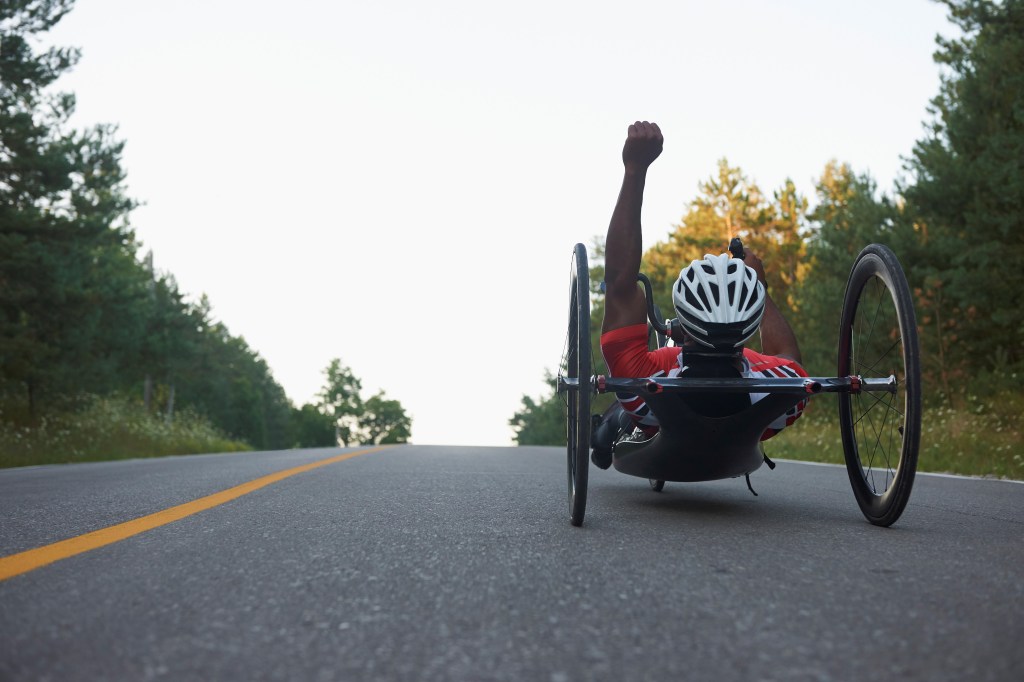

















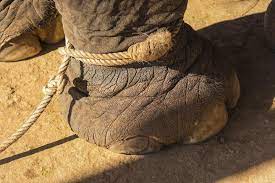








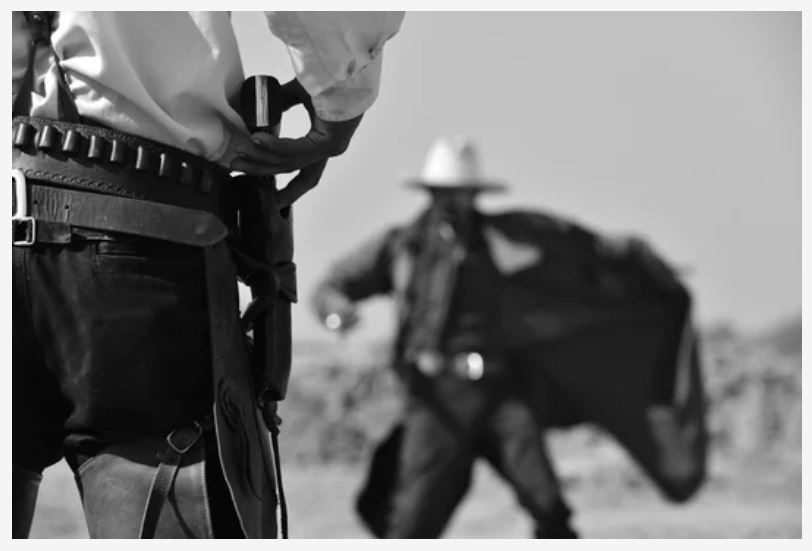
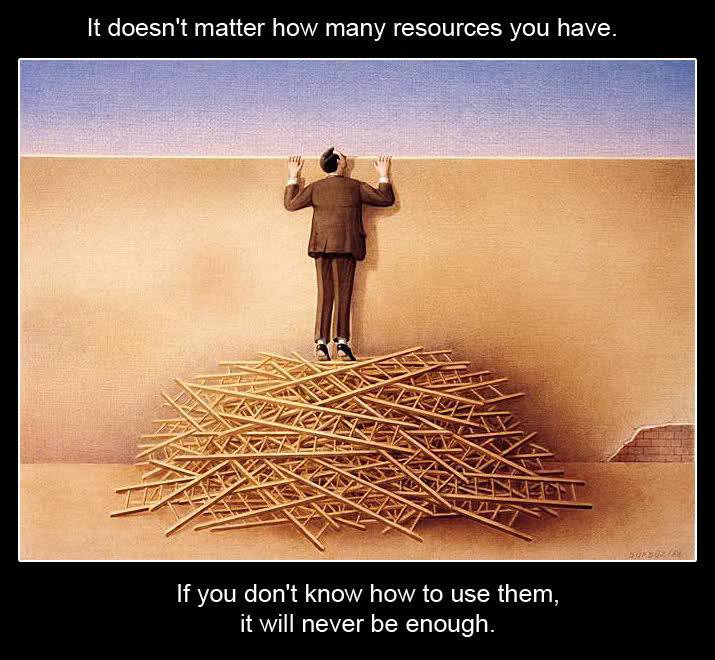






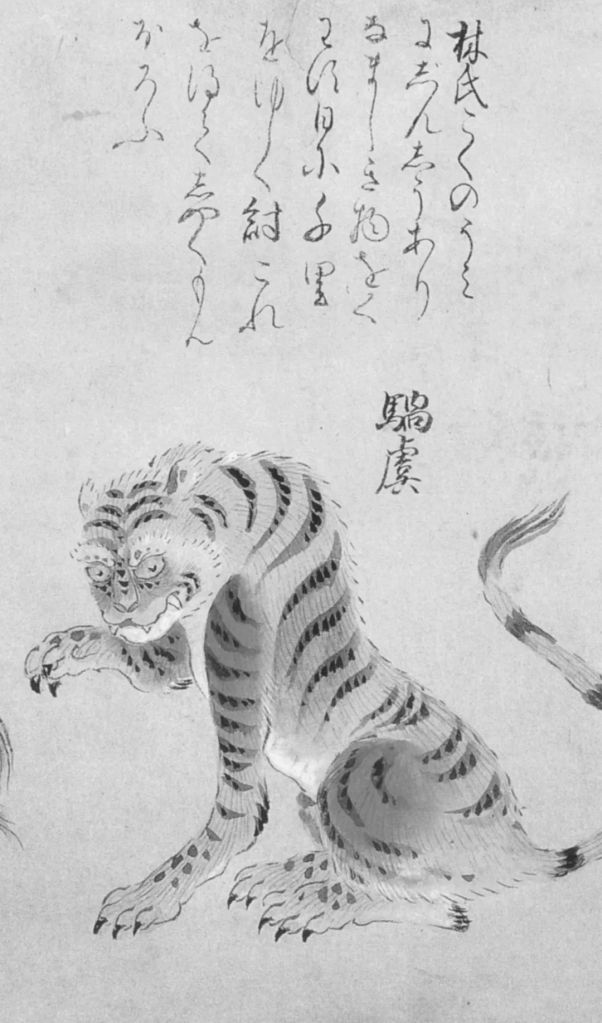



 Warrior: The Art of War for Life - A Podcast on Winning