In this episode of Warrior Mindset Unplugged, I interview former Air Force special operator and Combat Controller (CCT) Christopher Satterwhite. Born and raised in a shack on a farm western North Carolina where he learned hard work, problem-solving, and the importance of educating himself, Chris worked his way through community college, before receiving his Bachelor’s degree.
In the wake of 9/11, he joined the Air Force in 2002, served a total of five combat deployments with the 21st Special Tactics Squadron (STS), including four in Operation Enduring Freedom and one to Central America. He served for a decade before getting out in 2012 and doing a year in the intelligence community until he was sidelined by lingering combat injuries in 2014.
He was unemployed for five years while battling to recover physically and fighting the VA for his care. After being written off and almost having to go into hospice care, he has (almost) completely recovered and started training the next generation of Air Force special operators in his current job as an EOD preliminary course and SERE instructor at USAFA. Like so many of our veterans out there, his is an inspiring story of tactical patience, persistence, and the determination to never give up and empower himself while fighting for his life at home and abroad!
He uses humor and candor to talk about the importance of learning from those around us, breaking the chain of poor decision making and interrupting the cycle to turn things around. His story is an important reminder of the power we have as individuals to constructively engage with our political system and take ownership over our Constitutional rights. Thank you for your ongoing service!
Welcome to “Warrior: The Art of War for Life,” a podcast for those who want to win! Leadership lessons, motivational mindsets, empowering principles, success strategies, and transformational tactics from the Sunzi, the Master of Victory. I’m your guide on the side, David Boyd, award-winning educator, transformational speaker and certified life coach. It’s time to start winning at life!
Episode Introduction
Hey, hey, hey. Welcome, everyone. Thanks for joining us. I’m really glad you’re all here listening. I know that there’s a lot of other places you could be and a lot of other things you could be listening to. So I appreciate that you tune in and I hope that you can learn something that will help you and. Your daily battles. Today I’m really excited about this week’s podcast episode. Which is the seven deadly sins of self sabotage. So let’s go!
If you’re a visual learner like me, check out the blog version of this podcast at http://www.artofwar. Forlife.com. Which includes all the Chinese characters I discussed, along with additional images. Don’t forget to join the Art of War for Life Facebook page. And follow us on Instagram @artofwarforlife. For any questions, comments or to work with me, shoot me an e-mail at artofwarforlife@gmail.com.
Oh, and as a reminder, the views expressed in this podcast are my own and do not necessarily reflect the official policy or position of the United States Air Force Academy, the Air Force, or the Department of Defense. Thank you. Thank you very much.
Self-sabotage has been a major problem in my life and as a result I’ve done a lot of research on it over the last decade. Or so trying to understand my own patterns and tendencies and really trying to get to the bottom of the why and how. So, I’m really looking forward to exploring and sharing this. Topic with you all.
As innovative coaching consultant, Lauren Mackler has stated: “A critical key to achieving success lies in our ability to activate our potential to create the results that we seek. Start by being aware of our self sabotaging patterns.”
Self-sabotage then thrives in ignorance and lack of awareness. When we don’t understand what’s going on inside of us when we don’t understand the underlying beliefs that are creating these patterns in our lives. They’re going to continue to rear their ugly heads.
Today, we’re going to talk about seven patterns of self-sabotage, seven traps, seven pit falls. I use the word “sin” very loosely here just because it rhymes with the seven deadly sins. Self-sabotage isn’t necessarily a sin but it is destructive.
In Chapter 3.4 of Sunzi’s Art of War, we read:
“Now the general is the backbone supporting the state when the general support is comprehensive, then the state will surely be strengthened when the general support is fractured. Then the state will surely be weakened. Therefore, there are three ways the ruler brings calamity to the military. First, not understanding when the three armies cannot advance an ordering in advance any. Or not understanding when the three armies must not retreat and ordering a retreat anyway. This is called entangling the army.
Second, not understanding the affairs of the three armies and governing the three armies the same as the civilian government this causes. Confusion among the military service members. Third, not understanding of the three army’s balance of military power, the chain of command, and undertaking the duties of military command just the same as the civilian government. This causes doubts among the military service members.
When the three armies are confused and doubtful, then the likelihood of the feudal Lords making trouble arises. This is what is referred to as ‘a disordered army is the drawn bow of victory for another.’”
This passage describes seven ways rulers sabotage their military endeavors through their own ignorance or lack of awareness. First, by selecting spineless generals or engaging in back breaking micromanaging. Second, pushing a military agenda too far at all costs, consequences be damned. Third, by giving up too soon when they were right on the verge of victory. Both of these actions, pushing too far and giving up too soon, entangle the military.
The fourth form of ignorance that sabotages the military is not understanding military affairs and trying to run the army like a civilian government administration. This causes confusion among the ranks. Still another form of ignorance, or lack of awareness, pertains to not understanding the military balance of power or the chain of command and trying to adopt an egalitarian approach to military duties and responsibilities. This causes doubts, misgivings, and loss of confidence among the ranks. These sorts of ignorant sabotage sow seeds of confusion and doubt and leave the state and military vulnerable to meddling by the feudal Lords who were the states constituents in ancient China and result in chaos in the ranks, which makes the military and the state an easy target.
From this passage I’ve extracted seven deadly “sins” of self-sabotage:
1. Spineless Leadership: Not taking charge, not showing a little backbone, or being the general of our own state of being and our own lives,
2. Ignorantly pushing an agenda too far and not knowing when to quit, let go, and move on.
3. Ignorantly giving up too soon and abandonment.
4. Mishandling matters and indulging in constant confusion.
5. Bad boundaries and debilitating doubts.
6. Mistrust and the imbalance of personal power.
7. The internal conflict of conflicting and competing priorities.
1. Spineless leadership
We are the general, the backbone of our own state, of being. The Chinese character that Sunzi uses here is fu3 輔 and means to support, a frame, framework, and asset, backbone, or hub. It is comprised of a chariot 車 beside the character for beginning, which is a depiction of a sprout 屮 in a field 田. It’s literally depiction of a chariot frame in ancient China and conveys the sense that it all begins with the supporting frame. There were two long spars on either side that formed the frame of the chariot that went from the chariot itself and extended forward to the horse. The entire chariot was built around these two long frames. If those two beams were bad. The entire chariot would fall apart.
Likewise, in our own lives, we are literally the backbone, the supporting frame of our own lives. And if we’re not? We’re sabotaging ourselves. It all starts with us. We are in command of what we do with everything that comes into our lives and everything we send out into the world. We don’t get to choose what comes in, but we always get to choose what we’re going to do with it. We always have the ability to make lemonade out of the proverbial lemons.
When we externalize our happiness, self-worth, or personal power and peace, we are setting ourselves up for self-sabotage. When we let someone else rule over us or something govern our actions, we’re sabotaging ourselves. When we give someone or something else control of our state of being, we’re sabotaging ourselves. When we let other people become the center of our universe, or we let other things become the center of our universe and our entire lives revolve around them, we’re prone to self-sabotage.
Conversely, when we try to become the center of someone else’s universe, we’re also setting ourselves up for self-sabotage. Both of these are forms of self-sabotage. We live in a culture that constantly gives away its power to others and doesn’t even realize it. Every time we say, “oh, so and so made me so mad” or “so and so made me this or this made me that” or “if so and so does this, I’m gonna lose it!” we’re giving away our power to that person or that thing when the reality is nobody and nothing can make us feel anything that we don’t want to feel. We’ve just chosen, we’ve created a set of beliefs and a set of circumstances that become self-fulfilling prophecies where under these circumstances, I’m justified or forced in feeling and behaving this way – whether I want to or not – and we don’t even realize it! It’s all just programming! Anytime we let anything external dictate our happiness, our peace or our success, we’re setting ourselves up for self-sabotage because those externals do not have our best interests in mind. And yet, we subconsciously, unconsciously, unwittingly, unaware, ignorantly are choosing! That because it’s the culture that we’ve been raised in, we’ve grown up in. And we’re just not aware! But that’s actually what’s going on with self-sabotage!
Sunzi states that our self-leadership needs to be comprehensive and not fragmentary, so we cannot display a strong commitment to leadership in one area of our lives and not in others. For example, if we are uber-committed to our fitness regime, but not to our relationships. We’re sabotaging ourselves or vice versa. Take your pick. If we are super committed to work and excellence in our profession, but not in our home life, we’re sabotaging ourselves. All the money in the world is not going to heal a broken relationship, and even the best relationships are not going to create financial abundance. We need to eliminate those areas in our lives while we’re self-sabotaging and I’m speaking from experience. I’m a master of self-sabotage. I have been there. I still struggle with it, so what’s the solution? A good question to ask ourselves is: In what areas of our lives do we need to show a little more backbone and maybe not be so spineless? Are there some areas where we can show a little more backbone? Where can we create a little more structure? Where can we plan and get clear on what we want instead of failing to plan and therefore planning to fail? To really dig into this, I invite you all to go back to Episode 2: “Look in the Mirror – You are in Charge!” and Episode 15: “Six Butt-kicking Battlefield Beatitudes for Becoming the Master of our own Destiny.”
#2: Ignorantly Pushing Too Far
The second of Sunzi’s Seven “Sins,” for lack of a better word, of self-deception is ignorantly pushing an agenda too far. In other words, not being aware of and not knowing when we’re pushing things too far. We go too far sometimes. We don’t know when to quit, when to back down, or when to let things go and we force bad situations. Sometimes we push ahead, heedless of the cost. It can become an obsession, consequences be damned.
The etymology of the term that Sunzi uses here is advance or jin4 進 in Chinese. The ancient form of the character was comprised of a foot 止 beneath a bird 隹 beside a road 辶. It is literally a depiction of chasing after a bird on the road on foot. It brings with it a sense of being out of control or futility. If you imagine chasing after some bird running all over the place trying to catch this bird, it seems crazy. And yet, how often do we do something similar?
The etymology reminds me of a quote by Stephen King, of all people who said: “Some birds are not meant to be caged. That’s all. Their feathers are too bright. Their songs too sweet and wild. So you let them go. Or when you open the cage to feed them, they somehow fly out past you and the part of you that knows it was wrong to imprison them in the first place rejoices, but still. The place where you live is that much more drab and empty for their departure.” How many times in our lives when the bird has flown the proverbial coup, do we go chasing after it? Desperate to control it, to put it back in its cage. How many times when someone or something in life has given us the proverbial bird do go chasing after it to prove it wrong or seek revenge instead of just letting it go?
In the words of the classic Kenny Rogers song, “The Gambler:” ”You got no one to hold ‘em, know when to fold ‘em, know when to walk away, and know when to run.”
Herman Hess noted that: “Some of us think holding on makes us strong, but sometimes it is letting go that is actually strength.” Similarly, Eckhart Tolle stated: “Sometimes letting things go is an act of far greater personal power than hanging on.”
Sometimes it’s better to live to fight another day than to force a bad situation. We don’t always have to go down with the sinking ship. There are other opportunities that are awaiting us. So what’s the solution? Start by getting clear on what we really want and decide how we want to show up in any given situation, and then determine can this situation or this person or these conditions really give me what I want and if not, give yourself permission to let go and hold on to the belief that just because we couldn’t find it in this situation or this circumstance doesn’t mean that we can’t find it somewhere else; just because we failed in a business does not mean that there’s not a successful business endeavor out there for us somewhere else; just because we’ve been heartbroken in a relationship doesn’t mean that there isn’t a better relationship out there waiting for us; just because we’ve failed to achieve our fitness goals or our health goals or our financial goals or anything else that we want in this world in the past, doesn’t mean that we can’t get there in the future. It just means that something was missing from the equation this time.
So we go back to the drawing board and we need to believe that in order to let go, so that we don’t feel so desperate that this is my only chance at happiness! This is my only chance for success! This is my only chance for companionship! That’s why we stay in bad situations.
#3. Ignorantly Giving up Too Soon & Abandonment
The third of Sunzi’s seven deadly sins of self-sabotage is not being aware of or ignorance of when not to quit. This is essentially the opposite of #2. Far too often we give up, we give in, and we settle too easily. Instead of hanging on, hanging in, and pushing through just a little bit longer, staying out there in the fight, weathering the storm, we quit too quickly, concede defeat too easily, and run instead of fighting for what we really want. We abandon our goals, our dreams, and ourselves.
The character that Sunzi uses here is tui4 退, which means to retreat, to go inside, to withdraw, to slow, to waiver, or to abandon.
Thomas Edison once said: “Many of life’s failures are people who didn’t realize how close they were to success when they gave up.” I see this pattern in my own life a lot. I too often give up too easily in the pursuit of what I want and find myself stepping back into that comfortable role of the selfless servant without acknowledging or fighting for my own wants and needs, usually because I’ve also fallen into that first sin of self-sabotage – I’ve externalized my sources of happiness, of affirmation, of peace, and of success – and so I’m people pleasing or I’m trying not to rock the boat.
In Episode 23, I mentioned that I have abandonment issues from my childhood. Interestingly, as psychotherapist and founder of abandonment recovery, Susan Anderson has observed: “Self-abandonment is the emotional root of self-sabotage.” That fits me. When I abandon my dreams, I’m basically giving up on myself and my ability to create the life that I want – my worthiness or my deservedness to have the life that I want. This is a big one for me! So what’s the solution instead of pulling out, giving up or backing down too soon?
Again, decide on what is really important to you. What is the most important thing in a situation or circumstance or opportunity or relationship, and give yourself permission to hang in a little longer, even if it’s uncomfortable, even if there’s a risk, even if the possibility of failure looms over us like a shadow. Hang in! Hang on! Keep fighting a little longer! Even if it doesn’t work out, the act of hanging in there, staying in that fight a little longer gives us strength and peace.
I can’t remember if I’ve talked about this on the podcast. I did my Ph.D. work at the University of Indiana in East Asian Studies and minored in Religious Studies, and I completed all my coursework. I passed my qualifying exams. And the situation in the department had changed and people had left who had worked with the department had kind of imploded and they came back and told me they weren’t going to have any funding for me. And thankfully, my wife found this job at the US Air Force Academy, and so I took it and I started working on my Doctoral Dissertation away from IU, which was very challenging. My committee members were scattered. Communication tended to breakdown. I got distracted by other things. They would get distracted by other things. It was hard to maintain communication to get feedback in a timely manner, and I ended up with a whole lot of translations. My dissertation was on concepts of immortality, longevity, and deathlessness in ancient China – I like to say that my dissertation took forever! My first draft had all this translation. I had all this material. I had all this data. I didn’t have any questions. And it was terrible. And they tore it apart, and rightfully so. After that, I remember feeling like ‘I’m done. I’m never coming back to this!’ and so I literally set it on the shelf for a couple of years and I quit. I gave up. At that point I didn’t continue to push or fight hard. And that was right about 2010, 2011, and it was right about the time I was hitting my midlife crisis and just starting to really work on and become aware of a lot of my own issues and. so I just left it for a while and as I began to work on kind of my own personal recovery and my own growth and identify some of my issues, several people encouraged me to go back to it and I kind of shrugged it off, saying, “You know, it’s done. It’s over. I got nothing.”
After a couple of years, I realized that I did have something and I started to think, ‘You know, maybe there is something there and I and I should go back to this.’ So towards the end 2013, I passed my qualifying exams in 2008 and I had seven years of eligibility and so in late 2013, it started to come back to me and in 2014 I was reengaging, and so I wrote this dissertation in 2014 and I started sending in draft chapters and I started doing all this work. And I completed it just under the wire of my eligibility and the university came back and said we don’t have anybody who can guide you through a proper defense, and therefore we can’t give you a PhD. And I appealed. I went to the Dean. Again. I felt like this time I had that urge to just surrender, but I didn’t. I went to the Dean of the College. I went to the Dean of the University. I reached out to everybody I could think of. I went to the Board of Higher Education and in the end I still didn’t get my PhD, but I hung in that fight longer and I pushed myself harder and farther to not quit. And I have a certain amount of peace about it that I didn’t even though I didn’t get my Ph.D. I showed up in the end, and even though I lost on the technicality, so to speak, I fought harder than I would have previously for myself, and for my degree, and so I have a certain peace that I finished it anyway. Kind of like the runner who falls in a race and gets back up and finishes the race even though they finished dead last – even if they limp across the finish line – there’s value in that effort.
#4. Mishandling Matters and Indulging in Constant Confusion
The 4th of Sunzi’s “Seven Deadly sins of Self-Sabotage” is mishandling matters and indulging in constant confusion. This results from not knowing what we want out of a situation, or how to get it, or maybe we’re not giving ourselves permission to achieve it, which brings us back to “raising the BAR on our beliefs,” which I discussed in Episode 9. We have to believe before we can achieve and receive. The result of mishandling matters like this is constant confusion.
The character Sunzi uses here is huo4 惑, which means confused, perplexed, or bewildered. Its etymology is interesting. It’s comprised of a state 或 (also the phonetic) above a heart 心. The character for ‘state’ is comprised of that Chinese dagger-axe 戈 over a mouth 口 and the character for one 一. Just as we need to be willing to raise our voices and raise up our arms as one in defense of our state, our nation, or our country, what emotional and mental states are we willing to fight for? Conversely, a lack of clarity, a lack of unity, in this regard indicates that we’re confused and don’t know what we’re fighting for or why.
I’m reminded of the classic Genesis song, “Land of Confusion.” We are in charge of our own state of being mentally, emotionally, spiritually and socially. When we don’t know just what state we want to be in and that it’s our right to choose our state of being and to not let others dictate our state of being, that results in constant confusion and mishandling matters in our lives!
The Shuowen jiezi 説文解字, China’s earliest etymological dictionary, defines huo4 as chaos or turmoil. In this case, inner turmoil of the heart and mind. Life Coach Brooke Castillo has observed that confusion is a form of self-indulgence that separates us from our own wisdom – those arrows of applied knowledge that Sunzi talked about, when she stated: “We have so much more wisdom in ourselves, within ourselves, and access to so much more wisdom than we allow ourselves to know because we’re constantly indulging in confusion… Don’t live in the place of confusion. Don’t live in the place of ‘I don’t know.’ Don’t let yourself stay in that space, because when you do, you block all your progress. You block all of your opportunity to go into the unknown and you block all of your wisdom.”
When we indulge in confusion, we prevent ourselves from taking our shot and applying what we know. Again, this all comes back to certain belittling beliefs that we hold about ourselves. We don’t trust ourselves. We believe that we don’t have the answers. We don’t have the skills. We don’t have the experience or the expertise. We don’t have the knowledge, either because somebody told us or we just had an experience earlier in our in our lives where maybe we tried something and it didn’t work out.
I really like Brooke Castillo’s solution to confusion, which is this: Every time we find ourselves getting stuck in, ‘I don’t know,’ ‘I don’t know what to do,’ ‘I don’t know how to fix it,’ ‘I don’t know how to make it right,’ ‘I don’t know how to get where I want to be,’ or ‘I don’t know how to get what I want,’ anytime we find ourselves trapped in the “I don’t knows,” she always asks the question: “Well, if you did know, what would you do?”
This gives us permission to slow down, get out of that panic and get in tune with some possibilities and some options and some opportunities and some potential. So give yourself permission. You carry everything you need inside of you! And if you don’t know the answer, you may know how to find it, and you may know someone who does. So give yourself permission to find a solution to get out of that confusion and take a shot! Even if it doesn’t work the first time; even if it doesn’t work the first ten times, or the first 100 times! If it’s something we really want, give ourselves permission to figure it out and not just settle for, “I don’t know …”
We don’t have to live in a state of confusion! I think this happens because of certain belittling beliefs that we hold about ourselves. We don’t trust ourselves, which is one of Sunzi’s “Five Essential Leadership Attributes” that I talked about in Episode 4 and again just recently in Episode 23. I know for me, I didn’t trust myself. I learned to not trust myself, my intuition, my feelings, and therefore, I cut myself off from my own sources of internal wisdom. So trust yourself! You know you better than anybody else in this world! At the same time we’re capable of far more than we give ourselves credit for! So raise the bar.
#5. Bad Boundaries and Debilitating Doubts
The fifth of Sunzi’s “Seven Deadly Sins of Self-Sabotage” is the practice of bad boundaries and the indulgence in debilitating with doubts, which can lead to people pleasing, micromanaging and controlling others. In Episode 7: “Eight Tactics to Transform Your Life,” I discussed the importance of establishing good boundaries, which was the 6th of his eight tactics. There are a lot of great quotes there on good boundaries, so check it out!
Here I wanted to discuss the flip side: when we don’t establish good boundaries and either practice bad boundaries with others or allow others to practice bad boundaries with us. We’re sabotaging ourselves, the result, and perhaps even the cause of bad boundaries, is doubts, debilitating doubts!
The character that Sunzi uses here is yi2 疑, which means doubt or uncertainty. It depicts an old man with a cane and an open mouth conveying the sense of “uh …” or uncertainty. As Canadian American motivational speaker and self-development author Brian Tracy has said: “Self-doubt does more to sabotage individual potential than all external limitations put together.”
When we doubt ourselves and others, it’s usually because we don’t trust. We don’t trust ourselves or we don’t trust others. When we don’t trust ourselves, we often practice bad boundaries with others because we’re trying to people-please or seek external affirmation to offset our own lack of self-confidence. We’re spineless and are not being the general of our own lives.
When we don’t trust others, we often practice bad boundaries with them, such as manipulation, control, and micromanagement. When we do this, we cause others to doubt us and themselves, and when others do this with us, when we allow others to do this with us, practice bad boundaries, we’re creating doubt in our own lives and we’re reinforcing that doubt that they may have about us because we’re being spineless and not standing up for ourselves or being our authentic, true selves. The solution to defeating the debilitating doubts that cause us to practice bad boundaries, then, is to develop more trust in ourselves, more self-trust. So go back to that two-minute trust reflection I shared in Episode 23, “Warrior Mindset Unscripted.”
#6: Mistrust and the Imbalance of Personal Power
The sixth of Sunzi’s “Seven Deadly Sins of Self-Sabotage” is mistrust and the imbalance of personal power. What we’re talking about here is a lack of awareness, not understanding, or ignorance of when to take charge and when to trust others, when to lead out and when to delegate. This is all about chain of command. We can’t do everything! And we need to balance that out.
The character that Sunzi uses here is quan2 權, which means power or authority, and also a certain amount of balance to that power. The character is super interesting! The character quan2 is comprised of a tree 木next to a heron 雚. It is the ancient name for the yellow Birch wood tree, and it conveys the symbolism of unusual, uncommon, or extraordinary – the grace, balance, and power of the heron. A heron is a powerful hunter because it has great balance – even with those scrawny twig-like legs. If you’ve ever watched a heron fish, it just stands there waiting out in the water, waiting for its opportunity to strike.
As Thomas Paine put it: “The balance of power is the scale of peace.” As leaders, if we don’t trust the people around us or trust ourselves and therefore have the balance of power tipped too far in one direction or another, maybe we don’t trust ourselves so we delegate way too many things to other people or we delegate everything that we don’t feel confident doing or don’t want to do to others, resulting in those around us feeling like we never do any work. Or conversely, we hoard all the power ourselves and don’t give anyone else meaningful opportunities to lead and grow. When we do that, when that balance of power is tipped too far, in one direction or another, we’ll have no peace in our lives! We will feel that turmoil, that inner turmoil, that chaos! Will feel the need to control, manipulate and micromanage everything and everyone else around us! Everything everybody else does to try and ensure that we get what we want – but it is the ultimate form of self-sabotage! It’s no way to lead! It’s no way to live!
So how do we start entrusting others? Again, we get clear on what we want in our lives, out of our lives, and for our lives. And what kind of people can support and contribute to that. Then we attract and surround ourselves with those types of people by showing up in that way in our own lives. Sending that out into the world and modeling that for others, and then we trust them to do their jobs, play their parts, and fill their roles.
The best sports teams are not always the ones. With the biggest superstars. But the ones who can surround those stars with. Great role players. And the ones where those superstars can trust their role players. It takes a certain type of superstar athlete to make everyone around them better. Michael Jordan was a great example of this. He understood both the need to and the how to balance his own personal power on court with when to empower those around him. MJ took a lot of game-winning shots and he also set up a lot of other people on his team to take and make game-winning shots because he trusted them when the game was on the line, when the outcome was to be decided. So trust yourself and trust others a little more. Go back to that trust reflection exercise.
#7: Conflicting and Competing Desires
The last of Sunzi’s “Seven Deadly Sins of Self-Sabotage” is conflicting and competing desires. When difficulties arise, we feel inner turmoil. That’s what this describes. When we have conflicting and competing desires, especially when things get hard, we may feel pulled — we want to go one direction and yet we feel pulled in another – or we feel chained to another — like we’re tethered. We lack clarity and conviction, but allow ourselves to remain in a place of confusion and doubt. We create constant conflict, turmoil and chaos for ourselves and become subject and suspect to conflicting desires, competing priorities and other people’s agendas.
In Episode 21: “Overcoming the Anger of Frustration, Impatience, and Rash Action,” I discussed the concept of a divided heart. A divided heart often results in self-sabotage. Our self-sabotaging beliefs are like those bungee obstacles, where you’re strapped to a bungee cord with an anchor, like those inflatables, and you run and pull to see how far you can stretch out. It’s great strength training exercise! And in the beginning we can run and we can stretch it a little bit and then maybe we can crawl and we can climb and we can drag and we can stretch it a little bit further from that anchor point. But the further we push those limits, the further we push ourselves out from those limiting beliefs, the greater the internal resistance, and as soon as things get difficult, we usually get snapped back into our old familiar self-defeating habits, patterns, and behaviors.
As long as we’re tethered to our old ways of thinking and beliefs about ourselves, about each other, and about the world, we’ll never be able to get past our internal opposition, and what we want will forever remain just out of our reach. So, what can we do? What must we do? We need to get clear on our objective. What our “Big Deal” is, which we talked about way back in Episode 1. As I mentioned then and in several episodes since, when we get clear on our “Big Deal,” we may have the vision to achieve something new, but we may lack the beliefs to support it. That’s the work that we need to do to avoid self-sabotage. We must sever the tether. Cut the cord that controls us, break the bands that bind us, and cut ties with whatever it is that is holding us back, holding us down, and snapping us back into past patterns that will only allow us to progress so far. We need to level up our beliefs about what is possible and about our own potential. We need to set ourselves free.
Conclusion
In conclusion. Today we’ve talked about seven deadly sins of self-sabotage. They are:
1. Spineless leadership: not taking charge, showing up in our lives with little backbone, or not being the general of our own state of being, our own lives, livelihood, and well-being.
2. Ignorantly pushing an agenda too far. Not having the awareness of knowing when to quit, let go, and move on.
3. Ignorantly giving up too soon and abandonment – both self-abandonment and abandonment of our goals.
4. Mishandling matters and indulging in constant confusion.
5. Practicing bad boundaries and debilitating doubts.
6. Mistrust and the imbalance of personal power and
7. The internal conflict of competing priorities.
We’ve covered a lot of ground today, and I hope that this has been eye-opening and helpful for you. As someone who has struggled with self-sabotage throughout most of my life, I would encourage all of you go back to that “Face Your Fear” exercise in Episode 23 and determine what is more important than our fears and doubts and practice a little more courage. Be the general of your own state of being! Of your own life! And start to become aware of when maybe we’re pushing something a little too hard, a little too far, and when we need to step back, sit down, let go, move on; when to cut bait and when to cut our losses; and conversely, when we maybe need to hang in the fight a little more, and push a little harder; try one more time! Reach out again and not give up too soon, not give in, not settle! Never abandon our dreams, and never abandon ourselves!
We are powerful beings with a profound purpose on this planet! Don’t give up too quick on that! We have great gifts to give the world! Give ourselves permission to do so. Maybe step back and identify the areas where we tend to mishandle things or the circumstances. What are the triggers? What are the stresses that often result in us mishandling a situation? Give ourselves permission to get in touch with our own inner wisdom and take a shot! Try it, do something, don’t just sit there like a deer in the headlights of confusion. Stop doubting ourselves and start believing! Set some good boundaries, start to trust, and balance out our own personal power – when to take charge and when to delegate to others. And lastly, get clear on our priorities. Prioritize our time, our energy, and our lives!
The last thing I want to say is, if you struggle with self-sabotage like I have, believe that it doesn’t have to be that way. Dig into the beliefs that are fueling that self-sabotage because you deserve better. We can achieve more! We can have everything that you want in life – but we have to believe it first! We have to believe in order to achieve and receive. So regardless of whether it’s a better relationship or better job situation, better finances, better health, more peace, more happiness, greater abundance, whatever it is that you want that you’ve told yourself that you just can’t have, you can change it! It all comes back to beliefs.
When we change our beliefs, we end self-sabotage. You are worthy of all the best things the universe has to offer. Take a hard look at what’s underneath the surface of your self-sabotage and choose to believe something different. Then rise up! Show a little backbone! Don’t push things too far. Learn to let go of bad situations, believing that there will be better situations to come. Then fight for what you want. Don’t quit! Don’t give in! Don’t settle! Hang on! Hang in! Stay out there in the battlefield just a little longer.
Don’t indulge in constant confusion. Make a choice. Trust yourself. Don’t doubt. Just believe in yourself. Believe in those around you. Believe that the world will provide everything that you need to build the future that you want! Trust yourself to find your own way forward, because there is always a way to get from where we are to where we want to be in any area of our lives! Trust yourself that you’ll find it! Get clear on what you want and surround yourself with people who can help you to get there and put yourself in situations that can help you to create that.
In the words of Anthon St. Maarten: “No more excuses, no more self-sabotage, no more self-pity, no more comparing yourself to others. It’s time to step up. Take action right now and start living your life with purpose and on purpose.” It doesn’t matter how many times we’ve struggled with self-sabotage before. That’s gone! We can stop the self-sabotaging today. You can do it! You got this!
Thanks so much for listening everybody! If you found this podcast impactful, please, like and subscribe and join us for new episodes every warrior Wednesday. For more information, tools, and resources to help you in your daily battles, for questions or work with me, shoot me an e-mail at: artofwarforlife@gmail.com. Most importantly, always remember the power to win resides within! There is always a way!
In Episode 23 of “Warrior: The Art of War for Life ~ A Podcast on Winning,” I go unscripted to reflect on the “Five Essential Leadership Attributes” first introduced in Episode 3 and discussed in great detail in Episode 4. They are: wisdom, trust, empathy, courage, and disciplined determination, or grit. In the months, since I first introduced them, I have developed some quick and accessible tools and exercises to help us “level” them up in our lives in about two minutes!
First, knowledge is the arrow, and applied knowledge is wisdom or the ability to hit the bullseye in our lives. In this episode, you’ll learn a pair of two-minute wisdom skills for articulating clearly what we know and making it accessible to others to use while learning how to engage others with curiosity and apply what they know to our own circumstances and situations.
Second, the foundation of all trust — whether it is trustworthiness or entrusting others is self-trust. In the two-minute trust reflection, I give us time to really dig into how to increase our own trust and when and where it breaks down in our lives. With that understanding, and some grace and space, we can overcome our inner obstacles to trust, mend our broken bonds within, and learn to invest in ourselves and others again.
Third, empathy is the key to Emotional Intelligence, interpersonal skills, and thus effective leadership. Here I introduce a two-minute set of “SHARE” skills for engaging those around us with empathy. SHARE stands for: Share, Hear, Ask, Relate, and Express. As we do this, we create powerful bonds of connection with others and will find joy celebrating their successes and supporting each other in our difficulties.
Fourth, courage is the clarion call to face our fears and doubts. It resonates and reverberates like a bell. In exercising greater courage, I introduce a two-minute “Face your FEAR” drill to help us: Face it, Express it, Acknowledge it, and Reframe it so that we can recognize the MESS (Mental, Emotional, Spiritual, and Social) impact of that fear and the beliefs, feelings, thoughts, and behaviors that emerge from it and get in touch with what is more important to us than that fear and our why — because our why is our way forward.
Fifth, disciplined determination or grit is the commitment to ourselves to keep climbing the cliffs of challenge — to scrape and claw our way up the overhangs of life — in spite of the internal and external naysayers screaming we aren’t going to make it. To get in touch with our inner grit, I introduce a two-minute GRIT reflection: Get clear on Growth and Goals, Resolve to Resiliently act, Initiate & Ignore the urge to quit, and Tenaciously try and try again.
Soundtrack by Sentius
Episode Transcript
Welcome to Warrior, the art of War for Life, a podcast for those who want to win! Leadership lessons, motivational mindsets, empowering principles, success strategies and transformational tactics from the Sunzi, the Master of Victory.
I’m your guide on the side David Boyd, award-winning educator, transformational speaker, and certified life coach. It’s time to start winning at life.
Hey, hey, hey! Thanks for joining us. I’m so glad you guys are here listening. Last week we talked about 6 tactics to take back our lives and start picking our battles, and I promised that I was going to do another one of these warrior unscripted. It’s just me, and my thoughts, which can be kind of dangerous, but I hope it’s insightful.
Last week I mentioned that I had given this presentation on Sunzi’s five essential leadership attributes to the Enlisted Leadership Foundation and that I wanted to come back and reflect on that and share a little bit more.
I first introduced Sunzi’s “Five Essential Leadership Attributes” as part of Sunzi’s “Five Strategic Success Factors” way back in Episode 3.
These five attributes got their own treatment in Episode 4, and since then I’ve had some time to reflect and really hone in on how do I develop these? How can I work on these? How can I help people level up their lives, level up their leadership?
And and so I’ve developed some some tools, some exercises, some reflections, and two-minute exercises because everybody’s busy. I wanted these to be really accessible and something that could be just pulled out at any moment. Everybody’s got 2 minutes that they could devote to a practice, that they could invest in improving themselves and empowering themselves. Everybody’s got 2 minutes that they can invest in somebody else around them, whether it’s standing in line at the grocery store, waiting to check out or stuck in traffic or at a red light. I wanted these exercises and reflections to be really available and really accessible and really impactful.
So diving back into Sunzi’s five essential leadership attributes, the first thing that I wanted to convey is that leadership is the vision to take a stand and most importantly, it’s about self leadership. I’ve not been a very good self leader for most of my life — a leader of one. I was much more of a go with the flow sort of guy and part of that was because of my people pleasing and part of that was because I didn’t have a clear vision of what I actually wanted.
And so getting really curious about that led me to discover that I had a belief from my childhood that either I couldn’t get what I wanted or that my wants and needs were secondary to everyone else is around me — so what’s the point? And that fueled a lot of feelings of futility, the “futility farce” we talked about in Episode 6: “Sunzi’s Six Traps of (Self)-Deception and How to Avoid Them,” as one of those traps of self-deception and self sabotage, and it also just contributed to this sense of disempowerment and also a sense of undeservedness that if my needs are so unimportant in comparison to other people it must mean that I’m not as important.
And so that “Incapable Lie” that I wasn’t capable or wasn’t good enough to achieve what I wanted, combined with that limiting belief and the undeservedness and the futility that even if I wanted or even if I knew what I wanted, I couldn’t get it. I couldn’t have it because some other circumstance or somebody else’s needs were going to trump my own. This is kind of the dark side of a life of service. Service has been really important to me in my life. I have dedicated a lot of time to service service in the community, service to my country, and service in church.
I was raised with this idea that “when you’re in the service of your fellow beings, you’re only in the service of God.” That’s a great ennobling ideal. I am so grateful for the service that I’ve done for the opportunity that I’ve had to serve.
The dark side of that for me was this belief that I had to always be serving other people and couldn’t take care of myself, that my own ability to take care of myself was always secondary to the needs of the many — going bakk to Star Trek and to something Mr. Spock had taught “the needs of the many outweigh the needs of the few or the one,” which is a logical supposition.
And at the same time, if I’m not taking care of myself, I can’t take care of others. I can’t share water with others when my own cup is empty. So that’s something that I’ve really become aware of in the last decade.
So I kind of diatribed a little bit there. This was not something I was originally going to talk about. Not sure how I how I got onto that, but hey, we went with it. There it goes!
So leadership is the vision to take a stand and Sunzi identifies these five essential leadership attributes. Oh, I remember how we got on that. We got on that because we were talking about self leadership, leadership of one and I didn’t have great leadership because of a lot of these ideas, a lot of the beliefs that I had. I had good followership, but not great leadership and it’s still something that I struggle with in my life. I can be so passive and casual and so go with the flow that I need to make sure that what I am doing is actually something that I am fine with and I still want to do and that I’m not just people pleasing or trying not to rock the boat.
If I do have something that I want or need, I need to make sure that I’m giving myself space and permission to pursue that. Otherwise, it breeds resentment and resentment is something that I’ve struggled with throughout my life because of that sense of being pulled in opposite directions that I talked about in Episode 21: “Overcoming the Anger of Frustration, Impatience, and Rash Action,” where we want we really want one thing — and for me it was that I really wanted some things but I believed that I couldn’t get them or I believed that there were all these other things that trumped what I wanted, that were more important, and that I was actually the bottom of the totem pole.
And so that bred resentment because I really wanted to do this, but I felt like I had to do that. So leadership is the vision to take a stand, to passionately pursue what we want in our lives out of our lives and for our lives.
Sunzi talks about these five attributes: wisdom, trust, empathy, courage and discipline.
So let’s dive into a few of these, and since I’ve covered all this in Episode 4, I’m not going to go back through the etymologies a whole lot. I want to really focus on application. So let’s go.
Oh, and as a reminder, the views expressed in this podcast are my own and do not necessarily reflect the official policy or position of the United States Air Force Academy, the Air Force, the Department of Defense or the US government. Thank you. Thank you very much.
1. Wisdom
Alright, so starting off with wisdom. In Chinese, wisdom and knowledge are closely related to each other. Knowledge is the arrow of the mouth and wisdom is the ability to articulate that knowledge and to apply what others know into our own lives and our own situations.
We live in a data saturated world. We have more information at our fingertips than anyone has ever had in the history of humanity. For all those arrows in our quiver, there’s not a lot of people taking their shot wisdom, if knowledge is the arrow, wisdom is the ability to hit the bullseye to hit our objectives, get what we want to use those to get what we want, and it’s an iterative process.
Maybe we’re off a little bit in our first couple of shots. Right? Just like when you go and you shoot around of archery and they’re going to be kind of all over the place, right? Or shooting anything. Same thing with shooting guns. Going to be all over the place. And what’s going to happen is we’re going to make some minor adjustments. We tend to be pulling right or we tend to be a little bit high and we can make some adjustments. Then we’re going to have a better cluster as we make those adjustments. That’s the goal: to hit that bullseye repeatedly every single time in our lives.
You know, so imagine what happens when we just amass knowledge or information and we don’t do anything with it. It would just be like collecting arrows and putting them in our quiver and carrying them around because they look good. It might be fun at parties but to really use knowledge, right? As Dan, Millman said: “Wisdom is the application of knowledge.”
That’s really the whole point of an arrow. The traditional practice of archery had two goals: to hunt to secure food for yourself, your family, your village, and to protect, to defend that same family village from enemies from predators, from danger, from anything that would do us harm, and to do it at a safe distance, and this is the great benefit of ranged weapons.
You don’t have to defend your family or yourself going toe to toe with that danger, whatever that threat is. You can deal with that threat at a relatively safe distance and if you need to, you can take multiple shots.
Same thing is true in our life. Once we start applying what we know, we may have to take a couple of shots. We take a shot, we adjust, we take another shot, we adjust until finally we achieve our our mark, we get our objective. So here are two two-minute wisdom skills that we can practice:
The first one is to articulate with clarity so that others can learn. This is the learning focused skill of leadership. The ability to share what you know. So that others can pick it up as an arrow, put it in their quiver, and use it to sight and shoot at their objectives and hit. The bullseye in their lives. I’ve been in rooms with some super smart people in my life and been completely lost by what they were saying not because I’m an idiot, but because there was a disconnect between what they’re saying and the accessibility of what they knew.
So back to the two-minute wisdom skill #1. Articulate with clarity. So, I want you to think about something you know really well or something that you are really passionate about. You all have amazing skills out there! You all have something that you’re so good at; something that you’ve got some life hacks, you’ve got some experience, you’ve got some knowledge or you are passionate about it and enthusiastic. So I want you to think about that.
What is something you know really well? What are you really good at? And I also want you to think about something really difficult or challenging or a hard time that you’ve had. It could be anyone of these three: Something you’re really good at, something you’re really knowledgeable, passionate about, or something you know really well, or some challenge or difficulty that you have been through — that really pushed you to your limits.
Get in touch with that. What are the biggest takeaways I’ve learned from this? From my strengths, from my expertise, from my experience, from my trials and challenges?
What did I learn and what is the most important thing I can share about this to help others, to empower others who might be going through similar situations, or who might be trying to do the same thing that I’m really good at, or who are just starting off down the path that I was on 10 or 20 years ago?
That’s where the application of knowledge comes in. That’s where we can give them an arrow that can really help them in their lives. And again, I always go back to the Avenger Hawkeye, he’s got that quiver full of all these different arrowheads that can just pop on in an instant, and he can do whatever he needs to do with it and take the shot.
A totally customized specialty arrow for each one of our lives. For every situation that we find ourselves in, that’s what knowledge is. OK, write it out. Write it down. Brainstorm a little bit.
Wisdom, skill, #2: Apply with Curiosity
Knowing that everyone else around us has got a unique set of specialty custom arrows that they can do things with, we want to get really curious about hey, how can I use that arrow? How could that arrow help me in my life? How can this knowledge be applied to my situation?
See far too often in life, we’re so busy discounting what everyone else is going through and what everyone else knows that we prevent ourselves from gaining more tools and insights like we think, oh, that doesn’t apply to me. This person is talking about that and not that’s not something I’m interested in or struggling with. It’s completely irrelevant.
Instead of thinking how is the principle that they are teaching that they applied into their situation relevant to my own? There’s always an application and it may not even be the same application that someone else used but when we engage and we start to look for the application, how to apply that and we engage with curiosity, we will find innovation. We will find insights that become personal and powerful and applicable in our own lives.
So instead of thinking this doesn’t apply, I know this already, or this doesn’t matter, it’s not relevant to me. Instead, really get curious and start questioning when people are talking. When people are sharing some things that they know and an important part of this process is actually going in with curiosity and and asking people what are you really good at? What is your specialty? What is your passion? What sorts of experiences and expertise have you had and then as they’re sharing — because people like to talk about themselves and they love to talk about what they’re passionate and good at, then the challenge is to be constantly thinking what would happen if I applied this principle in my own life, what would it be like if we tried this over here in a different area of life, of business, of relationships, and how can I apply this to my current situation, to my current challenge, to my current objectives, to the pursuit of my “Big Deal”?
If you can get those two two-minute wisdom skills down, just think about the things that you would learn from those around you! Think about the people around you that you would be able to help!
With those two two-minute wisdom skills, think of all the knowledge that would be shared in accessible ways; that would empower people, and all the ways that our lives and other others lives would be empowered and enriched!
2. Trust:
I mentioned when I first introduced this topic, that trust is actually the hardest one for me personally and I’ve reflected a lot on this. It’s because I learned not to trust myself and without that self trust, it was really difficult for me to trust others, and therefore it was also just really hard for me to feel comfortable in positions of trust because I felt like sooner or later I’m going to mess this up. Because deep down inside, I felt like I was not trustworthy and so I really had to dig into this on my own and trust is really about our relationship with ourselves.
Do we stand by what we say? Do we say what we mean? Do we mean what we say? And do we stand by it? And so I really had to reflect on what was getting in the way of my self trust because the foundation of anyone else being able to trust us and of us being able to trust anyone else is self-trust.
So the trust reflection exercise that I came up with has parts. Simply put:
First: A reflection on how can I be more trustworthy? How well do my actions reflect my words and do I do what I say I will do? Do I stand by what I say? Do I say what I mean? Do I mean what I say and in particular, under what circumstances does that break down? Are there situations and circumstances where I don’t trust myself? Where did that come from? What are the reasons that I don’t trust myself in a given situation or circumstance and really dig into that get really curious. This is not about judgment. It’s not about blame or shame, it’s about curiosity. It’s about understanding ourselves and it’s about healing a broken bond within. It’s about rebuilding our own self trust. It’s about investing in ourselves and in our integrity, and in some cases. It may be about self forgiveness, or it might be about forgiving others and might be about letting some stuff go. Hurts, wounds that we’ve carried around for however long that it’s time to let go of that. It’s time to mend. Otherwise we carry all that baggage and it becomes part of our mess, and in Episode 2: “Look in the MIRROR! You are in Charge!” I talked about the MESS, the mental, emotional, spiritual and social set of beliefs and conditioning that we bring into every single interaction, whether we realize it or not, it’s time to manage our mess, and that is the heart of trust — self-trust and trusting others.
The second part of this reflection is: How can I trust and entrust others more? And what are the biggest obstacles in giving that trust? What gets in the way? Inherently, we all want to trust others and yet sometimes we’ve been burned and so it’s time to reflect on and reevaluate that and really dig in and say: Is it helpful for me to not trust others because I was burned by this person in the past? Is it helpful to other people for me to project this onto them? As a leader, we really need to dig into this because a lack of trust breeds controlling and micromanaging and there’s nothing worse in a leadership position than someone who micromanages who is controlling and who doesn’t trust their people to get their jobs done.
We need to give our people space to thrive, not corner them into this little area where they are constantly feeling like they are being looked over their shoulders. That sucks! So really dig in and get curious about what gets in the way of entrusting others. Because when we entrust others, we invest in others.
So that’s the trust reflection that I came up with and just really get curious. Really dig into this. Ask lots of whys. see what you discover.
3. Empathy
In the Chinese tradition, this is usually translated as benevolence or humaneness, or co-humanity. What we’re really talking about here is empathy. We’re talking about the ways that we interact with another human being with all those people around us. That is the very etymology of the word.
This is interpersonal skills. This is the foundation of emotional intelligence and this is one of the most important attributes for leaders. It doesn’t matter whether you are a powerful CEO or whether you are a three-star general. Empathy is key for relating to our people and even to ourselves. We need to have self empathy.
Sometimes we have such high expectations of ourselves, especially when it comes to emotions, especially when it comes to when we are a little off of our game and we think we just have to suck it up buttercup! We have to figure it out and we have to just get things done. We also need to realize, like my friend Kim Pinske said in her “Episode 16” Warrior Mindset Unplugged interview, that some days our 100% is not going to be the same as other days. Some days just rolling out of bed could be halfway to 100% and anything we can get done on top of that is just gravy.
Some days we’re going to have to invest and spend more time and energy managing our MESS and justice processing and really focusing on the things that matter most and we may not have the time or the energy or the bandwidth for anything else other than picking our battles, as I discussed in Episode 22: “Take Back Your Life! Six Tactics to Pick Your Battles and Start Winning!” Somedays we may only have enough to just show up and take care of school, take care of work, or just show up in our most important relationships a certain way and avoid “collateral damage” like I discussed in Episode 17: “Three Principles for Achieving the Ultimate (Personal) Victory in Life.” That might mean sacrificing some productivity, or it might mean today I have to get the mission done and so I need to set these personal troubles aside because, one I don’t have the time to deal with it and two, this right here in front of me is mission critical. We need to get through that and then take the space to deal with the family issues or deal with the personal issues.
There is this constant balance that has to take place, and so juggling all those priorities, when we feel pulled and stretched in so many different directions and giving ourselves grace in space, compassion and empathy is absolutely critical. As a leader it is really important to be able to give that to those around us, and we can only give that to those around us if we’re giving it to ourselves.
So I came up with a 2 minute empathy SHARE that is comprised of five skills. They create the acronym SHARE. SHARE stands for:
Share.
Hear.
Ask.
Relate.
Express.
Let me dig into those a little more. A 2-minute empathy share from a leader could look like this invite someone to share a recent challenge that they’re having and listen. Hear, not just the details of what they’re sharing, but the underlying feelings and the beliefs that those feelings reveal, the thoughts can work backwards and then ask lots of follow up questions. If you don’t get it right away, just ask more questions and see what keeps coming up in their responses. See if we can connect the dots between how they’re feeling and what’s really going on underneath the surface, this is one of those iceberg exercises.
We usually only see the tip of the iceberg with people. We don’t always see what’s beneath the surface or below the water line. As a matter of fact we rarely see the whole picture.
Think about you know about what’s going on with us. How many times do we just wake up in the morning and put on the uniform or get dressed for work or school, and we button ourselves up and we put our best face on and we go out the door and we’re just trying to hold it all together. Guess what? Nobody else is any different! Everyone has days like that! So ask lots of follow up questions. Because the reality is what we’re doing is we’re giving them space to talk through some things and process things that they may not have even realized we’re going on in their lives.
We’re giving them permission and a place to work through their thoughts and their feelings, which maybe they haven’t even given themselves yet because they’ve been so focused on the mission or they’ve been so focused on the task at hand or they’ve just literally been in survival mode trying to get through the day!
And let’s face it: Most people don’t want to engage with painful topics, and they certainly don’t want to engage with painful topics in an unsafe environment where they are worried that they’re going to be invalidated or they’re going to be shut down or they’re going to be called ridiculous!
So asking questions, giving lots of space, and then relating.
Think back on either a similar experience that you’ve had or completely different experience that brought up similar feelings within us and share bits and pieces of that with them so that they know that we are relatable and we get it because when we relate those things, it breaks down this false notion that we are all alone, that we are the exception to the rule, that nobody gets us.
And then #5: Express validating care. This is where we can express admiration, affirmation and encouragement, and we could just love on our folks and we can love on ourselves. This exercise can be done as a self coaching exercise as well.
We tend to think about empathy and employing empathy only in “negative” situations or circumstances, trials and challenges. We can also use empathy as a celebration for the successes! So we don’t just have to ask about a recent challenge we can also ask about a recent success. We can ask someone to share anything in their lives that is important to them and we can hear, we can ask questions, we can relate, and we can express empathy.
So think of empathy not as a spare tire on a vehicle, but as a steering wheel. We don’t just go to empathy when things breakdown. We want to go to empathy and we want empathy to guide our steps, to guide our actions, to guide our interactions with everyone around us and celebrate the good and support each other through the hard times.
So some of the most important things to think about with this two-minute empathy share are to listen attentively without any sort of agenda of response. Imagine yourself in someone else’s shoes being attentive. Listen, be genuinely curious about what they’re going through or what they’ve been through. Validate their feelings, discover similarities. Build bridges between us and them, and most importantly, this is a chance!
Empathy is a chance to share who you are with someone else! When you have an empathetic moment, when you have empathy with someone else, when you share that moment and there’s empathy between you all, you build trust. You build bridges, leaders who have mastered empathy earned the fierce loyalty and devotion of those they work with.
This one is really critical for ourselves as leaders and just as human beings! At the end of the day, it’s just about getting in touch with your humanity! As humans we are “MESSy” and we need to remind ourselves and let everyone else know that it’s OK to be messy and that we can work through our messes together.
4. Courage
Courage is definitely one of my favorite attributes out of five because the etymology of courage in Chinese is so visually compelling, it depicts a bell above strength, and it conveys this sense that courage is a Clarion call. Courage reverberates like a bell when you hear that bell, when you hear that bell from wherever you are, and you know it’s a long ways away and it’s just carried. It stirs something inside of us.
Courage is the exact same way, when we hear about courageous deeds we can and we live in a great age for courage. We live in an age where we can hear of the courage that people are displaying in so many areas of their lives all around the world. The internet can bring us these inspiring stories of courage and it resonates with us. It reverberates into our souls. Someone else’s courage inspires us to be more courageous. It gives us permission to face our problems, to face our fears, to face our doubts with more strength and more might to believe if they can do it, so can I if they can overcome that I can overcome this and so someone else’s example of courage gives us permission to flex a little bit more, try a little harder, dig in a little deeper. To get back up. Give it another shot to discover.
Going back to that Ambrose Red Moon quote, the thing that is more important than our fears and our doubts. That’s what we use. Courage is not the absence of fear. It’s not the absence of doubt, but rather the judgment that something else is more important than that fear and that doubt someone else’s example of courage and even our own examples of prior instances of courage in our lives, can get us in touch with what is more important in this moment in facing this fear, this challenge, this doubt, this problem, this obstacle.
So I developed this two-minute “Face Your FEAR” exercise. It has four simple steps that form the acronym fear, they are:
#1 Face your Fear.
Really look at it and give it a name. Once we can label something and name it, we can manage it. If we just let it roam around in our minds and our hearts and we’re not really sure what it is, and we don’t really want to look at it because we don’t want to engage with it? Or maybe we’re afraid of it, and we may not feel powerful enough to deal with it, or we may not feel knowledgeable enough to address it.
It’s like this amorphous blob rattling around in our brain. So we have to take a good look at it. We have to face it and identify what it is. You are low self esteem. You are lack of self-confidence. You are entitlement. You are pride. You are … whatever it is in that moment, fear of judgment. You are fear of abandonment. You are fear of insufficiency, your fear of failure. That’s what you are and we label it because problem is if we don’t label it, we end up subconsciously labeling ourselves and absorbing it as an innate part of us — but it’s not! It’s just a challenge! It’s just a feeling! It’s just a set of beliefs that we inherited from our childhood, from society, from somewhere else that maybe we’ve never been critical of that we’ve never really examined and now it’s time to take a look at it.
Is this set of beliefs and thoughts and feelings and behaviors around this challenge or obstacle or topic or situation, is it serving me? Is it how I want to show up in this world? And if not, we can change it.
So Step #1: face the thing we’re afraid of. I mentioned in last week’s episode that success is on the other side of one more try, so it doesn’t matter how many times we have failed and it doesn’t matter if we’re afraid of failing again or falling. What matters is we get back up! Because success and everything that we want is on the other side of that fear, so that reconnects us back to getting in touch with what is important to us.
What is more important to us than this fear? So, we need to face it. We need to really take a good, hard look at it and give it a name, give it multiple names because it could be a combination of several things.
#2: Express.
This is the E. How does this fear, this feeling, this doubt, this combination of thoughts, beliefs, and behaviors, the whole package — how does it feel physically, mentally, emotionally, spiritually, socially, how does it impact us? How does it show up? Where does it show up in our bodies, in our thinking, and in our decision making?
This is an exercise that I have my students do and emotional intelligence all the time is to actually give them a simple drawing of the body, and I have them think about where different emotions show up in their bodies. We do fear, we do anger, we do excitement, we do loneliness, we do a bunch of these different exercises and they start mapping on their body.
Oh, when I feel lonely, my eyebrows droop, or when I feel a lack of confidence my shoulders slump; when I feel angry, my jaw clenches and they start to get an idea, a map of how emotion shows up and it becomes a very useful self diagnostic tool.
In this case, we want to know how this fear is showing up physically. We also want to know what are the thoughts that I have when I am in this space, when I’m trying to avoid this or not engage with this, or when I’m letting it kind of dominate my mood without even realizing it, perhaps, to the thoughts that come with it. What are those deliverables that come into our lives? What are the emotions that I feel around this? For example, I have abandonment issues that brings with it a whole lot of anxiety and panic, and I feel it in my throat and a weight, a heaviness and the thoughts that I have that, you know, that come with that are related to all these doomsday scenarios, right? And so really digging in mentally, emotionally, and spiritually.
How does this affect my ability to believe in myself and then those around me and in the world and in any higher power that I might believe in? And how does that affect my social decisions?So really dig into the mess that this fear has created and express it, acknowledge it.
That’s step #3: Acknowledge it — validate the fear. What that fear has been trying to do for you? Because it is trying to do something, it’s trying to keep us safe. It’s trying to prevent us from feeling disappointment or hurt. When other people project their fears on us, they’re usually in a well-meaning manner, trying to do the same thing. They don’t want us to be disappointed like they’ve been disappointed. They don’t want us to be hurt like they’ve been hurt. When people project their fears on other people, it’s because usually that they haven’t healed from those hurts. They haven’t addressed the those fears of their own, and so they, you know, with good intentions project it onto others as others reality when it’s really just their own.
So give it a space to exist within us. Allow that fear to exist for a moment. Validate it. Like, ‘OK, I understand why I’m afraid of being alone, or why I’m afraid of failure or why I’m afraid that I’m not enough because there are so many people who are relying on me …’ Or whatever the case may be really acknowledge. that and validate it.
It doesn’t mean that we have to let it dominate our lives. We can give it a space, instead of what we usually do, or at least what I usually do, which is I invalidate it and I suppress it and I try and lock it in a closet with all the other skeletons and not deal with it.
So really trying, again with grace and space, without blame, shame and judgment to get curious and to acknowledge, ‘You know, I see as an 11 year old boy that this fear came up because I was trying to do this and I’ve just been trying to cope with it ever since and not knowing how to address it or how to resolve it or how to fix it or how to make it right, or even just how to live with it that. I was doing the best that I could.’
See, I believe that everyone is doing the best they can with the tools and the knowledge and the resources that they have available to them and sometimes we’re using outdated tools. Right? Or we’re using the wrong tools.
The computing analogy is if we picked up a set of beliefs as a kid and a set of fears. And we carry that into adulthood. We are dealing with 10-20 year old programming and it could be bad programming! Now we can do better than that. We don’t have to continue to let that operate in our lives.
On the military side, imagine going into combat with tech that is 20, 30, 40, 50 years old and outdated and never been updated and never even been maintained in most cases! That’s not how to win!
So we face our fear. We express it, we acknowledge it, and then #4, we reframe it, we get in touch with what it was trying to do with how it’s showing up in our lives. And we make a decision. We discover what is more important to us than this fear than this doubt than this whole mess that is created and we create a vision of what is more important of what we really want instead. We reframe it and then we embrace that and we beware of the “yes buts” that I talked about in Episode 17: “Three Principles for Achieving the Ultimate (Personal) Victory in Life!” “Yeah, I want that, but …” Because if we have a “yes, but” then we’re basically giving command back over to that fear to that mess to that doubt, to those limiting beliefs, those belittling beliefs, those limiting labels, those debilitating doubts and those festering fears. So, no “yes buts!”
So that’s the two-minute Face Your Fear exercise. Face your fear. Express it. Acknowledge it, and then Reframe it. Come up with something better because we need something better! We need to have something that is more important than that fear, than that doubt, than that MESS that we can then focus on and practice courage in! It takes courage to embrace a new set of beliefs about ourselves, about each other, about the world! To give ourselves a clean slate, a second chance; To turn over a new leaf, to do something differently, to change the outcome!
#5. Discipline, Determination, & Grit.
The last one. Yan2 严 is the Chinese term for discipline but also determination and grit — it means all of these. It can mean being strict with ourselves or severe but it also means self-respect and respecting others. This one encapsulates everything that we do in the military to maintain good order and discipline, as my friend and mentor Brig. General Paul Pirog mentioned in his Episode 12: Warrior Mindset Unplugged.
Going back to how we apply this in our own lives, why do we want good order and discipline? This comes down to a set of beliefs about ourselves, one we need it but we also deserve it. We are worthy of it. We are deserving of that investment in ourselves and all the benefits that it brings.
So I love this etymology of the Chinese word yan2, which does mean, disciplined and determined and strict. Being strict with ourselves in certain contexts is a good and necessary thing. I love this etymology, it’s got this overhanging cliff and as a rock climber I love that sense of these overhanging cliffs of challenge and there’s these two mouths at the top.
I always think of those as, as the critics, internal and external, who are going to say: “You’re not going to make it, bro,” “There’s no way,” “Just give up,” “You’re just gonna embarrass yourself,” or “this is gonna hurt like heck” and yet regardless of that climbing and clawing and scraping our way with whatever tools we have at our disposal — we’re going to figure it out. We’re going to make it work and we’re going to get to the top and we are going to kneel in victory at the top of the summit rather than kneel in defeat before the climb has even begun!
So I came up with a a great reflection as the last of our two-minute exercise about how we can develop more GRIT in our lives and this encompasses kind of everything in this character. How do we have the GRIT to practice discipline, daily discipline, determination in our lives?
I’m going to be the first one to say throughout a lot of my life, my discipline and determination was a roller coaster. I would be uber-disciplined and determined at times when things were going well and then I would have some setbacks and some frustrations and my mindset was such that I would give up on myself and then my self-care would go out the window and my discipline would break down and my determination would waiver. And then finally, I’d get so sick of that, then I would start over and be like, ‘alright, this time we’re going to go and we’re going to push even harder and we’re going to grind even more!’ And that was the cycle over and over and over again.
So this reflection is something that I developed that really is helping me to get off that roller coaster, that roller coaster of relative self-worth and performance-based worth and toxic perfectionism and have a little more balance, be a little more grounded. Because as we’re climbing and we’re facing those cliffs of challenge, we always need to make sure that we have multiple points of contact — grounding points so that we don’t slip and fall — and so this kind of came out of that.
So the GRIT reflection and the whole concept of grit got to give a shout out to Angela Duckworth. She really nailed this. So if you want to learn more about GRIT, look up Angela Duckworth. She’s got some great resources on her website. So the GRIT reflection again has four steps. You can do this in just two minutes or longer, but the four steps form the acronym GRIT.
I love acronyms, they help me organize my thinking. So the acronym GRIT stands for:
1. G: Get Clear on Growth and Goals: What do I want to do and achieve in my life right now? What do I want to be and become? How do I want to show up? What do I want in my life, out of my life, and for my life? So get clear on the growth that we want to experience and the goals that we want to have and pursue in our lives. We need that clarity first. Because that is our foundation. That’s our anchor.
2. R: Resolve any Resistance and Resiliently Act: So I’ve talked about this multiple times on the podcast when we get clear on our “Big Deal” we might have that vision but we rarely have the beliefs and the mindset to actually achieve it in the beginning. That’s where the work comes in and so as soon as we come up with what our growth and goals are, there are probably going to be some “yes buts” in there.
So we need to make a decision to act with discipline and determination and resolve any resistance and commit to seeing it through — no second guessing! If we’re going to do this, let’s do it and see it through! That’s going to mean resolving our internal resistance. If there’s a “yes, but” we’ve got to work it out, we’ve got to figure it out. We’ve got to figure out and face whatever that fear or that doubt is.
So we go back to that “Face your FEAR” exercise above and work it out. We give ourselves permission to resiliently act when we start off and we do something new. We’re going to stumble and we’re going to fail and we’re going to make mistakes and it’s not going to be perfect and in many cases, going back to what Marie Forleo said, we have to recognize that we’re going to suck. So we’re making a decision that throw ourselves out there in the beginning and learn from it and get better at it.
Nobody picks up any sport or any new language or any new instrument or any new activity, and just totally rocks it in the beginning. Even if you’re talented, even if it’s in our wheelhouse, it’s going to be a challenge. There’s going to be some setbacks, so giving ourselves permission. Expecting setbacks, expecting to stumble, expecting some failures and some missteps along the way, and giving ourselves permission to get back up and try again. To resiliently act. That is a key component of grit, resilience and that resilience.
Giving ourselves permission to be resilient means oh or Too often, we get in this mindset of: “Ugh, I can’t do this!” “See, this proves that I’m not good enough!” “I suck at this!” “I’m never going to get it down!” and we buy into that “Futility Farce,” that “Limiting Lie” that we talked about in Episode 6: “Six Traps of Self-Deception and How to Avoid Them.” So we need to make a resolution. We need to resolve that we’re going to stick with it! If we’re going to do a 90-day challenge, we are going to do all 90 days! We’re not going to quit at day 45 or day 5! We’re going to see it all the way through just for no other reason than to say I did a 90-day challenge and through that process I discovered it wasn’t really what I wanted to do with the rest of my life, but I did it for 90 days and now I’m going to take some of those skills and apply it in other areas of my life. So that’s the R.
3. I: Initiate and Ignore the Urge to Quit: So just because we’ve made a resolution and we’ve resolved any resistance to starting doesn’t mean that we’re not going to have the urge to quit later on. So we get clear on what we want, we make a resolution, a decision to pursue it, and then we actually get going on it. So what is the one thing that I can do right now or that I am willing to do right now to accomplish my goal or to grow in this area?
What one step can I take right now, where I am, as I am, with everything going on in my life that will get me closer towards who I want to be and how I want to show up in my life and get me closer to that goal? What one thing am I willing to do? Then do it and don’t wait! Don’t be like ‘I’ll start tomorrow.’ Start right now! Get it going!
Get the ball rolling, get things moving, and then ignore the urge to quit as it comes — and when I say ignore, I mean ignore that temptation. Meaning, don’t do it, but really, dig into why? Why is this showing up now? What’s going on? Get really curious about how and when does that urge to quit speak into my thoughts? What’s going on in my life? Is there something external that’s impacting me that’s wanting me to give up or give in? Or is there something going on within? Have I hit a wall, a plateau, where maybe I don’t feel like I’m good enough or maybe I feel like I’ve done enough and I’m ready to sit back and not work so hard and rest on my laurels. Whatever it is. Get curious about it. Figure it out.
Go back through that “Face Your FEAR” process that we just did. where we’re going to face it, express it, and we’re going to acknowledge it, and we’re going to reframe it. So that’s the “I” — initiate and ignore the urge to quit.
4. T: Tenaciously Try and Try Again! This is the key. The key to grit is vision. What is the vision that motivates me to get back up when I fall, dust myself off and try again? We want to get a little proactive here and we want to figure it out. Acknowledging that when I stumble and when I fall, when life knocks me down or even knocks me out, what am I going to cling to? What is going to get me back on my knees and try again rather than just take the 10-count? What is it that I refuse to let go of? What is my “Why?”
We’ve talked about this before in Episode 3: ”Sunzi’s Five Strategic Success Factors.“ Our why is our way forward. Our why is what allows us to tenaciously try and try again and get back up, over and over again until we get the outcome that we want. That is the heart of GRIT! Our why is our way forward!
So for this reflection, get clear on the growth and the goals that you want. Resolve any resistance to resiliently acting. Initiate and ignore the urge to quit and then tenaciously try and try again. OK?
Conclusion
So today we’ve talked about five 2-minute exercises that you can do to level up your life to level up our leadership. Even if it’s just being a leader of ourselves, we talked about wisdom — the arrow of applied knowledge and I gave you the two, 2-minute wisdom skills to articulate what we know, so that it can help other people, and to apply what other people know in our own lives and our own situations and our own circumstances.
Then we did the trust reflection to stand by what we say and how we can both earn that trust and give that trust. How can we invest in ourselves and our own integrity and also give others the opportunity and invest in them? And what gets in the way of that? Right? Where are the breakdowns in our own self-trust? To really reflect on that.
We talked about empathy. Getting in touch with our own humanity and that SHARE skills exercise: Share, Hear, Ask, Relate, and Express. We talked about courage — the clarion call to face our fears and I gave you the “Face your FEAR” exercise: Face it, Express it, Acknowledge it, and Reframe it.
Then we talked about discipline — the determination to keep on climbing — and I gave you a GRIT reflection exercise: Get clear on your growth and goals. Resolve any Resistance and Resiliently Act. Initiate and Ignore the Urge to Quit, and Tenaciously Try and Try Again!
Imagine what life would be like if we took one of these attributes and we leveled it up and then we did another one. Imagine what our organizations, our units, our circle of influence would be like if we created this sort of culture where everybody was leveling up their lives in whatever ways they felt like they needed! This is the sort of culture that we can create because when we embrace this, when we start engaging in this sort of personal development and leadership, we give everyone else permission to do it as well.
What would happen in your life if you had a quiver full of knowledge and you knew exactly how to hit the bullseye? Whatever life threw at you, you’re like, ‘OK, I’ve got an answer to this, boom! Here we go. Not a problem.’ Imagine what it would be like if, whenever you encountered somebody else, that you heard them from empathy, their struggles and their story, and then you could give them an arrow, and say: “Hey, this really helped me when I was in a similar situation. Maybe it’ll work for you.” Imagine the sorts of relationships that we would have if we had more empathy and more trust! If we trusted ourselves and we trusted others more than we do now. Imagine what kind of society and organization we could create! Imagine what we could accomplish with more trust and more empathy! Imagine what would happen in our lives if we courageously faced that fear that’s holding us back and we gave everyone else around us permission to face their own fears and resolve those things that were holding them back! And to act with determination and discipline and grit to keep climbing beyond those fears!
These are five game-changing attributes for our lives, so if we’re not where we want to be right now, pick one and start working on it right now! And then do another and another, and see what happens.
I hope this has been helpful for you and if you want more information you would like me to come and give a presentation on this, I’d be happy to do that. If you would like some worksheets, I’ve got some one pagers on these to walk you through the process and if you are a visual learner, please check out the written blog version of this at www.artofwarforlife.com.
You are awesome! You are amazing! And you are absolutely essential in this world! You have great gifts to give the world! So go get ’em.
Thanks so much for listening everybody. If you found this podcast impactful, please, like and subscribe and join us for new episodes every “Warrior Wednesday.” For more information, tools, and resources to help you in your daily battles for questions or to work with me, shoot me an e-mail at artofwarforlife@gmail.com.
Most importantly: Always remember the power to win resides within! There is always a way!
Do you ever feel like your life is not yours? That you are not in charge? That things are just spinning out of control? In Episode 22 of “Warrior: The Art of War for Life ~ A Podcast on Winning” we look at Sunzi’s Six Tactics for taking the offensive and picking our battles in life. They are:
1. Surround & Encircle
2. Take the Offensive: Strike!
3. Divide & Conquer
4. Pick Your Battles: Play to Your Strengths & Fight Where Able
5. Hold On! Maintain What You Can
6. Avoid Losses & Find Another Way
With inspiring stories and anecdotes, this episode reminds us that there is ALWAYS another option, another way, we don’t just have to accept defeat, and “victory is just on the other side of one more try!”
Episode Introduction
Hey! Hey! Hey! Welcome everyone! Thanks for joining us! I’m so glad you are here listening! I really am! I am so excited about today’s episode!
Last week, I gave a shout out to my class of 2023 graduates, who commissioned as 2nd Lieutenants in the U.S. Air and Space Forces before talking about the importance of overcoming our anger, impatience, and frustration to prevent rash action.
I wanted to give a shoutout to my brothers and sisters at the Enlisted Leadership Foundation (E.L.F.) or the Foundry in San Diego. Last week I had the privilege of presenting on Sunzi’s Five Essential Attributes for leveling up our lives and our leadership. What a great group of people doing amazing things! Thank you for your service! You are awesome! You are amazing! And you are absolutely essential in this world!
Next week, I think I’ll do a Warrior Unscripted recapping some of the new material I have developed since I introduced the topic in Episode 4, including some 2-minute exercises and reflections, so stay tuned!
This week, we are talking about six tactics for taking the offensive and picking our battles in life.
So let’s go!
Disclaimer: And as always, the thoughts and opinions expressed in this interview are fully those of the host David Boyd and do not reflect the official views of the United States Air Force Academy, the U.S. Department of the Air Force, or the U.S. Department of the Defense. Thank you. Thank you very much!
Introduction
In Chapter 3.3 of Sunzi’s Art of War we read:
Therefore, the strategy for deploying the army is this: when you outnumber the enemy tenfold, then surround them; fivefold, then attack them; twofold, then divide them; When the enemy is your equal, then engage them where you are able; when you are outnumbered, hold where you are able; when you are outmatched, then avoid them if at all possible. Otherwise, the inflexibility of a small force is the captive prey of a large force.
This week’s episode ties back in to concepts that we’ve discussed previously. Here are a few of them:
In Episode 10, I introduced the idea of exhausting and swaying enemy forces without combat (非戰屈兵); to stop chasing our own tails!
In Episode 18, we discussed uprooting our fortresses of fear, stronghold of (in)security, and the walls we hide behind without besieging it (非攻拔城). We talked about the importance of getting at what is lying underneath our belittling beliefs and debilitating doubts.
In Episode 13, I talked about the importance of destroying enemy states of mind without protracted campaigns (非久毀國). There is a great example of this from history with the fall of the Babylonian empire, which ruled much of the Middle East in ancient times — until the Persian Empire rose and overthrew them. After defeating the Babylonian army in the field of battle, the Persians arrived at the gates of Babylon, the capital of Babylonia. The Ishtar Gate (pictured above) and a series formidable fortifications loomed before them. It was said that the Ishtar Gate opened for no man (only the King of Babylon who regarded himself as a god). Rather, than engage in a lengthy siege of the city that could have taken months or even years, the Persians got smart. At King Cyrus’s command, they traced the city’s water source upstream and diverted the Euphrates River, robbing Babylon of its lifegiving waters, and allowing the Persian troops to march into the city through the dried river beds. At this time, the citizens revolted and threw open the gates allowing Cyrus to march in as a hero without a fight. This is exactly the sort of tactic that Sunzi would approve of!
In Episode 15: “Six Butt-Kicking Battlefield Beatitudes for Becoming the Master of Our Destiny!” I presented the importance of expecting and planning for opposition so that we don’t kowtow before the battle when resistance rears its ugly head (兵不頓). Let us kneel at the top of the cliffs of challenge in victory not bow down before them at the bottom before our climb has even begun!
To do, we need to preserve a vision of the value of the victory (利可全) we are fighting for, which I introduced in Episode 10: “Sunzi’s Five Full Send Commitment Tactics for When We Hit the Wall!” and preserving the benefits of the what we are trying to create in our minds, as I discussed in Episode 17: “Three Principles for Achieving the Ultimate (Personal) Victory in Life!”
Once we get clear on our “Big Deal,” our “Grand Endeavor,” as I introduced in Episode 1: “What’s Your Big Deal? What Are You Fighting For?” and as we really dig into our “Why” — because our “Why is our Way Forward,” which is the last of Sunzi’s “Five Strategic Success Factors,” discussed in Episode 3, and plan our course of action, we need to plan for the opposition we know we’re going to face.
I have a great WHOOP worksheet on this, which stands for What, wHy, Outcome, Opposition, and Plan. If you’d like a copy, please shoot me an email at: artofwarforlife@gmail.com.
All of these subjects are the context for today’s episode, in which Sunzi identifies six tactics for picking our battles. They are:
1. 圍 Surround
2. 攻 Strike: Take the Offensive
3. 分Divide & Conquer
4. 能戰 Pick Your Battles: Fight Where Able
5. 能守 Hold on! Maintain What You Can
6. 能避 Avoid Losing Battles When Possible
1. 圍 Surround
The etymology of the Chinese character 圍 (wei2; simplified: 围) is interesting and straightforward. The character means to surround and encircle, and is related to words meaning to protect. The character is comprised of an enclosure 囗 surrounding the character 韋. This character is a loan word for the warp and woof of a loom but it actually depicts two feet 舛 (top and bottom) circling an opening 口. This matches up better with the idea of guarding, patrolling, and protecting.
Interestingly, the character to surround is also the name of a very famous game, popularized under its Japanese name “Go.” In the game of Go, players place black or white stones on a 17×17 grid in an attempt to “surround” their opponent and claim the most territory. The game was around during and even before Sunzi’s time and Chinese strategists have been playing it for over 2500 years to master their problem solving and long-term thinking skills.
There are several lessons, we can learn from this concept. First, surround our challenges, look at our problems from multiple different angles and perspectives, to find the best opening and opportunity, and then take massive action.
The second is to surround ourselves with people who will unconditionally encourage, love, and support us — without blame, shame, and judgment — especially through the hard times. People who will show us blind spots and challenge to do and be better.
Here I want to give a shoutout to longtime friend and podcast supporter Jared Alvey who recently sent me a video that best embodies this idea. In the video, a 3 or 4 year old boy in karate class is trying to break a board with a reverse heel kick. It’s not going well. At one point, after many failed attempts, he starts to cry and states: “I can’t do it.” But his sensei encourages him and his fellow students start chanting his name. He gets a little coaching on stance and technique and after a few more failed attempts finally breaks through and the crowd goes wild! I really needed to see this as a reminder of just how important it is to surround ourselves with those sorts of people and to be that sort of encouraging support for others!
Imagine what it would have been like for that boy if he didn’t have that support and had given up and just accepted the limiting lie and belittling belief that “I can’t.” How would he have grown up if those around him had reinforced his limited view of himself or even thrown his initials failures in his face as proof that he was not good enough?
Here is the link to the karate boy breaking a board video from Linkedin that I discussed. Check it out!
I discussed the etymology of strike 攻 (gong1) in Episode 18: Four Steps to Attack Your Day as working and fighting with whatever tools and weapons we have at our disposal — in our hands right now!
Leverage superior numbers! Leverage our strengths and assets when the odds are in our favor.
In Episode 7: “Eight Tactics to Transform Your Life” I quoted ice hockey legend Wayne Gretzky: said: “You miss 100% of the shots you don’t take.”
Prioritize & take on challenges one at a time with focused intentionality.
Charlie Daniels: “A big problem is many times just a series of smaller problems. Divide and conquer. Let’s all make the day count.”
Concentrate all our firepower on a single target.
Throw everything we have at a single objective and then move on to the next one.
Military example: Trading fire with 10 canons one at a time will mean taking 40-50 rounds of enemy fire before destroying the enemy batteries. Concentrating all firepower on a single battery will reduce that number to 20-30 rounds effectively cutting the amount of enemy fire taken by 50%.
Dave Ramsey debt snowball principle in finances. It is better to pay an extra $50 on a single debt than an extra $5 on 10 debts. Not only will we pay off our debts faster but we will gain in confidence and momentum as we pay off individual debts.
4. 能戰 Pick Your Battles: Fight Where Able & Fight to the Last
The last three tactics that Sunzi identifies are all prefaced with an additional term “capable” or “able.” I previously discussed the etymology of neng2 能 in Episode 6 as a bear. Bears are capable animals that thrive in a wide variety of habitats and environments. The idea of these last three tactics, is to play to our strengths, leverage our assets, play our game, and selectively set ourselves up for success, however we can.
Then its time to fight, battle, or grind! The Chinese term used here meaning to fight or battle is 戰 (zhan4; simplified: 战). The etymology is interesting. The character is comprised of a cicada on the left 單 (dan1; simplified: 单) and the classic Chinese dagger-axe/halberd on the right 戈. The cicada was a loan word for a sling or bolo type weapon. It may have come to represent a sling because of the zinging sound that cicadas make when they fly through the air. Regardless, the word also comes to mean single, as in a single sling pellet or single cicada (which is ironic given that cicadas tend to swarm). It conveys the idea of fighting with sling and dagger-axe to the last soldier!
For us, it is a reminder to pick our battles wisely and play to our strengths. We don’t have to show up to every argument or party that we’re invited to. If we fight every battle, we may not have the strength and energy to fight the ones that really matter! Fight on our own terms. We only have so much time and energy each day, so don’t waste time fighting losing battles or fighting over things that just don’t matter in the bigger picture. Is this worth fighting for or fighting about? Is this a hill worth dying on?
5. 能守 Hold What You Can:
The fifth of Sunzi’s Six Tactics is to hold on, defend, conserve, and maintain when we are outnumbered and cannot take the offensive. The word is 守 (shou3), which means to hold, defend, or maintain. The etymology of the character is comprised of a roof 宀 over a hand and thumb 寸. It conveys the idea of taking stock of where we are at and taking measured action.
When we feel like our time, energy, or money is insufficient, that we getting stretched too thin, then it is time to cut back on extra things and focus on maintaining the most important priorities of our lives.
This goes back to scheduling our priorities, which I discussed in Episode 21 and structuring our lives so that we can make the best use of our time and energy, which I discussed in Episode 11.
Most importantly, hold on, hang on, and hang in. No matter how bad things seem right now, you can make it through! Things will get better!
6. 能避 Avoid No-Win Scenarios Whenever Possible:
The etymology of 避 (bi4), comes from avoiding a path 辶 that leads to defeat and finding another way. We don’t just have to accept defeat, walk in front of a firing squad, or bow down and take it.
In Episode 7: “Eight Tactics to Transform Your Life,” I introduced the concept of playing to our strengths and not into other people’s hands. Not just walking in front of a firing squad! There is ALWAYS another way, a third or fourth or fifth option. Avoid unnecessary drama and conflict. Don’t fight losing battles. We don’t have to go down with the ship! Live to fight another day. Don’t keep fighting battles that are already lost or that we don’t gain anything by winning.
Last week, I interviewed Cadet Jessica Fisher, whose determination to fight for her education and overcome a learning disability, service mindset in using her unique talents and interests to raise money for Filipino fishing villages devastated by Typhoon Haiyan was absolutely inspiring! If you missed it check it out!
Before we get started on this week’s topic, I wanted to give a shout out to my class of 2023 graduates, who commissioned last week as 2nd Lieutenants in the U.S. Air and Space Forces: To Katy and Alan, Devin and Peter, to Anna and Bella, Jason and Ryly, to Hunter and Justin, Alex and Ella, Catherine and Nick, to Bill and Sam, Ben and Max, to Mack and Brittany, Andrew and Brian, to Joseph and Thomas, Shannon and to all of my other students. Well done! Go out into the world and make a difference. You are needed. People are waiting for you to show up in their lives with your unique experiences, insights, and gifts. So aim high and go get ‘em Falcs!
This week we are talking about the importance of overcoming our anger, impatience, and frustration to prevent rash action.
So let’s go!
Introduction
In Chapter 3.2 of Sunzi’s Art of War we read:
If a general doesn’t conquer his own impatient anger and swarms the enemy prematurely like ants, he will kill one third of his servicemembers and still not take the stronghold. This spells disaster for an offensive.
將不勝其忿, 而蟻附之, 殺士卒三分之一, 而城不拔者, 此攻之災也。
The context of this passage remains siege warfare and breaking through enemy strongholds and fortresses.
Sunzi warns that a must conquer their own angry impatience and frustration and that failure to do so can lead to rash action, which results in massive casualties – even the loss of 1/3 of a general’s forces – without securing the enemy fortress, which spells disaster for an offensive campaign.
Putting this into more relevant terms for our own lives, as we fight to overthrow our enemy states of mind, those fortresses of enfeebling fear, bastions of belittling beliefs, and strongholds of self-limitation, it takes time and impatience can lead to rash action and regretful behavior that brings hurt and loss into our lives and does not help us achieve our ultimate victory as I discussed in Episode 1.
Many times, we bring about our own demise, we bring ruin and disaster upon ourselves, through our own impatience with the process or forcing the issue to quickly and doing something rash. Feelings have been hurt, friendships have been lost, opportunities to serve forfeited, and our objectives still not achieved.
Patience and preparation are key to besieging our belittling beliefs!
Etymology
There are many types of anger in Chinese. In Episode 13: “Three Secret Strategies for Overcoming Our Inner Enemies,” we talked about indignation as a positive form of anger that causes us to stand up in defiance for good causes and stand against injustice!
However, here Sunzi is talking about rage or resentment that is destructive and dangerous.
Etymology of 忿 = 分 to divide above a heart 心. 分 depicts a knife dividing things into eight parts. Taken together, the etymology of anger, resentment or rage is that feeling we get when our hearts are divided – literally cut up.
Emotionally speaking, impatience, frustration, anger, and resentment cut us up inside.
The 说文解字 defines fen4 as “impatience” or “rashness,” which is comprised of a heart 忄beside a small, flesh-eating worm 肙, which is comprised of a mouth 口 above flesh 肉.
What are the angry feelings of impatience, frustration, and resentment that worm their way into and eat away at our hearts and leading us to do rash things?
Have you ever done something rash? Something out of impatience and anger? I know I have. Too many times.
Why do we get caught up in rash behavior that can endanger ourselves and others and threaten the very outcome and objective we want in our lives?
In my experience, this kind of anger often points to one of three things:
A wounded heart – a cut up heart that needs to be healed
A divided heart – competing priorities where we feel pulled in multiple directions
A conflicted heart – mismatched vision and beliefs, where we want something but don’t have the beliefs to support getting it.
A Wounded Heart
Have you ever come on too strong? Ever swarmed someone with attention only to send them running in the opposite direction? Ever been so obsessed with wanting something so badly, wanting it now, that you’ve even becoming angry, impatient, frustrated or resentful that we didn’t have it? I have.
Have you ever been triggered by something? Ever just snapped and taken your anger or frustration out on something only to realize later that you were actually upset about something else entirely? Too many times for me.
This sort of outburst, this kind of anger points to a wound – a cut up heart that needs to be addressed and healed.
Resentment = re à again + sentiment = a feeling. Resentment is a deep sense of hurt or offense. Resentment occurs when we experience or think about something that takes us back to a feeling from a former wound or offense.
If not addressed, these sorts of wounds remain tender and can be easily irritated or inflamed. There was a time when I suffered from chronic patellar tendinitis in my knee. It was so bad that even the slightest bump or passing touch from my toddler would literally cause a massive knee-jerk reaction from pain. It wasn’t my toddler that caused the injury or pain. Rather, it was the lingering untreated injury in my knee. Thankfully, after some aggressive treatment, it got better.
It is the same way with our hearts. If we leave our broken hearts untended and our wounded souls unmended then every passing bump or innocent touch can trigger a profound painpoint within and every little thing can become the straw that breaks the camel’s back, which can lead to overreaction and rash action – I know I mastered those.
Rash action endangers ourselves and others and rarely if ever gets us what we want. Bridal Veil Falls climbing story. …607-foot, double cataract waterfall.
I don’t even remember what I was so angry and frustrated about today … but I almost died, which thirty years later now I can look back more clearly and see, would not only would have been a pointless and tragic end to my own life that would have caused untold heartbreak and anxiety for my parent’s, grandparents, and my entire family, but it would also have changed the trajectory of so many other people’s lives that I have influenced and interacted with since. My children wouldn’t have been born. Countless hours of service, instruction, and mentorship would never have been offered, and even this podcast, which has now reached thousands of listeners in 35 countries would never have existed. My rash action jeopardized all of that!
I bring this up not to toot my own horn but to open up possibilities and potentials for all you who are still younger in years and further down the trail of your own life’s journeys. Just as I had no idea that amazing and wonderful opportunities that awaited me in the decades since that night on the cliffs, the same is true for every single one of you out there listening!
That’s why I reiterate … you are powerful beings with a profound purpose on this planet! You have great gifts to give the world!
A Divided Heart: Conflicting Priorities Create Resentment
Returning to the etymology of this type of impatient and frustrated anger as a “divided heart.”
Have you ever had to do something but wanted to be doing something else? Have you ever felt frustrated that something you had to do right now was preventing you from doing something that you really wanted to be doing instead? Have you ever felt impatient or even resentful when those tasks took longer than we wanted them to? Have you ever had a day where you had a block of time scheduled for something you were really looking forward to, only to have something pressing schedule over it? This are exactly what a divided heart feels like.
As J.K. Rowling has said: “We are only as strong as we are united, as weak as we are divided.” Nowhere is this truer than in the human heart.
In the Gospel of Matthew chapter 6, verse 24, it states: “No man can serve two masters: for either he will hate the one, and love the other; or else he will hold to the one, and despise the other.”
This is a great example of the feelings that emerge when we have a divided heart. Sometimes we hate having conflicting and competing priorities on our time.
Elaborating on this, Canadian theologian A.B. Simpson (1843-1919) has said: “A divided heart loses both worlds.”
This ties into Stephen R. Covey’s “Time Management Matrix.” He categorizes tasks into four quadrants: Important or unimportant and urgent or not urgent.
One way internal conflict emerges in our lives is when we let unimportant but urgent tasks fill up our days leaving no time for what is important but less urgent.
Because as Dwight D. Eisenhower (1890-1969), the 34th President of the United States, observed: “What is important is seldom urgent and what is urgent is seldom important.”
This is why Stephen R. Covey notes that: “The key is not to prioritize what’s on your schedule, but to schedule your priorities.”
When we let unimportant but urgent matters from one priority dictate our lives for too long, especially at the expense of something that is important but less urgent, that is the breeding ground for resentment, impatience, and frustration.
There are lots of other impacts:
As attorney turned New Mexico senator Joe Cervantes said: “A heart that is divided will shatter and break.”
David Starry said: “A divided heart will lead to a distracted heart.”
Impatience = unwillingness to wait and work for what we want, which can lead to rash action when we have a sense of desperation.
Desperation is often rooted in a belief that we are going to miss out and lose what we want, that things are going to fall apart or go sideways if we don’t secure our desired outcome right now! Desperation is often just insecurity in disguise.
A Conflicted Heart
In Episode 2, I mentioned that often when we set out in pursuit of our “Big Deals” we may have the vision to accomplish our grand endeavors, but we may lack the beliefs to do so.
In Episode 9, “What’s it Going to Cost Me?” I mentioned the importance of “raising the bar” on our beliefs because in order to achieve something new in our lives, we have to first believe that we can receive.
Today, I want to add another piece to this, which is what sometimes happens when we lack the beliefs to support our dreams, goals, and “Big Deals.”
What happens when our beliefs are misaligned with our goals? That’s when we feel conflicted. That’s when we settle for less than in our lives. That’s when we suffer from the “Yes buts” I introduced in Episode 17: “Three Principles for Achieving the Ultimate (Personal) Victory in Life!”
When we hold beliefs about ourselves, each other, and the world – either consciously or subconsciously – that conflict with our deepest soul yearnings, we feel conflicted – and that inner conflict can create feelings of bitterness, anger, resentment, and even rash action.
For example: scarcity … victimhood … martyrdom
When we unwittingly, unknowingly, or subconsciously cling to disempowering, limiting, and belittling beliefs that we either embraced or accepted earlier in life as the “God’s truth,” we create the enemy states of mind that I discussed in Episode 18: “Four Steps to Attack Your Day.”
Think about the inner turmoil and conflict that is created when we really want something in our lives but subconsciously don’t believe we are capable or deserving of achieving it.
Conclusion
It’s time to heal our hearts from all the old wounds we’re carrying around.
It’s time to get clear on our priorities and intentional in scheduling our time.
It’s beyond time to align our beliefs with our “Big Deals.”
In this month’s Warrior Mindset Unplugged, I interview Cadet Third Class Jessica “Fish” Fisher, a Filipino-American whose inspiring story shows us that we are never too young to take charge of our lives and never too small to make a difference in the lives of others! Jess shares lessons learned from overcoming a learning disability, becoming a blackbelt in Tae Kwon Do, embracing her uniqueness and talents, which include the art of origami, and adopting a life of selfless service to others.
Jess gives a Memorial Day tribute to the “Warrior Mindset” of her class of 2025 exemplar, Colonel William “Psycho” Andrews, a 1980 USAFA graduate and one of the most decorated airmen of Desert Storm, receiving the Air Force Cross for heroism as a Captain after he was shot down on Feb. 27, 1991 and held captive as a prisoner of war. Andrews passed away in 2015 at the age of 56 from brain cancer.
With wisdom beyond her years, she speaks to youth and young adults trying to find their passions and purpose and make the world a better place!
From a young age, Jess learned to fight for her education in a system that largely overlooked and ignored her to overcome a learning disability. She shares the importance of listening to our hearts and having a team and support structure early on. She gives a gracious shoutout to her 2nd grade teacher Ms. Shields for being a transformational educator!
Jessica’s message highlights the importance of embracing your worth and identity! You are awesome, you are amazing, and you are absolutely essential in this world! Through lessons learned from Tae Kwon Do, including resilience, humility, and commitment, Jess embodies the self-discipline and concerted effort that is one of Sunzi’s Five Essential Attributes for Great Leaders. She encourages us to focus on our “why” because our why is our way forward. Working backward with that vision in mind, everything else in life becomes simple because everything falls into it proper place or falls out altogether because it either moves us closer to our dreams or farther away.
She shares how her maternal grandfather, or Lolo, who came from nothing in the Philippines to becoming a respected business owner, inspired her to want to be a better person and make the world a better place. In 2014, she raised a bunch of money through folding origami for a rural fishing village in the Philippines impacted by Typhoon Haiyan (Super Typhoon Yolanda), the most devastating and deadly tropical storm to ever hit the Philippines.
Her life demonstrates the power of giving from the kindness of our hearts. She reminds us that although we may not be able to change the world or solve all of its problems, we can help the people in front of us – no matter where we are. We never know the impact that a small act of service can have on the lives of those around us. She encourages us that it’s okay to be scared but understand that someone out there is listening. You are worth learning from. You have an experience and insight that you can provide that can help make someone better. The growth mindset comes from learning from other people. Go have a conversation with someone. Listen to what they are doing. Share what you’re doing and why. There’s a lot to learn. The opportunities are endless. By understanding ourselves and each other, we become unbreakable as a society.
In this episode of “Warrior: The Art of War for Life ~ A Podcast on Winning,” I go off script for a new segment and just have a conversation and share some thoughts on how the warrior mindset from Episode 1, the six traps of self-deception and self-sabotage from Episode 6, and the four steps to attack your day in Episode 18 came together in a recent real-life example where my underlying childhood beliefs about how my best wasn’t ever going to be good enough were creating feelings of futility, which resulted in me wanting to procrastinate something I needed to do. Here’s how I got out of it.
Do you ever feel like you aren’t getting what you want out of your days? Do you feel like your days just slip away from you? Do you ever look back at the end of the day and wondered what happened? In Episode 18 of “Warrior: The Art of War for Life ~ A Podcast on Winning,” I discuss four dual actions for attacking our day. They are:
1. Strike Down Our Self-Sabotaging Plots and Strike Up A Winning Battle Plan
2. Strike Down Our Old Associations & Strike Up New Alliances
3. Strike Down Enemy States of Mind & Enlist New Operators
4. Besiege the Bastions of Our Belittling Belief Systems & Build Up Bridges for Better Breakthroughs
With quotes from Stephen R. Covey, Brooke Castillo, and Michael Elmore-Meegan, this episode identifies four concrete actions for adopting the warrior mindset in the battlefield of our minds and start winning our daily battles!
Podcast Intro
Welcome to Warrior: The Art of War for Life – A Podcast for Those Who Want to Win! Leadership Lessons, Motivational Mindsets, Empowering Principles, Success Strategies, and Transformational Tactics from Sunzi, the Master of Victory!
I am your guide on the side, David Boyd, award-winning educator, transformational speaker, and Certified Life Coach.
It’s time to start winning at life!
Episode Introduction
Hey! Hey! Hey! Welcome everyone! Thanks for joining us! I am so glad you are here listening! Last week, we discussed Sunzi’s: “Three Principles for Achieving the Ultimate (Personal) Victory in Life!” Preservation, Permission, and Persistence. We also talked about compartmentalization and avoiding collateral damage. If you are a visual learner like me, check out the blog version of this podcast at www.artofwarforlife.com, which includes the Chinese characters I discuss along with additional images. Don’t forget to join the Art of War for Life Facebook page and follow us on Instagram @artofwarforlife. For any questions, comments, or to work with me, shoot me an email at: artofwarforlife@gmail.com. Today’s topic is “Four Steps to Attack Your Day.” So let’s go!
Disclaimer
“And as always: The views expressed in this podcast are my own and do not necessarily reflect the official policy or position of the United States Air Force Academy, the Air Force, the Department of Defense, or the U.S. Government. Thank you. Thank you very much!”
Four Steps to Attack Your Day!
In Chapter 3.2 of Sunzi’s Art of War, we read:
Therefore, superior military action is to strike the enemy’s plans, then to strike their alliances, then to strike their armies, and only at the end to attack their strongholds.
故上兵伐謀, 其次伐交, 其次伐兵, 其下攻城。
In this passage Sunzi identifies four priorities for superior military action: strike at the enemy’s plots and plans, then strike at their alliances and allegiances, then strike at their military, and lastly to strike at their fortresses and strongholds. From this passage, I have derived four dual actions for attacking our day. They are:
1. 伐謀 Strike Down Our Self-Sabotaging Plots and Strike Up A Winning Battle Plan
2. 伐交 Strike Down Our Old Associations & Strike Up New Alliances
3. 伐兵 Strike Down the Enemy Soldiers & Enlist New Operators – Search & Destroy
4. 攻城 Besiege the Bastions of Our Belittling Belief Systems & Build Bridges for Better Breakthroughs
1. Strike Down Our Self-Sabotaging Plots & Strike Up A Winning Battle Plan
– Etymology of 伐 = A person holding a halberd or Chinese dagger-axe. To strike down.
– Etymology of 謀 = Speech 言 next to the fruit of the sweet plum tree 某, which is represented by the character sweet 甘 (gan1) on top of a tree 木 (mu4).
– Have you ever seen a large, plump fruit up high in a tree, the ones that have been ripening the longest, and wondered: How can I get that? Then we start plotting a course of action … That’s the imagery of this word. Conversely, have we ever wanted something really badly but then talked ourselves out of it? It’s a double-edged sword!
– Do we focus on how to get to that sweet fruit, that outcome at the end? Or do we succumb to all the stinking thinking that says we can’t have it?
– Do I really want this outcome or situation in my life, for my life, and out of my life? Why? What am I getting out of it? Why do I want that?
– As we reflect on what we really want and as we get really curious without blame, shame, or judgment, without all the woulda, coulda, shoulda’s we place on our decisions, we may discover that what we thought we wanted isn’t really what we want, and what we really want is something else entirely.
– The problem is that we often subconsciously self-sabotage …
– Why? Because of our beliefs …
– How do we get out of our own ways?
– Have you ever said something like: “If so and so does that I’m going to be so mad!” or “If this happens I’m gonna lose it!”
– Are those outcomes that we really want or are we just setting up conditions where we feel justified in bad behavior?
– Every time we justify an undesired outcome with a set of external conditions and circumstances we are giving away our power to choose something different.
– That is a subtle form of self-sabotage and self-abandonment is the emotional root of self-sabotage.
– Every time we embrace a limiting label, a belittling belief, a diminishing doubt, or an enfeebling fear, we unwittingly abandon our hopes and dreams, our power and possibility for a less than life, we accept that this is just the way we are or life and that things won’t ever change or get better, and we settle.
– I know. I am a master of self-sabotage.
– I have all these little plots in my head, like a story or narrative, reasons and rules that keep me stuck where I am – like some pencil pushing bureaucrat who appears every time I want to live, dream, risk, or try something new.
– He appears in my mind, saying: “You can’t do that!” “You’ll never make it!” “Why try?” “You don’t deserve this!”
– Strike the personal plots, the Stinking Thinking, the self-sabotaging schemes.
– Strike at our lack of a plan or our plans to fail and put a battle plan in place for the day.
2. Strike Down Our Old Associations & Strike Up New Alliances
– Etymology of 交 = A bow and fire drill, used in ancient China.
– This is the root word for efficiency that we discussed in Episode 2: “Look in the MIRROR – You are in Charge!”
– The intersection and interaction within and with others where sparks can fly and connections can be made.
– Two types of associations to look at: internal and external.
Internal
– Episode 17: “Three Principles for Achieving the Ultimate (Personal) Victory in Life” I presented the idea of calling into question our assumptions and associations.
– Strike down the assumptions and associations, interrupt the cycle, get off the roller coaster.
– Triggers
– Waterslide analogy: I love waterslides! But once we get on a waterslide, it can only take us one place — down to the bottom. This is the difference between a waterslide and a rollercoaster, which always brings us right back to the same place every time.
– There are a lot of steps involved in getting to the top of a waterslide. So it is with our thinking. So, in attacking our day, we can call into question our assumptions and associations about things. Where is this thought leading me? Do I really want to go there? Is that how I want to show up in the world?
– Instead, we can reframe our assumption and associations and face our fears!
External
– Are those we associate with empowering us to pursue our “Big Deals” or enabling us to stay stuck?
– As Leon Brown puts it: “Our circle of friends must match our own aspirations and dreams. Otherwise, we will find little support when we need it most.”
– So, surround ourselves with the dreamers and the doers, the believers and the thinkers. But most of all surround ourselves with those who see greatness within us. We need to associate with people that inspire us, people that challenge us to rise higher, people that make us want to be better.
– And we need to be wary of people who are not adding to our growth, who belittle, coerce, or put us down; people who use us, or prevent our growth or sap the life and energy from us.
– That doesn’t necessarily mean we need to cut everyone out of our lives who doesn’t encourage us. It means we need to be intentional and change our dynamics and interactions with others.
– How do we find that sort of association? We start by being that sort of friend for others!
– I’m not great at math but one real life application I have learned is that changing one side of the equation changes the outcome.
– Too often we wait and demand that other people change what their putting in to create the outcome that we want and then we get upset when they don’t. Or we’re only willing to change if they change too.
– It only takes one! Be the one!
3. Strike Down the Enemy Soldiers & Enlist New Operators – Search & Destroy
– If there were enemy soldiers roaming this country, we would immediately launch a search and destroy mission to hunt down every last one of them. We would not tolerate the presence of militant enemy forces within our borders.
– So why do we tolerate enemy states of mind and thoughts running amok and running rampant in our minds actively undermining our wellbeing and sabotaging what we really want in our lives, for our lives, and out of our lives?
– Fears are the foot-soldiers of our insecurities – they get their marching orders from our own inner resistance!
– Doubts are the double-agents of our insufficiencies – they pretend to serve us but do no good!
4. Besiege the Bastions of Our Belittling Beliefs & Build Bridges to Better Breakthroughs
– The fourth and final action is to besiege the bastions of our belittling beliefs and work on building up bridges for better breakthroughs.
– Etymology of gong1 攻 = to attack or assault. From gong1 工 = to work (also provides the sound) and 攵 a hand working with a tool or weapon.
– What did Sunzi say we needed to attack, assault, or besiege? Walled cities, fortresses, and battlements.
– The Chinese term is cheng2 城, which is comprised of the earth radical 土 (tu2) next to “to become” 成. The ancient form added a tower on the left. The etymology of to become was further comprised of a mouth 口 (kou3) beneath a dagger-axe 戈 (ge1), the traditional Chinese halberd weapon we discussed above.
– One of my favorite activities in China is backpacking the Great Wall, which in Chinese is 长城, which literally means “the Long Fortress.” I have hiked miles and miles of abandoned and maintained sections of the Wall over the years. I love thinking about what life was like for those who built the wall and who were stationed on the wall. It is a marvelous feat of ingenuity and engineering.
– At times, I have thought about how anyone ever got through such a massive and imposing obstacle. For most of Chinese history, people didn’t.
– An often unintended side effect of building walls to keep people out is that they also keep us trapped within.
– Besiege Belittling Beliefs & Walls We Hide Behind (Strongholds of Safety).
– In Episode 10: “Sunzi’s Five Full Send Tactics for When We Hit the Wall” I introduced the concept of not continuing to throw ourselves at the wall but to try something different.
– Etymologically speaking we can become anything we can honestly say we are willing to fight for.
– Indeed, Sunzi was actually wary of siege warfare because of the time and cost, which is why it is the fourth of his strategic priorities.
– Prior to besieging enemy strongholds, he advocated for foiling enemy plots, breaking enemy alliances, and defeating enemy soldiers in the field. Only then, do we need to turn our attention to the enemy strongholds.
– So it is with our lives. In order to really besiege our belittling beliefs, limiting labels, and debilitating doubts, we need to first overcome our self-sabotaging plots and put winning plans in place, break out of our mental associations and surround ourselves with thoughts and supporters that empower, encourage, and inspire us, seek out enemy states of mind and destroy them – no more settling for less than, no more tolerating negativity, and no more beating ourselves up when we fall short!
– Then we are ready to breakthrough the walls!
– Irish humanitarian Michael Elmore-Meegan: “If we are ready to tear down the walls that confine us, break the cage that imprisons us, we will discover what our wings are for.”
– We are confined only by the walls we build ourselves.
– Others can try and people can help but the only one who can ever truly tear down our walls is the one who built them – us.
– This reminds me of the old Sting song “Fortress Around Your Heart” – people in our lives, may have given us the bricks and stone but we put them in place with the mortar of
– While I would say that some walls and some boundaries are essential and we need to make sure we build a portcullis – a gate … and a bridge.
– If we close off our lives to others and seal ourselves up behind bastions of belittling beliefs and our fortress of fear – it will become our tomb. Sooner or later, we need throw open the gates, invite some safe people into our lives and occasionally venture out to feel alive.
– This reminds me of the popular Disney film Frozen. In the film, the castle of Arendelle was closed up following the death of Anna and Elsa’s parents, leaving the two sisters painfully isolated from themselves and the outside world to battle their fears, doubts, and loneliness on their own. This sets the stage for the events of the film, when Elsa comes of age to take the throne and “for the first time in forever” the castle gates are opened.
– Episode 5: “Four Keys to Tip the Scales of Life & Shift the Balance of Power in Our Favor”
– Become Expeditionary – Get out there and make your mark! Leave the world a better place!
– Let’s start thinking thoughts and believing things about ourselves, each other, and the world that will bridge the gap between where we are right now and where we want to be in our lives! It’s time to throw open the gates!
Today, we’ve discussed four steps to attacking our day. They are:
1. 伐謀 Strike Down Our Self-Sabotaging Plots and Strike Up A Winning Battle Plan
2. 伐交 Strike Down Our Old Associations & Strike Up New Alliances
3. 伐兵 Strike Down the Enemy States of Mind & Enlist Battalions of New Thoughts
4. 攻城 Besiege the Bastions of Our Belittling Belief Systems & Build Bridges for Better Breakthroughs & Connection.
In order to attack our day, we need to get clear on our plan of attack and work backwards. What do we want to create today? How do we want to show up in our lives? We also need to plan for any self-sabotaging or excuses that might undermine, get in the way, or prevent us from executing our plan.
Then we need to call attention to and call into question our assumptions and associations. Are they serving us? If we believe and think as we always have, we will continue in the same patterns and same results, which is great if those patterns are creating the outcomes we want — but if we want something different, then we need to believe and think something different, something better than what we have believed. So we need to be our own general and lead the attack against any and all enemy states of mind — any thoughts that detract from or inhibit us in the pursuit of our “Big Deal.”
Lastly, we need to begin working on the walls we hide behind — the bastion of belittling beliefs, the fortress of enfeebling fears, and the dungeon of debilitating doubts that keeps us locked away in our self-imposed limitations. Instead, let us begin to build bridges from where we are to where we want to be in our lives. As we take these four steps, we will begin to win more of our daily battles.
Do you ever feel conflicted? Embattled? Like you are being pulled in too many directions? Do you ever go back and forth on decisions in your life? Like you are at war with yourself? Like even the victories take a toll? In Episode 17 of “Warrior: The Art of War for Life ~ A Podcast on Winning” I talk about three principles for achieving the most excellent personal victory in our lives. They are:
1. Preservation: Save All We Can & Avoid Collateral Damage
2. Permission: Give Ourselves a Break! Break Down, Breakthrough, & Break Out
3. Persistence: Wear Down & Wear Out Our Resistance – Not Ourselves
With inspiring quotes from Albert Schweitzer, John Sawhill, Billy Cox, Steven Furtick, Joyce Meyer, Germany Kent, and Anjali Chaturvedi, and thought-provoking discussions on achieving the ultimate personal victory in life — a mind freed of limiting labels, debilitating doubts, and belittling beliefs, healthy compartmentalization, how to stop doubting our empowering beliefs and believing our dubious doubts, and calling “BS” on our limiting “Belief Systems,” this episode is sure to inspire!
See if you can hear the little boisterous bird chirping in the background! :p
If you are a visual learner like me, check out the blog version of this podcast at http://www.artofwarforlife.com, which includes the Chinese characters I discuss along with additional images. Also, don’t forget to join the Art of War for Life Facebook page and follow us on Instagram @artofwarforlife. For any questions, comments, or to work with me, shoot me an email at: artofwarforlife@gmail.com.
Episode 17:Three Principles for Achieving the Ultimate (Personal) Victory in Life!
Podcast Intro (Previously Recorded)
Welcome to Warrior: The Art of War for Life – A Podcast for Those Who Want to Win! Leadership Lessons, Motivational Mindsets, Empowering Principles, Success Strategies, and Transformational Tactics from Sunzi, the Master of Victory
I am your guide on the side, David Boyd, award-winning educator, transformational speaker, and Certified Life Coach.
It’s time to start winning at life!
Episode Introduction
Hey! Hey! Hey! Welcome everyone! Thanks for joining us! I am so glad you are here listening! Last week, we discussed Sunzi’s: “Three Tactics for Maintaining Motivation & Growing in Abundance and Strength.” Last week, I had the distinct pleasure of interviewing longtime friend, All-American volleyball player, competitive weightlifter, Brazilian Jujitsu champion, USAFA strength and conditioning coach, and U.S. Army Reserve Military Police Captain Kim Pinske.” She has such an amazing story everyone, so if you missed it please check it out! If you are a visual learner like me, check out the blog version of this podcast at www.artofwarforlife.com, which includes the Chinese characters I discuss along with additional images. Don’t forget to join the Art of War for Life Facebook page and follow us on Instagram @artofwarforlife. For any questions, comments, or to work with me, shoot me an email at: artofwarforlife@gmail.com. I am so excited for Today’s topic, which is “Three Principles for Achieving the Ultimate (Personal) Victory in Life!” So let’s go!
Disclaimer
“And as always: The views expressed in this podcast are my own and do not necessarily reflect the official policy or position of the United States Air Force Academy, the Air Force, the Department of Defense, or the U.S. Government. Thank you. Thank you very much!”
Three Principles for Achieving the Ultimate (Personal) Victory
In Chapter 3.1 of Sunzi’s Art of War, we read:
Sunzi said: In general, the model for deploying the military is: Preserving an [enemy] state is superior to, destroying an [enemy] nation, which is not the foremost priority or ideal; preserving enemy battalions is superior to destroying them, which is secondary – not the foremost priority or ideal; preserving enemy platoons is superior to destroying them, which is secondary – not the foremost priority or ideal; preserving enemy squadrons is superior to destroying them, which is secondary – not the foremost priority or ideal. Therefore, achieving a hundred victories in a hundred battles is not the utmost excellence; exhausting and swaying the enemy army to surrender without us fighting with sling and dagger-axe is the utmost excellence.
In the opening passage of Chapter 3, Sunzi presents the principle of preservation as the highest ideal for military action. One of the most important pieces of historical context to this is remembering that Sunzi’s Art of War was written in a time of intense civil war. The unifying order of the Zhou Dynasty (1046-256 BCE) had broken down into the chaos of the Warring States Period (ca. 453-221 BCE), where numerous states were vying for total control. These were nation-states that in more peaceful times had interacted, traded, and intermarried with one another. It is helpful to think about the U.S. Civil War (1861-1865), where family was divided against family, some on one side and some on the other. Most of these people didn’t care about power or politics, they just wanted to live their lives in peace and provide for their families. They aren’t that different from us today.
In war, everyone is someone’s child, sibling, parent, or spouse. I think Sunzi would agree with Nobel Peace Prize recipient Albert Schweitzer’s (1875-1965) sentiment that: “Preservation of life is the only true joy.” That is why the Principle of Preservation states: Preservation is superior (全為上), destruction is secondary to it and is not ideal (破次之), and the most excellent victory (善之勝) is won without having to resort to weapons and combat. That is not to say that there is never a time to fight or go to war. Rather, the Principle of Preservation is to avoid and minimize collateral damage at all costs and to wear down and wear out the enemy – not ourselves – by being extremely precise and targeted in our offenses. Simply put: save all you can, break only what you must, and wear down the enemy not ourselves.
In applying the Principle of Preservation personally to our daily battles, I want to talk about three principles for achieving the most excellent victory in our lives today. They are:
1. Preservation: Save All We Can & Avoid Collateral Damage
2. Permission: Give Ourselves a Break! Break Down, Breakthrough, & Break Out
3. Persistence: Wear Down & Wear Out Our Resistance – Not Ourselves
1. Preservation: Save All We Can & Avoid Collateral Damage
The first principle for achieving the ultimate victory in our lives is the Principle of Preservation. The Principle of Preservation is embodied in the Chinese character quan2 全, which means complete, intact, whole, or perfect. Its etymology is derived from the top-down mouth decreeing or mandating 亼, that we talked about in Episode 15, over the character for jade 玉. Some ancient variants added one hand 又 or two hands 廾, along with the character to work 工 (gong1), with a blade 刀 (dao1), or an altar 示 (shi4). In ancient China, jade was highly regarded for its beauty and healing properties. It was used in a variety of religious and ritual contexts and symbolized personal worth and purity. Exquisite jades have been found dating back over four thousand years! According to the Shuowen jiezi 说文解字, one of the earliest etymological dictionaries from the Han Dynasty, 全 means “pure jade.” Jade is extremely hard and difficult to work with, especially in ancient times with only simple hand tools. In working jade, extreme caution had to be used not to crack or break the piece because the value and utility of the jade resided in what remained, what was saved, or what was preserved, not the little pieces that were carved out or chipped away. In the words of environmentalist John Sawhill (1936-2000): “In the end, our society will be defined not only by what we create, but by what we refuse to destroy.” So it is with us. We don’t have to totally destroy ourselves to become our best.
This reminds me of a story that I heard as a kid. “There was a sculptor. He found this stone, a special stone. He dragged it home and he worked on it for months until he finally finished it. When he was ready he showed it to his friends. They said he had created a great masterpiece, but the sculptor said he hadn’t created anything. The statue was always there, he just chipped away the rough edges.” This story seems related to a quote attributed to the great Italian artist Michelangelo (1475-1574): “The sculpture is already complete within the marble block, before I start my work. It is already there; I just have to chisel away the superfluous material.”
As we fight our daily battles it is all too easy to fall into the trap of fixating on what is wrong with us or what we lack. I grew up believing I was fundamentally flawed, broken, and defective. I was wrong. What if we aren’t actually? What if there is actually more right with us than there is wrong? What if we already have everything we need inside of us? What if we already carry the seeds of success within? What if we aren’t inherently the problem? What if it is nothing more than the environment of belief that we have inherited, accepted, or unknowingly embraced that has stifled our progress and buried us deep down inside ourselves?
In our obsession with becoming and amassing “more” it is a useful corrective to contemplate that we are already a wondrous work of art inside, a masterful mosaic in the making – we only need to carefully chip away a few rough edges or protruding pieces, a few pain points, that are getting in the way of being who we already truly are inside. As we work on ourselves, as we go to war with the limiting labels, the debilitating doubts, the festering fears, and the belittling beliefs, let’s take a holistic view of ourselves and not overly fixate on our problems and shortcomings. In a world of all-or-nothing and black-or-white thinking, let’s remember that there is more right with us than there is wrong with us. Shortcomings aside, each of us is amazing, awesome, and absolutely essential in this world! Each of us is a powerful being with great gifts to give and a profound purpose on this planet. So, when the gap between who we think we are, who we want to be, and who we wish we were seems like an uncrossable chasm, when the distance between where we are right now and where we want to be seems like an ever receding mirage, take a holistic view that balances out and considers ourselves a whole person. Don’t throw the baby out with the bathwater. Don’t blow things out of proportion. Self-improvement goals are stars to steer by not clubs to beat ourselves with every time we fall short.
Growing up I had a friend who loved riding motorcycles and softball. One day, while riding his bike, he was clipped by a semitruck. The accident almost killed him, and he lost one leg from the knee down. It was a terrible tragedy. He could have let it devastate him and ruin his life. He could have closed himself off to the world, shut everyone out of his life, and just given up. He could have turned to alcohol, drugs, or other self-destructive behaviors to numb his feelings, avoid his pain, and buffer his life – but he didn’t. He decided that he was NOT his missing leg. Rather than focus on what he had lost, he was an example of gratitude that the doctors had managed to save so much of his leg and save his life. He looked forward not backward and focused on what he still had. I never heard him complain (except when he would humorously remind me of his occasional wish to scratch a ghost itch in his now missing toes when I was complaining about something :P). He was a great softball pitcher and could still mash the ball at the plate! More importantly, he was a great example to me. He didn’t let a challenge or setback in one area of his life ruin the rest of it. We don’t have to either.
This takes us back to something my friend and mentor Brigadier General Paul Pirog talked about in Episode 12 in our Warrior Mindset Unplugged Interview when he talked about avoiding collateral damage at all costs. Have you ever taken your stress from one area of your life out on another area? I know I have. We don’t have to let stress in one area of our lives destroy all the other areas of our lives! We don’t have to let a bad situation at work affect our relationships at home, or let financial setbacks damage our physical and mental health and wellbeing. How do we do that? We practice healthy compartmentalization.
Compartmentalization often gets a bad rap and when it turns to neglect needed changes or even denial of damage and problems it is. However, there is a healthy application of compartmentalization. The ancient Chinese discovered the concept of compartmentalization from bamboo, where each segment is independently sealed and airtight from the next. Compartmentalization, then, is the ability to seal off one area or section so that it doesn’t affect other areas. I always like to think of this in terms of naval vessels. We have independently sealed compartments on ships to protect them in the case of damage. Some repairs simply can’t be made at sea. If a ship takes damage to its hull, the affected area can be sealed off, protecting the rest of the ship and preventing it from sinking. This allows the vessel to stay afloat and carry out its mission until it can return to safe harbor and get up on dry dock, where the sealed compartment can then be opened up and the necessary repairs made. Compartmentalization is a useful and I would argue necessary coping, survival, and self-preservation tactic. If your finances get torpedoed and we find ourselves sinking into debt, we don’t have to let it drown our relationships too. When a relationship goes south, we don’t have to let the pain of rejection, betrayal, or loneliness ruin our job performance. Doing so only makes bad situations worse!
Similarly, there have been times of deep despair and trial that tested me to my very limits; times when I didn’t know how I could go on, move forward, or recover from the bombs that blew up in my life. In those troubling times, I compartmentalized, I focused on the mission, whether it was mentoring cadets, serving in church or community, or just enjoying my family. I gave myself a mission to focus on. Next steps to take to keep me moving forward and save whatever I could and get it from being affected and not drown in despair. I refused to let a present failure flood my future and drag me down to the depths. A few years ago, our beautiful St. Bernard Timber contracted cancer. He was only five years old. At the time, we were living in Idaho and I was working in Colorado. I came home immediately to take care of him and ultimately he had to be put down. He was my dream dog. The best dog ever! It was one of the most painful things I have ever done to through that and stay with him to the end and when it was over, I went back home. I knew I didn’t want to let the pain of his passing affect the brief time I had at home with my family, so I focused on them, what I could do to help them and how we could enjoy the time we had together. I grieved later.
No matter how bad things get in one area of our lives, we can look to the good we still have in other areas. When we feel powerless in one area of our lives, we can choose to focus on where we can still serve and make a difference in other areas. When I feel really stressed in one area of my life, it is helpful for me to get outside myself and my troubles, go serve someone else, or engage with another area of my life and create some separation and perspective. This usually helps me go back to the problem areas with renewed hope and clarity about what to do next and how to begin making repairs. It’s not easy but it works. While we don’t want to fall into the trap of disassociating and leave those skeletons in the closet for decades, compartmentalization is one way to keep us afloat and protect and preserve other areas of our lives from damage in another until we can get to a safe space to open up and heal.
There is so much that is good, beautiful, and inspiring in the world, in our communities, and within ourselves! The Principle of Preservation gives us permission to be really intentional about what we want in our lives, out of our lives, and for our lives. So let’s not let the pain of our past or even our present hold the potential and promise of our future prisoner, let’s not let our hurt hold our hopes hostage, let’s not let our worries worm their way through the great work we can do, let’s not let the swirling tides of trial and tribulation sweep us downstream and dash our dreams on the rocks of reality, let’s not let the cliffs of challenge bring us to our knees before our climb through life has even begun. Instead, let us plot our course, navigate our rapids, climb our mountains and reach the summit! We don’t have to save our best for last – we can save our best for now!
2. Permission: Give Ourselves a Break! Break Down, Breakthrough, & Break Out
Sunzi’s second principle for achieving the ultimate victory in our lives is permission to give ourselves a break! Once we have saved all that we can – all that is good, worthy, and inspiring in our core, it’s time to break some stuff! To give ourselves permission to engage in some precision breakthroughs, break down some internal barriers, and break out of past patterns that no longer serve us.
The Chinese character is po4 破, which means to break, ruin, or destroy. The character is comprised of a stone on the left 石 (shi2) and an animal skin or hide on the right 皮 (pi3, which is the phonetic). The ancient character form of animal skin or hide 𡰻 was comprised of a carcass 尸beside a sideways stone knife above a reaching hand 𠬛. I remember field dressing my first deer with my Grandma Boyd and my cousins before I was a teenager. If not done properly, the entrails and fluids can spoil the meat. In hunting, a slain animal must be skinned before the delicious meat can be accessed, processed, and prepared – we have to literally breakthrough the skin to get to the meat beneath – some cuts had to be made.
For a more vegetarian example, we have a small flock of free-range chickens on our property that give us delicious eggs every day. I am often reminded of the riddle employed by J.R.R. Tolkien’s Bilbo Baggins in his battle of wits with Golem: “A box without hinges, key, or lid, yet golden treasure inside is hid.” I think of that every time I collect eggs. My mother was a gourmet chef and she reminded me that in order to make an omelet, we have to break a few eggs.
In our own lives, what breakthroughs do we need to have to take our lives to the next level? What limiting labels, debilitating doubts, and belittling beliefs do we need to breakdown to rise to our fullest potential? What self-sabotaging or self-destructive patterns do we need to break out of to be truly free to pursue our passions and purpose, our dreams and our Big Deals? What mold do we need to give ourselves permission to break to create something new in our lives, for our lives, and out of our lives?
As musician Billy Cox who played with the late great Jimi Hendrix () put it: “Remember … life’s greatest difficulties always happen right before life’s greatest breakthroughs.” Often our breakthrough is right on the other side of whatever we are resisting the most in our lives. So, where have we been resisting change and why? Resistance Whatever we are going through right now is preparing us for our next breakthrough. As Tony Robbins has said: “All personal breakthroughs begin with a change in beliefs.” So what beliefs about ourselves, each other, and the world do we need to make? What beliefs will empower and inspire us to take the next step toward what we really want in our lives, for our lives, and out of our lives?
Success comes when our persistence breaks through our resistance, because as Steven Furtick has taught: “Resistance is always fiercest on the borderline of breakthrough.” Sometimes it takes an overwhelming breakdown to have an undeniable breakthrough. The more we feel like giving up, the closer we are to a breakthrough. Joyce Meyer has said that: “When you are tempted to give up, your breakthrough is probably just around the corner.” Germany Kent: “You’re on the verge of your breakthrough. Your next level is near and your dreams are about to take flight. Believe it.” All we need to do is to face our fears and decide that what we want is more important than those fears and give ourselves permission to achieve and receive all the outstanding opportunities and amazing abundance that are waiting for us up ahead.”
3. Wear Down & Wear Out Our Resistance – Not Ourselves
Do you ever feel conflicted? Embattled? Like you are being pulled in too many directions? Do you go back and forth on things in your life? Like you are at war with yourself? Like even the victories take a toll? I know I do. This brings me back to the Anjali Chaturvedi quote: “In the end, it’s you fighting against you, for yourself.” Surprisingly Sunzi states that the ultimate victory is not to win every battle or defeat every foe. Rather, he argues that the ultimate victory is to wear down our enemies without us ever having to resort to warfare. The imagery returns to the concept of chasing our own tails that we discussed in Episode 10, “Five Full Send Commitment Tactics for When We Hit the Wall!”
In Episode 13, “Three Secret Strategies for Overcoming Our (Inner) Enemies,” I discussed the etymology of “enemy” as anything that enforces limitations and constraints upon us, anything that would reduce or diminish our opportunities or stature, or anything that inhibits or constrains our personal prosperity and individual abundance; anything that coerces, manipulates, or threatens our inalienable human rights and sovereignty by force, or anything that forces us to give up, give in, or settle for less than in our lives. In applying this to our own lives, what are the enemy states of mind that undermine what we really want?
The goal, then, is to work to end our own internal conflicts, the battles within, and wear down our own personal resistance to realizing our “Big Deals,” persistently chasing our dreams, and passionately pursuing our profound purpose on this planet. To do that, we need to get our beliefs working for us rather than against us. As I mentioned in Episode 2: “Look in the MIRROR: You Are in Charge!” when we start out in pursuit of what we want in our lives, for our lives, and out of our lives, we start off with a vision but often lack the beliefs to support that vision at first. This why “Raising the BAR” on beliefs is so important, as I discussed in Episode 9, because we can only receive what we persistently believe we can achieve.
How do we know if our beliefs are enabling and empowering us to achieve and receive what we want in our lives? It’s actually quite simple. There is a question we can ask ourselves. Do I want something more in my life, out of my life, and for my life than I have right now? Let me say it again: Do I want something more in my life, out of my life, and for my life than I have right now? How did you answer that question? How did you feel about that question? Was there a “yes, but” in there? I would say that a “yes, but” is almost always an indicator that there is a disconnect or a conflict between what we want and what we believe about ourselves, each other, and the world. Once we realize we have a “yes, but” we can dig into it, call it into question, ask a lot of “whys” – because remember “Our Why is Our Way Forward” as I discussed in Episode 3. As we begin to question our beliefs instead of our potential and identify our “yes, buts,” we can understand where those limiting lies and belittling beliefs are coming from, and see how they are holding us back and keeping us down, and we can choose to reframe them or replace them with more empowering belief that will support us in becoming who we want to be and how we want to show up in our lives and in the world. By doing so, we chip away the rough edges or superfluous material that is preventing the masterpiece we already are from emerging.
This connects back to the idea of becoming the General on Our Own Future that I discussed in Episode 15: “Six Butt-Kicking Battlefield Beatitudes for Becoming Master of Our Own Destiny.” The ultimate victory is to get our battalion of beliefs formed up and working for us rather than against us; to wear down our resistance to achieving our most excellent victory instead of wearing ourselves out with debilitating doubts, festering fears, and belittling beliefs.
Far too often we doubt our empowering beliefs and believe our debilitating doubts. To achieve the ultimate victory in our lives, we need to do the opposite! Doubt our doubts instead of ourselves, face our fears instead of fearing our future, and bash those belittling beliefs instead of beating ourselves up! We don’t want to let our own internal resistance run us ragged. How do we do that? We persistently call attention to our resistance, we call it into for questioning, and call it out for what it is – nothing more than B.S. – not the “BS” you might be thinking (although that works too) but a “Belief System” that is not serving us! In other words, we overcome our internal resistance with our intentional persistence.
See, our “BS” or our beliefs are nothing more than thoughts, perceptions, ideas, or (mis-)judments that we unknowingly or unconsciously inherited, accepted, or embraced as true and so we have repeated them subconsciously over and over again until they became a habit, a pattern of belief, or a conviction. Then we let those beliefs run amok and run rampant in our hearts and minds, creating chaos and pain. Every thought we think, every belief we embrace or allow to linger forms a neural pathway in our brain. The more that thought pattern is fired, the more that belief is triggered, the stronger that neural pathway becomes. In my case, I have thought patterns that have become entrenched neuro pathways in my brain that have been firing for decades ever since I was a child. It’s like a trail. The first time we hike that path through the weeds, its small and not well established, but if we walk that path multiple times each day, it eventually becomes a well-worn trail, compacted and hard as rock!
I once led a group of Air Force cadets on a horseback ride along the Tea Horse Road in southwest China and I was stunned by what I encountered along the route. The Tea Horse Road runs all the way to India and merchants have been taking horses along it for thousands of years! Over time the compression of the horse’s hoofs along the exact same route have made deep depressions in the soil, which eventually became holes, some of them a foot or more deep! I struggled to get and keep my horse out of those potholes because it was so conditioned to follow the established trail but I was persistent. The horse didn’t know any better. It was just operating on auto-pilot and trying to be as efficient as possible but it was extremely bored with its life. With some persistent effort, we finally broke free of the established trail and the shift was like night and day. It was amazing. All of a sudden, a glimmer came to this horse’s eyes and it came back to life! Rather than eyes down on the trail, disinterested and glazed over, it started looking around at the unfamiliar scenery, smelling the new scents on the air and, at one point, I even steered it over to eat a fresh dandelion! Slowly my mount’s resistance diminished. When it was time to head back, we took a different trail and galloped all the way back to the stables and I could tell, my rented horse was enjoying himself for the first time in a long while. There is a lesson here for us as well.
Just like that horse, if we’re not careful we can get stuck in the rut of routine thinking and if those established pathways are limiting labels, belittling beliefs, or debilitating doubts they can suck the life out of us! The good news is that any moment we can change our thought patterns and provide an alternative to these established beliefs and the ruts of results we keep recreating in our lives. Our brain has a miraculously high degree of neuroplasticity, which means that it doesn’t matter how long we’ve been stuck in those ruts, repeating the same worn out thought patterns, and experiencing life through the lens of the same uninspiring beliefs! With some persistence our own inner resistance will change course and then everything will begin to change.
Returning to the visual Sunzi employed, we want to wear down our resistance through our persistence, until exhausted, like a dog that has been ceaselessly chasing its tail until it finally lays down. So it is with our resistance. When we doubt our doubts instead of ourselves, when we face our fears instead of fearing our future, when we poke holes in our problems instead of our potential, and when we bash those belittling beliefs instead of beating ourselves up, our own inner resistance will ultimately give up and get on board with our new vision. What is that vision for ourselves? What is that most excellent victory? At the end of our lives, what will we look back on and speak of with hallowed voices and say we were most glad that we did or overcame? What will we be most grateful that we gave to those we will one day leave behind and those who will follow after us?
Conclusion
Today we’ve discussed “Three Strategies for Achieving the Ultimate Victory in Our Lives.” They are:
1. Preservation: Save All We Can & Avoid Collateral Damage
2. Permission: Give Ourselves a Break! Break Down, Breakthrough, & Break Out
3. Persistence: Wear Down & Wear Out Our Resistance – Not Ourselves
In the fierceness of our own battles, in the silent chambers of our own souls, and in the myopic fog of war, it is easy to be overly critical of ourselves, to focus too much on our deficiencies, and to lose sight of our own innate worth. If people could only see how precious they truly are, how powerful and capable they are, what great gifts they have to give the world, and all the people who are just waiting for them to show up in their lives with their unique blend and special sauce, suicide would no longer be an issue. Each of us is like a jade sculpture, we already have everything within us to be amazing and awesome! In chipping away the rough edges and chiseling off the superfluous material, we need to take great care to not lose ourselves or throw the baby out with the bathwater. There is more right with us than there is wrong and deep down inside, buried beneath all the compacted layers of limiting labels, the dust and detritus of debilitating doubts, and the berm of belittling beliefs there remains a golden treasure, a glimmering gem, a priceless and precious person with a profound purpose on this planet!
So give ourselves a break! Give ourselves permission to break down those walls that confine us, to break out of the prison that contains us, and to break free of the chains that bind us down, hold us back, and coerce us to give up, give in, and to settle for less than in our lives! Each of us is worth that break! So start wearing down our resistance to all the excuses and reasons why we believe we can’t, all the “Yes-Buts” that keep us paralyzed out of fear of changing. Pick a new path and persistently choose to doubt our doubts and believe empowering beliefs about our potential and promise. Look forward to a future full of possibilities, not backward to a past of broken dreams and the ruts of regrets! Our personal persistence will overcome our internal resistance, so keep at it. Keep believing better things about ourselves, each other, and the world! Keep calling attention to our debilitating doubts, keep calling into question our limiting labels, and keeping calling out the BS of our belittling belief systems! And some day, we will look back on the offering we have made and see that we have won the ultimate victory in our lives – a free and empowered mind and heart.
How do we know if our beliefs are enabling and empowering us to achieve and receive what we want in our lives? It’s actually quite simple. There is a question we can ask ourselves. Do I want something more in my life, out of my life, and for my life than I have right now? Let me say it again: Do I want something more in my life, out of my life, and for my life than I have right now? How did you answer that question? How did you feel about that question? Was there a “yes, but” in there? I would say that a “yes, but” is almost always an indicator that there is a disconnect or a conflict between what we want and what we believe about ourselves, each other, and the world. Once we realize we have a “yes, but” we can dig into it, call it into question, ask a lot of “whys” – because remember “Our Why is Our Way Forward” as I discussed in Episode 3. As we begin to question our beliefs instead of our potential and identify our “yes, buts,” we can understand where those limiting lies and belittling beliefs are coming from, and see how they are holding us back and keeping us down, and we can choose to reframe them or replace them with more empowering belief that will support us in becoming who we want to be and how we want to show up in our lives and in the world. By doing so, we chip away the rough edges or superfluous material that is preventing the masterpiece we already are from emerging.
Outro
Thanks so much for listening everybody! If you found this podcast impactful, please like and subscribe, and join us for new episodes every “Warrior Wednesday.“ For more information, tools, and resources to help you in your daily battles, for questions or to work with me, shoot me an email at: artofwarforlife@gmail.com. Most importantly, always remember: “The power to win resides within! There is ALWAYS a Way!”
In this third edition of the “Warrior Mindset Unplugged” I am pleased to share an interview with my good friend, All-American volleyball player, competitive weight lifter, Brazilian Jiujitsu champion, Army Military Police Captain, and the first female strength and conditioning coach at the United States Air Force Academy. With wit and humor, authenticity and vulnerability, she shares life lessons learned growing up on a farm, how to overcome setback, defeat, and gender bias, along with a powerful message of the importance of growth mindset, empathy, personal belief, resilience, and perseverance. Her ongoing struggle with fertility to realize her dream of having a child and her challenging journey through In Vitro Fertilization (IVF) is so inspiring to anyone who has battled fertility issues or struggled against insurmountable odds to pursue their dreams!
Kim was a multi-year starter, team captain, academic all-American, and All-American at the University of Minnesota. Though recruited as a hitter, a major abdominal injury left her in the trainer’s room recovering but she soon found new purpose as a defensive specialist/libero and developed a killer jump-serve (I can personally attest :p).
After volleyball she began competing in weight lifting, where her height as a volleyball player was a bit of a challenge in her weight class but she quickly compensated with technique and mindset, and hard work to (literally) stand head and shoulders above the competition, winning Colorado State Games 4 years in a row and placed 13th nationally. She is credentialed as both a Certified Strength and Conditioning Specialist (C.S.C.S) and Tactical Strength and Conditioning Facilitator (TSAC-F) by the National Strength and Conditioning Association (NSCA). She is certified by USA Weightlifting (USAW) as a Level 1 Coach, and is a LWC referee.
Though well established in an already successful career as USAFA’s first ever female strength and conditioning coach, Kim still felt like she had more to give, so she joined the Army and became a Military Police officer, where she has continued to distinguish herself, including empowering women and breaking down gender stereotypes by “maxing” the men’s fitness test. She deployed to Guantanamo Bay, Cuba in 2016 and has been awarded numerous decorations including the Meritorious Service Medal, Army Commendation Medal (with 2 Oak Leaf Clusters), Army Achievement Medal (with 3 Oak Leaf Clusters), Army Reserve Component Achievement Medal (with 2 Oak Leaf Clusters), National Defense Service Ribbon, Army Service Ribbon, Overseas Service Ribbon, Armed Forces Reserve Medal with “M” Device, Global War on Terrorism Expeditionary Medal, Global War on Terrorism Service Medal, and German Armed Forces Badge for Military Proficiency (Gold).
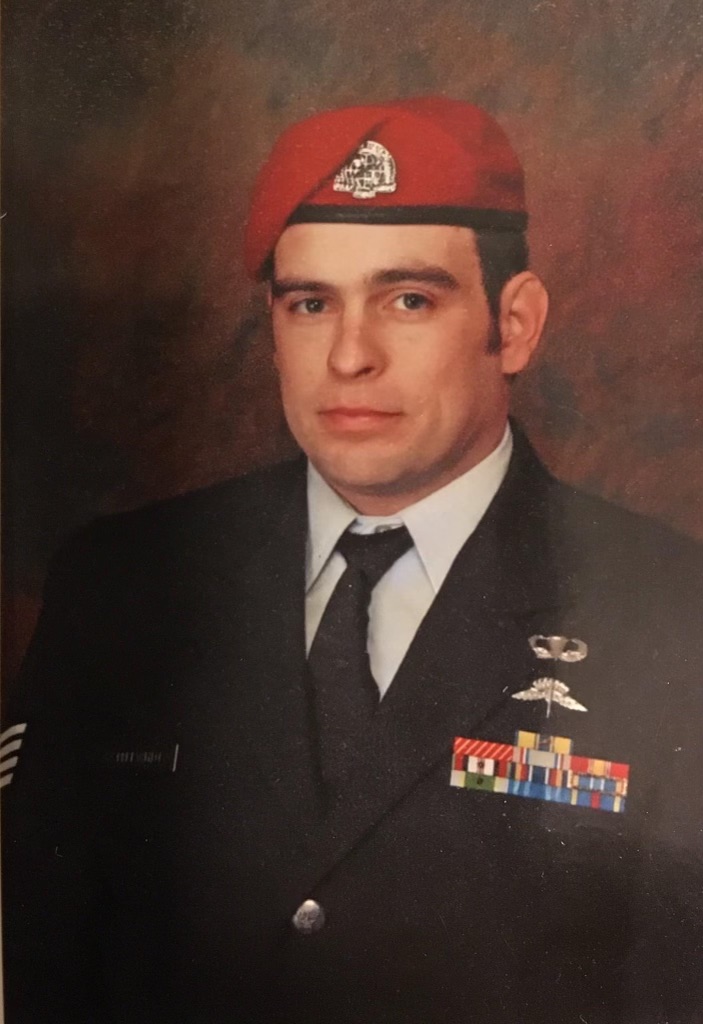

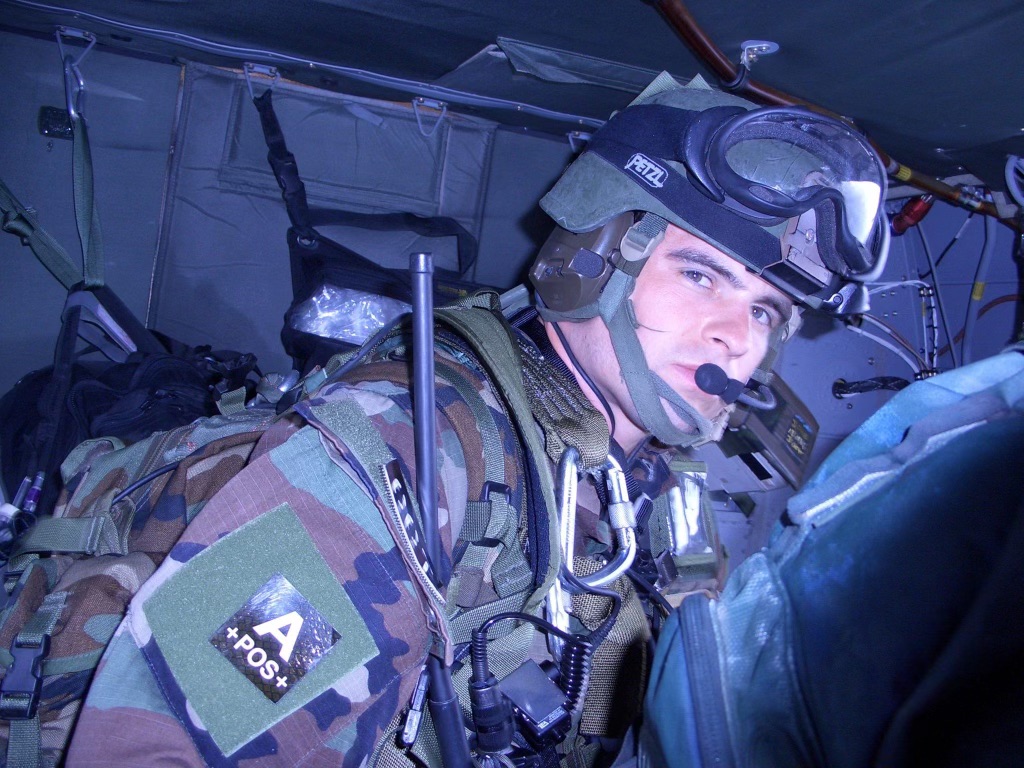
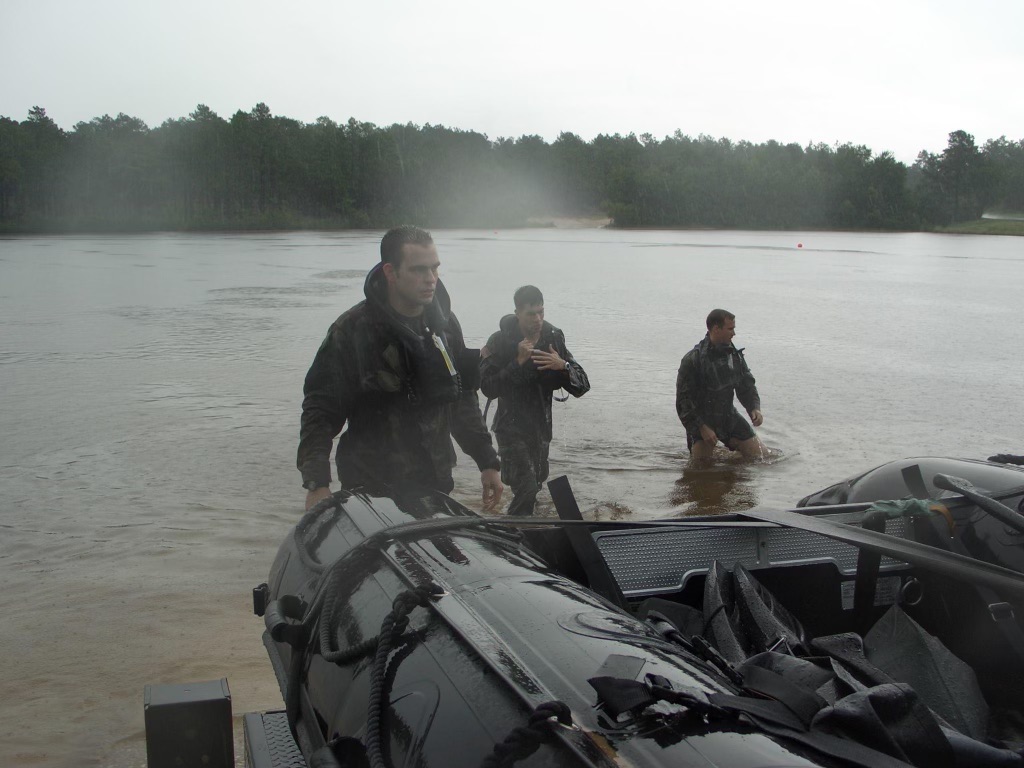
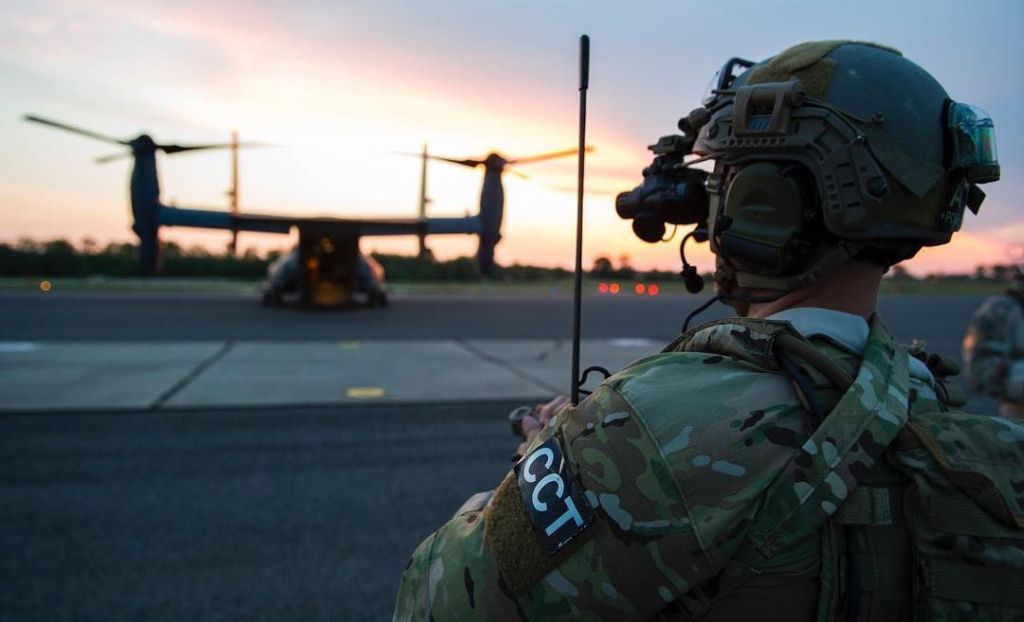

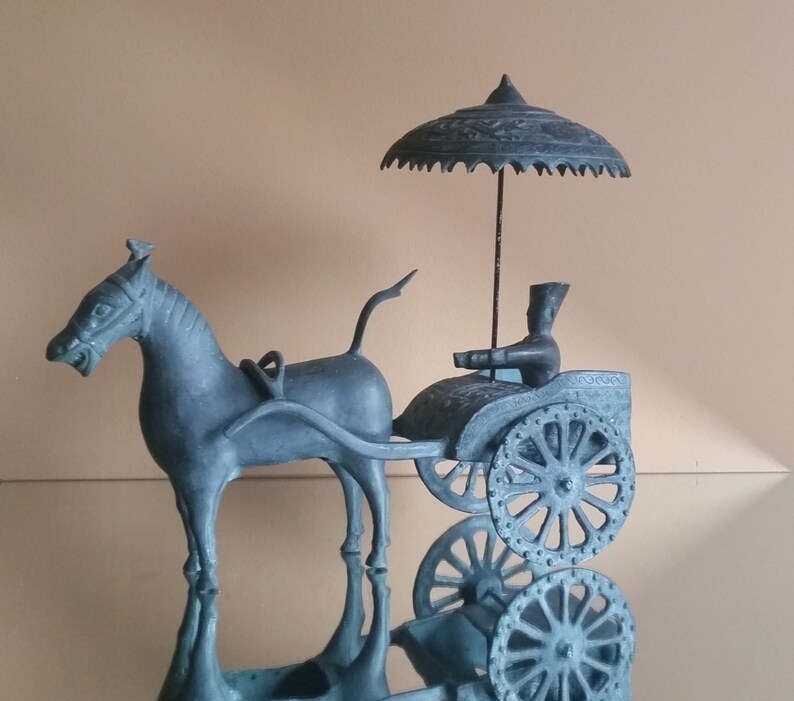

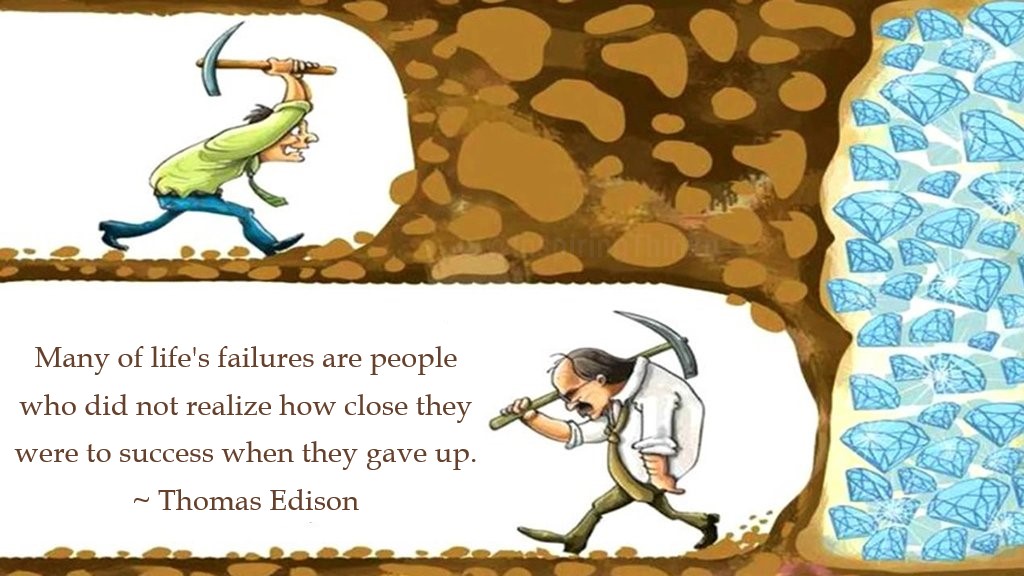
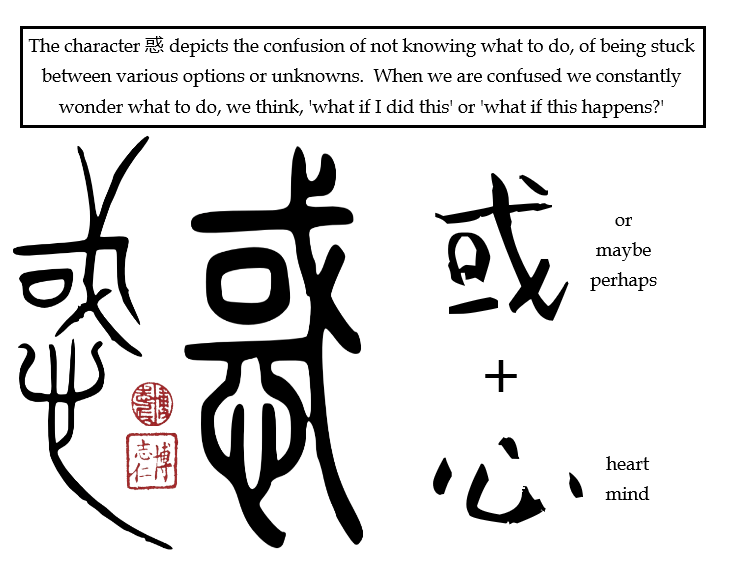

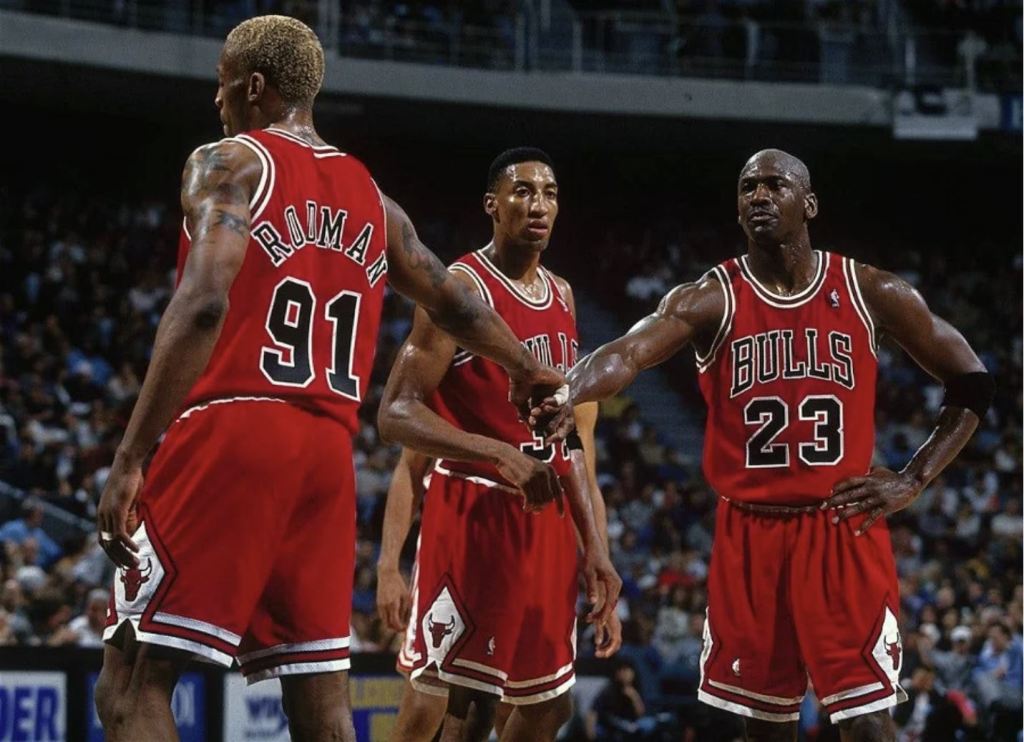

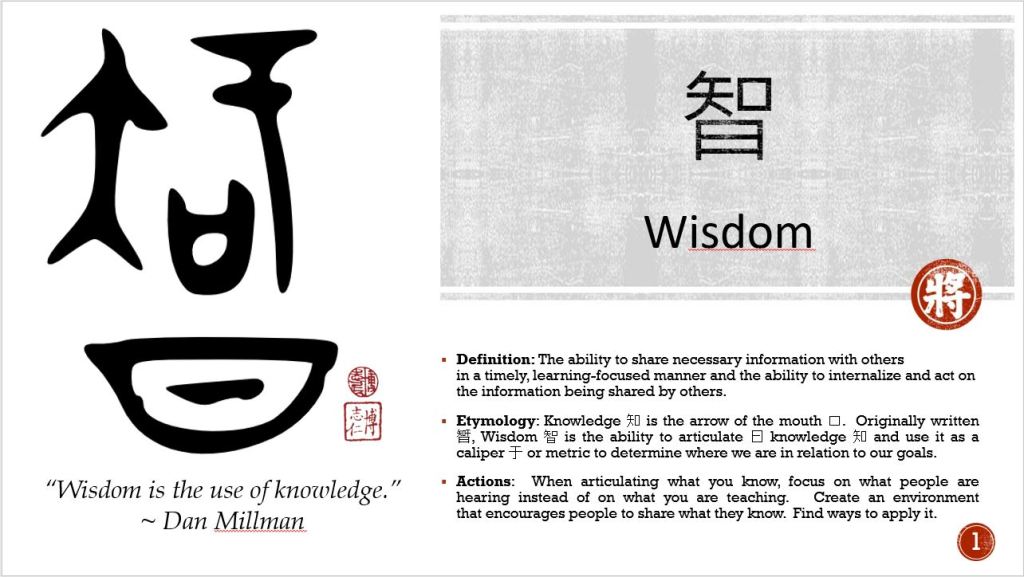

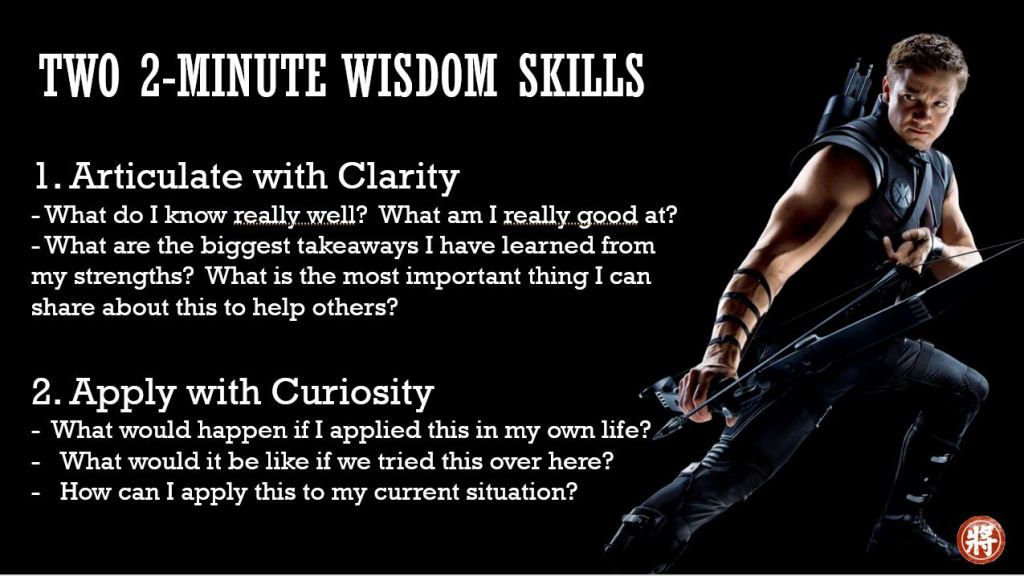
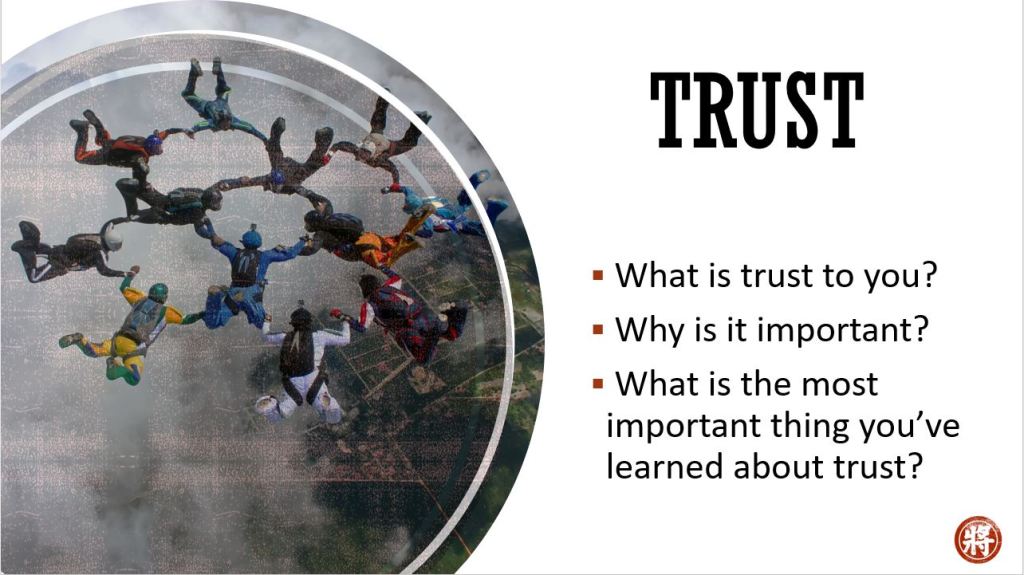
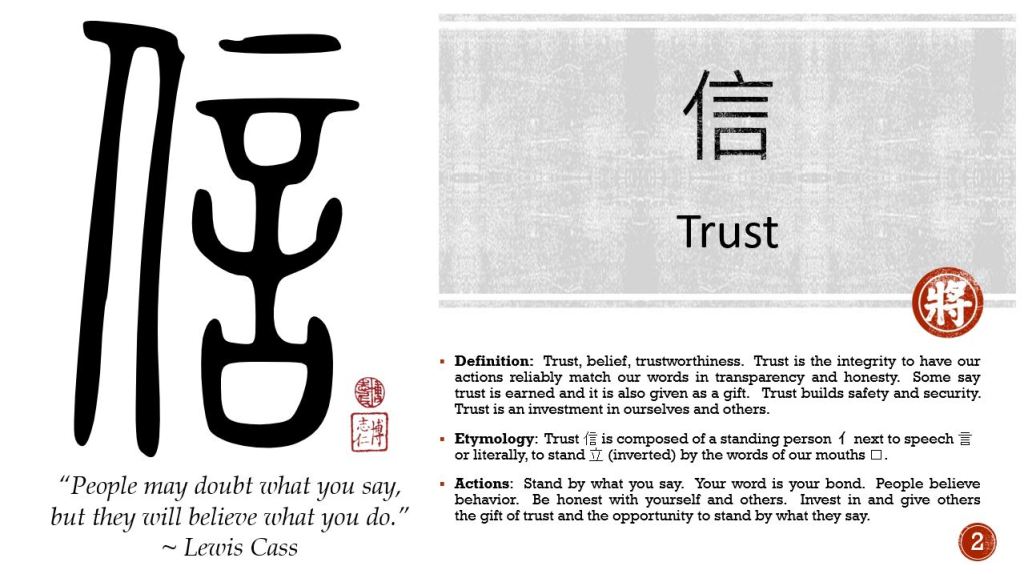
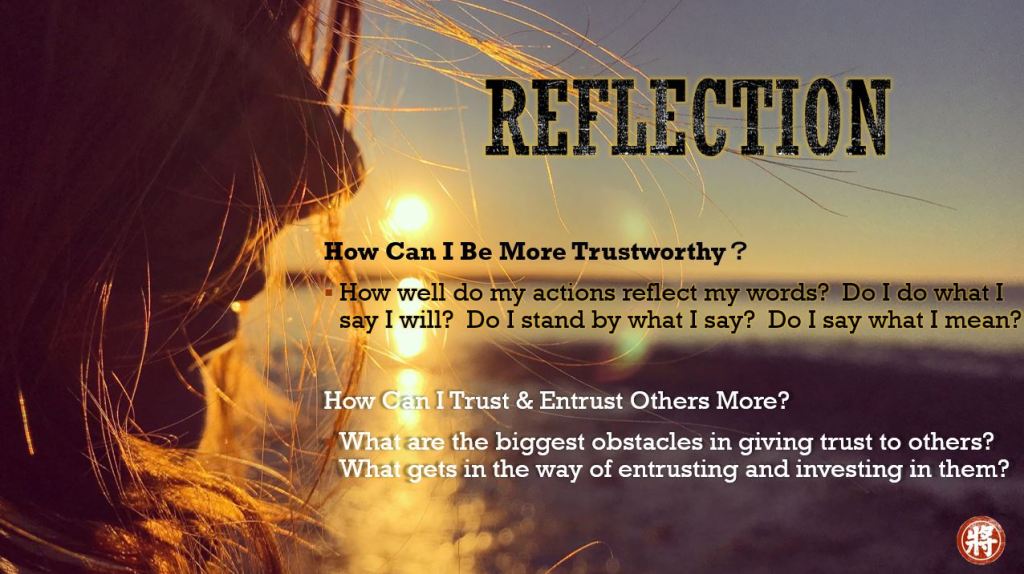
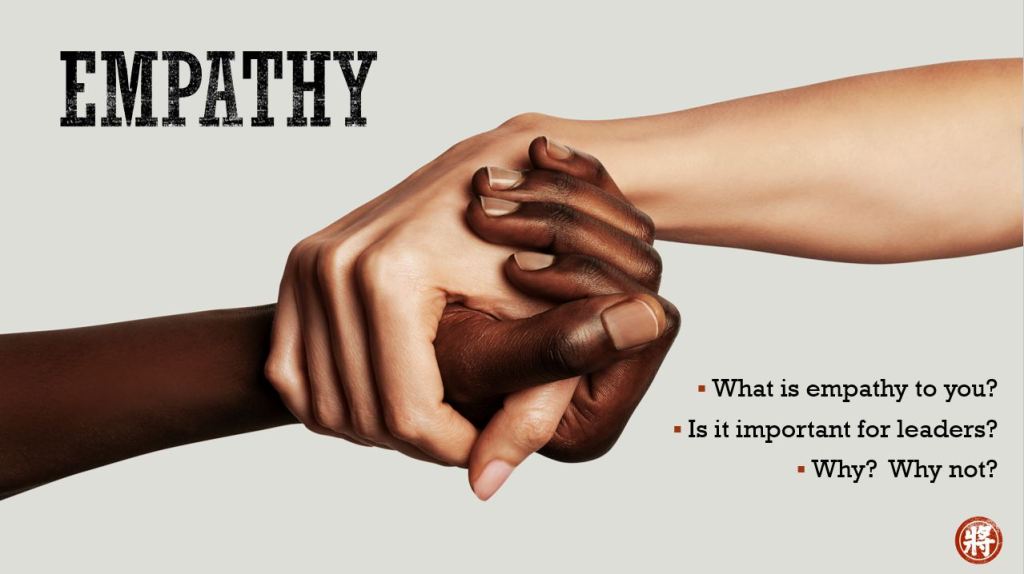
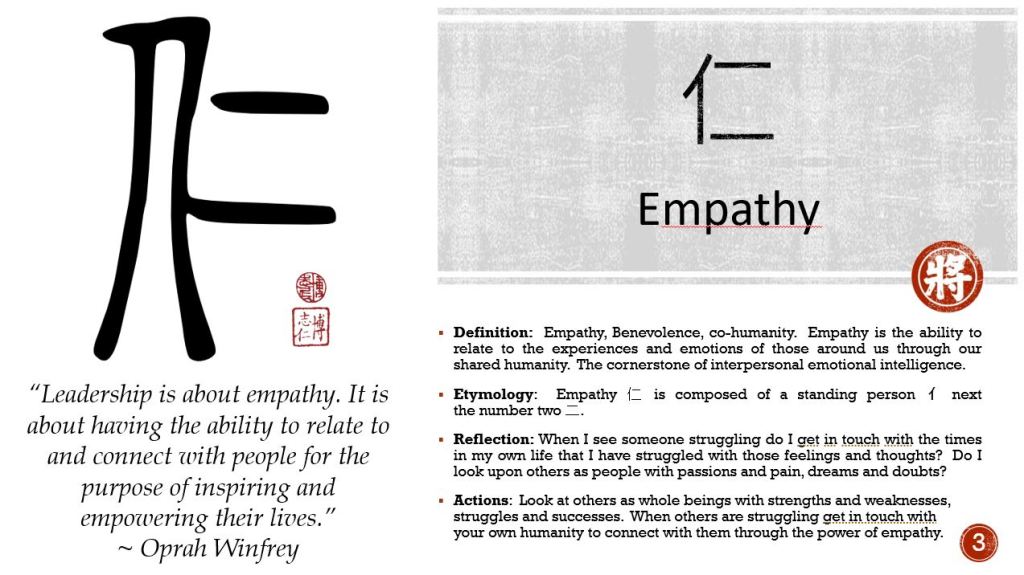
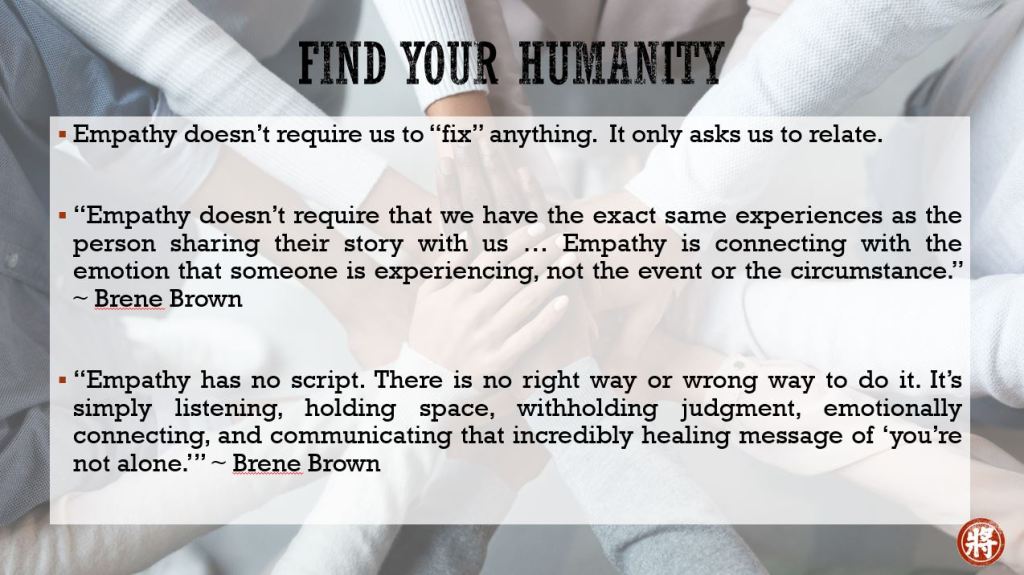


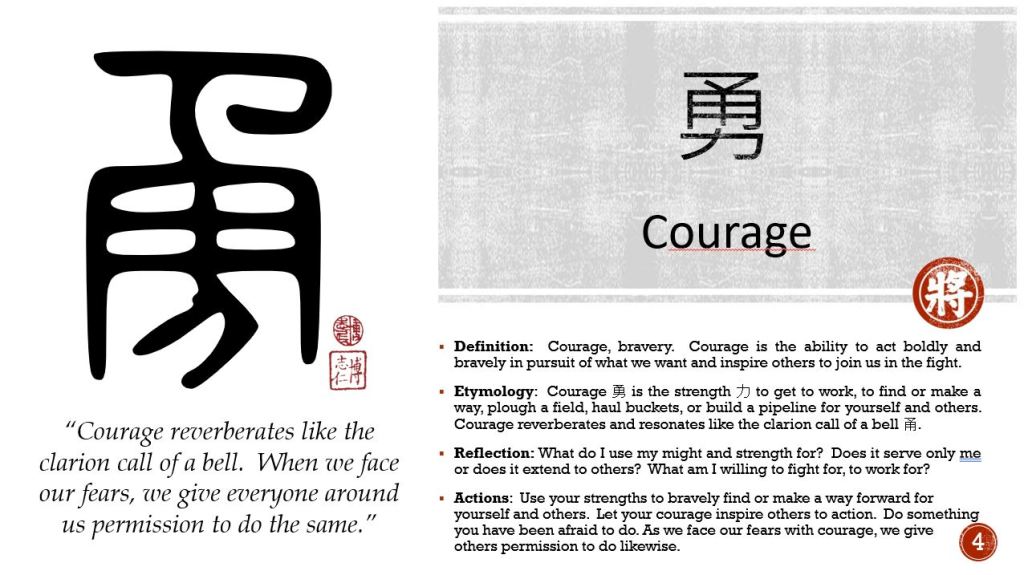
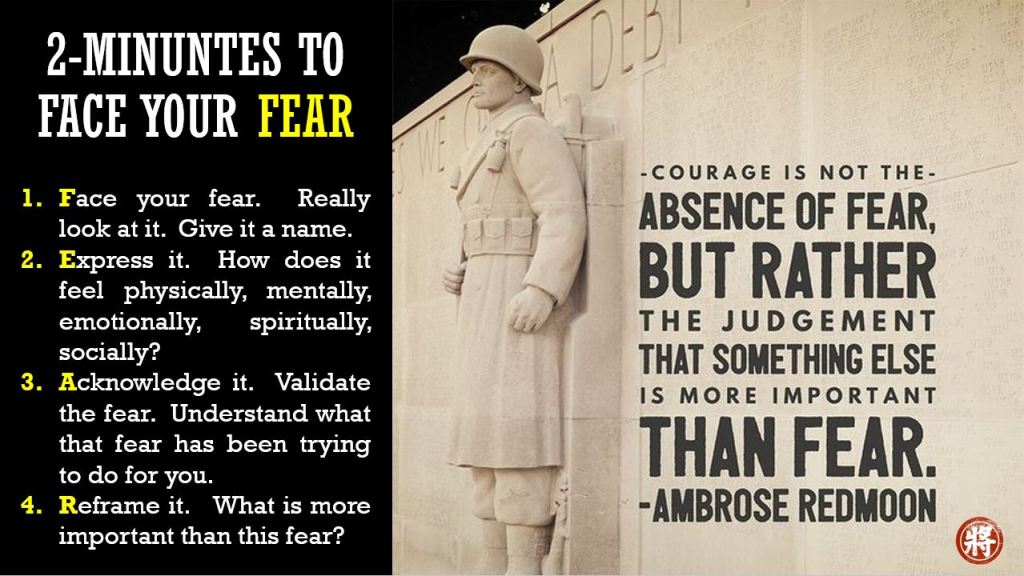



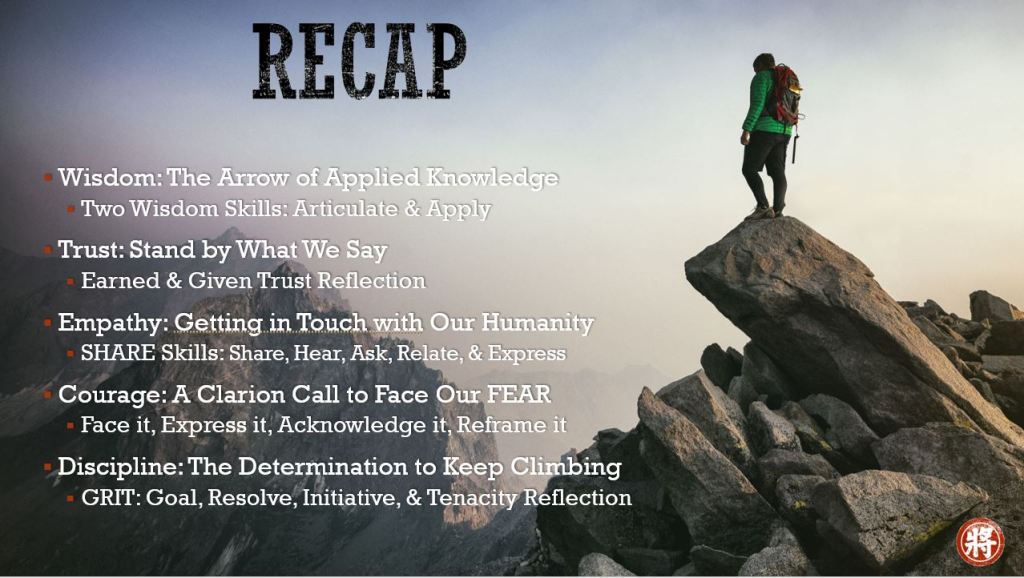









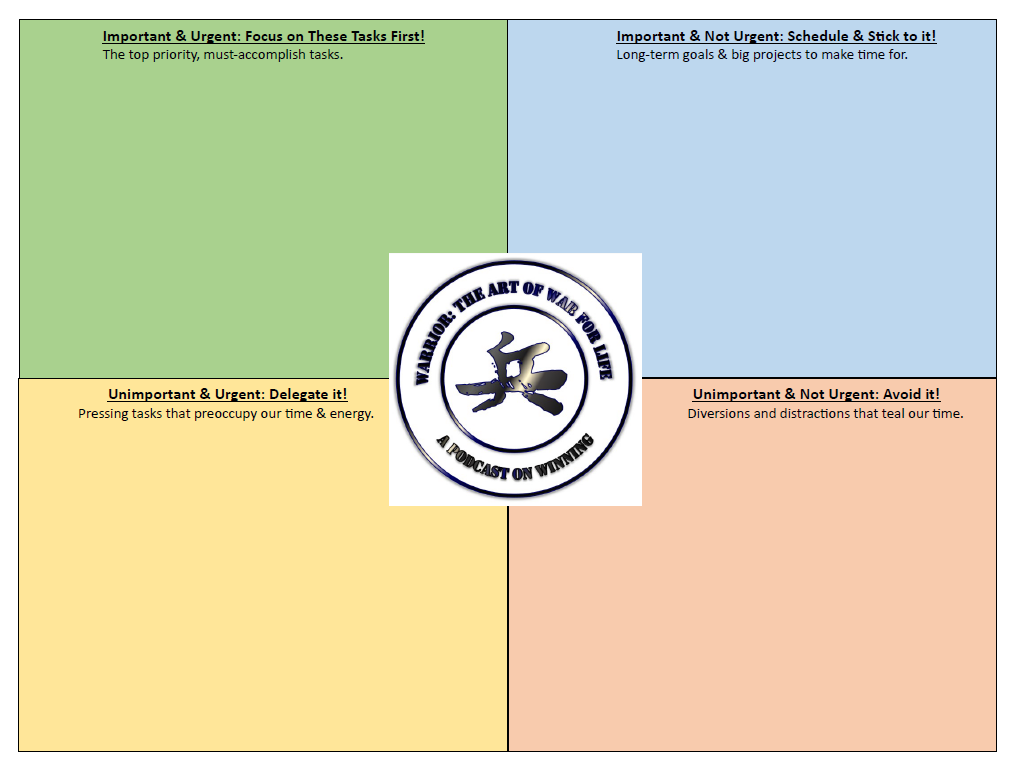

























 Warrior: The Art of War for Life - A Podcast on Winning