
Episode 15: Six Butt-Kicking Battlefield Beatitudes for Becoming the Master of Our Own Destiny!

Summary

In Episode 15 of “Warrior: The Art of War for Life ~ A Podcast on Winning” I discuss six “be-attitudes” for kicking butt and taking names in the battlefield of the mind to become the master of our own destiny! They are:

1. Believe in the Value the Victory We Are Winning 貴勝

2. Be Proactive: Don’t Value Protracted Problems 不貴久

3. Become a Warrior: Understand the Battles We Are Fighting 知兵

4. Be the General on Our Own Future 兵之將

5. Be the Director of Our Own Destiny 民之司命

6. Be the Master of Our Own Security 安危之主

With inspiring quotes from Robin S. Sharma, Stephen R. Covey, Roger McDonald, Giacomo Casanova, and the Buddha this episode is sure to get you fired up to start winning your daily battles with power and purpose!

Soundtrack by Sentius

Transcription

Podcast Intro (Previously Recorded)

Welcome to Warrior: The Art of War for Life – A Podcast for Those Who Want to Win!   Leadership Lessons, Motivational Mindsets, Empowering Principles, Success Strategies, and Transformational Tactics from Sunzi, the Master of Victory

I am your guide on the side, David Boyd, award-winning educator, transformational speaker, and Certified Life Coach.

It’s time to start winning at life!

Episode Introduction

Hey!  Hey! Hey!  Welcome everyone!  Thanks for joining us!  I am so glad you are here listening!  Last week, we discussed Sunzi’s: “Three Tactics for Maintaining Motivation & Growing in Abundance and Strength.”  Next week, I have the distinct pleasure to interview another of my longtime friends, All-American volleyball player, competitive weightlifter, Brazilian Jujitsu champion, USAFA strength and conditioning coach, and U.S. Army Reserve MP Captain Kim Pinske.”  She has such an amazing story everyone, so please tune in!    If you are a visual learner like me, check out the blog version of this podcast at www.artofwarforlife.com, which includes the Chinese characters I discuss along with additional images.  Don’t forget to join the Art of War for Life Facebook page and follow us on Instagram @artofwarforlife.  For any questions, comments, or to work with me, shoot me an email at: artofwarforlife@gmail.com.  I am so excited for today’s topic, which is “Six Butt-Kicking Battlefield Beatitudes for Becoming the Master of Our Own Destiny!”  So let’s go!

Disclaimer

“And as always: The views expressed in this podcast are my own and do not necessarily reflect the official policy or position of the United States Air Force Academy, the Air Force, the Department of Defense, or the U.S. Government.  Thank you.  Thank you very much!”

Becoming the Master of Our Own Destiny!

In Chapter 2.5 of Sunzi’s Art of War, we read:

Therefore, in war value victory, don’t value protracted campaigns.  Therefore, the general who understands war is the Director of Destiny for the people and governor of the state’s security.

故兵貴勝, 不貴久; 故知兵之將, 民之司命, 國家安危之主也。

In this concluding passage of Chapter 2, Sunzi lists six butt-kicking battlefield beatitudes for becoming the Master of Our Own Destiny.  They are:

1. Believe in the Value the Victory We Are Winning 貴勝

2. Be Proactive: Don’t Value Protracted Problems 不貴久

3. Become a Warrior: Understand the Battles We Are Fighting 知兵

4. Be the General on Our Own Future 兵之將

5. Be the Director of Our Own Destiny 民之司命

6. Be the Master of Our Own Security 安危之主

1. Believe in the Value the Victory We Are Winning 貴勝

In Episode 10, I discussed “Sunzi’s Five Full Send Commitment Tactics for When We Hit the Wall.” The first of these is to visualize the value of the victory we are winning – what it is that we are fighting for, what are we reaching out for in our lives.  The conceptual pair is gui4sheng4 貴勝, which means to value the victory.  If you missed it, go back and check out the detailed analysis.  Today, I’m going to expand on this concept from the perspective of becoming the Master of our own Destiny! 

It’s not enough to just visualize the value of the victory we are winning – that’s just the first step.  In order to become the Master of our own Destiny, we have to grab hold of that vision, that precious prize, that desired outcome with both hands and not let go!  We have to work for it and fight for it with the burning desire and passion and purpose!  To do that, we have to believe in it.  Because our actions are driven by our feelings and our feelings are created by our thinking and our thinking is shaped by our beliefs, to be able to maintain our motivation, like I discussed in last week’s Episode 14, we have to believe two things: First, that we can actually achieve victory, that we can really win in our lives, and Second, that there is actual value in our victory and worth in our work. 

Far too often we fall into those six traps of (self-)deception that I discussed in Episode 6, particularly the “Limiting Lie” that I can’t, I’m not enough, I am incapable, or I am undeserving or the “Futility Farce” – that there is no use.  If we believe that, it doesn’t matter how much we value we see in what we are trying to achieve.  This is why it is essential to “Raise the BAR” on our beliefs – because we need to “Believe” before we can “Achieve” and “Receive” as I discussed in Episode 9

At the same time, we also need to believe that there is actual value in what we are working to create.  Otherwise, we will struggle to maintain motivation and push through when we hit the wall.  Remember, our “why” is our way forward, which is one of Sunzi’s Five Strategic Success Factors, I discussed in Episode 3.

This is why the first secret to becoming the master of our destiny is to value the victory.  We have to want to win, believe we can win and are deserving and worthy of that victory;  we need to know – to believe deep down inside that all the blood, sweat, and tears that we are shedding, that what we are fighting for, what we are working towards, what we are sacrificing for, and pouring our heart and soul into is valuable and needed in this world!  Without that banner belief, we will have no bedrock upon which to build our “Big Deals.”

2. Be Proactive: Don’t Value Protracted Problems 不貴久

The second butt-kicking battlefield beatitude to becoming the Master of our own Destinies is to not place value on protracted problems.  This ties back to taking decisive action now and not letting problems and challenges linger for a long time in our lives, which is the second of “Sunzi’s Five Full Send Commitment Tactics for When We Hit the Wall,” which we also discussed in Episode 10.

Far too often, we let problems drag on unacknowledged, unaddressed, and unresolved.  What’s worse, we can begin to identify with, feel permissive toward, and even feel comfortable with chronic conditions, longstanding situations, or perpetual drama.  Do you know someone who just seems to be a magnet for all sorts of problems and drama?  Have you ever felt like things were going to well and were uncomfortable or uneasy with how smooth life was?  As dysfunctional as it may seem, some of us get so caught up and used to being in survival mode that we don’t know how to live without the “Constant Chaos” and “Distracting Drama” that I discussed in Episode 6.  What does it mean to be proactive?  According to Canadian author and thought leader Robin S. Sharma: “Being proactive means you shape circumstances and they do not shape you.”  So in the words of Stephen R. Covey: “Be proactive.  Ask yourself, ‘Are my actions based on self-chosen values or on my moods, feelings and circumstances?’”

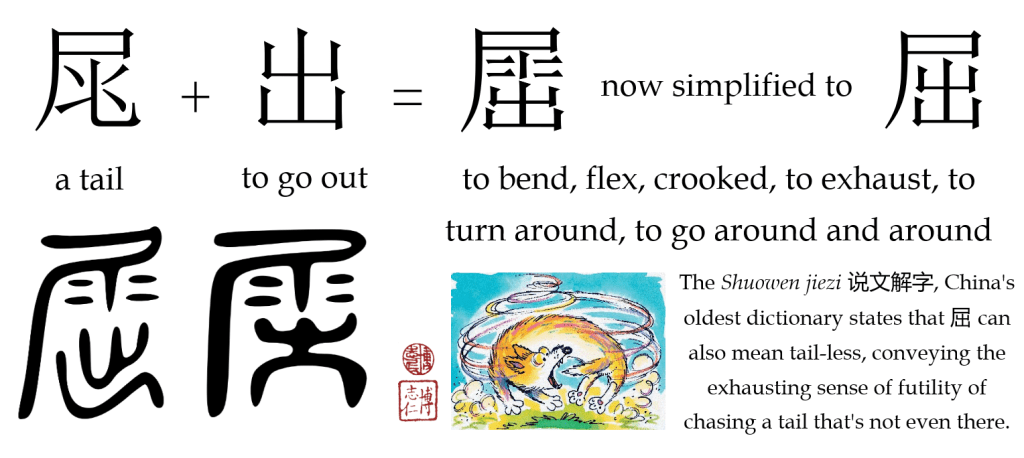
There is absolutely no value in running around in circles, like a dog chasing its own tail, letting problems, challenges, and issues linger long in our lives and letting the atrophy of indecision weaken our resolve and our wills until, exhausted, we just lay down and accept – settle for a less than life and a diminished destiny!

3. Become A Warrior: Understand the Battles We Are Fighting 知兵

Sunzi’s third butt-kicking battlefield beatitude to becoming the Master of our own Destinies is to become a warrior – to understand the battle and the warrior mindset.  We need to know the nature of the actual battles we are fighting and the actual enemies we are facing, as I discussed in Episode 13: “Three Secret Strategies for Overcoming Our (Inner) Enemies.”  Knowledge is the arrow and, as I discussed in Episode 4: “Level Up Your Life!  Sunzi’s Five Essential Attributes of Great Leaders” wisdom applied knowledge or the ability to hit the target with the arrow of knowledge.  To do that, we need to know what we are fighting for, what we are fighting against, and what we are shooting at.  What is our target?  If we don’t understand the nature of the daily battles we are engaged in, how can we ever hope to win?  We may end up fighting the wrong battles.

Throughout my life, I have struggled with some self-sabotaging and self-destructive behaviors, bad habits, and patterns.  I thought that they were the real problems and if I could just stop doing those things – if I could just defeat those inner enemies that my life would be perfect.  It wasn’t until I learned that these behaviors were just a symptom – a manifestation of an underlying issue and were being driven by much deeper beliefs – limiting lies – that I had accepted about myself, about others, and about the world, that I realized that the behaviors were not the actual problem or the real enemy – they were just a band-aid, my misguided attempt to cope with and escape from the actual source of the problem – the pain of my beliefs.  My first inkling of this idea came decades ago before I began studying or even knew about the warrior mindset.  One day I was out pulling weeds, nasty thistles.  It was hard work uprooting each one completely and despite wearing thick gloves, my hand and fingers were pierced repeatedly with the sharp barbs.  As I looked at the vast area of weeds I needed to pull – the immensity of the problem I needed to resolve – I felt overwhelmed and insufficient for the task.  In a moment of desperation, I decided to just pop the tops off, knock them all down with the weed eater, and deal with the rest later.  It was much easier, much faster, and when I was done the patch looked good – for a while.  But a few weeks later, the thistles were back in force, larger and more numerous than before.  I have reflected on this incident many times since. 

I have settled for temporary band-aid solutions in so many areas of my life for so long without doing the difficult and sometimes painful work of getting to the root issue because I felt overwhelmed, ill-equipped, was more interested in appearances, or just didn’t want to spend the time dealing with it.  What I have learned about this is that our problems will continue to grow and fester beneath the surface until we uproot them.

What do we actually need to cut down on or cut out of our lives and what are the inner enemies that prevent us from passionately and powerfully pursuing our purpose on this planet?  What and where are the lumbering limits and limiting lumber that block our way forward?  What are the actual limiting lies, debilitating doubts, and festering fears that need to be clear cut from our forest of thought and our garden of beliefs?  The more that we can learn – the more intelligence we gain – about our problems and challenges, the more we empower ourselves with the arrows of applied knowledge.  Once we have identified the real enemies in our thinking and beliefs and have assembled a quiver full of solutions, it is time to go to war!

4. Be the General of Our Futures 兵之將

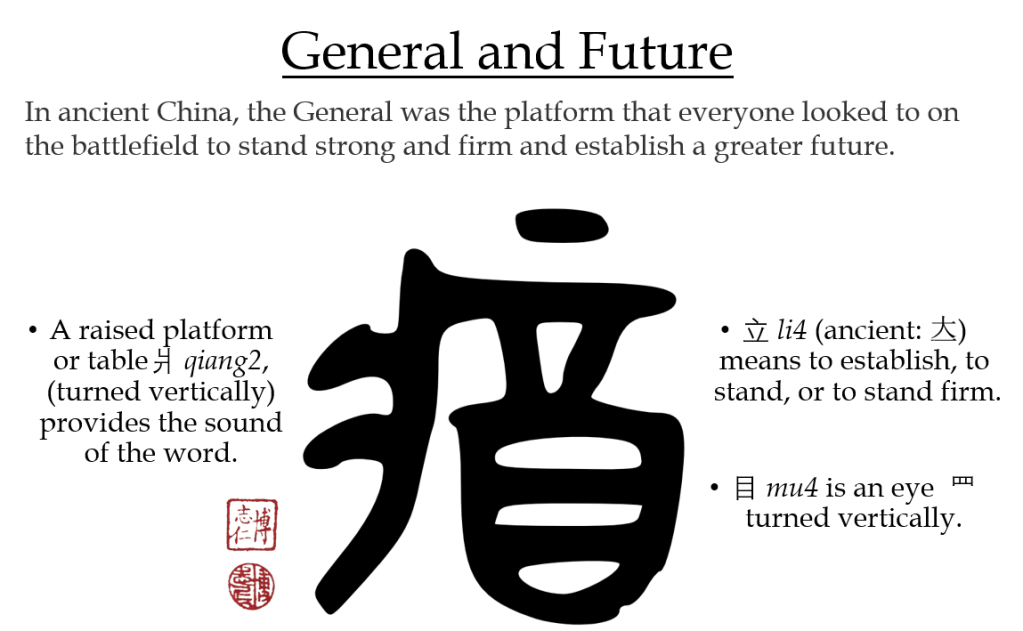
The fourth butt-kicking battlefield beatitude to embrace to start winning our battles is the be the general of our futures!  The Chinese character for general is jiang1 將 (simplified: 将).  Interestingly, it is also the character for “future.”  Its current etymology is a bit muddled as it depicts a simplified version of ribs or meat ⺼ (full: 肉) above a hand and thumb 寸, which doesn’t give any insights into the word.  However, the ancient character form as recorded on Zhou Dynasty bronze inscriptions from 3,000 years ago is clearer, comprised of a platform爿 (qiang2, which also serves as the phonetic) beside the character to “establish,” to “stand,” or to “stand firm” or “stand strong” 立 (li4; ancient form: 𡗓), which is itself comprised of the word for great or large 大 (da4) standing strong firm or large on the ground, above a sideways eye 目 (mu4).  Taken together, the etymology reveals that in ancient China, the general was the platform that everyone looked to on the battlefield to stand firm and establish a stronger “future.”  This also helps explain the meaning of “future” associated with this word as in the modern Chinese term for “future” 将来 jiang1lai2, which literally means: “when the general arrives.”  At some future point in time, when the general arrives on the battlefield everything will get sorted out, become firmly established, and there will be a greater, better future.
In the battlefield of the mind, our thoughts are like un-enlisted soldiers or mercenaries.  Left to themselves without discipline and good order, they may get us into quite a bit of trouble.  They may fight for us or they may work against us.  Without a unifying vision and overarching strategy, our thoughts and the underlying beliefs that shape them, may undermine what we actually want in our lives, out of our lives, and for our lives.  The good news is that we are in charge of our thinking, we get to choose what we will believe about ourselves, each other, and the world.  It is time to call our thinking to attention and enlist our beliefs in the pursuit of our “Big Deals,” of who we want to be and the future we want to create.  If we don’t become our own generals out there on the battlefields of life and most importantly on the battleground of the mind within, how can we ever hope to win?  If we don’t work and fight for what we want, we most likely end up working and fighting for other people’s dreams and goals.

In our lives, it is time for our own inner general to come to the battlefield, take charge of the campaign, and firmly establish a better, stronger, and greater future!  So congratulations, you just got battlefield promoted to Brigadier General of your own battalions of beliefs.  It’s up to you to firmly establish a vision for your personal mission on this planet.  Go get ‘em tiger!

5. Be the Director of Our Own Destiny 司命

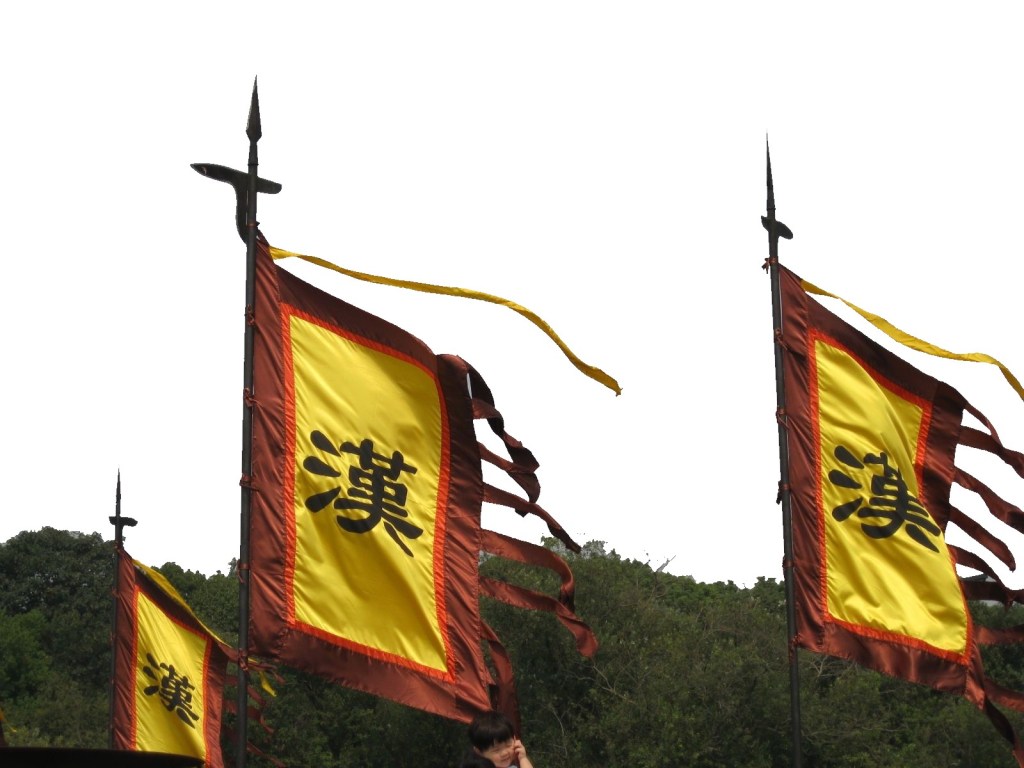
The fifth butt-kicking battlefield beatitude we need to embrace to start winning our daily battles is to be the Director of our own lives.  The term Sunzi uses here is fascinating and empowering.  It is Si1ming4 司命, which was an official title in the spiritual pantheon of ancient China meaning “Director of Destinies” or “Director of Life-Mandates.”  In ancient China, the term 司 si1 meant to take charge, preside, manage, or command.  It is comprised of a left-facing person 亻 above a mouth 口 (kou3).  The term 命 (ming4) refers to a life or death decree from above, orders to be followed at all costs, missions that took precedence above all else.  The character depicts a downward facing mouth speaking an edict or decree from above 亼over an upward facing mouth 口 beside a person kneeling 卩.

In asserting that the General was the Siming or Director of Destinies, Sunzi is arguing that held the fate of the people in his hands.  Similarly, the degree to which we will control or create our own destinies is tied to how much we take charge of and personal responsibility for our own lives.  We are in charge.  Regardless of what the River of Life brings our way, we get to choose how to navigate our RAFT.  Regardless of what happens to us, regardless of where we started out in life and what opportunities we may or may not have had, we get decide what we are going to do with what we’ve been given and what we’re going to make of ourselves.  We are the only ones – we hold our destinies in our own hands and we have all the tools and resources available to us to make whatever we want out of our lives!  In the words of Australian author, poet, and scriptwriter Roger McDonald: “I am master of my own destiny, and I can make my life anything that I wish it to be.”  Do we believe that?  If not, why not?  This belief is priceless.  As Italian adventurer Giacomo Casanova wrote: “My great treasure is that I am my own master, that I am not dependent upon anyone, and that I am not afraid of misfortunes.”  Even when we make mistakes and face hardship, we get to be in charge, we get to direct our own destinies – no one else! 

Throughout Asia lotus flowers are beautiful symbols of purity, healing, and rising above.  Because they rise out of the mud, they symbolize transcendence and our ability to grow, rise up, and overcome our past, our starting points, and our character defects.  As the Buddha taught: “As a lotus flower is born in water, grows in water and rises out of water to stand above it unsoiled, so I, born in the world, raised in the world having overcome the world, live unsoiled by the world.”  I have always loved that imagery and symbolism.  Just like the lotus, we too have the ability to rise above the mud, muck, and mire.  Each of us can bloom out of the deepest darkness and radiate light and beauty into the world.  We are the ones who get to decide what we will live for, what we will die for, what we will rise above, and what we will overcome.  We are the Directors of our own Destinies!

6. Be the Master of Our Own Security 安危之主

The sixth and final butt-kicking battlefield beatitude we need to embrace to start winning our daily battles is to be the master of our own safety and security.  The Chinese term for master is 主 (zhu3), which originally meant the light of a lamp and only later came by extension to mean ruler, lord, or master.  Each of us is a light and a lamp – a vessel and vehicle for light.  Each of us can light our own way and shine and be a light for others.

What does Sunzi say we are the master of?  While the military general is the master of the safety and security of the nation, each one of us is the master of our own safety and security, our own risk and danger.  The Chinese term is an1wei1 安危, which literally means safety or security and danger. 

I like the etymology of danger 危 (wei1), which depicts a kneeling person both above and below a cliff.  In facing the dangers of life, we get to decide whether we will scrape and claw and climb our way to the top of the cliffs of challenge.  Will we fall to our knees in victorious celebration at the summit or will we take a knee before the climb has even begun. 

We get to pick our own battles.  We get to manage our own risk.  We get to decide our own comfort level when it comes to risk and security.  We get to choose where to play it safe in life and where to climb the cliffs of challenge.  Each of us has the opportunity to make enlightened decisions in our lives.

Conclusion

Today we have discussed six butt-kicking battlefield beatitudes to embrace to become the Master of our own Destinies from Sunzi’s Art of War.  They are:

1. Believe in the Value the Victory We Are Winning 貴勝

2. Be Proactive: Don’t Value Protracted Problems 不貴久

3. Become a Warrior: Understand the Battles We Are Fighting 知兵

4. Be the General on Our Own Future 兵之將

5. Be the Director of Our Own Destiny 司命

6. Be the Master of Our Own Security 安危之主

First and foremost, we need to believe in the value of the victory we are winning.  We need to grab that vision and hold on to it with both hands.  We need to believe that what we are working for, fighting for, and sacrificing for is worth every effort and that we can and will achieve victory, whatever that looks like for us!  Victory is in our grasp so don’t let go.  Don’t give up.  Don’t give in.  Don’t quit.  Don’t settle.  Keep trying!

Second, be proactive and make things happen.  Don’t wait around for someone else to come solve our problems for us.  It’s on us!  There is no value in burying our heads in the sand, turning a blind eye, and pretending everything is fine.  It may hurt at first, it may really suck at times, but being proactive about what we want in our lives, out of our lives, and for our lives gives us back our power to respond to whatever the River of Life throws at us and, which allows us to ultimately shape our destiny!  So get up, get out there, and do something!  Take a step toward what we really want.  Make a move – even if it doesn’t work out right away.  Keep at it and it will!

Third, become a warrior!  Stand up and fight for what we want.  Gather intelligence, learn, gain knowledge – for knowledge is the arrow.  Get clear on what our objectives are and what the real enemies are that stand in the way.  Then start taking them out one by one!  Face our fears, defeat our doubts, eliminate our limiting labels, empower our expectations, and raise the bar on our belittling beliefs!  Take our shot – let’s be a little more Hawkeye or little more Legolas!  Let be more awesome archer and less quivering coward in our minds!

Fourth, be the general of our own futures!  It’s time to look to ourselves for firm leadership out there on the battlefield of life and in the battleground of our own minds.  Embrace our battlefield promotion as Brigadier General of our lives and start enlisting battalions of empowering beliefs and tactical thoughts to fight for what we want rather than allowing the neglected mental mercenaries to run amok in our minds, pledging their allegiance to highest bidder in the moment.  It’s time to pin on the “Star” and get to work.  No one else can do it for us.

Fifth, be the Director of our own Destiny!  We get to decide what we will think, say, and do with the time we have been given on this planet and since none of knows how long that is, we get to control and take charge of this present moment – the here and now!  We get to decide what we are going to give our lives to, what we are going to live for and die for.  That is how we direct our destiny!  Like the lotus flower, at any moment we can choose to rise above our muddied past.  Each of us is beautiful, powerful, and awe-inspiring! 

Lastly, be the Master of our own safety and security.  Don’t wait for someone else to step in and protect us or save us from danger!  Each of us is our own lamp and we can radiate and shine – choosing for ourselves where we want to create a safe home base and where we want to take some risks and climb the cliffs of challenge.  Each of us has the power and ability to make enlightened choices and decisions that let our lights shine and not just to curse the darkness around us! 

So believe in the value of the victory we are winning, be proactive in pursuing it, become a warrior and empower ourselves and each other with the arrows of applied knowledge, be the general of our own future out there on the battlefield of life and in the battleground of our own minds, be the director of our own destinies, and be a light-bearer, master of our safety and security – choose to kneel in victory atop of the cliffs of challenge we have overcome and not to take a knee before the battle has even begun.  You can do it!  You can win and the victory of winning the inner battles of life is far sweeter than anything we can imagine out there.  It is worth every effort.  You are worth every effort!  So invest in yourself!  Believe in yourself!  Empower yourself!  Don’t give up!  Don’t settle!  Keep trying!  Keep fighting!  Keep learning!  Keep giving yourself grace and space!  Keep rising above the muck and mire of circumstance!  You are the Master of your own destiny and your destiny is greater than you can even imagine right now!  Great things are coming!  It’s going to happen!

Outro

Thanks so much for listening everybody!  If you found this podcast impactful, please like and subscribe, and join us for new episodes every “Warrior Wednesday.“  For more information, tools, and resources to help you in your daily battles, for questions or to work with me, shoot me an email at: artofwarforlife@gmail.com.  Most importantly, always remember: “The power to win resides within!  There is ALWAYS a Way!”
Support this podcast: https://podcasters.spotify.com/pod/show/david-boyd3/support


Episode 14: Three Tactics for Boosting Morale, Maintaining Motivation, & Growing in Abundance and Strength!

Summary

Have you ever wanted to feel better and more motivated? Have you ever longed for greater abundance in your life? Have you ever wanted to be stronger, physically, mentally, or emotionally? In this episode of “Warrior: The Art of War for Life,” I discuss Sunzi’s “Three Tactics for Boosting Morale, Maintaining Motivation, and Growing in Abundance and Strength.” They are:

1. Reward Ourselves the First Time We Achieve & Celebrate the Small Victories

2. Change Our Banner Beliefs, Raise Our Flag, Send a New Message!

3. Be Gracious in Victory & Defeat – Treat Ourselves (& Others) Excellently, Nurture & Nourish – Especially in Defeat & Difficulty – Don’t Skip Our Self-Care

With inspiring quotes by Arnold Schwarzenegger, Brene Brown, Tara Westover, Renee Peterson Trudeau, and Susan Weiss Berry and powerful teachings from Rock Thomas, Carol Dweck, and Abigail G. Manning, this episode is certain to uplift and empower!

Please like and subscribe! Follow us on Instagram @artofwarforlife and join the Art of War for Life Facebook page. For the blog version, please visit our website at: www.artofwarforlife.com. For questions or to work with me, email: artofwarforlife@gmail.com

Original soundtrack by Sentius.

Remember: The power to win, resides within! There is ALWAYS a Way!

Transcription

Episode Introduction

Hey!  Hey! Hey!  Welcome everyone!  Thanks for joining us!  I am so glad you are here listening!  Last week, we discussed Sunzi’s: “Three Secret Strategies to Overcoming Our (Inner) Enemies!” Next week, we are going to discuss how to become the “Master of Our Own Destinies!”  So, stay tuned.  If you are a visual learner like me, check out the blog version of this post at www.artofwarforlife.com, which includes the Chinese characters I discuss along with additional images.  Don’t forget to join the Art of War for Life Facebook page and follow us on Instagram @artofwarforlife.  For any questions, comments, or to work with me, shoot me an email at: artofwarforlife@gmail.com.  Today we are going to talk about “Three Tactics for Maintaining Motivation & Growing in Abundance and Strength.”  So let’s go!

Disclaimer

“And as a reminder: The views expressed in this podcast are my own and do not necessarily reflect the official policy or position of the United States Air Force Academy, the Air Force, the Department of Defense, or the U.S. Government.  Thank you.  Thank you very much!”

Three Tactics for Boosting Morale, Maintaining Motivation, & Growing in Abundance and Strength!

In Chapter 2.4 of Sunzi’s Art of War, we read:

Thus in chariot warfare, when ten or more chariots are seized, reward the first to the one who seized them and change the flags and banners.  Then, intermix the chariots and drive them with ours.  Treat the prisoners of war excellently and nourish them.  This is what is called defeating enemies while increasing abundance and strength.

故車戰, 得車十乘以上, 賞其先得者,  而更其旌旗, 車雜而乘之, 卒善而養之,  是謂勝敵而益強。

While this passage may seem somewhat obscure at first, in it Sunzi identifies three tactics for boosting morale, maintaining motivation in the crucible of combat and growing in abundance and strength.  These are perhaps even more relevant in fighting our own daily battles.  They are:

1. Reward Ourselves the First Time We Achieve & Celebrate the Small Victories 賞其先得者

2. Change Our Banner Beliefs, Raise Our Flag, Send a New Message! 更其旌旗

3. Be Gracious in Victory & Defeat – Treat Yourself (& Others) Excellently, Nurture & Nourish – Especially in Defeat & Difficulty – Don’t Skip Your Self-Care 卒善而養之

1. Reward Ourselves the First Time We Achieve & Celebrate the Small Victories 賞其先得者

The first of Sunzi’s three tactics for boosting our morale, maintaining motivation, and growing in abundance and strength is to incentivize and reward ourselves.  The Chinese character meaning to “reward” is shang3 賞 (simplified: 赏).  It is comprised of the word “still” 尚 (shang4, which is the phonetic) above our well-known and often discussed cowry shell 貝 (bei4).  The character “still” can be further broken down to the number “eight” 八 (ba1) and “direction” or heading 向 (xiang4).  Taken together, the etymology of the word “reward” conveys the sense that there is still value in the journey, that as long as we are still making progress and heading off in the direction of our destination, it is worthwhile – even if we still have a long way to go – even if we are only an eighth of the way there!  We are still moving forward and there is value in that progress.  Remember, our direction determines our destination and our destination our decides destiny!

The Chinese character for “achieve” is de2 得, which means to attain, obtain, acquire, or gain.  It is comprised of an intersection or crossroad on the left 彳beside the word “to obtain” 㝵 on the right.  The graphic form of this word has undergone some evolution.  The ancient form (𠭁) dating back almost 3500 years ago depicted a cowry shell 貝 above a reaching hand 又.  Taken together, these elements convey the idea of the journey to strive for and attain something of value.

Sunzi understood the importance of celebrating the small victories.  In Episode 3, Sunzi’s Five Strategic Success Factors, I spoke on the importance of leveraging the landscape and creating a climate conducive to conquering and overcoming.  I used the metaphor of setting out on a journey – a journey of self-discovery.  As we set out on our journey in pursuit of our “Big Deal,” our “Grand Endeavor,” or our “Personal Mission,” as we move from where we are to where we want to be in our lives, as we begin to fight our daily battles against the real enemies of fear and doubt, unworthiness and weakness, entitlement and laziness within, we are going to reach the limits of our understanding, the edges of our comfort zone, the familiar boundaries that we have set in place for our lives and we are going to have to move beyond and push past them as we set out along the “road less traveled.”  In order to boost our morale, master our motivations, and maintain forward momentum to keep putting one foot in front of the other as we move further and further into the uncertainty of uncharted territory, we need to reward ourselves – especially early on and the first time we reach a landmark on our journey, pass a milestone, achieve a personal best or accomplish something we’ve never done.  We need to affirm ourselves and celebrate the small victories, no matter how trivial.

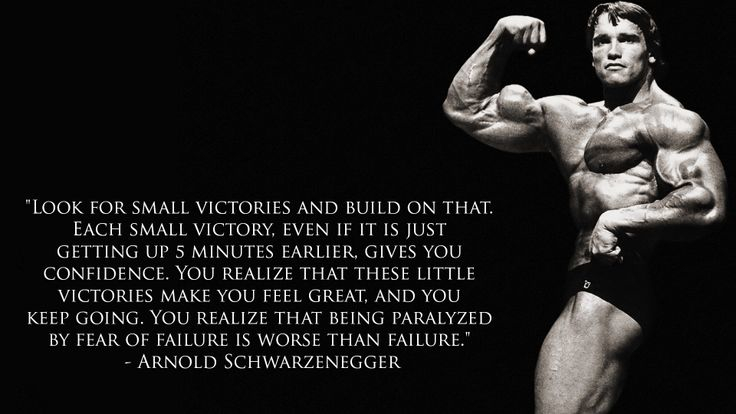
Returning to Arnold Schwarzenegger: “Look for small victories and build on that.  Each small victory, even if it is just getting up five minutes earlier, gives you confidence.  You realize that these little victories make you feel great and you keep going.  You realize that being paralyzed by fear of failure is worse than failure.”  So celebrate the small successes, for every little victory counts!

Sunzi suggests using what I call the “Rule of 10.”  The “Rule of 10” is a way of dividing up larger goals into smaller more manageable tasks – simply divide it up into 10 smaller goals and celebrate each one as we accomplish them.  If, for example, the goal is to save $10,000, celebrate at each $1,000 increment.  Take $100 of that first $1000 and do something with it that you’ve always wanted to or that you will really enjoy and actually celebrate! 

If the goal is to build up to running 10 miles, celebrate the first time you run your first mile, then two, then three.  Celebrate every milestone, in whatever way will increase our energy and enthusiasm because each one is us getting closer to our goals.  This is how we maintain momentum and grow stronger and more abundant.  Too often, we fall into the trap of thinking, I can’t do ten, so what’s the point in doing just one?  If we can flip the script and recognize that we will never do ten until we have done the first one – and that first one is the most important because it gets us started and gets us moving, then we will be on our way.  Then we replicate that for the second and third miles, and so on.  This will drive us as make progress toward our Big Deals.  Once we start celebrating the little victories, we begin to see how infinitely important they are to our success and even our very wellbeing!  By celebrating the little victories and small successes and using them as steppingstones, we focus on the process and the progress we are making rather than being obsessed with an all-too-often distant dream or faraway future that can sometimes seem unreachable, unattainable, or impossible to achieve.  Don’t wait until we’ve achieved our “Big Deals” or realized our dreams to be proud of ourselves.  As we celebrate the little things, we will enjoy the journey more.  Be proud in every step we take toward the life we really want to create.  It’s the small wins, the tiny triumphs, the everyday victories that are most important because without these unsung moments, the great achievements, the pinnacle successes won’t ever happen.  So celebrate them, they will take us there! 

2. Change Our Banner Beliefs, Raise Our Flag, Send a New Message! 更其旌旗

The second of Sunzi’s Three Tactics for Increasing Abundance and Strength is to “Change the Banners – Send a New Message.”  The original context was to seize the enemy’s chariots, change the colors they were flying and incorporate them into the victor’s own army.  This may seem completely irrelevant today, but the underlying principle is actually quite powerful.  In more modern terms, a conquering enemy would seize a defeated foe’s tanks, naval vessels, jets, or helicopters.  However, this is not just about appropriating machinery and tech.  In ancient China, the chariot was the seat of leadership, the symbol of power and right to rule.  Seizing an enemy chariot represented a change in command or, to borrow a metaphor from the business world, to be under “new management.” 

The underlying imagery here is instructive.  The Chinese word used here for “change” is geng4 更, which also means “more.”  The original form of the character 㪅 is comprised of one or two fire-kang 丙 (bing3) over a hand working with a tool 攴.  In traditional China, fire-kang’s were ingenious raised sleeping platforms that had an opening underneath them for a fire.  The warmth of the fire then radiated upward throughout the bed.  As with a fireplace or wood stove in the West, the fires needed to be tended, more logs needed to be added to stoke the fire, and the ashes of previous fires need to be cleaned out to make room for future fires. 

This is where the connection to boosting morale, maintaining motivation, and growing in abundance and strength comes in.  If our motivation and morale is like a flame, a passion burning within us, we need to regularly add fuel to it, stoke the fire, and move the logs around to keep it going.  We also need to regularly clear out the ashes of former fires to make room for future fires.  Thus, increasing abundance requires change.  It requires mixing things up, as I discussed in Episode 7: “Eight Tactics to Transform Your Life.”  It requires clearing out anything in our lives that is spent, used up, burned out, that has no life or energy left in it, or that simply does not serve us any longer. 

So what does Sunzi suggest that we change?  Our banner.  The Chinese character for banner is jing1 旌.  It is comprised of a flag 㫃, which can be further broken down into the word for direction 方 (fang1) beside a person 人 (ren2).  Underneath the person is the Chinese character 生, which means to grow.  Taken together, the etymology of this word reveals that banners gave people direction to grow and create.  In the West, banners were traditionally flags with a slogan representing a core belief on them that were prominently displayed on buildings or during processions.  In China, these banners were also attached to war chariots, so that the soldiers could see the direction their leaders were taking as the battle unfolded around them – it gave them direction and guidance. 

Today, people are bombarded with banner ads all over the internet, media marketing messages promising personal change and more abundance if we rally to their cause by clicking on their link.  What is our personal banner say?  What message are we sending out to the world?  How are we showing up?  What is our status?  Does our banner read: busy, bored, or in a meeting?  Does it say: distracted, disengaged, or unavailable?  How about: accepting offers, help wanted, or on the move?  Is the message: damaged goods, loser, not worth the time or effort?  Subconsciously our “banner” is tied to our core beliefs about ourselves, each other, and the world. 

In Episode 2, I mentioned that often when we set out in pursuit of our “Big Deals” we may have the vision to accomplish our grand endeavors, but we may lack the beliefs to do so.  In Episode 9, I discussed the importance of “Raising the Bar” on our beliefs.  In the Art of War, Sunzi discusses how changing the banners following a decisive military victory sends a message that boosts morale and maintains motivation.  In our own lives, we need to do the same.  We need to change our message to ourselves, to each other, and to the world.  However, we don’t have to wait until we’ve accomplished some grand thing or won some great victory in our lives.  We need to do it first.  We need to set our sights on winning – whatever that victory looks like for us individually and personally.  It is time to raise the “feel good flag!”  It is time to raise the bar on our beliefs!  It is time to swap out the old, burnt out ashes with emblazoned new banners of empowering beliefs!  How do we do that?  First we need to know what we really believe. 

In Episode 6, “Sunzi’s Six Traps of (Self-) Deception,” I shared Canadian entrepreneur Rock Thomas’ inspiring video: “What Follows I Am, Follows You.”  This is a great place to start.  I’m going to give you a prompt and I want you to fill in the blank with the first thing that pops into your mind – filtering or backtracking.  Just write down whatever and however many things pop into your head.  So here is your prompt: I am … [fill in the blank] … I am … [what] … How did you finish that sentence in your own mind?  What was the first thing that popped into your mind?  I am what?  What am I?  Who am I?  Now think about a time when you were at your absolute worst and get in touch with those feelings and memories for a moment and ask yourself again: I am … Now think back to a time when you were at your very best and get in touch with those feelings and memories for a moment and repeat the process while thinking about that: I am … How did you finish those statements each time?  What range of identities did you come up with? 

Now, without blame, shame, or judgment, I want you to reflect on these?  Where have seen evidence for them in your life?  Do you want to continue to believe all of these things?  Do they serve you?  Can you give them an upgrade?  If you could have a clean slate, a fresh start, a second chance, a new beginning and if anything were possible for you in this do-over (and it is!), how would you finish the prompt: I am …

When we change the banner of our beliefs, we change our experience and very existence in this world!  It is time to raise the bar on what is possible for each of us and all of us!  So what is the message that we want to send?  How do we want to show up?  What is our rally cry?  Our call to arms?  Our ensign to the nations?  As we get in touch with that and live from that place, as we move in that direction of personal growth, we will be able to overcome our inner enemies and grow in abundance and strength!

3. 卒善而養之Be Gracious in Victory & Defeat: Don’t Skip Your Self-Care, Treat Yourself (& Others) Excellently, Nurture & Nourish – Especially in Defeat & Difficulty

The last of Sunzi’s Three Tactics for Increasing Abundance and Strength is to “Be Gracious in Victory and Defeat.”  There are two key behaviors Sunzi identifies: the first is to treat the prisoners of war, the vanquished and defeated excellently (shan4; ancient form: 譱) and to nurture and nourish them 養 (yang3).  The ancient character for excellence is comprised of a lamb 羊 in between two words or speech 言 (yan2).  Far from just some dirty, smelly animal that tasted good when it was roasted on a spit over an open fire, in ancient China the most excellent lambs, similar to the unblemished lamb in the Hebrew tradition, were given as sacrificial offerings.  How did they speak about such a sacred offering?  What would they say to such a sacrifice with all the reverence, gratitude, and pleading that it implied?  Inherent then in the ancient character for excellence is speech. 

As a transformational linguist, I know that the words we use matter.  How do we speak of ourselves and what we do?  In our own lives, everything we do is a sacred offering of self – or rather it has the potential to become so.  We all make sacrifices and we give of ourselves.  Do we regard are efforts as valuable and venerable, worthwhile work, and sacred service?  Remember, what we do is not nearly as important as why we do it and what we make it mean for our lives.  In other words, self-talk is a key component of excellence.  It matters.  I’ve mentioned before that for much of my life, my self-talk was abusive, toxic, and riddled with blame, shame, and judgment.  When we are unkind, overly critical, or condemn ourselves and others when we lose, fail, or don’t measure up despite our best intentions and efforts, we rob ourselves of the opportunity to objectively learn from our defeats – and we feel like trash.  Not only do we have the pain and disappointment of the defeat, we hurl on top of it the weight of blame, shame, and judgment – and that stings for more and far longer than the defeat itself.

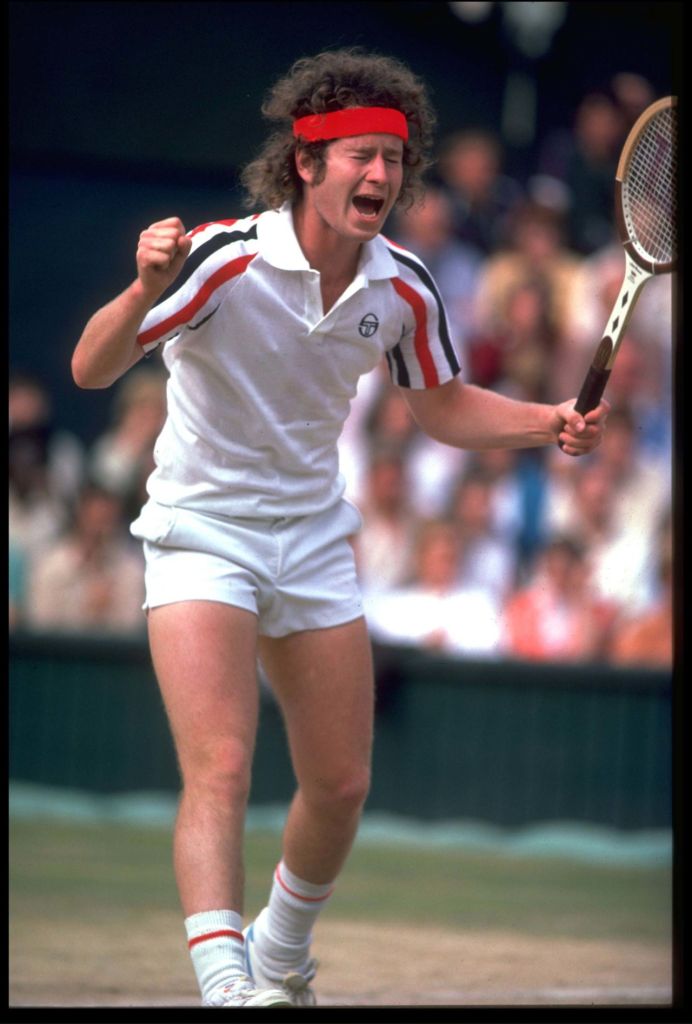
In her book, Growth Mindset, American psychologist Carol Dweck speaks of legendary tennis player John McEnroe who, to this day, holds the record for the most dominant season in men’s tennis with an astounding 84 wins to only 3 losses in 1984, winning thirteen tournaments, including two grand slams: Wimbledon and the U.S. Open.  However, his fame as a tennis player was only rivalled by his infamous outbursts and tantrums on court, including the infamous phrase: “You cannot be serious!” which later became the title to his memoir.  As Dweck notes in her book, McEnroe suffered from an intense “Fixed Mindset” and toxic perfectionism – both of which ultimately led to burn out for Mac-Attack and he left the tour for a time.  All of which I can relate to. 

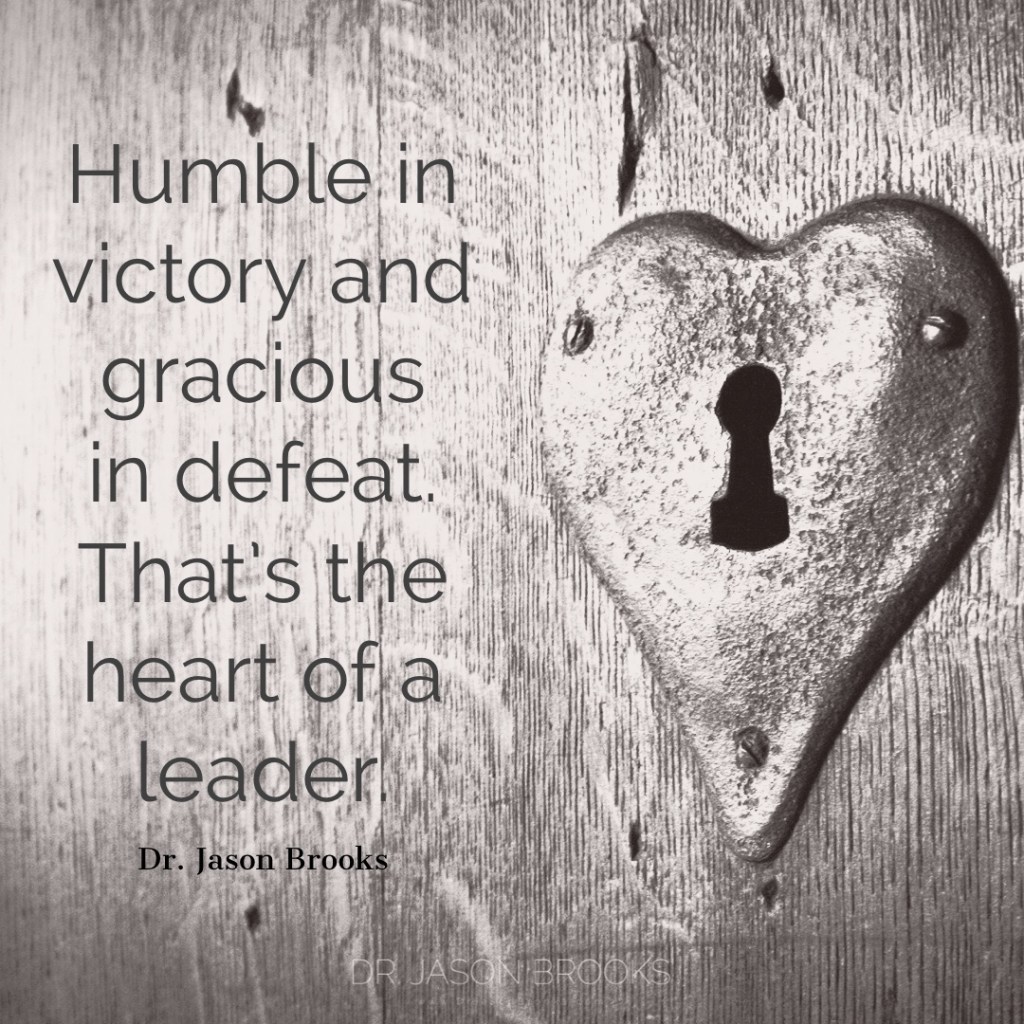
I also grew up playing tennis, though not anywhere close to the competitive level of McEnroe but I still play weekly and I love being out on the court.  However, there was a long time – decades – when I quit the game because of my mindset and scathing self-talk.  I put so much pressure on myself and had my self-worth so tied up in my performance that I was a virtual powder keg.  My self-talk literally destroyed competitive tennis career.  I remember one time, I was playing against someone who I felt that I should beat handily and as the match progressed, I just couldn’t quite find my groove.  I became increasingly frustrated with myself.  That frustration turned to anger as my self-condemnation grew in intensity and on match point, in true McEnroe fashion, I broke my racket.  I was not gracious in defeat – to myself or to my opponent.  I was a total jerk!  I am not proud of how I acted that day.  It was selfish, short-sighted, and immature.  That was rock bottom in my tennis career.  I didn’t pick up a racket again for decades after that.  From the ashes of that defeat though, I was slowly able to begin shifting my mindset.  I was able to reflect on what is really important to me in playing the game.  I haven’t played competitively for a long time now and after learning about mindset, when I finally picked up my racket again, I knew I wanted to create a different experience from my time on the court.  At almost 49 and fortunate to still be in good enough health to play a sport I love, I have learned, as Sunzi has suggested, to celebrate even the little victories on both sides of the net – the great gets, the effort and hustle, the outstanding shots, whether hit by me or my partner and it has brought an entirely new level of joy, appreciation, and deeper friendships. As Dr. Jason Brooks has said: “Humble in victory and gracious in defeat. That’s the heart of a leader.”

As we change our banner beliefs, put ourselves out there and begin taking risks, push ourselves in new ways and face our inner enemies, we are going to make mistakes, face setbacks and disappointments, lose and even fail.  It’s going to happen.  In fact, the harder we try, the more we risk, the bigger our mistakes and failures will be.  That’s okay.  It is part of the process of progress.  So, knowing that failure, defeat, and loss are the steppingstones to success, victory, and greater growth, it is absolutely essential that we, as my friend Abigail G. Manning has urged in Episode 8, give ourselves “grace and space.”  To do so, must not skip our self-care.  We need to treat ourselves and others excellently – especially in defeat!  For me, an important aspect of my self-care is my self-talk and it is often the first thing to break down when things get difficult.  We need to nurture and nourish ourselves and we do that first and foremost through our self-talk.  When things aren’t going well, are we our own greatest advocates or just our own worst critics?  Do we seek to comfort and contextualize, to look for the good and learn from the bad?  Or do we just drag up all of our past failures as evidence that we are doomed, hopeless, or unworthy?  After decades of destructive and debilitating self-loathing, where I hated myself, I appreciate the reminder of researcher and storyteller Brene Brown to: “Talk to yourself like you would to someone you love.”  How we speak to each other is central to treating each other excellently.  So too is self-talk is central to treating ourselves excellently. 

The next action is to nurture.  The Chinese term that Sunzi uses here is yang3 養 (simplified 养), which means to nurture, nourish, tend to, to raise, or to rear.  The word has its etymology in animal husbandry, as the traditional character is comprised a sheep 羊 (yang3, which is also the phonetic) above food 食 (shi2).  However, the implications go far beyond just feeding livestock.  The oldest versions of the character depict a hand holding a tool 攴, in this case perhaps a brush for working its coat.  Do we take good care of ourselves when things are difficult?  Do we nurture and nourish ourselves – even when we make mistakes, suffer a setback, or are dealing with disappointment and even defeat?  I know that I don’t.

American historian and memoirist Tara Westover has said: “The greatest act of self-care is to believe that we are worthy of care.”  An empty lamp provides no light.  An empty tank will always take us exactly nowhere.  So we need to take time to refuel on our journey.  We can’t give to others what we don’t already have.  As award-winning author and work-life balance expert Renee Peterson Trudeau asserts: “Nurturing yourself is not selfish – it’s essential to your survival and your well-being.”  Self-care is the fuel that allows our light to shine brightly.  Don’t neglect it.  This takes us back to one of the “Eight Tactics” to transform our lives that I spoke of in Episode 7, to engage in meaningful recreation that recharges, restores, and replenishes all that we have lost along the way.  What is that for you?  What nourishes and nurtures your body, mind, and spirits?  We need to take time to do what makes our souls genuinely happy and peaceful. 

As mindfulness coach and artist Susan Weiss Berry put it: “With every act of self-care your authentic self gets stronger, and the critical, fearful mind gets weaker.  Every act of self-care is a powerful declaration: I am on my side, I am on my side, each day I am more and more on my own side.”  This is why nourishing and nurturing self-care is one of Sunzi’s key tactics for increasing in abundance and strength. 

Conclusion

In the Art of War, Sunzi clearly defines how to increase our abundance and strength.  Today, we have discussed his three tactics for growing in personal abundance and empowerment.  They are:

1. Reward Ourselves the First Time We Achieve Something & Celebrate the Small Victories

2. Change Our Banner Beliefs, Raise Our Flag, Send a New Message!

3. Be Gracious in Victory & Defeat: Treat Yourself (& Others) Excellently, Nurture & Nourish – Especially in Defeat & Difficulty

How do we begin to increase our abundance and strengthen ourselves as we fight our daily battles and stare down our own inner enemies?  As we start off in pursuit of our “Big Deals” and move from where we are right now to the uncharted territory of where we want to be we are signing up for a whole new life.  With that comes a lot of firsts.  So celebrate them!  Every time we do something for the first time, every time we reach a milestone – no matter how trivial – celebrate it, in whatever way is energizing, encouraging, and inspiring for you!  That will keep our excitement, morale, and motivation high as we face the uncertainty and setbacks that await us beyond our comfort zone.  There is value in the process and our progress is worthwhile – so enjoy the journey – even as we keep our eyes set on the horizon!   Celebrate every effort to reach for the prize!

To do, we’ll need to start upgrading our thinking and our beliefs about ourselves and our goals. It’s time to change our stories, change our narrative, change our banner!  Raise the bar on our beliefs, raise our sights, and raise a new flag!  Clear out the ashes of yesterday, make room for a new spark, and stoke the flames!  Show ourselves and everyone else what is actually possible when we believe better about ourselves!  I’ve said it before, each of us is a powerful being with a profound purpose on this planet!  Each of us has great gifts to give the world!  Someone out there is just waiting for us to show up in their lives with our unique blend of personality and experience, our own special sauce and zest for life!  Our beliefs are like a banner that give our lives direction, pointing the way to greater growth, so raise them high, let them guide our steps and our thinking as we fight our daily battles!  As we raise our flags, we simultaneously send a message others about what is possible and give them permission to change their banner beliefs, raise their “feel good flag” stoke their unique sparks of creativity and passionately pursue their “Big Deals!” 

Lastly, and perhaps most importantly, as we do so we must treat ourselves and others excellently, because everything we do, everything we give, everything we make, is a sacred offering of ourselves.  It matters.  We matter.  So speak to ourselves and about ourselves and others as we would a sacred sacrifice, a labor of love, a wonderful work in progress.  

My wife enjoys doing puzzles and has introduced the hobby to our family.  Human life is often like a perplexing puzzle missing the clear picture on the outside of the box.  As we treat ourselves excellently, give ourselves permission to not be okay, all together, or at our best all the time, we can enjoy the experience, have patience with the process, and peace with our progress.  Each of us is a masterful mosaic in the making!  Unparalleled uniqueness unfolding!  Making a mosaic requires taking all the broken pieces, the shattered shards of setback, the fractured fragments of failure and fitting them together to become something more wondrous and beautiful than any one of them could have been on their own.  So take good care of ourselves and others – especially when it feels like our lives are falling apart!  That we are just barely hanging on or holding everything together.  Practice rigorous self-compassion.  Give ourselves and each other grace and space.  Nurture and nourish.  Every act of self-care sends a message of worth – not just our own but the non-negotiable and infinite worth of all life on this planet.  You are excellent!  You are worthy!  You are loved!

Outro

Thanks so much for listening everybody!  If you found this podcast impactful, please like and subscribe, and join us for new episodes every “Warrior Wednesday.“  For more information, tools, and resources to help you in your daily battles, for questions or to work with me, shoot me an email at: artofwarforlife@gmail.com.  Most importantly, always remember: “The power to win resides within!  There is ALWAYS a Way!”

Support this podcast: https://podcasters.spotify.com/pod/show/david-boyd3/support
Episode 13: Three Secret Strategies for Overcoming Our (Inner) Enemies

Summary

In Episode 13 of “Warrior: The Art of War for Life ~ A Podcast on Winning” I present Sunzi’s (Sun Tzu’s) Three Secret Strategies for Overcoming Our (Inner) Enemies, which are:

1. Slay Your Enemies 殺敵: Know Who the Real Enemy Is that We Need to Slay

2. Master Your Motivations, Part I: 怒 Indignation — Know What We Are Fighting Against?

3. Master Your Motivations, Part II: 貨 Tangible Benefits — Know What We Are Fighting For?

With inspirational quotes from Lou Allen, Anjali Chaturvedi, Walt Kelly, Jordan Peterson, Viktor Frankl, and Arnold Schwarzenegger, this episode talks about fighting our inner battles and defeating the demons of debilitating self-doubt, the fiery fiends of feral fear, the antagonists of anger, and the legions of limiting beliefs that can swarm our thinking and taint our beliefs with lies and self-deception. It’s time to take back the battleground of our minds and hearts!

Featuring an original soundtrack by Sentius.

Transcription

Podcast Intro (Previously Recorded)

Welcome to Warrior: The Art of War for Life – A Podcast for Those Who Want to Win!   Leadership Lessons, Motivational Mindsets, Empowering Principles, Success Strategies, and Transformational Tactics from Sunzi, the Master of Victory

I am your guide on the side, David Boyd, award-winning educator, transformational speaker, and Certified Life Coach.

It’s time to start winning at life!

Episode Introduction

Hey!  Hey! Hey!  Welcome everyone!  Thanks for joining us!  I am so glad you are here listening!  Last week, we had the pleasure of hearing from my mentor and friend USAF (retired) Brigadier General Paul Pirog in our second Warrior Mindset Unplugged!  He was a “Cold-War” B-52 navigator, Air Force JAG, and Head of the Law Department at USAFA during his 37 years of dedicated service, so don’t miss it!  You can listen to it or watch the video on Youtube!  Next week, we are going to talk about Sunzi’s The Keys to Growing in Abundance and Strength, so stay tuned!  This week, we are talking about Sunzi’s: “Three Secret Strategies to Overcoming Our (Inner) Enemies” So let’s go!

Disclaimer

“Just to be clear: The views expressed in this podcast are my own and do not necessarily reflect the official policy or position of the United States Air Force Academy, the Air Force, the Department of Defense, or the U.S. Government.  Thank you.  Thank you very much!”

Four Secret Strategies to Overcoming Our Enemies and Growing in Abundance and Strength!

In Chapter 2.4 of Sunzi’s Art of War, we read:

Therefore, what drives us to slay the enemy is indignation, as if our women were enslaved; what drives us to seize the enemy’s assets is their material wealth. Thus in chariot warfare, when ten or more chariots are seized, reward the first to the one who seized them and change the flags and banners.  Then, intermix the chariots and drive them with ours.  Treat the prisoners of war excellently and nourish them.  This is what is called defeating enemies while increasing abundance and strength.

故殺敵者怒也, 取敵之利者貨也。故車戰, 得車十乘以上, 賞其先得者,  而更其旌旗, 車雜而乘之, 卒善而養之,  是謂勝敵而益強。

In this passage Sunzi identifies three secret strategies to overcoming our enemies.  They are:

1. 殺敵 Slay Your Enemies: Know Who the Real Enemy Is that We Need to Slay

2. 怒 Master Your Motivations: Know What You Are Fighting Against

3. 取貨 Seize Tangible Benefits: Know What You Are Fighting For

This week we are going to talk about the first two: Slaying our enemies and mastering our motivations.  Next week, we’ll talk about being gracious in defeat, not skipping our self-care, and treating ourselves and others excellently through self-talk, and nurturing and nourishing ourselves and others – especially during times of difficulty and defeat.

1. 殺敵 Know Who the Real Enemy Is that We Need to Slay

Similar to concepts of the “Grim Reaper” in Western traditions, the Chinese character sha1 殺 (simplified: 𣏂) meaning to kill, to slay, or to cut down.  The character is comprised of two elements: 𣏂 (sha1) on the left, which means to cut or chop down millet grain stalks with shears, scissors, or a scythe.  The right side is 殳, also meaning to kill or cut down, which is further comprised of a hand 又 (you4) holding an axe, sickle, or other curved blade that could be used both in agriculture and war.

A devil hacks a field with a scythe. Woodcut, ca. 1700-1720. Work ID: wk2cdte7.

See every belief that we embrace, every thought that we entertain is like a seed in our minds.  We reap what we sow whether consciously or unwittingly.  Since our beliefs and our thinking shape our feelings and our feelings drive our actions, and our actions and response to a large extent determine our outcomes and our results.  So what do we need to cut out or cut down on in our lives?  Before we begin slaying, seizing, and defeating enemies, it is essential to know who the real enemies are in our lives. 

敵 The Real Enemy 

The word enemy has a fascinating etymology and profound imagery in Chinese.  The character di3 敵 (ancient form: 𢿪; simplified: 敌) means enemy or adversary.  The ancient form 啻 is comprised of Thearch, the supreme ruler, emperor, or god 帝 (di4) in ancient China, above a mouth 口 (kou3), implying to speak.  It is related to headdresses or crowns worn as symbols of sovereignty and the right to speak for and speak as god and rule over people.  It also has an agricultural imagery to it, as it also means sheaves and is therefore linked to the harvest, prosperity, and abundance.  Di was known as the “sheaf king” or the “King of Harvests” controlling the prosperity of people, the livelihood of individuals, and the abundance of nations.  A later version of the character 𢿪 adds a hand holding a weapon 攵 on the right side. 

To achieve victory in our lives, we need to understand what the real enemy is, and it is rarely other people.  I had a coworker once who I felt was just passive-aggressive and constantly out to get me.  Though our offices were close to each other, we rarely interacted in person but mostly through email – especially as the tension built between us.  This person would never come to me with anything in person but the instant I stepped away from my office for any reason, even to go to the restroom, they would go to my supervisor and ask where I was.  I began to feel attacked, manipulated, and resentful.  Eventually, leadership intervened but things didn’t change.  When I went through the Arbinger Institute Outward Mindset training for the first time, I decided to take full accountability for my part, stop blaming, and shift my thinking about this individual.  It was hard work.  I went out of my way to interact with and get to know my coworker and to express care and concern for some of the challenges they were experiencing in their lives.  As I did, my resentment dissipated and I was able to rise above some of the real and imagined issues that had almost driven me to the point of leaving.  As I battled my own thinking, I changed my experience with this individual.  Furthermore, as I changed what I was putting in and how I was showing up, my coworker changed some things too.

In Episode 0, I quoted Lou Allen who said: “Some battles are fought with swords, some with words, but the hardest battles are those we fight in our own minds.”  In Episode 1, I introduced the concept of the “Battleground of the Mind.”  It is time to revisit that here.  Because, as Anjali Chaturvedi has said: “In the end, it’s you fighting against you, for yourself.” 

In the humorous and witty words of political satirist Walt Kelly’s (1913-1973) Pogo: “We have met the enemy and he is us.”  The real enemy in our lives is almost always lurking in the shadows of our mind, in our own toxic thinking, limiting labels, and belittling beliefs.  It is our festering fears and our debilitating doubts that usually convince us to settle for less, to accept things the way they are, and to stay in bad situations.  It is the malevolent meaning that those parasitic beliefs create that destroys our dreams and sucks the life out of us!  Most often, long before any external foe or adversary appears to challenge us, it is our inner beliefs, our inner thinking that has already defeated us.

The imagery of enemy or adversary is anyone or, for our purposes, anything that enforces limitations and constraints upon us, that would speak as a false god in our lives; anything that would reduce or diminish our opportunities or stature, or anything that inhibits or constrains our personal prosperity and individual abundance; anything that coerces, manipulates, or threatens our inalienable human rights and sovereignty by force of arms or at gunpoint; anything that obstructs our ability to reap what we sow and to live and let live – the real enemies are those ideas, those limiting beliefs, those negative names, those enslaving labels, and insidious stereotypes that we accept and even unwittingly embrace in our lives, that say we can’t do this or we aren’t enough to achieve that, or that we are destined to stay stuck as and will never be able to rise above and create something different in our lives, out of our lives, and for our lives – those are the real enemies that we must slay in the battleground of our own minds! 

I would like to present an alternate paradigm for personal empowerment – though we rarely have full or even partial control over the circumstances and situations that the River of Life brings our way – we ALWAYS have control of our RAFT and how we navigate the currents of challenge and the tides of trial and tribulation.  The acronym RAFT stands for: Response, Actions, Feelings, and Thoughts.  We have the power to take charge of our responses, our actions, our feelings, and our thoughts.  No one can ever take that away from us!  But far too often we don’t recognize the power we have in our RAFT and we throw it away, or give it away, or put other people in charge of our lives.  No one can make us think, feel, do, or respond in a certain way – unless we give them that power!    Why do we choose to give our power away to people and things that do not have our best interests in mind? 

In Episode 2, I shared a quote by Holocaust survivor Viktor Fankl (1905-1997), who became one of the most influential thinkers of his age: “There is a space between stimulus and response, and in that space is a choice, and in that choice is freedom.” That space is the “Battleground of the Mind.”  It is the place where we decide what we will believe about ourselves, each other, and the world as River flows all around us.  It is the space where we make meaning of the MESS of the human condition.  It is the place where we either choose to navigate our RAFT and plot a course through the rapids or allow ourselves, our hopes, and our dreams to be carried along downstream by the currents of culture or dashed by despair upon the rocks of what we have accepted as reality! It all comes back to beliefs.  Our beliefs direct our thinking, our thinking creates our feelings, our feelings drive our actions, and our actions direct our responses.  This is where the hardest battles are fought and won, this is where we fight for ourselves and against ourselves – in the silent chambers of our own minds.

Not who, but what are the enemies in our lives?  What prevents us from achieving our “Big Deals” or “Grand Endeavors” or personal missions and pursuing our dreams?  It is time to slay the enemies within!  The ones that pillage and plunder our hopes and dreams, that sap us of our strength and courage, that enslave us to settle for a diminished life and a less-than existence and accept that things cannot and will not ever change, that there is no hope, that this is as good as it’s going to get, that we’ll never amount to anything or make a difference.  They are all limiting lies, as I discussed in Episode 6, and these lies are the real enemies of our lives! 

2.  Master Your Motivations: Know What Fighting Against

The second strategy Sunzi lists is to know two things: what we are fighting for and what we are fighting against so that we can understand, maintain, and master our motivations.  Both of these are related to our Why and as I discussed in Episode 3, one of Sunzi’s “Five Strategic Success Factors” is to get clear on our why because our why is our way forward.  As with sports, where there is both defense and offense, Sunzi identified two types of why, two driving forces that motivate us to fight for what we want in our lives: the first is indignation, which motivates us to stand up in defiance of our enemies and to drive them out of our lives, and the second is tangible benefits, the goods, results, outcomes, and personal gain we will receive by fighting for what we want in our lives, out of our lives, and for our lives. 

Some people are more motivated moving towards a goal or by achieving something and other people are motivated by preventing something undesirous from happening or pushing a possibility out.  Which are you?  Here’s an easy example to help you identify your motivations.  Think about a health or fitness goal.  If asked you why you wanted to achieve that is the answer because you wanted to achieve or become something or is it because you wanted to prevent something bad from happening – like a heart attack?  Or is it both?  For me, moving away from a bad situation or an undesirable outcome usually only produces a short burst of momentum and motivation like a turbo charge and can eventually be demotivating.  Whereas I feel much more motivated by working toward something that I want to create or achieve – that gives me more sustainable, long-term momentum – but everyone is different.  The truth is over two centuries ago, Sunzi already identified the need for both types of motivation in fighting our daily battles.

怒 Indignation:

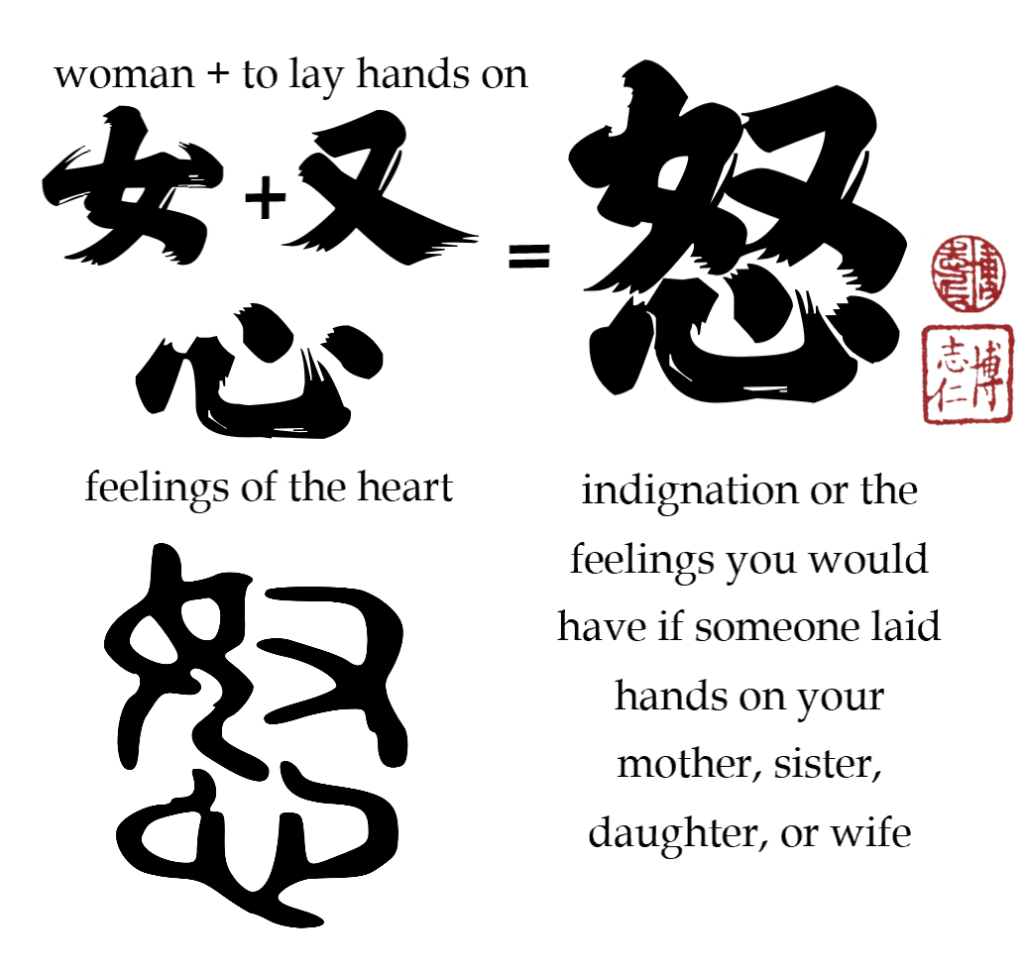
The Chinese character nu4 怒 means anger, rage, or most accurately indignation.  It is comprised of three graphic elements: a woman 女 (nü3) and a hand 又 (you4) above a heart 心 (xin1).  When combined 奴 referred to a dark history of female slaves or servants who were considered property and often abused.  When further combined with the heart, it refers to the feelings that such a tradition evokes.  How would you feel if someone enslaved your mother, your grandmother, your sister, your daughter, or your spouse?  How do you feel right now and how would you react to anyone laying hands on them? 

For those who have been physically abused out there in any way, forgive me if this is triggering.  You did not deserve what was done to you.  It was wrong and horrible and I hope that you can find the courage to stand up and fight so that it never happens to another man, woman, or child ever again.  Abuse of any kind has no place in this world!

Indignation is the internal resistance to something in our lives that is misaligned with our values.  It is an internal signal that something is just not right.  If there is something in our lives, in our thinking, in our feelings that we just can’t stand anymore, then stand up to it!  Take a look at it.  The things that we cannot stand for are often clues to our “Big Deals.”  In the words of Canadian psychologist and award-winning author Jordan Peterson: “Well the first question is: ‘What bugs you?  What’s bugging you?  Where is [your] destiny?  Well, what bothers you?  Well, that’s where your destiny is.  Your destiny is to be found in what bothers you.  Why do those things bother you?  There’s a lot of things you could be bothered by – like a million man!  But some things grip you.  They bug you…. They’re your things man!”  As Peterson notes, the things that bother us, that really get us riled up, that we will not and cannot stand for another minute are often the things that we feel the most indignation toward and that we feel the most motivated to take a stand against and fight to eliminate.

Internally, what are the thoughts and feelings that we just can’t stand anymore?  What have we tolerated in our lives?  Where have we settled?  What have we just accepted that we don’t like?  That we feel indignant toward?  We can choose to doubt our doubts and silence our fears.  We don’t have to let them dominate our minds and dictate our decisions.  There are things worth fighting for in our lives!  Indignation is our call to arms!  If we are sick of believing the same old things and getting the same tired results, then it is stand up for something more, for something better!  Fight back against your fears!  Slay our enfeebling enemies!

What are the enemies that hold our hopes hostage?  That destroy our dreams?  Ransack our relationships and kidnap our creativity and control?  That pillage our personal power?  That bombard our bravery and boldness?  These are the enemies of our lives!  How much more are we going to take?  How many more abuses are we going to endure before we declare war on our doubts and fears?  Are you fed up yet?  What are you fighting against?  What are you fighting for?

3. 取貨 Seize Tangible Benefits

The other half of Sunzi’s motivational why is to focus on getting the goods or seizing the commodities.  As discussed in Episode 11, the Chinese character meaning to seize or secure is 取 (qu3) and is literally a depiction of a hand grabbing someone by the ear.  What exactly are we seizing?  The term used here is huo4 貨, which means goods, commodities, material things, and tangible benefits.  The character is comprised of the word for transformation 化 (hua4), which literally means to turn around or turn upside down, above a cowry shell 貝 (bei4), which as I discussed in Episode 10, was a precious and valued form of ancient currency. Taken together, the term commodity or goods represents the quantifiable value added to our lives, whether intangible or material goods, those transformative treasures that can tip the scales of life, shift the balance of power, and turn our lives around.  This ties back to visualizing the value of the victory we are fighting for, which I also discussed in Episode 10.  In Episode 2, I discussed how I shifted my mindset around taking the stairs from focusing on the difficult of the obstacles to the tangible benefits and opportunities that taking the stairs provided – such as how every step makes me stronger and every step gets me closer to my office where I have the privilege of mentoring cadets, conversing with colleagues I respect and conduct research that I enjoy – including working on this podcast!

What benefits are we going to bring to the world by pursuing our Big Deals?  What are we working to build or create in our lives?  What positive seeds are we sowing so that we can reap a bountiful harvest of abundance and prosperity in our lives and in the lives of others?  Whenever we can visualize the value of the victory we are winning and lay hold of the tangible benefits and value that we are adding to our own lives and the lives of others, we bring a grounding perspective to the hard work and sacrifices that we make to realize our dreams and they become more of a labor of love.  

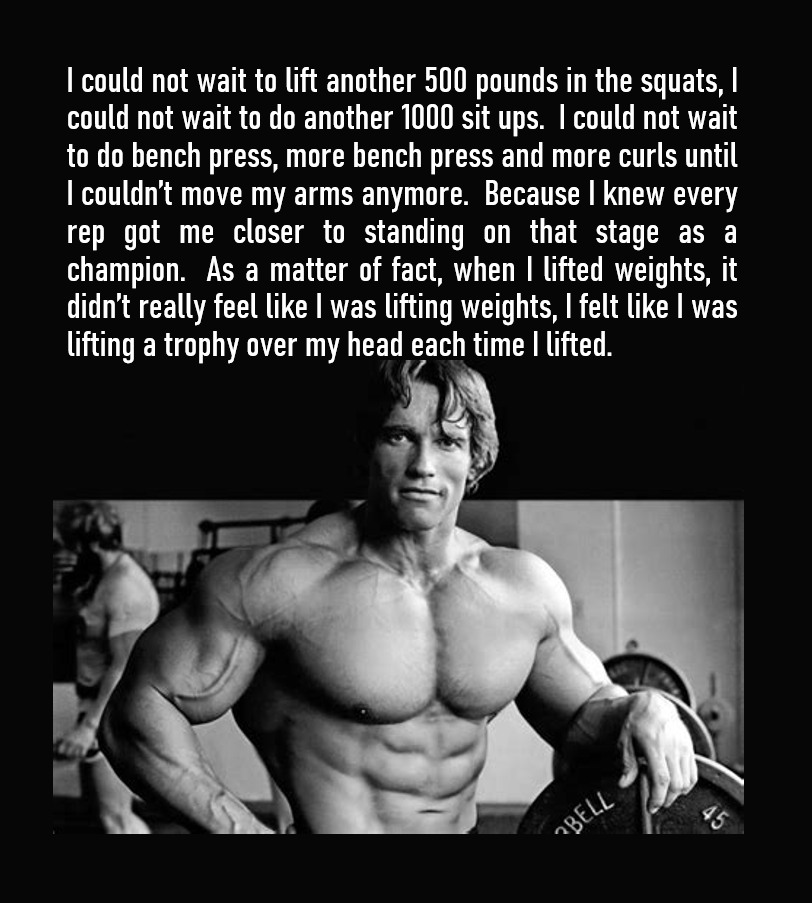
In the words of Arnold Schwarzenegger: “I could not wait to lift another 500 pounds in the squats, I could not wait to do another 1000 sit ups.  I could not wait to do bench press, more bench press and more curls until I couldn’t move my arms anymore.  Because I knew every rep got me closer to standing on that stage as a champion.  As a matter of fact, when I lifted weights, it didn’t really feel like I was lifting weights, I felt like I was lifting a trophy over my head each time I lifted.”  That is the power of vision, the motivation to seize those tangible benefits that we want in our lives, out of our lives, and for our lives.

Conclusion

In the Art of War, Sunzi clearly defines how to defeat our enemies.  Today, we have discussed three secrets for doing so – for overcoming our inner enemies.  They are:

1. Slay Your Enemies: Know Who the Real Enemy Is that We Need to Slay

2. Master Your Motivations: Know What You Are Fighting Against

3. Seize Tangible Benefits: Know What You Are Fighting For

First and foremost, in order to win, we need to know who the real enemy is that we are fighting in our lives.  The real enemies are not out there somewhere but lurking within the selfish shadows of our mind, the corners of our consciousness.  They are the demons of debilitating doubt, the fiends of festering fear, the pariahs of powerlessness, adversaries of anger, and the legions of limiting beliefs and parasitic thoughts that the suck the life out of our hopes, dreams, and noblest aspirations.  Those are the enemies within that bring us to the very  brink of defeat and disaster and would subjugate us to a lesser world of indentured servitude, enslaved to past failures, present insufficiencies, and a bleak future.  Those are the enemies who whisper lies and deal in self-deception, that speak as false gods and seek to enforce their lies at gunpoint, telling us that we can never have what we really want in life, that we’re not good enough, strong enough, smart enough, attractive enough, or deserving enough to have the “good life” that “personal paradise” that we envision for ourselves – whatever that looks like. 

They scream that we are insufficient, incompetent, and unworthy.  They shout out example after example of tainted evidence as to why what they say is the cold, hard truth about us, creating a self-fulfilling prophecy and downward spiral – a triple tailspin of trouble, trial, and tribulation – but they are all lies.  It is the pain of those false beliefs about ourselves, each other, and the world that leads to so much contention and conflict.  Once, we know the real enemies that we are fighting against in our hearts and minds – the thoughts and feelings that keep us stuck, hold us back, and kick us when we’re down, it becomes much easier to stand up and fight against them.  To embrace new beliefs and think new thoughts, and by so doing to change how we feel and experience the world.  No matter how long we’ve been fighting losing battles with our own demons, whether they show up in our lives as doubt or fear, anger or resentment, conceit or arrogance, self-condemnation or being judgmental of other, or whether its despair or worthlessness, we can take back our minds.  We are the only one’s who get to decide what we will believe and what we will think, which will shape how we will feel and likely what we will do, which will determine our experiences and results in our lives.  We have the power – no one can take it away from us.  If a thought or belief does not serve us, we can change it, we can let it go, and we can replace it with something more empowering and ennobling.

Sunzi’s second secret to overcoming is to master our motivations to get clear on what we are fighting against and what we are fighting for.  What is it that we can no longer stand in our lives, for our lives, or out of our lives?  What can we no longer tolerate in our thinking and our feelings?  What is it that we need to stand up to?  Where do we need to draw a line in the sand and say “no more?”  What do we need to cut down on or cut out of our lives?  Once we have cleared away the clutter of confusion and gained some clarity on what we don’t want, we create space to explore new possibilities and potentials to fill the void vacated by our doubts, fears, and resentments.  Blame can become boldness, shame can shift to self-confidence, and (mis)judgment can transform into acceptance. 

We can begin right now to move away from what we don’t want, draw the battle lines, utter our battle cry, our call to arms, and stand up for ourselves and our hopes and dreams.  We can begin to reclaim our hearts and minds, and one by one drive out the debilitating doubts, feral fears, and legions of limiting labels and belittling beliefs that threaten our wellbeing or even that have dominated our lives.  We can resist and rebel.  We can throw off the shackles of shame and self-condemnation.  We can chop down the lumbering limits and limiting lumber of lies and cut a path through the wilderness to wherever we want to go, to whatever we want to create in our lives.  No matter how long we have felt trapped, lost, or defeated there is ALWAYS a Way forward, a way onward, a way upward.  No matter how impassible or impossible our challenges feel, the instant we overcome our own thinking and beliefs, we will find a way through, a way around, or a way out that seemed invisible to us before.  Remember, our why is our Way.  So get clear on what the real enemies are, why we are choosing to stand up and drive them out of our lives, out of our hearts and minds, and what value and benefits we are choosing to create instead.  That is how we begin to overcome our enemies in the battleground of the mind – that is the warrior mindset in action.

Support this podcast: https://podcasters.spotify.com/pod/show/david-boyd3/support
Episode 12: Warrior Mindset Unplugged with Brigadier General Paul Pirog

In Episode 12 of “Warrior: The Art of War for Life ~ A Podcast on Winning,” we present our second segment of “Warrior Mindset Unplugged with USAF (retired) Brigadier General Paul Pirog. During his 37 year career, he was a “Cold War” B-52 navigator before going to law school and becoming an Air Force Judge Advocate General (JAG), after which he went on to serve four tours as a Staff Judge Advocate, as a Medical Law Consultant, in the AF General Counsel’s Office as the Chief of the National Security Law Branch, as the Deputy Commandant of the AF JAG School, and as the Deputy Staff Judge Advocate of Air Mobility Command. His final assignment was as Permanent Professor of the Law Department at the United States Air Force Academy. His inspiring message emphasizes the importance of teamwork, personal accountability, and our constant power to choose how we respond to the storms of life. With a rarely heard insider story about the Battle of Mogadishu, Somalia in 1993, known as “Blackhawk Down,” he powerfully teaches: “Your importance to the mission is not determined by your proximity to the target.” Speaking of the importance of expanding our field of view, second chances, and avoiding collateral damage in our lives, this episode is sure to inspire!

What the full video version on the Art of War for Life Youtube channel!

Disclaimer: The thoughts and opinions expressed in this interview our fully those of the host David Boyd and Brig. Gen. Paul Pirog (USAF ret.) and do not reflect the official views of the United States Air Force Academy, the U.S. Department of the Air Force, or the U.S. Department of the Defense.

Episode 11: The Art of Getting Stuff Done: Sunzi’s Three Tactics for Effective Execution!

Summary

Do you ever feel like you’re in over your head, that you’re outnumbered, outmatched, or overwhelmed? Do you ever feel like you’re running on empty, that something is missing from your life, or that you just aren’t making any progress? Do you ever feel like you are missing out on opportunities, are always a day late and a dollar short, or constantly suffer from burn out?

In Episode 11 of “Warrior: The Art of War for Life ~ A Podcast on Winning” we discuss “Sunzi’s (Sun Tzu’s) Three Tactics for Effective Execution or the Art of Getting Stuff Done!” They are:

              1. Do Your Due Diligence: Know What is at Stake and What You are Up Against

              2. Secure Sufficient Supplies: Get What You Need to Get Started

              3. Be Opportunistic: Find What You Can Along the Way

With insights and quotes from Richie Norton, Abigail G. Manning, Ayn Rand, and Jameela Jamil, this episode provides pragmatic principles and concise concepts for increasing our effectiveness and execution and mastering the art of getting stuff done!

Podcast Intro

Welcome to Warrior: The Art of War for Life – A Podcast for Those Who Want to Win!   Leadership Lessons, Motivational Mindsets, Empowering Principles, Success Strategies, and Transformational Tactics from Sunzi, the Master of Victory

I am your guide on the side, David Boyd, award-winning educator, transformational speaker, and Certified Life Coach.

It’s time to start winning at life!

Episode Introduction

Hey!  Hey! Hey!  Welcome everyone!  Thanks for joining us!  I am so glad you are here listening!  Last week, we discussed “Sunzi’s Five Full-Send Commitment Tactics for When You Hit the Wall.”  What has worked for you when you’ve hit your wall?  I’d love to hear!  So please shoot me an email at artofwarforlife@gmail.com or send me a DM on Instagram @artofwarforlife, and please join the Art of War for Life Facebook page.  Next week, we’re going to hear from my mentor and friend USAF Brigadier General Paul Pirog in our second Warrior Mindset Unplugged!  He was a “Cold-War” B-52 navigator, Air Force JAG, and Head of the Law Department at USAFA during his 36 years of dedicated service, so don’t miss it!  If you haven’t listened to the first interview with international keynote speaker, powerful story-teller, changemaker, and Marine Mom, Abigail G. Manning, what are you waiting for?  Go back and listen to it or watch the video on Youtube!  Her teachings on recognizing our “Purple Threads” those personal limiting thoughts physiologically tied to what we think, say, and do was amazing!  Her practical advice for eliminating the finger pointing language of blame, shame, and judgment, and giving ourselves grace and space were transformative. This week, we are talking about “Sunzi’s Three Tactics for Effective Execution or the Art of Getting Things Done!” So let’s go!

Sunzi’s Three Tactics for Effective Execution or the Art of Getting Stuff Done!

In Chapter 2.3 of Sunzi’s Art of War, we read:

Therefore, those who don’t fully understand the inherent dangers of deploying troops are incapable of fully understanding the potential benefits of deploying the troops.  Those who excel in deploying the military don’t draft conscripts again and again, and don’t have to ship provisions a third time (because the first two shipments were insufficient). Procure gear from the state and seize provisions from the enemy.  Then, the military’s rations will be sufficient.

故不盡知用兵之害者,則不能盡知用兵之利也。善用兵者, 役不再籍, 糧不三載, 取用于國, 因糧于敵, 故軍食可足也。

From this passage I have identified three tactics for effective execution essential to the art of getting stuff done!  They are:

              1. Do Your Due Diligence: Know What is at Stake and What You are Up Against

              2. Secure Sufficient Supplies: Get What You Need to Get Started

              3. Be Opportunistic: Find What You Can Along the Way

1. 盡知 Do Your Due Diligence Know What is at Stake and What You are Up Against

Sunzi noted that those who don’t fully understand the inherent dangers cannot fully comprehend the potential benefits.  In others, we need to know what is at stake and what we’re up against.  The Chinese term here is jin4zhi1 盡知.  Jin4 盡 means completely, thoroughly, fully, or exhaustively.  The character depicts a hand holding a brush 聿 above four dots of fire 灬 over a ritual vessel 皿 (min3).  Taken together, the association is of thoroughly scrubbing, brushing out, and cleansing a ritual vessel with fire.  After ritual use, the vessel had to be thoroughly cleansed and cleaned – nothing could be left behind.  The first of “Sunzi’s Five Essential Attributes for General Leadership” discussed in Episode 4 is wisdom and we discussed the relationship between knowledge and wisdom, which I defined as applied knowledge.  In Chinese, knowledge, or zhi1 知, is the arrow of the mouth.  So, in terms of doing our due diligence, the Chinese phrase means to completely, exhaustively, and thoroughly gain knowledge.  We must not miss anything because a vital piece of intel could cost lives!  In the same way, as we pursue our “Big Deals” and fight our daily battles, we must thoroughly amass all of the arrows of knowledge that we can and put them in our quiver of preparation.  No stone can be left unturned, because knowledge is potential and applied knowledge is power, and a crucial piece of information can mean the difference between success and disappointment.

In Episode 9: “Sunzi’s Threefold Questions for Calculating the Cost and Committing to Accomplish,” I walked us through a simple cost-benefit thought exercise.  A great next step to do here is to conduct a more thorough SWOT analysis.  Though typically used for businesses, it is equally effective in pursuing our “Big Deals,” chasing our dreams, and understanding ourselves and our current situations.  SWOT stands for Strengths, Weaknesses, Opportunities, and Threats.   

Conducting a thorough SWOT analysis can help us understand the possible risks and weigh them against the potential benefits.  It allows us to decide: Is this a hill worth dying on?  It also allows us to get to know ourselves a little better as we reflect on what our weaknesses are in a particular situation or circumstance and what our strengths are, which in turn allows us to play to our strengths.  As award-winning author, podcaster, and entrepreneur Richie Norton has said: “Strategic entrepreneurs and leaders find the greatest insights hiding behind SWOT.”

One thing I learned from my friend, international motivational speaker, change-maker, and two-time successful entrepreneur Abigail G. Manning is to outsource our weaknesses and those things we just don’t care about but that have to be done as quickly as possible.  This frees us up to play to our strengths, which is the second of “Eight Tactics to Transform Your Life” that I discussed in Episode 7

If I am starting a business and know that I am weak in the marketing area, I can hire a virtual assistant to take that on for me.  If I know that finances stress me out, I can hire an accountant. 

It’s March Madness right now and the teams that are winning are the ones that are able to dictate the style of play, leverage their strengths, exploit other teams’ weaknesses, and capitalize on mismatches.  They are the ones that are delivering career highs on the biggest stage in college basketball and posterizing their opponents!

If you like, I have a great one-pager to help walk you through this.  So, shoot me an email at: artofwarforlife@gmail.com and I’ll send you a free downloadable copy.

2. 取用 Secure Supplies – Get What You Need to Get Started

The second of Sunzi’s Three Tactics for Effective Execution is to “Secure Supplies” or in his words, to “get what we need to use” in order to win.  This ties back to doing our due diligence because it requires us to thoroughly plan ahead in how we manage our time, energy, and the resources and materials we need to use to succeed, win, or create our “Big Deals.”  Remember, in Episode 2: Look in the MIRROR – You Are in Charge!, we talked about the importance of strategic planning to improve our results and outcomes in life.  Sunzi devotes the first chapter of the Art of War to “Preliminary Planning.”  He was a firm believer in the adage: “If you fail to plan, you plan to fail.”  So, we need to put together a plan to secure what we need to use to win!

The Chinese pair used here is qu3yong4 取用.  Qu3 取 means to secure, the character depicts a hand 又 (you4) beside an ear 耳 (er3).  When we’ve got someone by the ear, we have secured their attention!  Yong4 用 is literally a pictogram of a fishing net.  It refers to usefulness, utility, application, employment, and deployment. I first introduced this character in Episode 6: Sunzi’s Six Traps of (Self-) Deception and How to Avoid Them when I discussed the “Futility Farce.”  One thing I like about the imagery here is that he is not just talking about a fishing hook, he’s talking about a full on net.  See, a fishing hook can land a single fish and requires more active attention on our part but a fishing net is a passive tool that works for us all the time, even when we are busy doing other things or even sleeping.  So it also links back to “Systematizing Success,” which is one Sunzi’s Five Strategic Success Factors that I discussed in Episode 3.

Whatever our “Big Deal,” whatever that soul yearning is that we long to say “Yesss!” to is, we need to prepare sufficient time, energy, and resources to start seeing it through to its realization. 

Be smart, streamline, & secure our supply-chain & our schedules so that we can maximize our efforts and work smarter not just harder.  One of the things I learned about myself is that I am a morning person – that’s when I have the most energy, highest creativity, and greatest clarity.  I usually record these podcasts between 4am and 6am when the whole world is asleep, and all is quiet.  Everyone’s different – my wife is a night owl – so one of the things I realized is that I need to maximize my creative and productive hours with the most important tasks and save some of the more procedural items to later in the day. 

One of the reasons Sunzi argued for securing our supply chains is to avoid in-the-moment (wartime) inflation.  I recently had an insight into how this is still relevant and applies outside of a military context.  My wife and I have renovated four houses and each time, there have been moments when our progress has been halted because we didn’t have all the supplies we needed.  Of course, sometimes there are unanticipated problems that have to be resolved.  However, I am embarrassed to confess by failing to plan ahead and secure the necessary supplies, that I have been to the same home improvement store three or even four times in the same day for parts and supplies!  I began to feel like I knew all the salesclerks and associates on a first name basis and they definitely knew me!  What a colossal waste of time!  Nothing kills progress on a weekend project quicker than not having the materials prepared ahead of time.

If we don’t plan ahead and secure what we need beforehand we are the mercy of whoever has what we need and whatever price they charge.  In the internet age, a little planning and preparation can almost always save us time and money and prevent unnecessary delays & costly setbacks.

3. 因糧 Be Opportunistic: Find What You Can Along the Way

The third and final tactic for effective execution that Sunzi identified is to be opportunistic and to find what resources we can along the way.  The Chinese pair is yin1liang4 因糧.  Yin1 因 means cause, reason, and to respond.   Liang4 糧 refers to grain and by extension to sustenance, provisions, rations, and supplies.  Taken together the two characters refer to responding to the resources that surround us.

In other words, to be resourceful and opportunistic, to use what is at hand, and to seize opportunities that present themselves to get free resources, opportunities, and exposure – even if it means deviating from the plan a little here and there.  For example, if we are learning to play a sport and we happen to be out for a walk and come across a pick-up game, jump in, practice our skills, make some friends, and gain some experience!  If we are learning an instrument and there is an opportunity to get free tickets to a premier performer, go get them!  If we are developing a business and we find ourselves in an elevator with someone who can help us or that we can help, don’t be afraid to open our mouths.  Don’t just wait for opportunities, seek them out, make them happen, or create them!

This links back to the third of Sunzi’s Five Strategic Success Factors that I spoke of back in Episode 3, to “Leverage the Landscape” because on our journey from where we are to where we want to be, we have no idea what or who is waiting for us up ahead and part of strategic planning is just putting ourselves in the right place at the right time to give ourselves an opportunity for a chance meeting, a serendipitous encounter, or even a personal miracle – to find that game-changing strategic advantage, like I discussed in Episode 5, “Four Keys to Tip the Balance of Power and Shift the Scales of Life in Our Favor”  that will open up new worlds of possibility that we never even knew existed.  As Russian American author and philosopher Alice O’Connor, better known by her pen name Ayn Rand (1905-1982) has said: “The ladder of success is best climbed by stepping on the rungs of opportunity.”

Every day, every hour, every moment is a fresh start, a clean slate, a new beginning; each second, each breath, each heartbeat is new opportunity to grow, to become a better version of ourselves, and to change our lives.  As British activist, actress, screenwriter, and presenter Jameela Jamil has said: “Every twist and turn in life is an opportunity to learn something new about yourself, your interests, your talents, and how to set and then achieve goals.” 

Conclusion

Today we have discussed “Sunzi’s Three Tactics for Effective Execution” or as I like to call them “The Art of Getting Stuff Done!”  They are:

1. Do Your Due Diligence: Know What is at Stake and What You are Up Against

2. Secure Sufficient Supplies: Get What You Need to Get Started

3. Be Opportunistic: Find What You Can Along the Way

By doing our due diligence, putting in the time to exhaustively learn and gain knowledge and understanding about ourselves, our strengths and weaknesses, what motivates and drains us, we gain invaluable insights into how to play our own game, play to our own strengths, and set ourselves up for success.  As we thoroughly invest time and energy to learn about and understand the infinite potential and limitless possibilities that await us as we pursue our “Big Deals,” our “Grand Endeavors,” or our “Personal Missions” along with the possible dangers and threats, obstacles and opposition – both internally and externally – that might stand in the way and prevent us from reaching our goals and realizing our dreams, we gain strategic insights that we transform into tactical advantages that we can use out there on the battlefields of life to endure and overcome.  As I mentioned in Episode 4: Level Up Your Leadership!  Five Essential Attributes of Great Leaders and How to Develop Them, knowledge is the arrow and wisdom the ability to use that knowledge to hit the bullseye in our lives and win!  The more knowledge we gain, the more arrows we have in our quiver to hit our targets and achieve our goals. 

In order to consistently do so, we need to secure sufficient resources and get what we need to get started.  As we thoroughly plan ahead and structure our lives so that we can make the best use of our time and energy, we will begin to make steady progress, gain momentum and confidence, and prevent burnout.  When we have what we need in our lives, mentally, emotionally, spiritually, and socially, we can more effectively manage our MESS and show up in a sustainable and committed manner.  So, figure out what you need in your life, out of your life, and for your life and go get it! 

Lastly, open ourselves up to the opportunities that are out there every moment of every day.  Wherever we are, whatever stage of life we find ourselves, there are always openings and opportunities just waiting for us to discover and discern.  Obstacles are just opportunities awaiting an innovative approach.  Problems are just possibility awaiting a different perspective.  As we begin to master these three tactics, we will discover that we getting more stuff done!  More of the things that matter and making more progress in our lives toward what we really want.  We will feel less stuck and more empowered, more optimistic and less jaded, and we will find that things are beginning to change.  Pieces will start falling into place, opportunities will emerge, and doors are opening, leading us into a whole new realm of promise and possibility! That is the secret to effective execution – the art of getting things done!

Podcast Outro

Thanks so much for listening everybody!  If you found this podcast impactful, please like and subscribe, and join us for new episodes every “Warrior Wednesday.“  For more information, tools, and resources to help you in your daily battles, for questions or to work with me, shoot me an email at: artofwarforlife@gmail.com.  Most importantly, always remember: “The power to win resides within!  There is ALWAYS a Way!”

Soundtrack by Sentius

Episode 10: Sunzi’s Five Full Send Commitment Tactics for When We Hit the Wall!

Summary

In Episode 10, I share Sunzi’s (Sun Tzu’s) five full-send commitment tactics for when we hit the walls of life (and we will). They are:

1. 貴勝: Visualize the Value of the Victory

2. 久暴: Don’t Delay: Avoid the Atrophy of Indecision – Take Decisive Action Now!

3. 力屈: Eliminate the Entropy of Failing to Fully Commit – Stop Chasing Your Own Tail

4. 攻城: Stop Throwing Yourself at the Wall – Try Something Different

5. 拙速: Commit Quickly: No Second Guessing Your Decision, Backing Down, or Looking Back

With inspiring quotes by Bill Hybels, Henry Ford, Leonard Ravenhill, Napoleon Hill, Marie Forleo, and Matt Hogan, this episode is replete with profound imagery and powerful insights to help us get over the walls of our limiting beliefs and chase our dreams!

Soundtrack by Sentius

Support this podcast: https://anchor.fm/david-boyd3/support

Transcription

Podcast Intro

Welcome to Warrior: The Art of War for Life – A Podcast for Those Who Want to Win!   Leadership Lessons, Motivational Mindsets, Empowering Principles, Success Strategies, and Transformational Tactics from Sunzi, the Master of Victory

I am your guide on the side, David Boyd, award-winning educator, transformational speaker, and Certified Life Coach.

It’s time to start winning at life!

Episode Introduction

Hey!  Hey! Hey!  Welcome everyone!  Thanks for joining us!  I am so glad you are here listening!  Last week, we discussed “Sunzi’s Three-fold Questions for Calculating the Cost & Committing to Accomplish.”  I gave you a lot of questions to ponder.  How did that go?  I’d love to hear from you!  So please shoot me an email at artofwarforlife@gmail.com or send me a DM on Instagram @artofwarforlife, and please join the Art of War for Life Facebook page.  Next week, we’re going to discuss Sunzi’s Three Tactics for Effective Execution, so stay tuned. This week, we are talking about “Sunzi’s Five Full-Send Commitment Tactics for When You Hit the Wall.”  So let’s go!

Sunzi’s Five Full-Send Commitment Tactics for When You Hit the Wall

In Chapter 2.2 of Sunzi’s Art of War, we read:

其用戰也貴勝, 久則鈍兵挫銳, 攻城則力屈, 久暴師則國用不足。夫鈍兵挫銳, 屈力殫貨, 則諸侯乘其弊而起, 雖有智者, 不能善其後矣。故兵聞拙速, 未睹巧之久也; 夫兵久而國利者, 未之有也。

In deploying troops in combat, value victory. When a costly campaign takes a long time, it blunts the weapons and grinds down the troops.  When besieging walled cities, their strength will waiver, like they are chasing their own tails (but it’s not there).  When the brigade is dehydrating in protracted combat, the state’s capabilities will be insufficient.  Now, when the weapons are blunt and the troops are ground down, when their strength is wavering from chasing their own tails and the supplies expended, then the feudal lords will seize the opportunity to take advantage of your vulnerability and revolt.  Even if you have wise leadership, they will be unable to excel in the end.  Therefore, I have heard of awkward rapid deployments, but I have never seen a skillful protracted campaign.  In general, there has never been a state that benefited from a protracted war.

From this passage, I have identified five full-send commitment tactics for when we hit the walls of life.  They are:

1. 貴勝: Visualize the Value of the Victory

2. 久暴: Don’t Delay: Avoid the Atrophy of Indecision – Take Decisive Action Now!

3. 力屈: Eliminate the Entropy of Failing to Fully Commit – Stop Chasing Your Own Tail

4. 攻城: Stop Throwing Yourself at the Wall – Try Something Different

5. 拙速: Commit Quickly: No Second Guessing Your Decision, Backing Down, or Looking Back

1. 貴勝 Visualize the Value of the Victory

The conceptual pair Sunzi uses here is gui4sheng4 貴勝.  The Chinese word gui4 貴 (ancient form: 䝿; simplified: 贵).  As a verb, it means to value, prize, honor, and esteem.  As an adjective, it also means valuable and expensive.  The character is a depiction of two hands holding or grasping 臾 above a cowry shell 貝 (simplified: 贝bei4). 

The character sheng4 勝 (simplified: 胜) means victory, conquest, or winning.  It is comprised of the character for moon, depicting the lunar cycle 月, beside two hands using a plough beneath fire 火.  In traditional agrarian societies, life revolved around the agricultural cycle.  The window for military action was following the harvest, when the fields were burned in the fall and before the fields were ploughed and planted in the spring.  Taken together, these elements reveal that in ancient China, the concept of victory was represented by working with all your might and strength to achieving victory over one’s enemies without impacting the livelihood of the people.

As we begin to make changes in our lives and pursue our “Big Deals” we are inevitably going to hit the wall.  It’s going to happen.  When we hit the wall and the resistance and opposition, internally or externally, feels insurmountable, we need to hold onto our vision of the value of the victory that we are fighting for!  Last week, I invited us all to get in touch with the vision of what we wanted in our lives, for our lives, and out of our lives.  I want us to get back in touch with that now. 

Can we see the value of what we want to create?  Can we envision the benefits that will come into our lives and the lives of others because we achieved this?  See, as Bill Hybels has said: “Vision is a picture of the future that produces passion.”  When we hit the wall in our lives, the first thing we need to do is get back in touch with that vision and hold on to it with both hands, to treasure and value it because that passion is what motivates us to keep pushing, keep trying, and find a way.  In Episode 3: Sunzi’s Five Strategic Success Factors, I shared the idea that: “Vision guides decision, decision determines direction, direction leads to destination, and destination creates destiny.”  So, hold on tight to your vision and visualize the value of the victory you are winning! 

2. 久暴 Don’t Delay: Avoid the Atrophy of Indecision – Take Decisive Action Now!

The second strategy is to avoid the dangers of delaying by taking decisive action now.  In Episode 6: Sunzi’s Six Pitfalls of (Self)-Deception and how to Avoid Them, we talked about the problem of procrastination.  The Chinese character Sunzi uses here is jiu3 久, which simply means “a long time.”  It also means to let linger.  Sunzi was adamant about the dangers of delaying decisions, not fully committing to campaigns, letting legions linger in limbo, and the problems of prolonged battles and protracted wars.  He notes that protracted campaigns blunt our weapons and grind down our troops.

The longer our forces are out there in the field of battle exhausting themselves, the more likely things are to literally blow up in their faces.  The character Sunzi uses here is bao4 暴, which means to explode, to dry up, dry out, dehydrate, or erupt into violence.  The character depicts the sun 日 (ri4) above two hands 共 (gong4) spreading rice 米 (mi3) out to dry.  Interestingly, sometimes as the grains of rice dried in the hot sun, some grains would spontaneously “pop” like popcorn, which is where we get puffed rice from.  This must have been quite a surprise to ancient farmers!  There is also an older variant of this character that depicts instead a slain buck hung out to dry in the sun.

The longer we hang our troops out there to dry, the longer we put off the deferred maintenance of the military machinery, the warrior’s wounds, and soldier’s soul, the more likely they are to “pop” or snap out in the sweltering heat and smoldering flames of war.

As it is with warfare, so it is with us.  See, there is an atrophy in indecision.  Nothing kills momentum and enthusiasm in our lives quicker than just letting problems drag on, unresolved, unaddressed, and unimproved.  I am speaking from painful experience here.  So don’t let things linger in indecision or persist without progress.  The longer things drag on delayed without a decision, the more likely it is that things will blow up in our faces.

When I was a kid, my family used to go to Lake Powell every summer.  We’d swim, camp, explore, and boat with my cousins.  I have such fond memories of those trips!  One of our favorite things to do was to jump off the beautiful sandstone cliffs into the water.  We’d do it over and over again.  For an 11-year-old boy wanting to prove myself and impress his older cousins, this was gut check time.  Time to face my fears, silence my doubts, and commit – just take the plunge!  I never regretted jumping but there were times, I didn’t get there.  There were some cliffs that seemed a little too high, some jumps that felt a little too far, and sometimes when for whatever reason I felt a little too small and I walked away.  There is nothing worse than the feeling of walking back down to water’s edge from our jumping off point knowing that we let fear, doubt, and indecision win the day.  This is something I learned from cliff jumping: The longer we stand at the top of the cliffs of challenge and choice peering down at our problems below in perpetual paralysis, the less likely we are to take the plunge!  But only by doing so can we reach the vast possibility and endless potential beyond.

When we delay, communication breaks down, frustrations mount, resentment builds, tempers flare, resources dry up, interest wanes, determination waivers, windows of opportunity shut, doors of possibility close, and capabilities decline.  Our will to win weakens with every second we stand motionless; our attitude atrophies into inaction, and we often end up aborting before we’ve even begun, failing to launch, walking away from what we really wanted, cut our losses, accept defeat, and just settle for: “oh well …”

So what can we do?  As I’ve said before, when we find our Way, don’t delay, seize the day!  Dive in!   Take the plunge! 

3. 力屈: Eliminate the Entropy of Failing to Fully Commit – Stop Chasing Our Own Tails

Full Send Commitment Tactic #3 is to eliminate the entropy of failing to fully commit to something in our lives.  Not only is there an atrophy of indecision and a danger of never getting started, there is also the risk of entropy in failing to fully commit.  In English, the word entropy refers to the gradual breakdown of order into chaos, the disbursement of energy to a variety of other interests and responsibilities, and the overall tendency for things to get messy and complicated over time.  Entropy is the enemy of clarity.  In Sunzi’s terms, prolonged campaigns blunt our weapons and grind down our troops, stalemated sieges sap our forces of their strength and cause our will to win to waiver. 

The imagery Sunzi uses here is rich and insightful.  The term “waiver” is qu1 屈 (ancient form: 𡲬), which means to bend or flex.  It is a depiction of tail 㞑 above footsteps going out 出 (chu1) or going after.  It is literally a depiction of a dog running around in circles chasing its own tail.  Amusingly, the Shuowenjiezi 说文解字, one of China’s oldest dictionaries dating back to the Han Dynasty (206 BCE-220 CE) notes that 屈 can also mean “tail-less,” further conveying the exhausting sense of futility that comes from running around in circles chasing a tail that is not even there!  Eventually, the dog just gives up and lays down exhausted having gone nowhere.

Have you ever felt like your wheels were just spinning?  That you had no traction?  That you were just running on the endless hamster wheel of life?  That you were getting nowhere fast?  That you didn’t know where you were going but that you were making good time?  That is exactly what Sunzi is talking about here.  How have often do we get worked up, spun around, and waste our time and energy chasing after things that aren’t there or that will only end up in us feeling spent or hurting ourselves?  We need to stop going round and round in circles like chickens with our heads cut off, forever frantic, perpetually busy but not accomplishing the things that are most important to us!  I’m calling myself out here!  I do this so many times …

You know, one of the benefits of doing a podcast like this is, guaranteed whatever lessons are on tap for the week invariably end up being the ones I need to work on the most.  It’s like the universe is reminding me through struggle and placing me in the trenches as I prepare to record every week – and honestly, I need it!  I need the reminders because in really trying to think through what Sunzi was saying, how the Art of War can apply in our lives, and how to help empower all of you in your daily battles, I learn and relearn what I need to do.

In the Air Force, I see planes practicing touch and go’s, where the pilot repeatedly practices taking off, circling around, and then landing again.  It is an essential part of their training so that they can master these two critical skillsets.  It is also a significant investment in terms of time and fuel.  From pilot friends, I’ve learned that taking off, getting that plane into the air and up to altitude burns through the most fuel – about 30-40% of the total for a typical flight.  For example, during takeoff, a Boeing 747 Quadjet burns about a gallon of gas each second during takeoff!  That is a lot of fuel!  While touch-and-gos are necessary training for safe and efficient take offs and landings, if that is all pilots ever did, they’d never get to their destinations and the planes would have empty gas tanks before they knew it.

There is a profound principle here.  Getting things started in our own lives, pursuing our Big Deals takes the most energy.  And yet far too often, we start something and then we stop and then we recommit and then we decommit; we accelerate, then we decelerate.  No wonder, we sometimes feel like we have no momentum or motivation and that we are running on empty!  How many times have I started a new health and fitness program or a new routine and then let myself get distracted and forget about it only to recommit and return to it and start again, only to get derailed by something else – and the cycle repeats.  It is exhausting and ultimately, a lot of times, I end up not following through, leaving a trail of unfinished projects and half-done dreams in my wake. 

Often in our lives, half measures do not yield half results.  If we follow half the steps to make a cake, we don’t end up with half the cake.  We end up with all the mess and none of the delicious rewards!  Again, calling myself out here.  I have dozens of half-read books on my shelves.  My home renovations are notorious for having multiple half-finished projects underway and what I am learning from that is to avoid half-measures at all costs!  Finish the job!  See the journey through to its end.  If it’s worth starting, it’s worth finishing!

When we feel stuck, like our wheels are spinning and we aren’t making any progress it is easy for competing priorities and conflicting agendas to emerge, creating distracting difficulties, pushing our plans to the sidelines, and squeezing our goals out of our lives.  So, we need to avoid all the running around in circles, all the starting & stopping – because every time we do, we run the risk of losing all our momentum and progress and having to start all over again!  See, the real danger is not that we might try and fail, stumble out of the gates and fall on our faces.  No, the real danger lies in never fully committing to doing what needs to be done to succeed and achieve our Big Deals.  Leaving our personal passions, great gifts, and masterful music trapped inside, forever frozen in a cryochamber of fear and a decelerator of doubt.

4. 攻城: Stop Throwing Yourself at the Wall – Try Something Different

Closely related to this is Sunzi’s fourth full-send commitment tactic is to stop throwing ourselves at the wall and try something different.  In Sunzi’s day and age, siege warfare was difficult and costly.  They didn’t have explosives and bunker busting bombs, they didn’t have air power.  As a result, he often spoke against impulsively besieging a fortified city and getting locked into timely and costly stalemates.  In his list of priorities to defeat an enemy, besieging their strongholds was last.

Though times have changed, there is still something we can learn from this – it is still applicable in our own lives.  Not every problem can and must be solved or resolved right now.  Some things can wait while others cannot be put off.  This requires some clarity.  One of the best lessons that I’ve learned from my wife about parenting is that we don’t always have to correct a child in the moment.  It is often counterproductive, not getting us the outcome we want and can lead to escalation, antagonism, and damaged relationships.  It is the same with our lives.  Sometimes it is better to wait and look for an opening instead of launching an all-out frontal assault and pressing the attack at all costs!

At the same time, as I mentioned in Episode 7: Eight Tactics to Transform Your Life!, Henry Ford (1863-1947) said: “If you always do what you’ve always done, you’ll always get what you’ve always got.”  That’s great if it’s getting us what we want, that’s what Sunzi would consider “Systematizing Success,” which is one of his “Five Strategic Success Factors” we discussed in Episode 3.  However, if what we are doing is not getting us the outcomes that we want, we can’t just keep constantly circling the fortress of futility and wonder how to break in!  We also can’t just keep throwing ourselves futilely at the walls of resistance, doing the same things over and over again hoping for different results.  That is the very definition of insanity.

There are no benefits to letting bad situations continue unchanged, to letting persisting problems perpetuate, or not dealing with immediate dangers and matters close at hand.  However, sometimes the walls of resistance are just too high for us to get over without help or a tactical advantage that can transform the battlefield and shift the balance of power in our lives, as I discussed in Episode 5: Four Keys to Tip the Scales of Life and Shift the Balance of Power in Our Favor.  If we can’t smash through the walls, maybe we can tunnel under them, or we can fly over them, or we can go around them.  If not, we will need to access some strength greater than our own, like a catapult, a trebuchet, or better yet, how about a B-2 Spirit stealth bomber – Sunzi never saw that coming!  Although, come to think about it, he did talk about the need for stealth … that’s a topic for another podcast … anyway … 😛

The point here is to work smarter not just harder, to mix things up, the last of the “Eight Tactics to Transform Your Life” that I discussed in Episode 7.

5. 拙速: Commit & Move Quickly (Even if it’s Awkward)!  No Second Guessing Your Decision, Backing Down, or Looking Back

The fifth and final tactic Sunzi identifies is to deploy rapidly even if it is awkward and imperfect.  The Chinese pair used by Sunzi is zhuo1su4 拙速.  Zhuo1 拙 means awkward, unskilled, or clumsy.  It is a depiction of a hand 扌 next to a two outbound feet 出.  Taken together they convey the idea of stumbling hand over foot toward something.  The character su4 速 means swiftly, quickly, or rapidly.  It depicts a sheaf, or bundle of grains tied together, 束 (shu4, which also serves as the phonetic) on the road 辶, conveying the idea of getting our product to market.  Before refrigeration, more advanced preservation, and cold storage techniques, the shelf life of perishable foodstuffs was far shorter and the need to act quickly was essential, which brings us back to Leonard Ravenhill’s (1907-1994) idea that I shared in Episode 3 and Episode 6 that “The opportunity of a lifetime must be seized within the lifetime of the opportunity.”  While there are always possibilities and opportunities in our lives, any particular possibility is perishable and any specific opportunity can become outdated if not acted upon.

In Episode 5: Four Keys to Tip the Scales of Life & Shift the Balance of Power in Our Favor, I discussed the concept of engaging or getting out there (wai4 外).  We get out there quickly and engage knowing and expecting that our sometimes fumbling and bumbling efforts aren’t going to be perfect and sometimes barely passable – but in the getting out there we gain invaluable experience, momentum, resources, and insights to power improvement.  So get out there!

2,500 years ago, Sunzi had already hit upon what Napoleon Hill (1883-1970) observed as a secret to success when we reported that: “Successful people make decisions quickly and firmly. Unsuccessful people make decisions slowly, and they change them often.”  Successful people understand and avoid the atrophy of indecision and the entropy of failing to fully commit. 

So take swift action – make a firm commitment to ourselves and take action – even though it is imperfect!  Even if we need to change things later.  Even if we suck at first!  Keep Moving Forward, if something didn’t work, it’s just part of the process!  It’s not evidence that we are doomed to fail.  In the words of Marie Forleo: “Years will go by unless you get your butt out of your chair and go out there and be willing to suck and then trust that you are going to get good over time.  [If you don’t] 20 years will go by, and then you’ll be no closer than you are right now.”  So just get started today!  Learn some lessons, gather some experience, improve some processes, and gain some momentum.  Endless equivocation and hesitation, the constant back and forth, the starting and then stopping is exhausting, so let’s not wear ourselves out before we’ve even started and once we’ve begun don’t look back!  Keep moving forward!  Maintain momentum even if we need to adjust our course.

In order to do this, we need to stop second guessing ourselves.  While a certain amount of self-reflection on our decision making is healthy and necessary, constantly and chronically second-guessing ourselves is motivation murdering and strength sapping, it is the harbinger of hopelessness and the demon of debilitating doubt.  

As Matt Hogan of MoveMe Quotes so beautifully put it: “In life we do things.  Some we wish we had never done.  Some we wish we could replay a million times in our heads.  But they all make us who we are, and in the end they shape every detail about us.  If we were to reverse any of them we wouldn’t be the person we are.  So just live, make mistakes, have wonderful memories, but never ever second guess who you are, where are have been, and most importantly where it is you are going.” 

So make a commitment to stop second-guessing ourselves, give ourselves permission to act, even when its imperfect, awkward, and clumsy.  Grant ourselves the freedom to just move forward hand over foot, believing that we’re going to figure it out along the way and we’re not going to quit until we do – that is the warrior mindset!

Conclusion

Today, we’ve discussed Sunzi’s five full send commitment tactics for when we hit the wall in our lives.  They are:  Visualize the Value of the Victory, Don’t Delay: Avoid the Atrophy of Indecision & Take Decisive Action Now!, Eliminate the Entropy of Failing to Fully Commit & Stop Chasing Our Own Tails, Stop Throwing Ourselves at the Wall & Try Something Different, and Commit Quickly: No Second Guessing Our Decision, Backing Down, or Looking Back. 

When we hit the wall in our lives that seemingly insurmountable fortress of futility, with its bastions of belittling beliefs lined with legions of limiting lies ready to unleash their arrows of fear and doubt; when the walls rising up from where we are to where we want in our lives seem un-scalable and endless and we just can’t seem to find a hand hold or a foot hold to start climbing, we can choose to stop obsessing over the obstacles and start visualizing the value of the victory we are fighting for; we can reject all the reasons we can’t and remember our why.  No matter how long we have stood motionless atop our cliffs of personal challenge, we can stop peering down into the seemingly endless abyss of our problems, start mustering our courage, and take a leap of faith into our infinite untapped potential and possibilities!  We can stop wasting our lives, running around in circles, chasing our tails, and expending all of our time and energy on things that are not getting us what we want in life!  We can step away from the endless cycle of starting and stopping, refuse to stay forever stuck in the futility of half-measures and start committing to complete tasks – even or especially the small stuff, pursue our goals, and chase our dreams!  We can stop the insanity of repeating the same old patterns in our lives and settling for the same tired results!  We can do something different.  We can make a change.  We can choose to see ourselves, each other, and the world differently – and when we do, we change our thinking and our feelings, which transforms our actions, which revolutionizes our results and redefines our experience and very existence in this world!  We can move forward in faith, hope, and optimism, believing in ourselves.  We can refuse to give in, give up, or back down in the pursuit of our dreams, our “Big Deals” whatever they are!  We can look forward not backward.  Take a step.  Make a move and don’t give up!

Podcast Outro

Thanks so much for listening everybody!  If you found this podcast impactful, please like and subscribe, and join us for new episodes every “Warrior Wednesday.“  For more information, tools, and resources to help you in your daily battles, for questions or to work with me, shoot me an email at: artofwarforlife@gmail.com.  Most importantly, always remember: “The power to win resides within!  There is ALWAYS a Way!”

Episode 9: What’s it Going to Cost Me? Three Questions To Ask Before We Act!

Summary

Have you ever wanted to achieve something but weren’t sure if the prize at the end was worth the price of the process?  In Episode 9 of Warrior: The Art of War for Life, we will discuss three sets of questions to help us get clear on our “Big Deal.”  They are:

1. The Cost of NOT Achieving: What is it costing me right now to NOT achieve this, to NOT change this in my life?  What opportunities will be missed if I never accomplish it?  What will it cost the world if it never happens?

2. The Cost of Accomplishment: What is it going to cost me in terms of time, energy, and money to accomplish?  

3. How willing am I to pay this price, to invest in the process?  Why am I willing to pay it?  If not, why not?

With the astounding true story of ultra-marathon runner Dion Leonard and his dog Gobi and inspiring quotes from Oliver Wendell Holmes Sr., Ryan Scott Lily, Frank Lloyd Wright, Brian Tracy, Vince Lombardi, and Ralph Waldo Emerson, this episode will get you thinking on what you really want in your life, out of your life, and for your life and teaches that the power of belief and self-confidence are essential catalysts for change and success.  

For questions, feedback, or to work with me, please shoot me an email at artofwarforlife@gmail.com or send me a DM on Instagram @artofwarforlife, and please join the Art of War for Life Facebook page.

Soundtrack by Sentius

Support this podcast: https://anchor.fm/david-boyd3/support
Transcription

Podcast Intro

Welcome to Warrior: The Art of War for Life – A Podcast for Those Who Want to Win!   Leadership Lessons, Motivational Mindsets, Empowering Principles, Success Strategies, and Transformational Tactics from Sunzi, the Master of Victory

I am your guide on the side, David Boyd, award-winning educator, transformational speaker, and Certified Life Coach.

It’s time to start winning at life!

Episode Introduction

Hey!  Hey! Hey!  Welcome everyone!  Thanks for joining us!  I am so glad you are here listening! I want to take a moment to personally thank all of you who have provided feedback about the podcast!  For those of you haven’t yet, please do.  If you are listening to this episode, I want to hear from you!  I’d love to hear what challenges you are looking to overcome, what you are looking to create, and what your “Big Deals” are.  So please shoot me an email at artofwarforlife@gmail.com or send me a DM on Instagram @artofwarforlife, and please join the Art of War for Life Facebook page.  When you do, I will send you a free copy of the Sunzi Battle Planner I developed, a great resource to walk you through getting clear on your “Big Deal,” getting in touch with your why, Sunzi’s Five Strategic Success Factors, and how to level up our leadership with Sunzi’s Five Essential Attributes of Great Leaders.

Last week, we week I introduced a special segment called: Warrior Mindset Unplugged and we got to hear from international keynote speaker, impactful storyteller, change maker, and Marine Mom Abigail G. Manning!  That was so much fun!  Please let me know what you thought of it.  Next week, we’re going to discuss “Sunzi’s Five Full-Send Commitment Tactics for When You Hit the Wall” so stay tuned. This week, we are talking about “Sunzi’s Three-fold Questions for Calculating the Cost & Committing to Accomplish.”

Sunzi’s Three-fold Questions for Calculating the Cost and Committing to Accomplish

Chapter 2 of Sunzi’s Art of War opens with a discussion of the cost of waging war.  Sunzi is quite detailed here and though the specifics of what it costs to deploy troops and wage war are different, the principle is the same.  There is a price that must be paid.  Sunzi’s level of detail here is designed to get the ruler really thinking about the cost of military action and inaction.  Sunzi, here, is trying to dissuade the willy-nilly whimsical deployment of troops by hitting the ruler where it hurts most – their wallet.

There is a principle here for our own lives.  In Episode 1, I invited us to get clear on our “Big Deals,” our grand endeavors, our personal missions.  I want to circle back around to that now.

I want you to think of what that is.  What is that yearning deep down inside, that thing that we’ve always wanted to say “Yesss!” to in our lives?  What is it that we want to create?  What do we want in our lives, out of our lives, and for our lives?  Can you see it?  Can you see yourself actually accomplishing it?  What does victory look like for you personally?  What does it feel like?  How will you know when you’ve won?  When you’ve arrived?  In 10, 20, or 30 years from now what does life look like having accomplished your “Big Deal?”  How do you feel?  What do you know?  Who have you become?  What impact have you had on the lives of those around you?  Feel free to pause this and write down any thoughts and feelings you may have.  If you can’t write them down at this moment, say them out loud.

The Cost of Not Achieving

With that vision of what personal victory and success look and feel like in mind, I want to flip the script here.  What is it costing us in our lives to not achieve our “Big Deals” or to continue to just do what we’ve always done?  What is it costing us in lost opportunities?  Imagine for a moment, coming to the end of our lives and never achieving our “Big Deals?”  Borrowing a music metaphor, physician and poet Oliver Wendell Holmes Sr. (1809-1984) said: “Many people die with their music still in them. Why is this so? Too often it is because they are always getting ready to live. Before they know it, time runs out.”  What does life look like 10, 20, or even 50 years from now without bringing our “Big Deals” into existence?  Though it may feel uncomfortable, I really want us to dig into this.  If things don’t change, what do our lives look like?  Is that the life that we want for ourselves?  Who else will be impacted by the absence of our “Big Deals” and never even know what they are missing?

I had an experience a few years ago where I went through my entire life and all of my relationships and cleaned house.  I expressed gratitude to everyone I could contact who had helped me on my way and I made amends to everyone I was carrying guilt toward.  It was cleansing, cathartic, and healing.  In that process, I realized that because of my limiting labels, belittling beliefs, and scathing self-talk that I had deprived myself and others of countless opportunities for friendship, connection, and shared experience throughout my life.  As entrepreneur and personal and economic development speaker Ryan Scott Lilly has said: “The opportunity cost of an unlived dream is not only that dream, but also the dreams the dream was meant to inspire.”  In Episode 3: Sunzi’s Five Strategic Success Factors, one of which was leveraging the landscape, I mentioned that when we get clear on our “Big Deals,” our grand endeavors, and we decide to act in pursuit of those goals, we are setting out on a journey.  On our journeys through life, the cost of not taking the first step in a new direction includes every step that would have come after and as I mentioned, we have no idea the amazing opportunities, people, and experiences that are waiting for us up ahead on the path of life.

I recently had the good fortune of meeting ultra-marathon runner Dion Leonard and his dog Gobi.  I am working to get them on the show.  What an inspiring story!  Though a highly successful senior corporate leader with 20 years of experience, Dion Leonard’s lifestyle was killing him. Weighing 250 pounds, Dion’s uncontrollable eating habits, heavy smoking, and excessive drinking to hide from the demons of his abusive and turbulent childhood were leading him to an early grave.  Dion felt his life was missing a deeper purpose. On a drunken dare, he took up running and found the further he ran, the tougher the challenge, the more he learnt to harness the power to overcome any obstacle in front of him.  Dion’s iron will and innate ability to survive led him to transform his life and become one of the world’s top ultra-runners competing in some of the toughest and most extreme ultra challenges across the planet’s most inhospitable locations. 

Though singularly focused on winning, one act of kindness during a 155-mile ultra-race in the Chinese Gobi Desert would change Dion’s life forever.  In the middle of the Gobi Desert, a little stray dog appeared out of nowhere and started running with him!  Day after day and mile after mile, they formed an unbreakable bond that would become the ultimate challenge of overcoming adversity to achieving the unachievable. This life changing moment would become the internationally bestselling memoir “Finding Gobi!”  Imagine what would and would not have happened if Dion hadn’t laced up his running shoes on that first day at 250 lbs, overweight and hungover to huff and puff his way around the block all those years ago.

It has been said that rejection endures but for a moment, but regret lasts for a lifetime.  What will we regret if we don’t achieve our “Big Deals” in our lives?  I don’t want to linger here but I wanted us to experience the juxtaposition of the excitement, creativity, and passion of achieving our “Big Deals” with its absence in our lives.  We need to embrace our “Big Deals!”  We need to say “Yesss!” to our yearnings.  We are powerful beings with purpose on this planet!  We have great gifts to give the world – unique things that only we can create and that people out there desperately need and don’t even know it yet.  Things that will enrich, enliven, and improve people’s lives!  Solutions and insights that will bring joy, hope, and prosperity!  Those things are inside of us for a reason and since they are inside of us, then there is definitely a way for us to bring them into existence.  We don’t need to just die with our music still inside of us!  No matter how long it’s been, it is never too late!  We can start with a single note and leave our best out there on the courts, in the fields, or even in the seemingly barren deserts of life!

The Cost of Achieving

For everything that we want to create, build, or achieve in our lives there is a cost associated with it.  Bridges just don’t build themselves, championships aren’t just handed out, business contracts aren’t just allotted randomly, great relationships don’t just magically appear out of thin air, there is no such thing as “something from nothing.”

So I want to invite us all to really think about what it is going cost us to achieve our “Big Deals?”  How much time, money, and/or energy do we need to invest?  What good things in our lives will we need to sacrifice to obtain something better?  How do we move from good to great?

Legendary football coach Vince Lombardi (1913-1970) said: “The price of success is hard work, dedication to the job at hand, and the determination that whether we win or lose, we have applied the best of ourselves to the task at hand.” 

So aside from the obvious hard work and dedication is the determination to fully commit regardless of the outcome.  This brings us back to one of Sunzi’s five essential attributes of general leadership described in Episode 4 – that of disciplined determination – or the daring to keep climbing the cliffs of challenge and the overhanging obstacles regardless of how many times we’ve fallen.

Similarly, Frank Lloyd Wright (1867-1959) said: “I know the price of success: dedication, hard work, and an unremitting devotion to the things you want to see happen.”  Vision, then, is critical to success – the vision to see what we want to achieve, our “Big Deals,” to create that vision in our minds and hearts, emotionally, spiritually, mentally before it exists in the real world.  Creation is act of sheer will.

If we don’t pay the price of success, we can’t enjoy the benefits of success.

As Canadian-American motivational speaker and self-development author Brian Tracy has said: “There is an interesting point about the price of success: It must always be paid in full-and in advance. Everyone wants to be successful. Everyone wants to be healthy, happy, thin, and rich. But most people are not willing to pay the price.”

Shortly after high school, I had a friend who wanted to buy a big truck.  At that moment in his life, it was his “Big Deal.”  There was only one problem.  He didn’t have the money.  So, he started working odd jobs and extra hours to earn the money he needed.  It was a slow process and often he felt like he was just saving pennies. Then one day, he had a realization.  He was spending a lot of his extra money on cigarettes and he hated it.  In a moment of courage and clarity, he connected the dots between what we wanted most – a big truck – and what we wanted to cut out of his life – smoking.  He calculated how many cigarettes he smoked each day, how many packs that was, how much each pack cost him, and how much he was spending on smoking each month.  The number was staggering.  At the time, he was spending $500/month on what he called his “cancer sticks.”  That was more than the car payment and gas for his dream truck!  The vision of what he really wanted, the changes and sacrifices he was willing to make, and the obstacles that he was willing to reveal and resolve in his own personal life, began to work together and in a few short months, we were driving in his big truck! 

3. Are you willing to pay the price to win? Why? Why not?

There is a personal price that each of us must pay to make the changes that we want in our lives.  There is also a price we are already paying and will continue to pay just to stay where we are.  Each of us must decide which price we want to pay and if the prize is worth the price to us personally. If we don’t pre-pay the price to achieve our goals, our “Big Deals” and leave our music forever trapped inside of us, we might end up on a long-term payment plan of missed opportunities with a high interest rate of regret that is constantly compounding in our lives.  This is not a simple equation.

Having thought about what our lives will look like with and without achieving our “Big Deals” and what the cost of achieving it will likely be, what thoughts are coming up for you?  What feelings are you having?  What is the MESS that is revealing itself to you in this moment?  What are the Mental, Emotional, Spiritual, and Social limits that you see and feel inside?  Is there resistance?  Are we willing to pay the price?  If so, why?  Remember, our Why is our Way forward!  If not, why not?  This is where we get to “look in the MIRROR.”

Taking a good look in the MIRROR and determining how willing we are to pay the price is revealing.  Sometimes, we look at the price for things we want to achieve or accomplish and then decide that the prize is not worth the price, which is fine.  If it doesn’t compel us then we need not continue to expend our time and energy on it and can look for greener pastures more aligned with our passions and interests.  However, sometimes it is not the value of what we want to create but rather our own self-deception, which I talked about in Episode 6.  It is our own beliefs and feelings of self-worth that often get in the way and that make us unwilling to pay the price to earn the prize.

In Episode 2, I mentioned that often when we set out in pursuit of our “Big Deals” we may have the vision to accomplish our grand endeavors, but we may lack the beliefs to do so.  In order to achieve almost anything in our lives, we have to first believe that we can receive the benefits in that area.  We have to believe from the get-go that we can achieve our “Big Deals” before we will be able to receive the benefits of achieving it in our lives.  Because we can only receive those things in our lives that we already believe we deserve; we can only achieve those things in our lives that we already believe we are capable of.  So, it all comes back to beliefs. 

Specifically, what do we believe about ourselves in the area of our lives that we want to change or achieve something in?  What do we really believe that we deserve in our lives, out of our lives, and for our lives in this particular area?  For a long time, I believed that I was incompetent, incapable, and powerless in certain areas of my life, which left me feeling trapped and stuck, insecure and hopeless.  I believed that I deserved to be punished, that I was worthless, broken, and a failure – doomed for a less than existence in certain areas of my life while in other areas of my life, I believed in myself, felt deserving, and therefore was full of confidence because confidence is something that we create within when we choose to believe in ourselves.

Now, it is not uncommon to hold conflicting and contradictory beliefs about ourselves, which is why we see people who are incredibly confident and successful in some areas of their lives, while other areas are a total dumpster fire in a toxic landfill of limiting labels, belittling beliefs, and scathing self-talk.  That was totally me and in some ways it still is.

See it is absolutely essential to reveal and resolve the beliefs that distort our thinking, which taint our feelings, which undermine our actions, and which hinder, block, or prevent us from achieving our “Big Deals” and receiving those benefits in our lives.  As mentor, coach, and visionary expert Joel Brown puts it: “We only get what we believe that we deserve.  Raise the bar, raise your standards and you will receive a better outcome.” It is time to “Raise the Bar” on our beliefs about what we can achieve and what we deserve to receive.  This is not arrogance or entitlement – it is giving ourselves permission to do and be our best. 

So, think about what you want to achieve.  Get back in touch with that vision for a moment.  See your “Big Deal” as if it has already happened and you are living it right now.  Think about what kind of person you became to achieve that.  What does that version of me look like?  Who have I become in the journey?  What does that incarnation of me do?  How did I respond to the challenges I faced and overcome in achieving and receiving?  Since our feelings drive our actions, how does that iteration of me feel about myself, others, and what I’ve accomplished?  How does it feel to be this manifestation of me?  What are the thoughts I think about myself, others, and my “Big Deal?”  How do they encourage and empower me to achieve and receive?

If we aren’t getting the results that we want in our lives, we may need to go back to the beginning to our beliefs about ourselves.  Do you believe in yourself?  Why or why not?  It’s easy to say that we believe in ourselves but what do we really believe about ourselves?  Are you willing to believe something better about yourself?  What do you want to believe about yourself?  So why not just believe it? 

Belief is a choice.  It is a choice that each of us has the power to make at any moment in our lives.  If our beliefs are not serving us, we can change them.  We can eliminate any belief that disempowers us and embrace new beliefs about ourselves that empower us.  We don’t have to keep believing what we have believed, especially if it is not getting us what we want in our lives, out of our lives, or for our lives!  We have that power to choose! 

Choose to believe in the best of yourself and others; to live by choice, not by chance; to make changes, not challenges; to be motivated, not manipulated; to be useful, not used; to excel, not to make excuses; to encourage, not discourage.  Choose to see opportunities, not obstacles; possibilities, not problems.  Choose self-esteem, not self-pity; Choose self-worth, not self-condemnation.  Choose to believe in your inevitable success, not your ultimate failure.  Choose to listen to your inner voice of wisdom, not the clueless cacophony of culture, the sycophantic social media suck-ups, or the hilarious howling of haters who have already given up on their own dreams and now take pot-shots at everyone else’s.  Choose to be and believe in yourself.  For in the words of Ralph Waldo Emerson (1803-1882), “To be yourself in a world that is constantly trying to make you something else is the greatest accomplishment.”  So believe in yourself even when no one else does. 

What do you choose to believe?  Who do you choose to believe in?

Podcast Outro

Thanks so much for listening everybody!  If you found this podcast impactful, please like and subscribe, and join us for new episodes every “Warrior Wednesday.“  For more information, tools, and resources to help you in your daily battles, for questions or to work with me, shoot me an email at: artofwarforlife@gmail.com.  Most importantly, always remember: “The power to win resides within!  There is ALWAYS a Way!”

Episode 8: Warrior Mindset Unplugged with Abigail G. Manning

Episode 8 of “Warrior: The Art of War for Life ~ A Podcast on Winning” introduces a new video series, “The Warrior Mindset Unplugged,” a boots-on-the-ground, real-life application of the leadership lessons, motivational mindsets, empowering principles, success strategies, and transformational tactics identified by Sunzi (Sun Tzu), the master of victory over 2500 years ago, in the trenches of modern life!  

Our first guest speaker is international keynote speaker, compelling story-teller, change-maker, two-time successful entrepreneur, and Marine Mom Abigail G. Manning!  In this interview “Gator” discusses how to overcome “Purple Threads” — limiting personal thoughts, connected to past traumas that become physically trapped in our bodies and physiologically tied to what we think, say, and, do, how to eliminate the “finger-pointing” language of blame, shame, and judgment in our lives, and so much more!  Her story of conquering childhood and domestic abuse to become an empowered leader is an inspiration!    

To learn more about her, visit www.abigailgmanning.com  

For the full video interview, check out our new Youtube Channel!   

For more episodes of Warrior: The Art of War for Life, check us out on Spotify, iTunes, Google, Amazon, or wherever you stream your podcasts.

If you found this episode impactful, please like, subscribe, and share!  

For questions, comments, or to work with me, shoot me an email at: artofwarforlife@gmail.com, shoot me a DM on Instagram @artofwarforlife, join the Art of War for life Facebook page, or connect with me on Linkedin.  

Soundtrack by Sentius.  

Episode 7: Eight Tactics to Transform Your Life!

Summary

In Episode 7, we discuss eight tactics to transform your life.  They are: 1. Get Real: Prepare for Real Life Threats, 2. Play to Your Strengths & Avoid Direct Confrontation, 3. Don’t Stir up Trouble in Anger, 4. Balance Humility & Confidence, 5. Engage in Meaningful Re-creation: Balance Rest and Labor, 6. Establish Good Boundaries: Connect with Others & Uphold Personal Space, 7. Strike at the Point of Least Resistance: Take Your Shot! 8. Mix Things Up.

With quotes from Bill Parcels, Alexander Graham Bell, Benjamin Franklin, Jennifer Lopez, Nelson Mandela, Marianne Williamson, President Theodore “Teddy” Roosevelt, Martin Luther King Jr., and many more.  These eight tactics can radically change your life! 

Soundtrack by SENTIUS

Support this podcast: https://anchor.fm/david-boyd3/support

Podcast Intro

Welcome to Warrior: The Art of War for Life – A Podcast for Those Who Want to Win!   Leadership Lessons, Motivational Mindsets, Empowering Principles, Success Strategies, and Transformational Tactics from Sunzi, the Master of Victory

I am your guide on the side, David Boyd, award-winning educator, transformational speaker, and Certified Life Coach.

It’s time to start winning at life!

Episode Introduction

Hey!  Hey! Hey!  Welcome everyone!  Thanks for joining us!  I am so glad you are here listening! I want to take a moment to personally thank all of you who have provided feedback about the podcast!  Your insights and opinions are invaluable to me.  For those of you haven’t yet, please do.  If you are listening to this episode, I want to hear from you!  It’s been a little over a month since we launched and I would still love to get some more feedback on what from the episodes is speaking to you, what is impacting you, what is working and what isn’t so I can better help you win your daily battles.  I’d also love to hear what challenges you are looking to overcome, what you are looking to create, and what your “Big Deals” are.  So please shoot me an email at artofwarforlife@gmail.com or send me a DM on Instagram @artofwarforlife, and please join the Art of War for Life Facebook page.  When you do, I will send you a free copy of the Sunzi Battle Planner I developed, a great resource to walk you through getting clear on your “Big Deal,” getting in touch with your why, Sunzi’s Five Strategic Success Factors, and how to level up our leadership with Sunzi’s Five Essential Attributes of great leaders.

Last week, we talked about “Sunzi’s Six Traps of (Self)-Deception and How to Avoid Them.”  Next week, I have a special treat for everyone.  I am introducing a special segment, where I bring in a guest speaker to talk about the Warrior Mindset – our first guest is international keynote speaker, impactful storyteller, change maker, and Marine Mom Abigail G. Manning!  So don’t miss it.  This week, we are talking about “Sunzi’s Eight Tactics to Transform Your Life.”

Sunzi’s Eight Tactics to Transform Your Life

              In Chapter 1 verse 6 of Sunzi’s Art of War, we read:

When the enemy poses a real threat, prepare for them; when they are stronger, avoid them. Infuriate them with harassment; feign humility to spur their overconfidence. When they are at rest, belabor them – do not give them a moment’s rest; when they are united, divide them. Attack where they are not prepared; show up where unexpected.

In this passage, Sunzi identifies eight transformational tactics to shift the balance of power on the battlefield.  Today, I want to apply these tactics to the battlefield of life.  The Eight Tactics to Transform Your Life are:

  1. Get Real: Prepare for Real Life Threats
  2. Play to Your Strengths & Avoid Direct Confrontation
  3. Don’t Stir up Trouble in Anger
  4. Balance Humility & Confidence
  5. Engage in Meaningful Re-creation: Balance Rest and Labor
  6. Establish Good Boundaries: Connect with Others & Uphold Personal Space
  7. Strike at the Point of Least Resistance
  8. Mix Things Up

We’ve got a lot of ground to cover today, so let’s go!

1. 備實: Get Real: Prepare for Reality – Real Life Threats

The first of Sunzi’s Eight Transformational Tactics is to prepare for reality, or in other words, to get real.  I grew up in the Scouting program and the motto I learned was “Be Prepared.”  In the “Good Book” it says: “If ye are prepared, ye shall not fear.” 

In Chinese, the word prepare is 備 bei4, which depicts a person 亻 standing next to a quiver of arrows 𦯞.  Hall of Fame football coach Bill Parcells taught: “The more you prepare beforehand, the more relaxed and creative and effective you’ll be when it counts.”  As Alexander Graham Bell (1847-1922) put it: “Before anything else, preparation is the key to success.” According to Benjamin Franklin (1706-1790): “By failing to prepare, you are preparing to fail.”  So, what are we to prepare for? 

Sunzi says that we are to prepare for reality.  The Chinese term is shi2 實, which refers to real wealth, abundance, and resources.  The character is comprised of a roof 宀 over a string of cowry shells 貝 (bei4).  In ancient China, cowry shells were used as currency for purchasing goods and we a symbol of real, tangible wealth and prosperity.  In short, the Chinese concept of reality was preparing a roof over our heads and income.  What do we all really need today?  The same things.  We need a roof over our head and cash, which means we need a job, a business, or some means of adding value to the world and getting paid what we’re worth for it.  Getting real, then, is tied to abundance and prosperity, to wealth and residence, to tangible resources that are connected with the needs of real life.  When we have our quiver full of arrows, assets available and place to hang our hats, as it were, we are prepared for anything. 

At the same time, this hearkens back to the idea we discussed last week of preparing for real threats and dangers while not giving in to the illusion of fear – to those distant doomsday dilemmas that may never materialize but that sap our strength to face today with the worries of tomorrow or never after, that may or may not materialize. 

How do we do that?  One great approach is to cut out the stories and the narratives and just stick to the facts.  We have a tendency to overlay reality with our own meanings.  As, Stephen R. Covey (1932-2012) states: “We see the world, not as it is, but as we are – or rather as we are conditioned to see it.”  If we focus on the story, on what things mean to us, we have a tendency to overblow things in our heads – at least I do.  Our focus determines our reality.  If we are worried about finances, then put them down on paper and deal with them there – stick to the numbers.  If we are concerned about succeeding in a new endeavor, map it out.  Start with the end in mind as Stephen R. Covey suggests: “and work backwards.”  Get that clear vision of your “Big Deal” and your why – because your why is your way forward.  Return to Sunzi’s Five Strategic Success Factors, which I talked about a few weeks ago and create a climate conducive to success that can compensate for the MESS beyond our control, leverage the landscape, level up our leadership, and systematize success.  Take all the doomsday meta-stories out of the equation and just get to work.

2. 避強: Avoid Direct Confrontation

The second of Sunzi’s eight tactics to transform your life is to avoid direct confrontation.  The phrase he uses is bi4qiang2 避強, which literally means to avoid other’s strengths.  Bi4 避 refers to avoiding or finding another way and qiang2 強 depicts the power and strength of an already taut bowstring.  Taken together, the warning is to not walk in front of the enemies drawn bows – there is another way.

As we pursue our “Big Deals,” our mission, our grand endeavors, we need to play to our own strengths not others.’  Sometimes we fall into the trap of playing into other people’s strengths, playing their game instead of our own, or playing right into their hands. 

Legendary football coach Paul William “Bear“ Bryant (1913-1983) reminds us that: “You win games with your strengths not your weaknesses.”  So, in the words of singer Jennifer Lopez: “Don’t push your weaknesses, play with your strengths.”  Sometimes, we can get so focused on our weaknesses that we lose sight of our strengths or worse, forget we even have any.  For a long time, I let my weaknesses disqualify me from utilizing my strengths – what I was actually good at and passionate about.  That sapped the life out of me!

We don’t want to go toe-to-toe with life without our strengths – that is setting ourselves up for failure!  We don’t want to just walk out in front of the social media firing squad and let our hopes and dreams become someone else’s target.  Why?  As business system strategist Wendy Nicole Anderson has taught: “Play to your strengths.  They’re your greatest assets.”  When we play to our strengths, we’ll be happier, we’ll feel better about ourselves and our lives, and then we’ll turn in a superior performance.  So just be yourself.  Do more of what you’re great at.

There is a mindset here that I have seen in sports over and over again where for some reason a team starts losing and that sense of futility that I spoke about last week gets stuck in their heads and then before they know it they are getting posterized as everybody else’s career highs.  When that happens, it’s time to make a change. 

As Australian Olympic Beach Volleyball player, author, and motivational speaker Annette Lynch has said: “Change the game to suit your strengths … use your strengths to change the game.”  If the game of life is not going the way we want it to, then maybe it is time to change the rules, change our approach, or play a different game.  We don’t have to accept a Kobayashi Maru or no-win scenario in our lives!  To do that we need follow actress Kate Upton’s encouragement to “find your strengths and play them up.”

How do we do that?  How do we play to our strengths when we may not even know what they are or believe that we have any?  This brings me back to what I spoke on in Episode 5: “Four Keys to Tipping the Scales of Life and Shifting the Balance of Power in Our Favor.”  We start by listening to our hearts.  We recover our worth as unique, irreplaceable, and powerful beings with profound purpose on this planet.  Then we uncover our dreams, our soul yearnings, those things we’ve always wanted to say “YESSS!!!” to in our lives but have been too afraid to, we uncover the great gifts we have to give the world that have been buried deep down inside of us by the dust of disappointment and the detritus of self-doubt.  Then we start playing with them, we get clear on our “Big Deal” and discover or (rediscover) our destinies.

3. 擾怒: Don’t Stir up Trouble in Anger

The third of Sunzi’s eight tactics to transform our lives is to stir up the enemy to anger.  The Chinese term is rao3nu4 擾怒.  Rao3 擾means to stir up or disturb, to get into their heads and into their hearts with worry, anger, and sadness.  Nu4 怒refers to anger and rage.  The lesson here for us is to not let ourselves get stirred up to anger and do something rash or be goaded into doing something that we’ll regret. 

Unchecked anger and rage enslave our hearts and minds.  As Joe Hyams has said: “Anger doesn’t demand action.  When you act in anger, you lose self-control.”  Some things are not worth fighting over.  Some hills are not worth dying on.  Let some things go.  Sometimes it is not worth stirring up the hornets’ nest or poking the bear.  Our personal peace is worth more than being goaded into trouble and carrying around resentment toward others.  In the end, resentment and anger only hurt us.  As Nelson Mandela (1918-2013) said: “Resentment is like drinking poison and then hoping it will kill your enemies.”

This one hits me hard.  I can’t tell you all how many times I have made matters worse by escalating issues and stirring up trouble in my life out because I was angry, offended, or hurt – but it never once got me what I really wanted.  Enough said.

4. 卑驕: Balance Humility & Confidence

Sunzi’s fourth tactic to transform our lives is to balance out humility and confidence.  The conceptual pair used here is bei4jiao1 卑驕.  Bei4 卑 refers to lowliness, subservience, and inferiority.  It is the act of fanning or fawning over someone else.  Conversely, jiao1 驕 is a literal depiction of a highly spirited horse than stands taller than the rest.  In traditional Chinese military strategy, it is a common trope to feign humility, weakness, and inferiority to fawn over them to puff them up to overconfidence and arrogance.  As the proverb says: Pride goeth before the fall.

Adapting this principle to our own lives, we need to balance out humility and confidence, like Yin and Yang – taken to extremes both are detrimental and potentially self-destructive.  In America today, low self-esteem, insecurity, and lack of self-confidence are plagues!  Depression and suicides are at all-time highs.  We are suffering from a pandemic of inferiority complexes stemming from the limiting lies, debilitating doubts, and belittling beliefs that we have accepted as our truths.  We struggle to stand up, stand out, and stand tall for who we are, as we are, and where we are without the need to put others down.

I have always loved this quote by Marianne Williamson:

“Our deepest fear is not that we are inadequate. Our deepest fear is that we are powerful beyond measure. It is our light, not our darkness that most frightens us. We ask ourselves, ‘Who am I to be brilliant, gorgeous, talented, fabulous?’ Actually, who are you not to be? You are a child of God. Your playing small does not serve the world. There is nothing enlightened about shrinking so that other people won’t feel insecure around you. We are all meant to shine, as children do. We were born to make manifest the glory of God that is within us. It’s not just in some of us; it’s in everyone. And as we let our own light shine, we unconsciously give other people permission to do the same. As we are liberated from our own fear, our presence automatically liberates others.”

Whether we are religious or not, it is true.  Us playing small, diminishing and denigrating ourselves does not serve the world.  Every one of us has a unique light, a glory within, and when we give ourselves permission to shine without needing to outshine others, we invite everyone else in this world to add their own gifts and glory, which brings greater enlightenment to the world.  So, when we’re feeling low, it’s okay to pump ourselves up!  Encourage ourselves and others.  Be our own biggest advocates not just our greatest critics!  You are awesome!  You are amazing!  And you are absolutely essential in this world!  You are needed!  You belong!  You are strong and capable!  You are an overcomer!

Conversely, when we are feeling overconfident, we can humble ourselves!  Don’t get cocky or slip into the narcissism of comparing ourselves to others to feel better than, or the opposite, to feel less than.  True self-confidence is not comparative, for as President Teddy Roosevelt put it: “Comparison is the thief of joy.”

Too many people think of humility as being weak, unworthy, and worthless.  On the contrary, true humility is a powerful internal force that can bring us to a place of purpose, vision, and power.  Humility, then, is not weakness but rather inner strength amassed and

Patrick Lencioni, pioneer of the organizational health movement, has said: “Where there is humility, there is more success, and lasting success.”

Humility is the foundation of all other virtues, the ground floor of greatness.  It is not thinking less of ourselves or denying our strengths.  Humility is the courage to see ourselves as we really are; to acknowledge our strengths without feeling superior to others and recognize our weaknesses without destroying our dignity.

Radhanath Swami has taught that: “To be a leader means to have humility, to have respect and to serve the people that we are leading. And that type of character, that type of integrity not only brings real fulfillment to our own hearts, but also has a great effect on the lives of all the people around us.”

5. 佚勞: Meaningful Re-Creation: Balancing Rest & Labor 

The fifth of Sunzi’s five strategic pairs for victory is belaboring the enemy and not giving them a moment’s rest while ensuring that our own forces are well-rested.  Taking these two principles and turning them into tactics for transforming our lives, I have come up with the need to balance rest and recreation with labor and hard work.  In The Chinese term is yi2lao2 佚勞.  Yi2 佚 refers to rest and recreation.  It depicts a person 亻 beside the character for loss 失 (shi1), which is a depiction of things slipping through our fingers or falling from our grasp. 

When we feel like we are losing, losing parts of ourselves, or at a loss, when we feel like we are holding on too tight but that things are still slipping through our fingers and that we just can’t keep holding on, we need to stop, rest, and re-create ourselves.  Rest and recreation, then, is the act of restoring and replenishing what we have lost on our journey.  It is also the awareness that we may need to relax and even let go of some old things to create space for something new. 

Former U.S. Postmaster General John Wanaker (1838-1922), regarded as a founding pioneer in marketing, said: “People who cannot find time for recreation are obliged, sooner or later, to find time for illness.”  Rest and recreation, then, are essential to our health and wellbeing.  Walt Disney (1901-1966) stated that: “In my view, wholesome pleasure, sport, and recreation are as vital to this nation as productive work and should have a large share in the national budget.”

Far from just a distraction, diversion, or an escape, we can choose rest and recreation that restores, rejuvenates, & reinvigorates us!  We can engage in meaningful and connective recreation that recharges and empowers our labor, not just that is an escape from real life and leaves us dreading our return on Monday!

At the same time, labor is a blessing.  The ability to work for what we want and to provide a living for ourselves and those we love instead of being dependent upon someone else to give us a handout is a huge blessing that not everyone in the world has or recognizes as such.  It has been said that there is no substitute for hard work and it’s true.

The Chinese term for labor is lao2 勞, which is a depiction of flames above a plough.  We talked about what a game-changer the plough was in Episode 5: “Four Keys to Tipping the Scales of Life and Shifting the Balance of Power in Our Favor” because it enabled humanity to harness a power greater than our own.  It is not just working hard but systematizing success, which is one of Sunzi’s Five Strategic Success Factors discussed in Episode 3.  We don’t want to just haul buckets all our lives, we want to build a pipeline that will benefit ourselves, our families, and entire communities and nations long after we are gone.

Returning to President Roosevelt: “It is only through labor and painful effort, by grim energy and resolute courage, that we move on to better things.”  Simply put: “Without labor, nothing prospers.”  To unlock the all the potential abundance and harvest of a seed, we have to plant.  We must sow before we can reap and there is dignity therein.  Martin Luther King Jr. (1929-1968) said it best when he said: “All labor that uplifts humanity has dignity and importance and should be undertaken with painstaking excellence.”  Legendary football coach Vince Lombardi (1913-1970) said: “Every job is a self-portrait of the person who did it. Autograph your work with excellence.”

6. 親離: Establish Good Boundaries: Connect with Others & Uphold Personal Space

The sixth of Sunzi’s battle strategies is to undermine the enemies’ allegiances and connections, to isolate and create distance from their allies while drawing closer to our own.  The two terms are qin1li2 親離.  Qin1 親 means intimate, close, and family.  It refers to those we are closest to and see 見 (jian4) the most often.  Li2 離 refers to distance, separation.  The character depicts a net 离 beside a bird 隹. Like birds, we need to steer clear of and keep our distance from dangerous traps.

In applying these two concepts as tactics to transform our own lives, the principle is to balance close connections with others while practicing good boundaries and upholding personal space.  Life is about close connections.  We live in the most interconnected world that has ever existed and yet we feel more disconnected from ourselves and each other than ever.  In this world of algorithms, hashtags, and followers, we need to understand the true importance of real human connection.  For as Paul J. Meyer has stated that “the human connection is the key to personal and career success.”

I love Brené Brown’s definition of “connection as the energy that exists between people when they feel seen, heard, and valued; when they can give and receive without judgment; and when they derive sustenance and strength from the relationship.”  We all need connection – real connection.  We need people in our lives see us, love us, and accept us without what my friend, speaker, change-maker, and next week’s guest on the show Abigail G. Manning has called the “finger-pointing language of blame, shame, and judgment.”  How do we attract people like that into our lives?  By being that type of friend for others.

At the same time, as a recovering co-dependent people-pleaser, I can say that it is absolutely essential to have good boundaries and uphold personal space.  Gerard Manley-Hopkins (1844-1899) taught: “Your personal boundaries protect the inner core of your identity and your right to choices.”  As Anna Taylor has said: “Love yourself enough to set boundaries.  Your time and energy are precious.  You get to choose how you use it.  You teach people how to treat you by deciding what you will and won’t accept.” 

See, as author and advocate Adelyn Birch has taught: “Boundaries protect the things that are of value to you.  They keep you in alignment with what you have decided you want in life.  That means the key to good boundaries is know what you want.”  This brings us back to the importance of getting clear on our “Big Deals,” as we discussed in Episode 1, where I quoted Les Brown who said: “Life is a fight for territory and once you stop fighting for what you want, what you don’t want will automatically take over.”  If we don’t have good personal boundaries then we are inviting things we don’t want to take over our lives. 

So create meaningful connections with those who will respect and uphold our personal boundaries – starting with ourselves.  Because a lack of boundaries invites a lack of respect but a lack of self-respect creates a lack of boundaries and invites others to disrespect us as well.  In know, that’s what my lack of self-respect resulted in.

7. 攻不備:  Strike at the Point of Least Resistance

Sunzi’s seventh strategy is to strike where the enemy is unprepared.  We discussed the imagery of preparation in tactic #1 as having our quivers full of arrows and being ready to let loose.  In applying this to ourselves as a tactic that can transform our lives, the principle holds true.  As with tactic #2, avoiding direct confrontation, we want to pick our battles, play our game, play to our strengths, and not walk in front of a firing squad.  In basketball, sometimes it is better to take the open layup than force a contested three-point shot. 

This is about giving ourselves the best chance of success by actively looking for openings and opportunities in our lives.  Then, when we find our way forward, don’t delay!  Get out there!  Seize the day.  Take a step.  Make your move.  Strike while the iron is hot.  Go out on a limb.  Grab the bull by the horns and don’t let go.  As hockey legend Wayne Gretzky said: “You miss 100% of the shots you don’t take.”  So, take your shot.  Worst case scenario, a moment’s rejection is better than a lifetime of regret.  So take your shot and silence the woulda, coulda, shoulda’s!

8. 出不意: Mix Things Up

The last of Sunzi’s eight strategies is to show up where the enemy is not expecting you; to do something unexpected.  Applying this principle to our own lives, in the words of Henry Ford (1863-1947): “If you always do what you’ve always done, you’ll always get what you’ve always got.”  If our routines have become habits and our habits have become ruts; and if we want to get out of those ruts – if we’re tired of doing the same old things over and over again and getting the same tired results, then let’s mix things up! In order to achieve something in our lives that we have never accomplished before, we’ll need to do things, think things, and believe things we’ve never done, thought, or believed.  When we change our beliefs about ourselves and others, we shift our thinking, which transforms our feelings, which inspires new actions, which revolutionizes our results!

Along with that, if what we’re doing is not working, meaning it is not getting us the results that we want in our lives or getting us closer to our “Big Deals” we need to do something else, show up in a different way, and get outside of our comfort zones.

Whenever we feel stuck in a rut in our lives, it’s time to mix things up and do something different.  In our daily lives, this could be something as simple as taking a different route to work or school, shaking up our daily routine, or going someplace we wouldn’t normally go and doing something we wouldn’t normally do.  If we want to meet new people, for example, we have to go to new places or go at different times.  When we put ourselves in different situations or try something new, we open ourselves up to new experiences, opportunities, and insights.  Try it, you might like it!

Conclusion

Once again, we have covered a lot of ground today.  To review, Sunzi’s eight tactics to transform our lives are:

First, prepare for reality not doomsday fears – focus on the facts not the nightmare narrative playing out in our minds.

Second, play our game, not others’ – avoid playing into others’ hands.  Play to our strengths not those of others’.

Third, stay calm, hold your peace, and don’t get stirred up to anger and do something rash.  Don’t let people push your buttons and goad us into a conflict on their terms. 

Fourth, balance humility and self-confidence.  When we’re feeling low, pump ourselves up, when we’re feeling a little too high and mighty, humble ourselves.

Fifth, balance rest and recreation with work.  Work hard for what we want to create in our lives then find meaningful ways to unplug, step away, re-create ourselves, to recharge our batteries, and replenish what we’ve lost of ourselves along the way.

Sixth, create close connections with others while upholding good boundaries that honor our personal space. 

Seventh, strike at the point of least resistance.  Find our opening and strike.  Take our shot!

Lastly, mix things up.  Pick something in our lives and do it differently.

These eight tactics have the power and potential to change our lives.  They are simple but not always easy.  Inevitably, there will be internal resistance – there always is.  That’s okay.  Change can be scary but if we want to change in any area of our lives, the opportunity is always there.  So let’s get our stuff together, prepare ourselves for what we really want; play our game, play to our strengths, don’t give in to anger or resentment, our personal peace of mind is worth far more than that; hold our heads high and see ourselves for who we really are – amazing, awesome, and essential beings with power, purpose, and great gifts to give the world; give ourselves permission to work hard – even if those around us are slacking – and play hard, enjoy those moments and let them rekindle in us the spark of passion and purpose; create meaningful connections with those around us, get curious and care while maintaining healthy boundaries that respect our time and energy; find our openings and take our shot – even if our hands are trembling and our knees are shaking.  Take our shot – even if our voice is quivering and our heart is pounding.  Take our shot – even if we miss.  It will be okay; and lastly, shake things up, get out of our comfort zone, climb out of the rut, do something unexpected, give ourselves a chance, and see what happens.  We got this!

Podcast Outro

Thanks so much for listening everybody!  If you found this podcast impactful, please like and subscribe, and join us for new episodes every “Warrior Wednesday.“  For more information, tools, and resources to help you in your daily battles, for questions or to work with me, shoot me an email at: artofwarforlife@gmail.com.  Most importantly, always remember: “The power to win resides within!  There is ALWAYS a Way!”

Episode 6: Sunzi’s Six Traps of (Self)-Deception and How to Avoid Them

Summary

In this episode, we put a new twist on Sunzi’s adage that “warfare is the art of deception” by discussing the six traps of self-deception, which are: 

1. The Limiting Lie (I can’t, I’m not …):

2. The Futility Farce (It’s no use …)

3. The Procrastination Problem (Not dealing with issues close at hand)

4. The Distant Dilemma (Worrying about things that may never happen)

5. The Temptation Trap (Taking the bait)

6. The Constant Chaos & Distracting Drama

With quotes from Plato, Marcus Aurelius, the Dalai Lama, the Arbinger Institute, and many more, along with stories from Wil Smith and Loren Eisley, this episode will inspire you to take a look in the mirror, increase your awareness of the how these forms of self-deception show up in your life, and take back your power.

Introduction

Welcome to Warrior: The Art of War for Life – A Podcast for Those Who Want to Win!   Leadership Lessons, Motivational Mindsets, Empowering Principles, Success Strategies, and Transformational Tactics from Sunzi, the Master of Victory

I am your guide on the side, David Boyd, award-winning educator, transformational speaker, and Certified Life Coach.

It’s time to start winning at life!

Episode 6: Sunzi’s Six Traps of (Self)-Deception and How to Avoid Them

Hey!  Hey! Hey!  Welcome everyone!  Thanks for joining us!  I am so glad you are here listening! I want to take a moment to personally thank all of you who have provided feedback about the podcast!  Your insights and opinions are invaluable to me.  For those of you haven’t yet, please do.  If you are listening to this episode, I want to hear from you!  It’s been a little over a month since we launched and I would still love to get some more feedback on what from the episodes is speaking to you, what is impacting you, what is working and what isn’t so I can better help you win your daily battles.  I’d also love to hear what challenges you are looking to overcome, what you are looking to create, and what your “Big Deals” are.  So please shoot me an email at artofwarforlife@gmail.com or send me a DM on Instagram @artofwarforlife, and please join the Art of War for Life Facebook page.  When you do, I will send you a free copy of the Sunzi Battle Planner I developed, a great resource to walk you through getting clear on your “Big Deal,” getting in touch with your why, Sunzi’s Five Strategic Success Factors, and how to level up our leadership with Sunzi’s Five Essential Attributes of Great Leaders.

Last week, we talked about “Four Keys to Tip the Scales of Life and Shift the Balance of Power in Our Favor.”  Next week, we are going to discuss Eight Tactics to Transform Your Life.  Today, we are going to discuss Sunzi’s talk about “Sunzi’s Six Traps of (Self)-Deception and How to Avoid Them.”

So let’s go!

The Art of (Self)-Deception

Chapter 1, verse 6 of Sunzi’s Art of War opens with the statement that:

Warfare is the Way of deception. 

Therefore, where you have capabilities, appear incapable;

where you are engaging, appear disengaged.

When your objective is nearby, make it seem distant;

when it is distant, make it seem nearby.

Entice the enemy with profits and gains;

sow chaos and disorder within their ranks to seize them by the ear.

The traditional reading of this passage in a military context is to deceive our enemies through misrepresentation, misdirection, misattribution, misjudgment, and misinformation.  The Chinese term that Sunzi’s Art of War uses here is gui3 詭 (Simplified 诡), which literally means to endanger the enemy through deceptive words that will ultimately bring them to their knees.

However, as I worked through these military strategies, I began to see some parallels with where I sometimes feel embattled in my own life.  So, I want to talk about these from the perspective of self-deception. 

Plato taught: “The worst of all deceptions is self-deception.” Aiden Wilson Tozer (1897-1963) elaborated on this idea stating: “Of all forms of deception, self-deception is the most deadly, and of all deceived persons, the self-deceived are the least likely to discover the fraud.”

A couple years ago I did a very impactful workshop on Outward Mindset during which we discussed the idea of self-deception.  In their book, Leadership and Self-Deception: Getting Out of the Box, The Arbinger Institute states: “Self-deception is like this. It blinds us to the true causes of problems, and once we’re blind, all the “solutions” we can think of will actually make matters worse. Whether at work or at home, self-deception obscures the truth about ourselves, corrupts our view of others and our circumstances, and inhibits our ability to make wise and helpful decisions.”[1]

I have a Master’s Degree if not a full on Ph.D. in Self-Deception from the school of hard knocks, with minors in self-sabotage, toxic perfectionism, and performance-based worth!  Oh, and I was captain of the co-dependency and people pleasing clubs too! 

Honestly, I still struggle with these things sometimes.  Returning to the original Chinese etymologies, I have taken these six strategic deceptions and looked for them inwardly, to identify six traps of self-deception so that we can take a good look in the MIRROR and see if maybe we don’t fall into them ourselves. Because as Stoic Marcus Aurelius stated: “[each of us] who persists in self-deception and ignorance is injured.”

So, the Six Traps of Self-Deception are: 1. The Limiting Lie, 2. The Futility Farce, 3. The Procrastination Problem, 4. The Distant Dilemma, 5. The Temptation Trap, and 6. The Constant Chaos & Distracting Drama.

1. : The Limiting Lie

The first of Sunzi’s six strategies for deceiving the enemy is to appear weak when we are strong and strong when we are weak.  This about misrepresentation so that enemy cannot gauge our true combat capabilities.  It’s all about appearances.

The Chinese character is neng2 能, which refers to abilities and capabilities.  It is a depiction of a bear eating meat.  Bears are capable and versatile creatures that thrive in a variety of environments and habitats.  So are we.

The limiting lie is the false belief that we are incapable不能.  That we lack the ability, strength, or intelligence to accomplish and achieve our goals and dreams.  It shows up in our thinking and in our self-talk as “I can’t” or “I’m not.”

How often do we believe we can’t do something we really can – limiting ourselves?  How often do we tell ourselves and believe that we are not strong enough, smart enough, capable enough, attractive enough, or worthy enough to achieve what we want to achieve or live the life we dream of?

In A.A. Milne’s (1882-1956) classic children’s book Winnie the Pooh, Christopher Robin tells Pooh Bear: “You are braver than you believe, stronger than you seem, and smarter than you think.”

The problem with the limiting lie is that as soon as we accept it, it becomes a self-fulfilling prophecy.  What are we really capable of?  I have said before that we are powerful beings with a profound purpose on this planet.  We each have great gifts to give the world!  We aren’t teddy bears!  We’re grizzly bears!

The most curtailing limits that we experience in our lives are NOT those placed upon by circumstance but rather by our own thinking and beliefs!  Far too often our beliefs and thinking about ourselves are occupied by debilitating doubts and belittling beliefs.  The only limits that exist are the ones in our own minds.  Thus, all limits are self-imposed.  So stop limiting ourselves and start believing in the bear!

What can we do?  How can we start?  Simple.  Take back our self-talk!  Identify something that we tell ourselves that is limiting and replace with something more empowering.  We are the ones who get to decide whether we will allow any limitations in our minds and hearts.  It’s time to liberate our captive minds and hearts!  Make a vow to ourselves right here, right now that we will no longer tolerate any thought or belief that denigrates or diminishes us in any way!  We will no longer accept any limiting lies that hold us back or hold us down from living the life that we dream of!  There is a great motivational video on this by Canadian entrepreneur Rock Thomas entitled, “What follows I am, follows you!”  So check it out!

2. : The Futility Farce

The second of Sunzi’s six strategies for deceiving the enemy is about misrepresenting our activities.  The Chinese word here is yong4 用, which is literally a pictogram of a fishing net.  It refers to usefulness, utility, application, employment, and deployment.  The opposite of utility is futility and inactivity and that is what I want to focus on in applying this principle to our own lives – what I call the futility farce.

How often do we choose not to try or fight for what we really want because we accept or believe that it is futile, that there is no use or point in continuing, or that it’s a lost cause?  How often do we give up, give in, accept something we don’t want, or settle for less than?  Often the futility farce works in conjunction with the limiting lies we let dictate our lives.

As Pakistani attorney turned poet and peace advocate Tasneem Hameed has said: “When efforts are considered an exercise in futility, difficulties are converted into impossibilities.”  There is a certain resignation and deep despair that flows into our lives from the belief that there is no use.  Futility is a blight on our souls. 

For a long time, I wrestled with feelings of futility.  I believed that no matter how hard I tried, my best would never be good enough.  It was profoundly painful.  Sometimes that belief still screams at me from deep down inside – but it is a farce, a lie, a scam, a sham.

Long ago, my mother gave me the antidote to futility in the form of Loren Eisley’s (1907-1977) “The Star Thrower” more commonly known simply as “the starfish story:”

One day an old man was walking along the beach after a big storm.  The sands were littered with starfish that had been washed up on shore by the tempest that day.  As he walked, he noticed a group of amused onlookers watching a child running along the beach.  The child would stop, gently pick up a starfish, throw it back into the ocean, and run to the next one. 

Approaching the youth, the old man asked, “What do you think you are you doing?”

The youth replied, “Throwing starfish back into the ocean. The surf is up and the tide is going out. If I don’t throw them back, they’ll die.”

“Las,” the old man said, “Look at this beach! Don’t you realize that there are miles and miles of beach and hundreds if not thousands of starfish? You can’t save all these starfish. You can’t make a difference!”

After listening politely, the little girl bent down, picked up another starfish, and threw it back into the surf. Then, smiling at the old man as she ran on to the next one, she said…” I made a difference for that one.”

Inspired by the little girl’s example, the old man hunched over and picked up a starfish.

Growing up on the beach near Half Moon Bay, CA, I always loved this story.  No matter how seemingly trivial, no good deed is ever worthless.  No effort to improve is ever wasted.  No determination to rise up, when we have been knocked down by the storms of life is insignificant.  Every time we get back to our knees, stand up, dust ourselves, and try again we are adding value to the world.  Every kindness we offer someone, every small act of service, every time we hold a door for someone else, every time, we smile at a child, or encourage someone around us, we are making a difference!  Do not let the seeming immensity of the problems of this world overwhelm us and discourage us from helping the one right in front of us.  Look around.  There are lots of people who need help.  There is lots of good we can do in this world, right now, as we are, where we are, flawed and as insufficient as we may feel.  There are lots of things we can do to improve and empower ourselves, no matter how long we have let those opportunities pass by in the past.  Our lives are like beaches littered with starfish washed up on shore by the storms of life.  Each one is an opportunity to make a difference.  So, take a step, pick up a proverbial starfish, throw it back into the ocean of infinite possibility and opportunity, and then run to the next one.

3. 近: The Procrastination Problem

The third of Sunzi’s six strategies for deceiving the enemy is about proximity.  It is about misdirection and disorientation, getting the enemy turned around, and not letting them know when we are nearby and preparing to strike.  The character is jin4 近, which is comprised of an axe on the road.  In my own life, I have seen this principle manifest as self-deception in the problem of procrastination or not dealing with dangers or matters close at hand. 

I have a confession to make, my wife and I have renovated each of the four houses we have owned over the years.  The imagery of the axe in the road, reminds me that I am notorious for not putting my tools away.  When it comes to house projects, I am a great starter but not as great a finisher.  I often justify that I am just going to come back and work on this or that later and it would take too much time or effort to put all my tools away and get them back out again when I am ready.  I have literally left axes out in our driveway when spitting wood for weeks or even sometimes months.  I am not proud of this.

Alyce P. Cornyn-Selby has observed that “Procrastination is, hands down, our favorite form of self-sabotage.”  Procrastination is something that I have often struggled with throughout my life.  A certain amount of procrastination is commonplace and yet how often do we fail to take care of things right in front of us?  Julia Cameron has observed that “Procrastination is not laziness … it is fear.”  For me, procrastination is often tied back to the previous two pitfalls of self-deception: the limiting lie and the futility farce.  The things I procrastinated most were the things I believed I was the most incompetent or incapable in, or the areas in which I feared that my efforts were the most futile. 

What’s the big deal with procrastination?  Charles Dickens (1812-1870) said: “Procrastination is the thief of time.”  In the words of Napoleon Hill: “Procrastination is the bad habit of putting off until the day after tomorrow what should have been done the day before yesterday.” 

American aphorist Mason Cooley (1927-2002) said: “Procrastination makes easy things hard, hard things harder.”  According to ice hockey legend Wayne Gretzky: “Procrastination is one of the most and deadliest of diseases and its toll on success and happiness is heavy.”  Why?  According to William James (1842-1910), “Procrastination is attitude’s natural assassin.  There’s nothing so fatiguing as an uncompleted task.”  Not only is procrastination draining to have an endless to-do list that we keep putting off, we also run the risk of missing out on opportunities, because as I mentioned a few weeks ago: “the opportunity of a lifetime must be seized in the lifetime of the opportunity.” Investor, entrepreneur, and author Tai Lopez has warned us that “The penalty for procrastination is the loss of hopes and dreams.”

When we feel tired, stressed, and overwhelmed by all the things we need to do, what can we do to push back against the problem of procrastination?  We can “Nike” up, pick one thing on our list and just do it.  Then we can do another and another.  We can’t change the past and we can’t control the future, but we can act now.  In the words of Roy T. Bennett (1957-2018): “Don’t let procrastination take over your life.  Be brave and take risks.  Your life is happening right now.”  As Abraham Lincoln (1809-1865) stated: “[We] cannot escape the responsibility of tomorrow by evading it today.”  When there is a mountain to climb, don’t think that waiting will make it any smaller.  Take a step.

4. : The Distant Dilemma

The fourth trap of Sunzi’s six strategies for deceiving the enemy is to trick them into believing we or our interests lie far away.  Thus, tricking them into shifting their focus to some distant danger or dilemma.  This is also a problem of self-deception.  In today’s world where doomsday media sensationalizes reports of this or that in some distant land or far away country, how often do we get distracted and not take care of business in our own backyard? 

There is a balance here that needs to be struck.  While it is important to plan ahead, to prepare for the future, and to be aware of potential dangers.  However, when taken to extremes, we can spend all of our time freaking out about distant troubles that may or may not come to pass and miss what is happening right here and now close by.  Sometimes, we worry about the wrong things and fall under the spell of fear with its constant whispers of what if …

Corrie Ten Boom (1892-1983) stated: “Worrying is carrying tomorrow’s load with today’s strength – carrying two days at once. It is moving into tomorrow ahead of time. Worrying doesn’t empty tomorrow of its sorrow, it empties today of its strength.”   As Joyce Meyer puts it: “Worry is a down payment on a problem you may never have.”  Singer Janis Joplin (1943-1970) said: “You can destroy your now by worrying about tomorrow.”

I have seen this in my own life when challenges arise and my thinking automatically goes to the worst case scenario, the worst possible outcome, and I see myself losing everything and my family living in a tent down by the river!  The sky is falling on top of me and the ground is falling out from under me!  So many times, the doom and gloom I thought was coming turned out to be nothing or there was a simple solution to the problem. 

A great example of this was Y2K, which is the shorthand term for “the year 2000.” Y2K was commonly used to refer to a widespread computer programming shortcut that was expected to cause extensive havoc as the year changed from 1999 to 2000. Instead of allowing four digits for the year, many computer programs only allowed two digits. As a result, there was immense panic that computers would be unable to operate at the turn of the millennium when the date descended from “99” to “00” that would result in a cascade failure that bring down computer systems infrastructures, such as those for banking and power plants.  Widespread outcry and panic about the potential implications of this change, not much happened – certainly not when compared to the anxiety and worry that ran rampant through the media and public imagination.

Similarly, Will Smith’s first experience skydiving is also instructive.  He talks about how in a moment of bravado he agreed to go skydiving with some friends, resulting in a terrible night of sleep filled with fear, anxiety, and worry.  His near panic continued the next morning through the pre-departure brief and up until the moment he was pushed out of the plane.  In the euphoria of his jump, he asked himself the question: Why were you scared last night in your bed?  Why were you worried and afraid sixteen hours before the jump?  What did you need that fear and worry for?  Why couldn’t you enjoy your life?  There is no reason to be worried, it just ruined your day.  As the Dalai Lama puts it: “If it can be solved, there’s no need to worry, and if it can’t be solved, worry is of no use.”  So, to vibe with Reggae legend Bob Marley (1945-1981) and the Wailers’ Three Little Birds: “Don’t worry ‘bout a thing, ‘cause every little thing gonna be alright.”

5. 誘: The Temptation Trap

The fifth of Sunzi’s six strategies for deceiving the enemy is to tempt, lure, or bait them into a trap.  The Chinese word here is you4 誘, which means to tempt, lure, attract, or entice.  The character is comprised of speech 言 next to a ripe, low hanging fruit 秀.  It is not difficult to see how this one applies in our own lives.

When I was young, I enjoyed fishing and I remember one day connecting the dots as to why fish strike lures or take the bait.  Instinctively, a fish knows it needs to eat to survive.  A fish takes the bait because it smells like food, looks like food, and even tastes like the food it enjoys eating – but there is literally a catch – a hook that lands the fish in the fisher’s net.  The best bait for any fish is what it is already eating.  Nowadays, there all sorts of scientifically designed artificial power baits that appeal to the fish’s olfactory senses and even hormones. 

On the other side, fish strike lures because they look like and they mimic what a fish is eating.  Flyfishing is a great example of this.  The flyfisher is a master of deception, watching the waters for a hatch, looking at what insects are rising, and casting a fly that mimics it.  It looks like the real deal but it is a deadly counterfeit, an imitation.

Sound all too familiar?  Just like fish, we take the bait because we have genuine needs that we are trying to satisfy, and we fall prey to the allure of the bait.  We strike that lure because it appeals to our basic survival instincts – the more desperate the better.  There is a Mongolian proverb that says: “The fish sees the bait not the hook; a man sees not the danger — only the profit.”

We live in a world full of temptation.  The internet bombards us with “click bait” promising to give us something we desperately want or need in our lives.  Catfish are all over our social media and networking sites, posing as the perfect match.  Scammers and spammers run rampant online and are constantly phishing (with a ph) in our inboxes.  They all offer miracle cures – that proverbial snake oil – shortcuts and secrets to wealth, health, and abundance.  They play to and prey upon our noblest sensibilities by allowing us to be the heroes that can save the less fortunate out there in some afflicted third world country.  Companies sell our information and search history to marketing firms who analyze it looking for patterns of purchasing and online behavior so they can tailor an ad that will hook us.  The dark side of the psychology of marketing is little more than manipulation.  We take the bait because we feel like something is missing in our lives that we desperately want or need.

Thomas Jefferson (1743-1826) stated: “Do not bite at the bait of pleasure ‘till you know there is no hook beneath it.”  English poet William Blake (1757-1827) said: “It is better to shun the bait than struggle in the snare.”  Easier said than done.  How do we do it?  First and foremost, we can practice self-awareness and come to know what our needs and wants are, what our “triggers” are, what our painpoints are – these are the places where we are most vulnerable to take the bait or get lured into financial or personal scams and schemes.  In the end, if it looks or sounds too good to be true, it probably is.  There is (almost) always a catch.  There are better ways of meeting our needs and chasing our dreams. 

6. 亂: The Constant Chaos & Distracting Drama

The last of Sunzi’s six strategies for deceiving the enemy is to sow seeds of chaos, confusion, and disorder among them.  Napoleon Bonaparte (1769-1821) said: “The battlefield is a scene of constant chaos. The winner will be the one who controls that chaos, both his own and the enemies.” Interestingly, this remains one of the primary objectives of China’s “Fifty Cent Army” (wu3mao2 五毛) of illicit influencers and trolls today – to sow discontent, divisive drama, distractions and diversions, and endless inflammatory outrage on our social media platforms. 

The character Sunzi uses here is luan4 亂 (Simplified: 乱).  It is a depiction of the frayed and loose ends on a broken loom.  It is the snarled knots all tangled together instead of the tightly interwoven strands of a well-managed life.  There is a constant stream of chaos and drama coming into our news feeds and if we let it, it can distract us from what is really important.

How often do we let little, trivial, or unimportant things distract us from our actual goals?  How often do we get hung up on a single word instead of seeing the bigger picture?  How often do we become fixated on or feel frayed by forces beyond our control instead of taking charge of the tapestry of our lives and stepping into our power to pull our own strings?  How often do we turn to drama either to distract ourselves from our own issues or to try to fill some feeling of insecurity?

There is an anonymous quote that says: “Drama does not just walk into your life. Either you create it, invite it, or associate it with it.”  Have you ever known someone who just seems to attract or create a lot of drama?  It makes sense, since we live in a culture where victimhood and the victim mindset is rampant.  Victimhood requires endless drama to sustain itself.  I know, I lived that for decades and sometimes still find it lurking in the corners of my mind and heart.  Indian philosopher and mystic Abhinavagupta (c. 950 – 1016) wrote: “Drama is like a dream, it is not real, but it is really felt.” 

Why do we buy into drama?  For me, it is tied to feelings of insufficiency and insignificance.  I want to matter.  I want to be noticed but I feel invisible and unheard at times.

The less we respond to drama, the more powerful our life becomes.  So, as self-help author and entrepreneur Karen Salmansohn has suggested: “Un-drama yourself. Be who you were before all that drama happened which distracted you from who you really are and what you really want for your life.”  So, never allow the negativity, drama, or opinions of another person to stop you from being the person you were created to be.  Ignore the drama.  Ignore the hatred.  Ignore the pain.  Find peace.  Find happiness.  Find yourself.  You are already amazing, awesome, and absolutely essential in this world.  You don’t need the drama to be important, to matter, or be heard.  You already are.

Conclusion

This week we covered a lot of ground in the six traps of self-deception.  Which ones do you see showing up in your life?  Or are you like me and have fallen into all of them at times?  I would invite each of us to reflect these six and really dig into when and where we turn to them.  Because the truth is, at least for me, these aren’t just traps that we “fall” into.  Rather, we albeit sometimes unknowingly turn to them thinking they will help or solve our problems – but they don’t – they are a trap.  Awareness is the first step toward change. 

We turn to these six forms of self-deception because we believe lies about ourselves and about the world.  Maybe it’s that we just aren’t enough – not strong enough, smart enough, attractive enough, or capable enough – but that is a lie, for we carry within us all the seeds we need to thrive in this world and we can learn, grow, adapt, and overcome any challenge that stands between us and what we really want! 

Maybe we believe it’s no use, which really means we don’t believe we can make a difference or that our efforts matter – that it’s too hard, the deck is stacked against us, and that the odds are never in our favor.  Resistance is futile – but that is a lie, for every single good deed we perform, every act of service we render, every kindness we extend sends ripples out into the world.  Every word of encouragement we utter, every time we help someone on their journey, every time we withhold judgment on others and give them permission to just be where they are as they are, we create a better world.  Every fear we stare down and push past, every time we choose to honor the best within ourselves, every time we decide to get to our knees and then our feet, and to try again, empowers and strengthens us.  It all matters.  It all makes a difference.  You matter.  You make a difference.

Maybe we have procrastinated and put things off because deep down inside, the mountains seem insurmountable, or we feel overwhelmed – but that is a lie.  You can do this.  There is ALWAYS a way forward from wherever we are to wherever we want to be in our lives.  It doesn’t matter how long we have put off taking that step, making that change, or leaving the past behind.  A journey of a thousand leagues starts with the first step – the one underfoot.  So take a step.  Start now.  Don’t wait and before we know it, we’ll be knocking at the doorstep of the dreams that once felt so distant.

Maybe we worry about too much about things that may or may never actually happen and are paralyzed by the constricting fear of “what if” – because again, in our hearts we are afraid that we are not up to the task – but that is a lie.  Whatever the river brings into our lives, we can and will navigate our raft through the currents of challenge, we can and will respond to the rapids.  So don’t worry about a thing because every little thing is going to be all right.  No matter what happens, you will get through.  You will be okay.

Maybe we have taken the bait and gotten lured into traps because we were desperate, had unmet needs, or didn’t know how to get what we wanted.  Maybe we were just tricked into believing there is nothing better for us out there or that we aren’t worthy of or don’t deserve it – but that is a lie.  It’s okay.  We can learn from our mistakes and do better next time.  We can get clear on what we want to create in our lives and protect ourselves from the counterfeits and fakes out there.  We don’t need to settle for some cheap knock-off that we don’t actually want just because we don’t know how to find or create the real thing yet.  We deserve better.  We deserve the best.

Lastly, maybe we have allowed ourselves to get caught up in the endless drama because we believe that is the only way we can have significance or get attention – but that is a lie.  The truth is that each of us already matters.  We are already amazing, awesome, and absolutely essential in this world, as we are right now.  We are already unique, precious, and irreplaceable.  We don’t need to attract or create drama from a place of our own insecurities to get attention or make an impact.  We are powerful beings with a profound purpose on this planet.  So don’t be deceived.  You can do it!


[1] The Arbinger Institute, Leadership and Self-Deception: Getting Out of the Box, 2000.

Soundtrack by SENTIUS

Support this podcast: https://anchor.fm/david-boyd3/support